And he told the jury that if Erica had been taken…
And he told the jury that if Erica had been taken for medical help quickly, doctors probably could have reversed the damage.
Let that land. Erica Green did not have to die. A phone call. A drive to an emergency room.
That is all it would have taken. She very likely could have lived, grown up, gone back to Muskogee, gone to school, had a life.
Instead, two people decided that old warrants mattered more than a little girl. The jury went out to deliberate.
They came back in about 3 hours. Harold Johnson was convicted of first-degree murder. In Missouri, that conviction carries one sentence.
Jackson County Circuit Judge John Torrence sentenced him to life in prison without the possibility of parole.
The jury also recommended additional years on related charges of child abuse and endangerment. Michelle Johnson pleaded guilty.
Her sentence was 25 years in prison. 15 years for second-degree murder and 10 more for endangering the welfare of a child, abandoning a corpse, and tampering with physical evidence.
Prosecutors had recommended that sentence because she testified against her husband. In court, she apologized.
She said she was sorry she had not been a better parent to Erica. Some people in the courtroom thought 25 years was far too little for a mother who knew her daughter was dying and did nothing.
Then stayed silent for 4 years while strangers buried her child. Others said that without her testimony, the case against the man who kicked Erica might never have been as strong.
I want to know which side you are on. Was her testimony worth the deal?
Or should a mother who stayed silent for 4 years have faced the same sentence as the man who struck the blow?
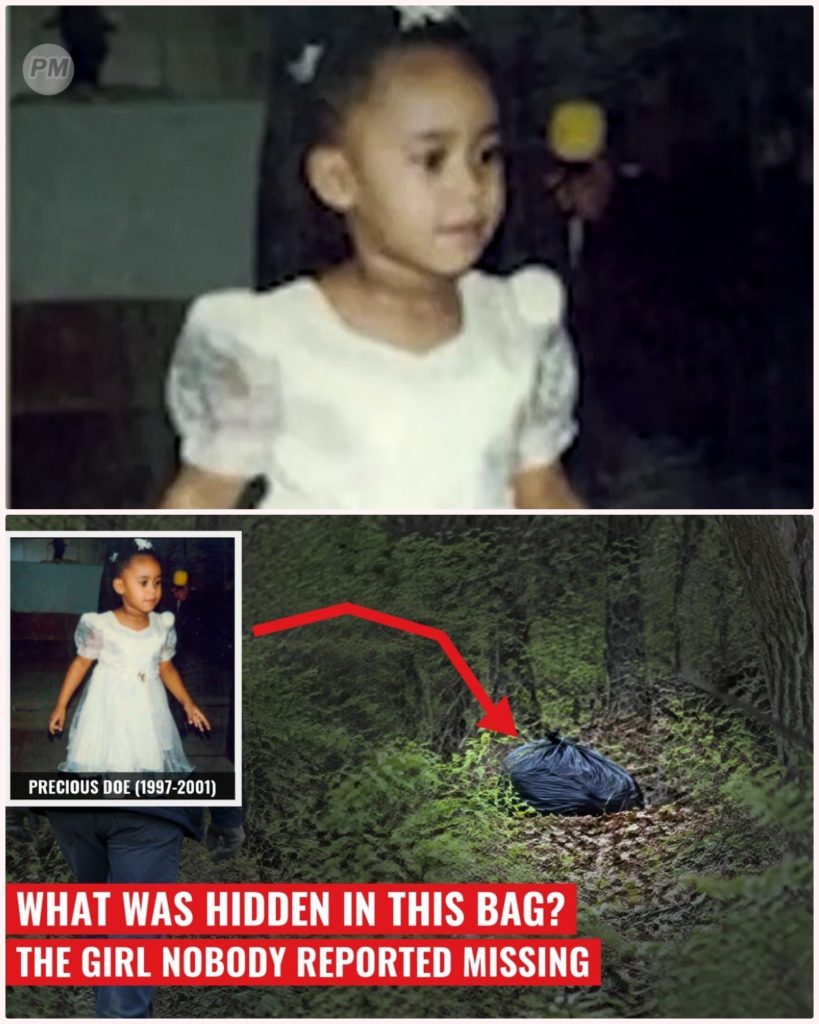
Now, there was one more thing left to do. In August 2005, Erica was laid to rest again at Memorial Park Cemetery in Kansas City, the same cemetery where she had been buried as Precious Doe almost 4 years earlier.
About 35 people came this time. It was quieter than the first funeral, smaller, but this time, the people standing at her grave knew who she was.
This time, the stone could carry her real name, Erica Michelle Marie Green. Her life and death had a strange shape.
In life, she was moved from the home where she was loved to a home where she was hurt.
In death, she was hidden by the people who should have protected her, and then found and loved by people who never met her.
Her family failed her. Her city did not. There is one more chapter to Erica’s story, and it is the one that may matter most.
Years after the trial, Erica’s father went to court. His lawsuit asked a hard question.
When a baby is born to a mother in prison, who checks on that child?
Who makes sure the state knows she exists, and that someone is watching over her when her mother gets out?
In Erica’s case, the answer had been nobody. She was born behind bars, handed to a family friend, and then quietly collected by a mother who had just come out of prison, with no agency ever stepping in to ask whether she would be safe.
The lawsuit ended in a settlement, and out of it came a change in Oklahoma.
Under what became known as Erica’s Rule, prisons must notify the state’s Department of Human Services anytime a prisoner has a baby, so that a child born the way Erica was born is never again invisible to the people whose job is to protect her.
A little girl who spent 4 years without a name now has a rule named after her.
Somewhere in Oklahoma, a baby born in prison this year will be seen by the state because of Erica.
It is easy to end a story like this on the villains, the stepfather who kicked a 3-year-old and left her to die, the mother who watched and said nothing for 4 years.
And they deserve every word said about them. But I don’t think that is the heart of this case.
The heart of this case is the volunteer who walked into those woods in the first week of May 2001 and found what the killer had tried to hide.
It is the detectives who kept her drawing on their desks for 4 years and never let her become a file in a box.
It is the people who came to the woods with candles and teddy bears for a child who had nobody.
It is the strangers in a Louisiana lab who rebuilt her face so the world could see her.
It is the hundreds of people who build a church to bury a little girl whose name they did not know.
And it is an old man in Muskogee who came to believe his own grandson had killed a child and kept picking up the phone until somebody listened.
Every one of them chose to care about a girl they had never met. And in the end, that is was what gave her back her name.
So go back to where this began. A small body in the woods on the southeast side of Kansas City in April 2001, a city waiting for a call that never came, a funeral for a child with no name, a grave that had to be opened again, a face rebuilt from bone in another state, 600 tips, 4 years, and the whole time two people in Oklahoma knew exactly who she was.
What do you think should have happened to the people who stayed silent? Tell me in the comments.
Her name was Erica Michelle Marie Green. She was 3 years old. For 4 years, a whole city called her precious Doe.
If this one stayed with you, the case on your screen right now is another child the world almost forgot.
