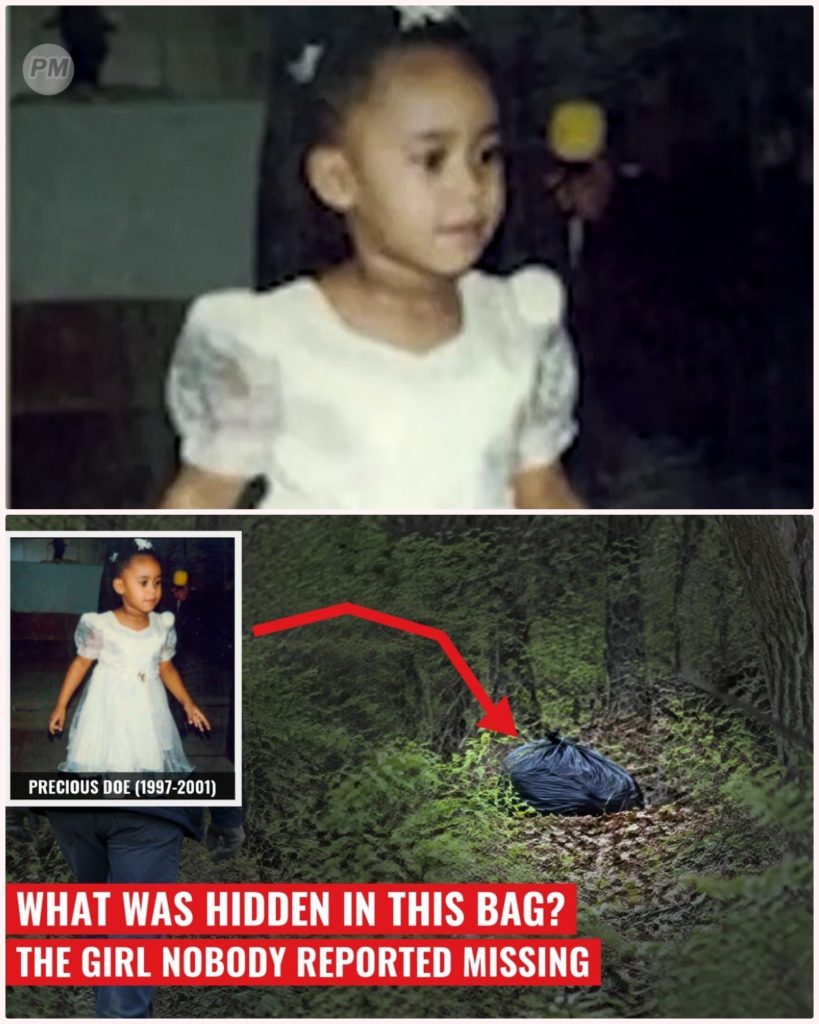
So, the girl in Kansas City was still nobody's dau…
So, the girl in Kansas City was still nobody’s daughter. And somewhere in Washington, a family was still searching for theirs.
Later, another name came up. Rilya Wilson, a little girl in Miami who had been in the care of Florida’s child welfare system and had vanished without the agency noticing for more than a year.
Her case had become a national scandal. Could the girl in the woods be Rilya?
Again, the test came back. Again, no. Detectives tried technology, too. A computer-generated sketch of her face was made and released.
It did not bring the call they needed, so they turned to one of the most famous forensic artists in America.
Frank Bender worked out of a studio in Philadelphia. He had made his name sculpting the faces of the dead and the missing, and once famously sculpted an aged-up bust of a fugitive killer that looked so close to the real man that it helped catch him after 18 years on the run.
Police sent Bender what he needed, and he went to work with clay, building a face for a girl he would never meet.
On August the 31st, 2001, Kansas City police unveiled Frank Bender’s bust. A small child’s face in clay, eyes open, looking straight at the cameras.
Her case went national. It was featured on America’s Most Wanted, the show that had helped catch hundreds of fugitives, not once, three times.
Millions of people across the country saw her story. If anyone anywhere had known her, this was the moment they would call.
The phones did ring. Tips poured in from everywhere. But every one of them came from someone guessing.
Not one came from someone who knew. Each time a name was ruled out, the girl in Kansas City became a little more alone.
>> [clears throat] >> Not Teeka, not Rilya, not anyone who was missing. Because nobody who loved her had told anyone she was gone.
And this is where the case becomes something more than a murder investigation. Because the detectives and then the whole city started to feel something they did not expect.
They started to feel responsible for her. Somebody had to be her family. If her real family would not come forward, then Kansas City would be.
Through the summer and autumn of 2001, people came to the woods where she was found.
They left teddy teddy bears and plastic flowers, candles and glass jars, handwritten cards. They held vigils there.
Ministers prayed for her by a name that nobody had given her at birth. Precious Doe.
Doe because that is what investigators call the people they cannot identify by. Precious because that is what the people who mourned her wanted the world to understand she was.
The detectives on the case kept her photo on their desks. They went home at night and thought about her.
Some of them had children the same age. And the questions sharpened. How does a child vanish from a home without anyone noticing.
Did she have a doctor, a daycare, grandparents? Did she ever go to church, to a park, to a birthday party?
Every 3-year-old leaves a trail, even a small one. Where was hers? The silence itself became a clue.
Investigators began to suspect what nobody wanted to say out loud. The reason no one reported her missing might be that the people who would have reported her were the people who knew exactly where she was.
But a suspicion is not a name. And without a name they could not even begin.
By December 2001 8 months had passed. The girl had been in the medical examiner’s care all that time.
It did not feel right to anyone to leave her there any longer. So Kansas City buried her.
The service was held in December at a church and it lasted about 90 minutes.
Hundreds of people came. Families brought their own children. Police officers stood in uniform. People who had never met her who had only ever seen one drawing of her face wept in the pews.
She was buried at Memorial Park Cemetery. Her headstone did not carry a real name because nobody knew it.
It carried the name the city had given her. Imagine being one of the detectives standing at that graveside.
You have spent 8 months trying to find out who this child is and you have failed.
And now you are watching her go into the ground and the people who should be standing where you are standing are out there somewhere living their lives saying nothing.
Some of them made a promise that day. Not out loud, maybe, but they promised her they would not stop.
That promise would take another 3 and 1/2 years to keep. And here is what none of them knew while they stood at that grave.
About 300 miles away, there was a woman who had raised this little girl from the day she was born.
A woman who would have known her face in a second. She was not at the funeral.
She did not even know there had been one. In a few minutes, I will tell you who she was and why she never made the call.
After the funeral, the case did not go cold in the usual sense. The city would not let it.
Every anniversary, the local news ran her story again. Every few months, a new tip came in.
>> [clears throat] >> Investigators kept working, kept checking, kept ruling people out. By the time it was over, more than 600 tips had come in.
