The first was a claim about what happened to Bella…
The first was a claim about what happened to Bella’s body after she died. Prosecutors alleged that her body did not go into the harbor right away.
They alleged that it was kept inside the apartment for a time wrapped in garbage bags inside the refrigerator.
When investigators brought a cadaavver dog through the apartment, the dog gave an alert at the hinge of the refrigerator door.
A dog’s alert is a lead, not a verdict. It can tell investigators where the odor of death may have been.
It cannot say how long, and it cannot say who put it there. The second thing was in the water.
Relle had described a duffel bag with weights. Police searched the water near a wararf at City Point in South Boston.
There they recovered a duffel bag and weights. Investigators traced the brand of those weights.
The same brand was found at a plumbing shop owned by Michael McCarthy’s father. On its own, a matching brand of weights does not prove who carried a bag to the water, but it connected the bag in the harbor to a place in McCarthy’s family, and it fit the account.
Relle had given. The third thing was the water itself. [snorts] City Point and Deer Island are only a few miles apart across Boston Harbor.
A Coast Guard expert would later testify that it was quite possible for something to drift from the shipping channel to the Deer Island shore.
For 3 months, investigators had allowed for the possibility that the girl on the beach on the beach had come in from far away.
If this account was right, she had traveled only a few miles. The tide had carried her from one side of Boston’s own harbor to the other.
The fourth thing was the medical evidence. In the summer, the first autopsy had found no cause of death and no obvious injuries.
By the time the case went to court, the medical examiner gave a fuller picture.
Bella’s death, the examiner said, was caused either by a lack of oxygen or or by a disturbance of her heart’s rhythm brought on by a blow.
There was bruising and there was bleeding inside her body, and she had most likely been dead for at least a week before she was found.
Those findings did not name a killer, but they were consistent with a blow to a small child’s body, and they meant that by the time the woman’s dog stopped on Deer Island, Bella had been gone for days, while the people around her said nothing.
And that was the last thing investigators could test, what the adults had said and written while she was missing.
The record shows that McCarthy told Spinsky and a relative that Bella was staying with family members.
The couple told a neighbor that the Department of Children and Families had taken her away.
To anyone who knew how often the state had been involved in Michelle’s life, that sounded believable.
A witness noticed that Bella’s toys had been thrown out. That that summer, Michelle had a case in housing court.
According to the court record, McCarthy texted her, not to mention her daughter, in case the Child Protection Agency got involved.
And there was money. After Bella’s death, Michelle continued to collect welfare benefits that were tied to her daughter, almost $1,400, for a child who was no longer alive.
Michelle would later admit that she had lied to people after Bella died. She would say she was ashamed that she had never called 911.
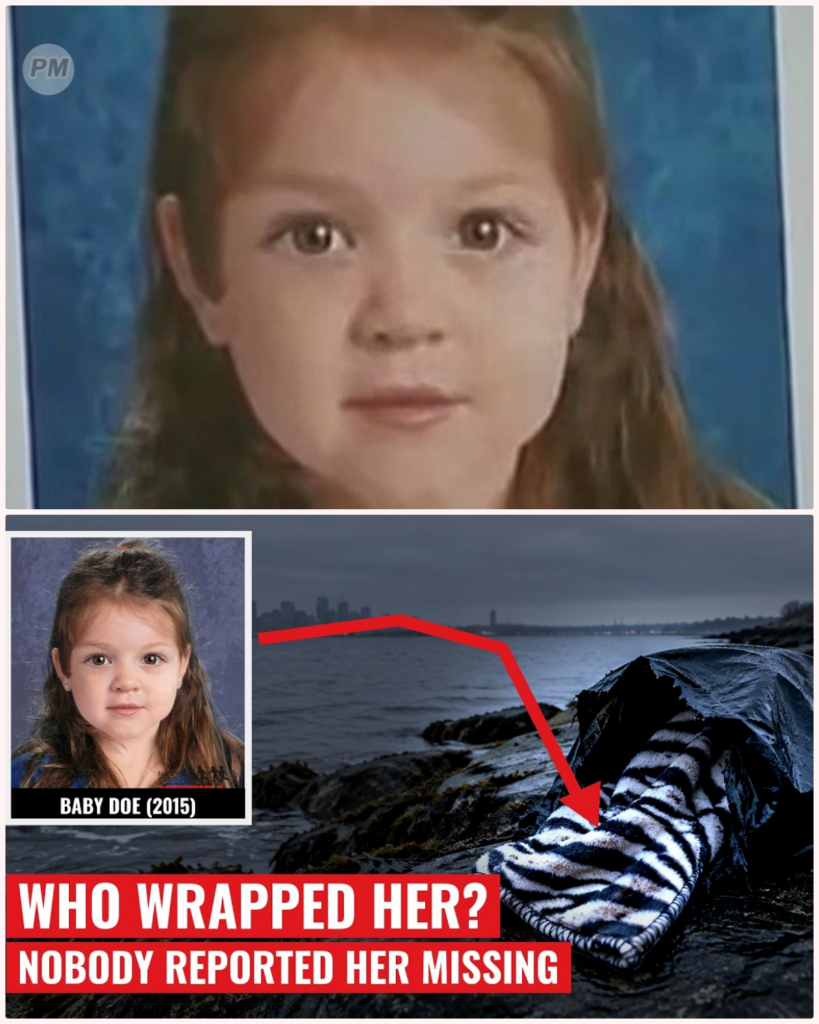
None of these statements explained how Bella died. What they showed was that for 3 months, while her face looked on from billboards across the city, both adults in her home had given other people stories about where she was.
On September the 21st, Michael McCarthy and Relle Bond were brought into court in Dorchester.
McCarthy was charged with murder. At the arraignment, prosecutors told the judge that he had been obsessed with the occult and repeated what they said he had told Relle about Bella, that she was a demon, that it was her time to die.
He was ordered held without bail. Michelle Bond was charged as an accessory after the fact for helping to conceal her daughter’s death and with larseny over the welfare money.
Her bail was set at $1 million. The news landed hard on the agency that had twice closed Bella’s case.
Within weeks, the state’s office of the child advocate reviewed the department’s handling of her.
Its report found that both cases had been closed prematurely and that the agency had not properly assessed Relle’s ability to care for her daughter.
Governor Charlie Baker ordered changes to the agency. By then, investigators had a name, an apartment, a duffel bag, a set of weights, a medical finding, and a record of 3 months of stories.
They had a version of the night Bella died. What they didn’t have was an account that both adults agreed on.
[clears throat] The prosecution’s case would depend heavily on the word of the woman who had hidden her daughter’s death for an entire summer.
In the end, it would be up to a jury in a Boston courtroom to decide what the evidence proved and which of the two people in that apartment to believe.
Before that jury was ever chosen, the prosecution made a decision that would shape everything that followed.
