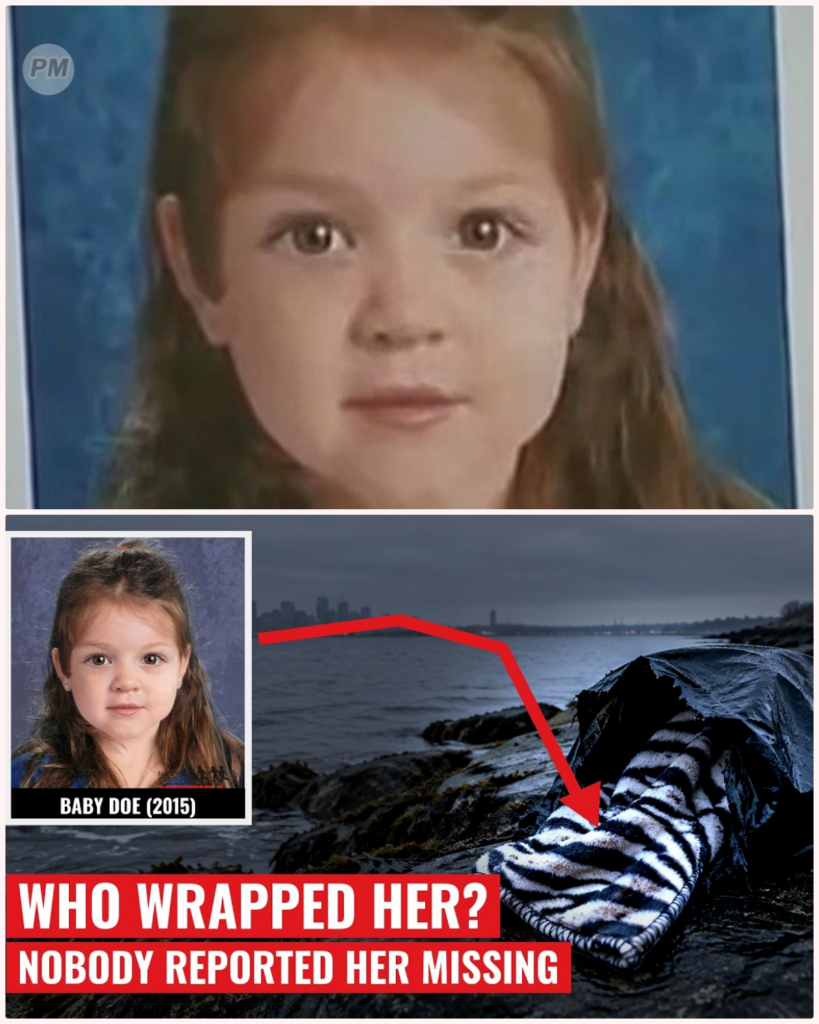
Close to 50 million people saw this little girl's…
Close to 50 million people saw this little girl’s face on Facebook, on billboards, on the evening news.
More people than live in the entire state of California. And for almost 3 months, not one person who knew her said a word.
She was found on Thursday, June the 25th, 2015 on the shore of Deer Island in Boston Harbor.
A woman was walking her dog along the path by the rocks. The dog stopped at something near the water and would not move on.
It was a black trash bag knotted shut, wrapped in two blankets. Inside was a little girl.
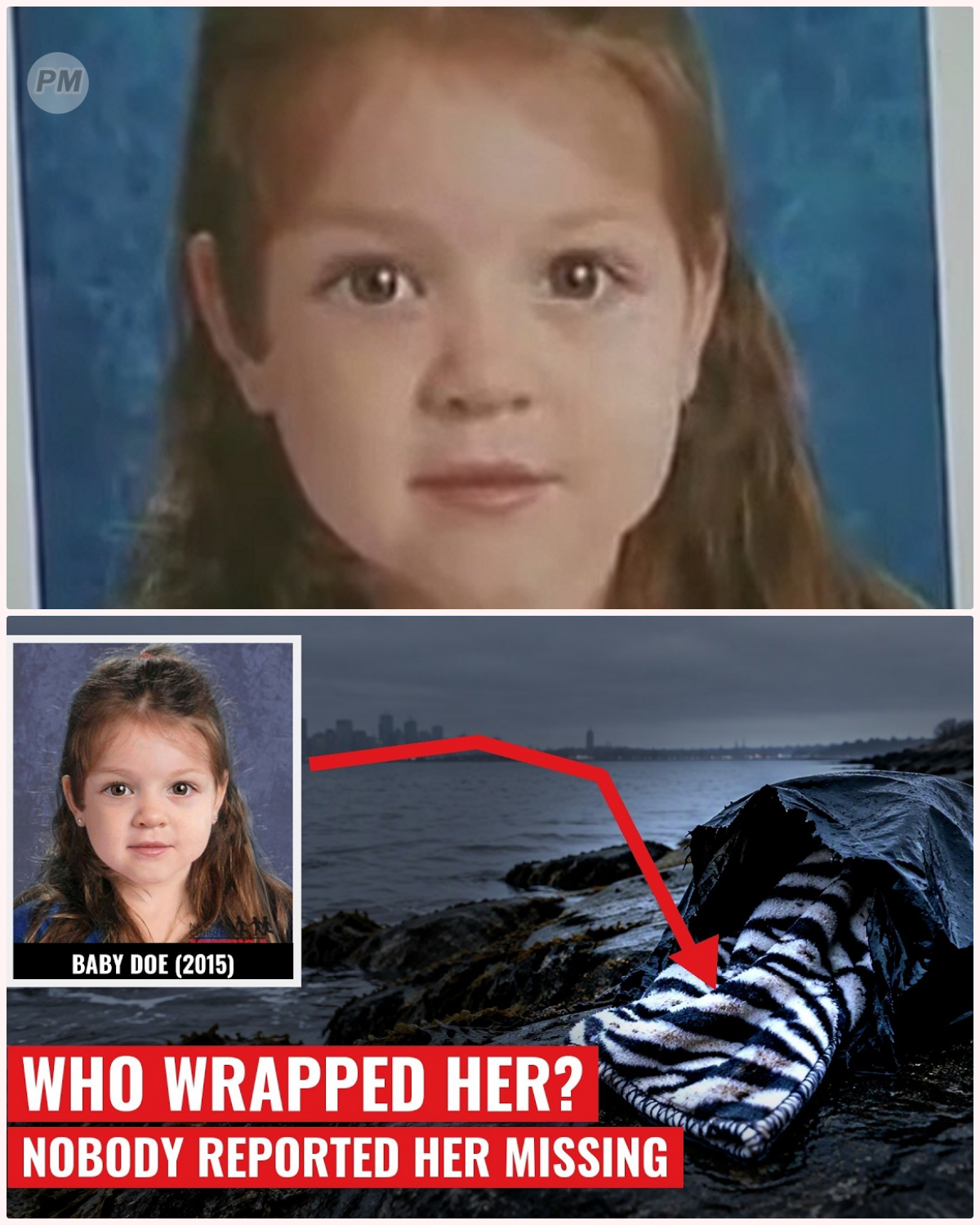
She was wearing white leggings with black polka dots. Beside her was a small blanket with a zebra print and an elastic hair tie.
No name, no note. No missing person report anywhere that matched her. The people who knew her name were a few miles away watching the same news as everyone else.
And they would keep watching it all summer long. State police detectives and the Suffach County District Attorney’s Office took the case that afternoon.
Divers searched the water off the island. Cadaavver dogs worked the shoreline for anything else that might have come in with the tide.
They found nothing. The first question was the simplest one. Where had she come from?
Boston Harbor is full of currents and the tide turns twice a day. A bag in that water can travel a long way.
And in the first weeks, investigators allowed for the possibility that she had drifted in from somewhere far off, somewhere outside the harbor, somewhere that was not Boston at all.
On July the 3rd, the medical examiner finished the autopsy. The results did not narrow anything down.
They opened it wider. The examiner could not state a cause of death. There were no obvious injuries on her.
Tests found no drugs or poison in her system. The doctor estimated her age at around 4 years old, and she had been in the water too long for the usual ways of naming someone.
Her face could not be photographed and recognized. Her fingerprints could not be used. So, here is what the investigators had.
A child about four, no identity, no cause of death, no one anywhere in the country reporting a little girl like her missing.
Here is what they did not have. Everything else. What they did have were three small objects.
The polka dot leggings, the zebra blanket, the hair tie. Somebody had bought those leggings.
Somebody had dressed her in them. Somebody had wrapped her in that blanket. If they could not find the people, maybe the people could find her.
The National Center for Missing and Exploited Children gave the job to one of its forensic artists, a woman named Christy Andrews, working in Photoshop for about 4 hours.
She built a picture of what the girl most likely looked like in life. Brown eyes and dark hair.
On July the 2nd, the Massachusetts State Police posted it on Facebook. Her face, a photo of the leggings, a photo of the zebra blanket, and one line asking for help.
Does anyone know this child? Within days, the post had been shared more than 600,000 times.
Within about 2 weeks, Facebook’s own estimate was that it had reached 47 million people.
Later counts went higher, past 50 million. Many of those people believed they were looking at a real photograph.
It looked real. It looked like any little girl at any playground on any afternoon.
People who had never shared a news story in their lives shared this one with a message underneath.
Somebody has to know her. 84 billboards across the region put her face above the highways.
Many of them donated. A tip line was set up, then a text line. The tips came in by the hundreds, and every single one had to be checked by hand.
And then came the calls nobody wanted to take. Across America, families whose own daughters had vanished saw that face and picked up the phone.
Is it her? Is it our girl? Detectives had to answer each of them. More than 200 missing children were compared against the girl on Deer Island.
Some of their names were known across the country. Aya Reynolds, the toddler missing from Waterville, Maine.
Ali Lunsford, missing from West Virginia. Catherine Phillips, the infant from Florida that the country knew as baby Kate.
One by one, they were ruled out. For each of those families, the news that it was not their child was its own kind of grief.
The Archbishop of Boston offered to bury her. Strangers left flowers on the rocks at Deer Island for a girl none of them had ever met.
And the longer it went on, the louder one fact became. A child that young does not live alone.
