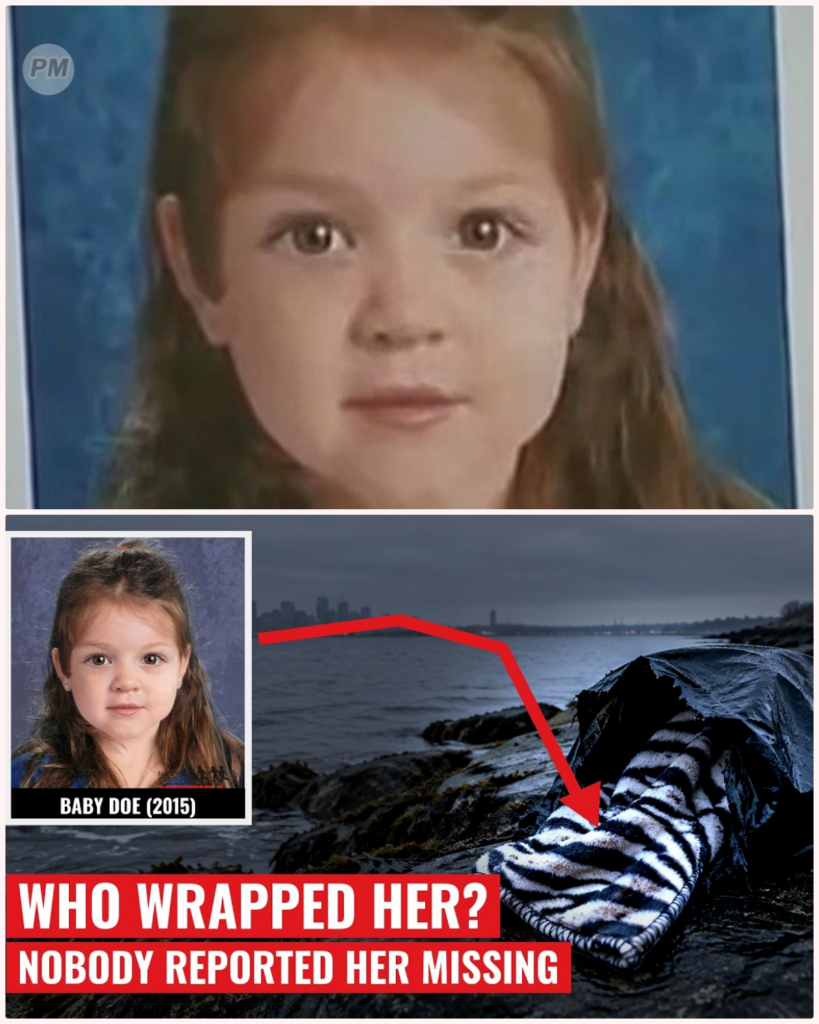
Somebody fed her breakfast
Somebody fed her breakfast. Somebody put her to bed. Somebody knew her laugh, her favorite toy, the sound of her crying in the night.
Somewhere there was a daycare, a neighbor, a grandmother. None of them called. With with no one coming forward, investigators turned to the only witness they had left, her body.
They took DNA from her hair and from one of her teeth. It matched nothing in any database in the country.
No relative in the system. Samples went to a laboratory at the University of North Texas which built a profile from her mother’s side of the family, the kind called mitochondrial DNA.
It still matched no one. So, they tried something most people never think about. Pollen.
Every place has its own air, the plants that grow there, the dust that blows through it.
Specialists studied the tiny grains of pollen and particles caught in her blanket and her clothes.
Separate isotope tests looked at the chemistry of her hair and teeth, which records the water a person drinks.
Those results were less clear, suggesting she had spent time in several New England states and possibly elsewhere in the country.
What they f found was pollen from trees typical of the greater Boston area and none from other parts of the country.
The science could not tell them her name, but it told them something that changed the whole case.
She had probably not drifted in from far away. Investigators believed she had probably lived somewhere in or near Boston.
Among the same people who were sharing her picture, retired FBI profiler Mary Ellen Tulle speaking to the media about the case gave her opinion.
In her view, whoever was responsible was probably not a stranger. It was likely, she said, a family member or a caregiver.
Police released an updated version of her face and the waiting went on. But one of those hundreds of tips was was not like the others.
On July the 13th, less than 2 weeks after the picture went up, a woman named Nicole Marquee was scrolling past it like everyone else.
Then she stopped. She thought she knew that face. It looked like a little girl she had spent time with, the young daughter of a woman she knew, a woman named Michelle Bond.
Nicole went to Relle’s Facebook page and took screenshots of the photos of Relle’s little girl.
Then she called the police and told them what she had found. 2 years later, in a courtroom, she would describe that call in a few plain words.
She told them she said that Relle Bond had a Facebook. It was one tip in a flood of them.
Hundreds of people all sure they had seen her somewhere. On its own, it did not break the case.
July turned to August. August turned to September. The billboard stayed up. Children went back to school.
And the little girl from Deer Island was still known only as Baby Do. Somebody close to her had already looked at that face and recognized it.
So why through an entire summer did the people who knew her best never say a word?
The public record does not explain what became of Nicole Mary’s call in July. What it does show is how the case finally broke 2 months later.
And the person who broke it was not a stranger who had seen a face on Facebook.
He was someone who had lit under the same roof as the little girl. His name was Michael Sprinsky.
For a few months, he had stayed in an apartment in the Doorchester neighborhood of Boston with a couple and with the woman’s young daughter.
The man in that couple was his lifelong friend. In September of 2015, the woman told Sprinsky something.
According to the court record, she told him [clears throat] her daughter was dead and that his friend had killed her.
Sprinsky did not go straight to the police. First, he sent a text message to his friend.
The answer that came back blamed someone else. His friend wrote that it was the mother and he repeated a story he had told before.
The state’s child protection agency had taken the girl away. Now, Sprinsky had two accounts from the only two adults who lived with that child.
Each one pointed at the other. The only thing they agreed on was that the little girl was no longer.
He went to the authorities. On September the 17th, investigators executed a search warrant at the apartment in Dorchester.
The next day, Suffach County District Attorney Dan Connley spoke to reporters after almost three months of telling the public that the girl on Deer Island had no name.
He began with the name. Her name was Bella. Bella Bond. To 50 million people, she had been a drawing on a screen and a set of polka dot leggings.
