In December 2018, a man in Kansas threw something away. An empty cup, a scrap of trash, something he never gave a second thought to.
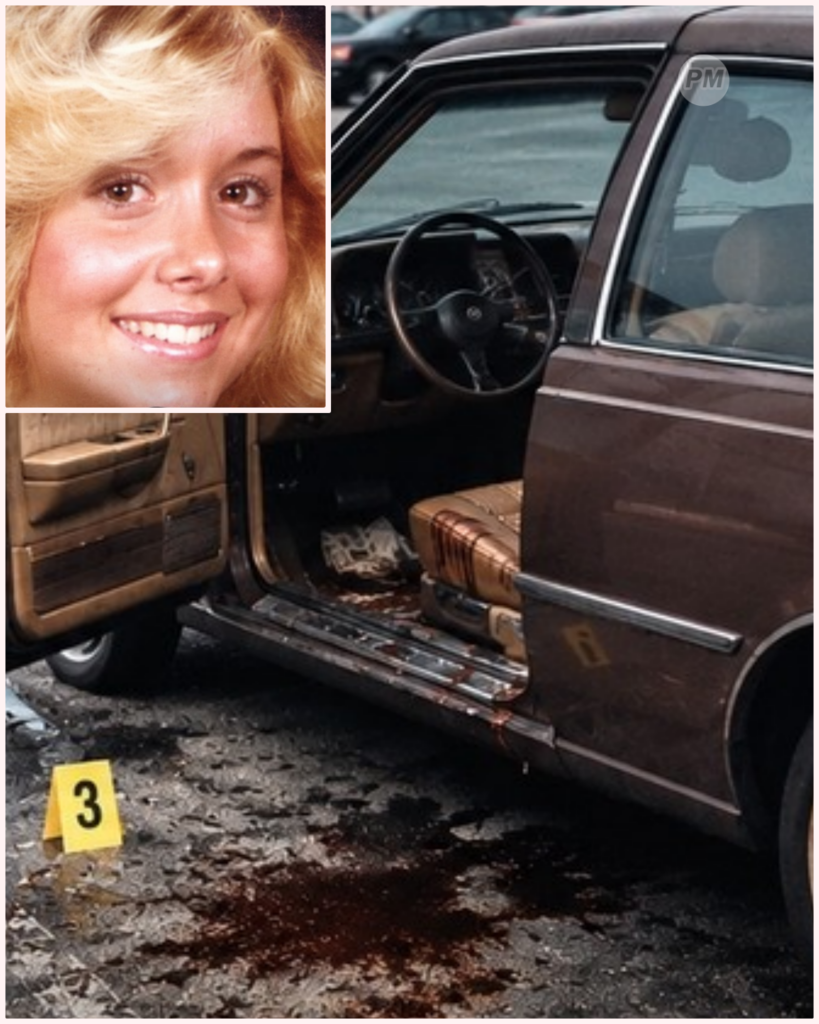
He had no idea that a team of investigators was watching him, and that the thing he discarded would carry a secret he’d kept for 39 years, a secret that began on a December night in 1979 in a mall parking lot in Cedar Rapids, Iowa, where an 18-year-old girl was stabbed to death inside her family’s car.
The killer left blood behind. Not much. A few traces on her clothing. A tiny biological fingerprint that for decades matched no one.
Detectives collected DNA from dozens of men. They chased tips, rechecked suspects, and reopened files again and again.
Every time, the same answer came back. No match. The killer wasn’t a ghost. He was a real person who went on living, working, and growing old while the family of Michelle Martinko waited for a name.
And when that name finally arrived, it came from a source no one in 1979 could have imagined.
A database of strangers’ family trees. This is the story of how a cold case that outlasted a generation of detectives was finally broken open, and of the single drop of evidence that never stopped waiting.
December 19th, 1979 was a Wednesday, 6 days before Christmas. In Cedar Rapids, Iowa, the city was doing what cities do in the last week before the holiday.
Stores stayed open late. Parking lots filled up. And families moved through the cold with their arms full of packages.
Michelle Martinko was 18 years old, a senior at Kennedy High School, and by every account, she was the kind of young person people were glad to know.
She was well-liked, close to her family, and looking ahead. Her whole adult life was waiting for her just past graduation.
That evening, she left home in her family’s Buick and drove to Westdale Mall, one of the busiest shopping centers in the city.
She was running a simple errand, picking up a dress. It was the kind of trip a teenager makes without thinking twice.
She parked in the lot, walked inside, and as far as anyone can tell, did what she came to do.
And then, something happened between the mall doors and the Buick that no one has ever fully reconstructed.
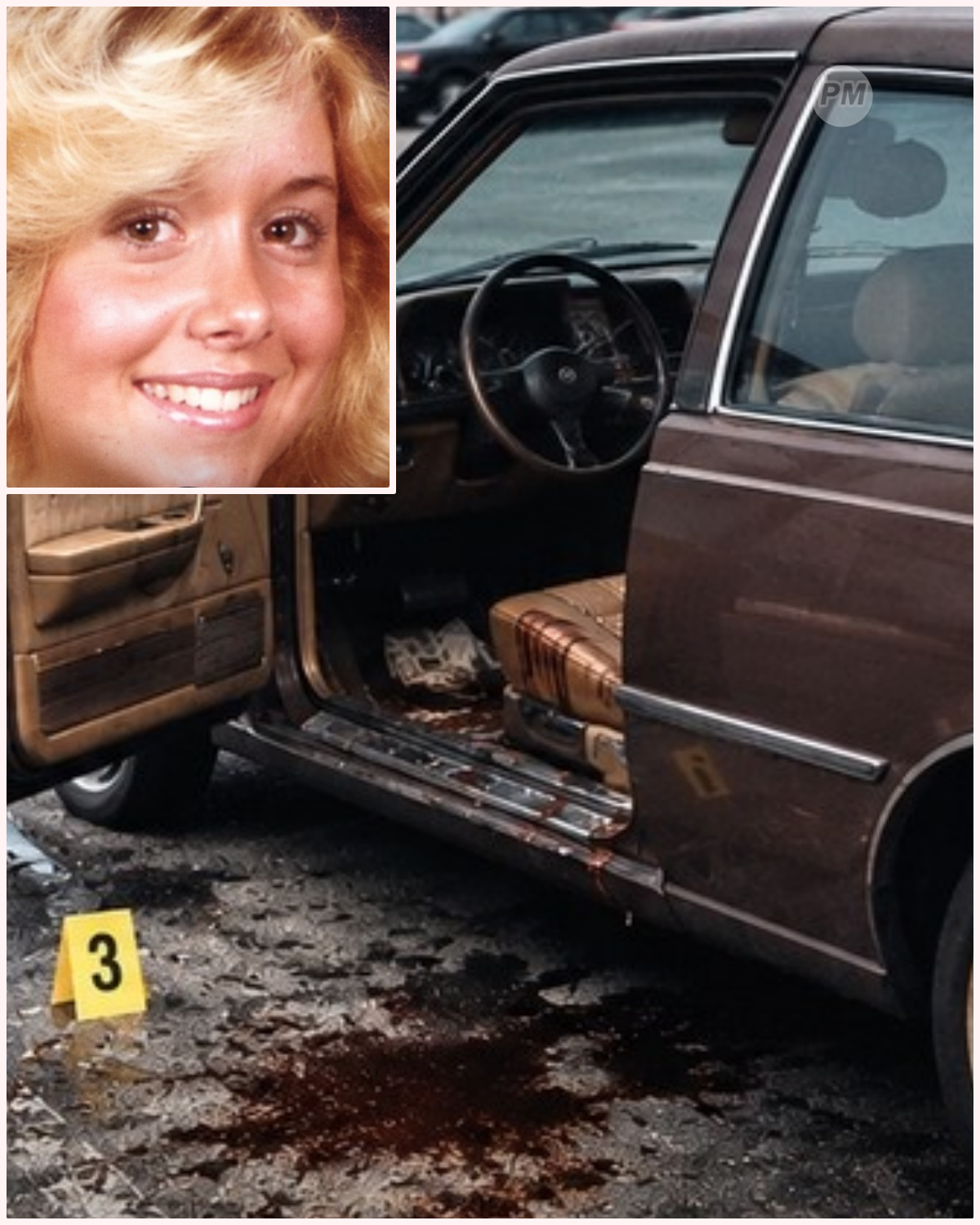
Here is what investigators confirmed. Later that evening, Michelle was found dead inside her family’s car in the Westdale Mall parking lot.
She had been stabbed repeatedly. She was in the front passenger area of the vehicle, and according to investigators, the car was not where she had originally parked it.
It had been moved. Think about what that detail means. This was not a blitz attack in a dark corner.
Someone got into that car, took control of it, and moved it in a busy lot in the middle of the Christmas rush with people coming and going all around.
Whoever did this was bold, or confident, or reckless, possibly all three. And when the attack was over, he walked away into the crowd.
Cedar Rapids in 1979 was not a city accustomed to this kind of crime. A teenage girl murdered in a public parking lot at a mall at Christmas time.
The shock rippled through the community, almost instantly. Parents who had always let their kids drive to the mall suddenly wouldn’t.
Teachers at Kennedy High School found themselves trying to explain the unexplainable to a building full of students who had sat next to Michelle days earlier.
The investigation began that night, and in the first hours, detectives did what they always do.
They looked at the people closest to the victim. Friends, acquaintances, anyone who might have had a reason.
But Michelle had no enemies. There was no obvious conflict, no history of threats, no ex who’d made trouble.
The usual starting points led nowhere. Then they turned to the scene itself, and the scene offered something.
The killer had been hurt. In the struggle, he had apparently been cut, and he left blood behind.
Not on the floor of a place he’d never been to, but on Michelle’s own clothing.
Now, in 1979, that was a clue with almost no practical value. DNA profiling didn’t exist.
The technique that would one day turn a smear of blood into a name was still years away from being invented.
Detectives could tell that the blood wasn’t Michelle’s, and that was about it. It was like holding a key without any idea which door it opened.
So, they preserved it. And that single decision to keep that evidence carefully stored through years of other priorities would turn out to be the most important thing anyone did in this case.
The weeks became months. The tips came in, hundreds of them. People reported suspicious men they’d seen at the mall.
They reported co-workers who’d acted strangely, neighbors with a temper. Detectives ran down every one of them.
Some were eliminated within hours, others took weeks. None of them produced the break. There were also the questions that detectives could not answer and still cannot answer with certainty.
Did Michelle know her killer? Was she targeted or was she simply chosen? Did the killer follow her from inside the mall or was he waiting in the lot?
Those questions led to theories. And it’s important to be clear. Theories are all they were.
Some investigators leaned toward the idea that this was a crime of opportunity. A stranger who saw a young woman alone.
Others wondered whether the killer had some connection to her. The truth is that for nearly four decades, nobody could prove either one.
If you’re the kind of person who stays for the full story, the ones where the answer takes years to arrive, subscribe to get new crime and cold case stories every week.
Now, back to Cedar Rapids. By the early 1980s, the case had gone cold. Detectives retired.
Files moved from active shelves to storage. But the Martinko family never stopped asking. Every December 19th, the anniversary came back.
And with it, the same silence. Michelle’s parents grew older with an empty chair at the table and no explanation.
Her friends graduated, married, had children of their own, and sometimes, in quiet moments, thought about the girl who never got to.
And in the evidence room, a small piece of Michelle’s clothing waited with the killer’s blood still on it.
Then, in the 1990s, the world changed. DNA profiling became a real forensic tool. It was one of the biggest revolutions in the history of criminal investigation.
Cases that had been unsolvable for decades suddenly had a path forward. If you had biological evidence and a suspect to compare it against, you could now say with near certainty whether the two matched.
For the Martinko case, that meant that blood on the clothing could finally be tested.
And it was. Cedar Rapids investigators developed a DNA profile of the person who had left that blood behind.
A complete usable profile of Michelle’s killer. They had his DNA. What they didn’t have was his name.
This is the cruel gap that haunts so many cold cases. A DNA profile is only as useful as the thing you can compare it to.
Investigators could run it through the national database, CODIS, which holds profiles of convicted offenders and arrestees.
If the killer had ever been arrested for a qualifying crime, he’d show up. But he didn’t.
No match. The profile came back as a stranger to the system. That told investigators something important, and it’s worth pausing on.
Whoever killed Michelle Martinko had not, in the years since, been caught for something that would have put his DNA on file.
He had either stayed out of trouble or he’d never been caught at all. So, detectives went back to the old method, the slow, human method.
They compared the DNA to people. Over the years, investigators in Cedar Rapids collected DNA samples from numerous men who had been connected to the case in some way.
People who’d been interviewed. People who’d been tipped. People whose names had surfaced in the long list of possibilities.
Each sample was a chance to close the case. Each one came back the same way.
Not a match. Eliminated. It was grinding, repetitive work. And as the years went by, the pool of potential suspects got older, moved away, or died.
Some detectives later admitted they worried the killer might already be gone, buried before anyone ever learned who he was.
In 2005, the case got a fresh look from Cedar Rapids investigators as part of continued cold case review.
Evidence was re-examined, old interviews were reread, searching for details that earlier detectives might have missed.
The case remained open, but it remained unsolved. A quarter century had passed, then a little more.
On the 30th anniversary, 2009, the Martinko family and the Cedar Rapids Police Department marked another year without an answer.
Another vigil. Another renewed plea for anyone who knew anything to come forward. And the response, once again, was silence.
Understand what a family goes through in a situation like this. They aren’t just grieving Michelle.
They’re grieving the knowledge that the person responsible is out there, somewhere, possibly living an ordinary life, going to work, sitting down to dinner.
Every anniversary renews the loss and renews the question, “Who is he?” And then, in 2018, a piece of news that had nothing to do with Cedar Rapids changed everything.
In April of that year, California authorities announced the arrest of a man they believed to be the Golden State Killer, a serial predator who had terrorized communities for decades and eluded capture the entire time.
The investigators had not used a traditional database. They had taken the killer’s DNA profile, uploaded it to a public genealogy website where ordinary people share their DNA to find relatives, and built a family tree around the the It was a new approach, and it worked.
Within months, other law enforcement agencies were asking the same question. Could we do that, too?
Cedar Rapids was one of them. The department had a complete DNA profile from the killer.
A profile that had been sitting in a file for years. Useless against the national database.
But genetic genealogy didn’t need the killer to be in a criminal database. It only needed one thing.
A relative who had taken a consumer DNA test. A distant cousin, a great uncle.
Someone the killer had never even met. Cedar Rapids police turned to Parabon NanoLabs, a company that specializes in this kind of work.
And here’s how it works. The killer’s DNA profile was uploaded and compared against the public database.
It didn’t produce a name. It produced something subtler. A list of people who shared small amounts of DNA with him.
Distant relatives. Genetic cousins, many of whom had no idea they were connected to a murder.
From there, it became a puzzle. Genealogists took those distant matches and began building family trees.
Working backward through generations to find where the branches overlapped. Each ancestor. Each marriage. Each child narrowed the possibilities.
It was painstaking. Like assembling a map from fragments. And slowly, the tree pointed toward a single family.
And within that family. Toward a single man. His name was Jerry Burns. In 1979, Jerry Burns was 20 years old, living in the Cedar Rapids area.
By 2018, he was 59 years old and lived in Manhattan, Kansas. He had a life there, a home, and a routine.
And as far as the public record showed, he was the kind of man nobody would have flagged.
He had not been a known suspect in the Martinko case. His name wasn’t in the old files.
Investigators would later say he hadn’t been on their radar at all. Now, it’s important to be precise here.
The genealogy work did not prove that Jerry Burns was the killer. Genetic genealogy points investigators in a direction.
It gives them a lead, not a conviction. What it gave Cedar Rapids police was a name worth testing.
And the question now was how to test it. They couldn’t just knock on his door and ask for a DNA sample.
If Burns was the killer, that would warn him. So, investigators did what law enforcement does in these situations.
They conducted surveillance, and they waited for him to discard something with his DNA on it.
A cup, a utensil, something thrown away in public, something no one owns once it hits the trash.
That’s what he gave them. A discarded item, collected lawfully, and sent to the lab.
The lab compared the DNA on that item to the DNA profile from the blood on Michelle Martinko’s clothing, and the result came back.
It was a match. 39 years after Michelle was killed, her family finally had a name.
On December 20th, 2018, just 1 day after the 39th anniversary of the murder, Cedar Rapids police announced the arrest of Jerry Burns for first-degree murder.
At a press conference, officials described the breakthrough, and for the first time in almost four decades, the Martinko family heard those words, “We have arrested someone.”
It’s worth sitting with that for a moment. Think of Michelle’s parents who had waited their entire adult lives for those words.
Some family members had not lived to hear them. The investigators who had worked the case in the 1980s were long retired.
But the evidence they had saved, that single piece of clothing with a stranger’s blood on it, was the thing that carried the case across 39 years.
Burns was arrested in Kansas and brought back to Iowa to face the charge. He pleaded not guilty.
And now the story entered its final phase. The courtroom, where a jury would have to decide whether a DNA match found through a method that was still relatively new, was enough.
What was not confirmed, what prosecutors never fully established, was why. The motive in this case remained one of its deepest mysteries.
Did Burns know Michelle? Was it a random attack? Was it planned? Or did it escalate in the moment?
Prosecutors had a powerful forensic link, but a forensic link is not the same as a story.
And those who followed the case closely noted that the question of motive was left largely unanswered.
The defense, for its part, pushed back. In court, Burns’ attorneys challenged the evidence and the way it had been developed.
It was a serious argument and the jury had to weigh it. But the prosecution’s case was strong in the way that DNA cases can be.
The blood on Michelle’s clothing had been preserved since 1979. It was not a modern sample.
It came from the scene itself, from the night of the murder. And the profile derived from it matched the profile of the man sitting at the defense table, a man who had never been ruled out because he’d never been tested until the genealogy led there.
Prosecutors argued something simple. A person who bleeds on a victim during an attack is the person who attacked her.
Blood doesn’t wander. It doesn’t drift from stranger to stranger. It was left by the man who was there.
In 2020, after hearing the evidence, a Linn County jury reached a verdict. Jerry Burns was found guilty of first-degree murder in the death of Michelle Martinko.
He was sentenced to life in prison. For the Martinko family, it was the end of a wait that had lasted more than half a century of combined lifetimes.
It was not the end of the grief. Nothing could give Michelle back her future.
If this story hit you and you want more cases like it, subscribe so you don’t miss a single one.
We bring you new crime and cold case stories every week. Michelle Martinko was 18 years old.
She went to a mall to pick up a dress 6 days before Christmas. She never came home.
And for 39 years, the person who made sure of that lived with the safe assumption that no one would ever know.
He was wrong. The blood he left behind outlasted his silence. It outlasted the detectives who first found it.
It outlasted the technology that couldn’t read it. And in the end, it said exactly what the evidence in a cold case sometimes says, “If you wait long enough and never stop looking, I was here.
And it was me.” Michelle’s story is a reminder that the passage of time does not erase the truth.
It just delays it. If you want to hear the stories of the victims who were forgotten and the people who refused to let them stay that way, subscribe now.
New crime and cold case stories every week. The next case is already waiting.


