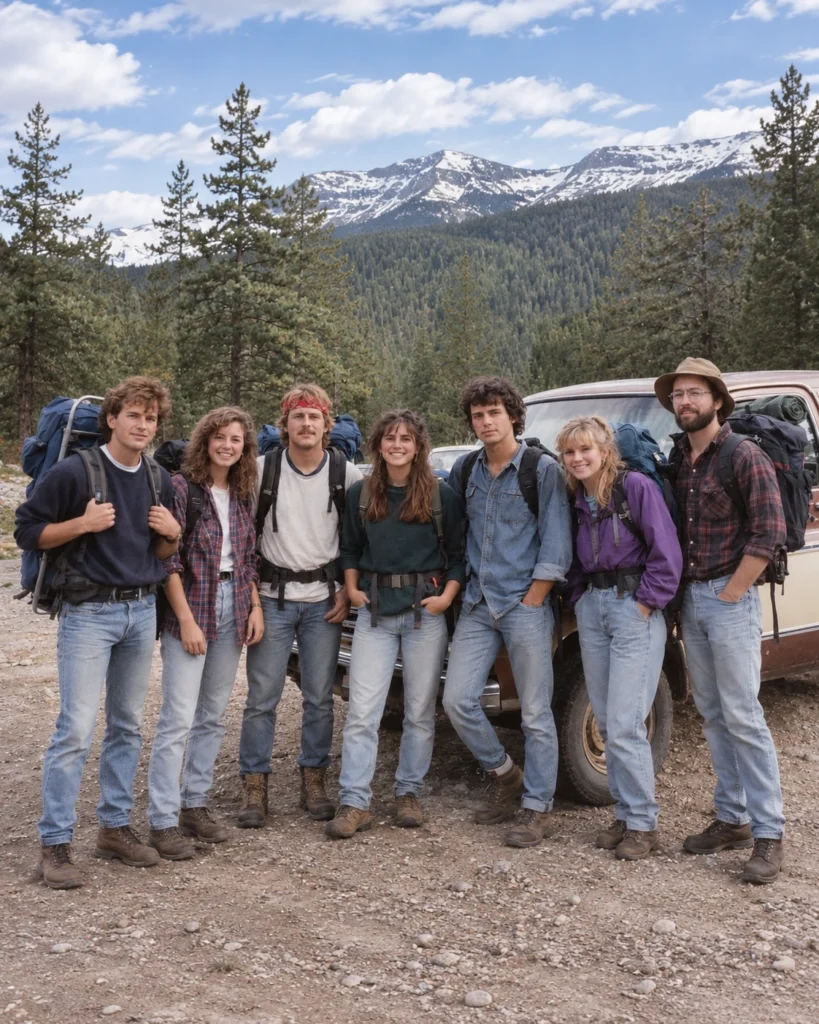
She would later struggle with the fact that she ha…
She would later struggle with the fact that she had found comfort in him on a day when he could still have told her where her brother was.
In October of 2018, Owen Price contacted Clare and asked to meet.
He had been one of the younger members of the hiking group and had moved away several years after Daniel disappeared.
Their contact had become infrequent, so the request surprised her.
He wanted to see her somewhere private without her daughter present and asked her not to mention the meeting to Peter.
Clare arranged for him to come to her office after work.
With his agreement, she recorded the conversation on her phone.
She expected him to admit that the argument had involved something the group had concealed.
Over the years, she had considered whether Daniel had been injured in a fight or left behind when he was less capable of looking after himself than the others claimed.
Owen’s account began with a different trail and a house that had never appeared in any description she had heard.
On the third day of the hike, the group had followed an old path that seemed to offer a shorter way across the ridge.
They passed a damaged fence and continued until they reached a clearing containing a house and several outbuildings.
A man came outside carrying a shotgun and demanded that they leave.
The hikers tried to explain that the path appeared on their map, but the encounter became an argument.
Daniel was nearest to the owner when the man fired.
Owen remembered Daniel falling and one of the women moving toward him.
The owner pointed the gun at her before she could reach him, then forced the six survivors toward a shed.
He made them go inside and secured the door from outside.
They remained there through the night, able to see only a narrow part of the clearing through gaps in the boards.
Daniel was outside their view, and they could not tell whether anyone had approached him.
Inside the shed, they tried to judge whether they could escape without being seen.
They listened for the owner and worried that he might open the door and shoot them.
None knew the property or how far they would have to run before reaching cover.
By morning, they were exhausted and frightened enough to follow his instructions.
When he returned with the gun, he made them carry Daniel to an abandoned well beyond the outbuildings.
Owen described a low stone surround hidden in vegetation and a damaged cover they had to move aside.
The owner watched while they lowered Daniel’s body into the opening and dropped his pack after him.
He then collected their identification and copied their names and home addresses onto a piece of paper.
He threatened to come after them and their families if they reported what had happened.
He also insisted that moving the body made them participants in concealing the killing and that police would hold them responsible alongside him.
Clare paused the recording while Owen described the well.
Until that evening, she had spent 20 years imagining her brother somewhere in the open where a searcher might eventually find him.
She now had a specific place to picture and knew that the people who had helped her search had stood beside it.
When she was ready, she asked Owen to continue with what happened after the owner let them leave.
The six walked away from the property and stopped once they believed they were out of sight.
They discussed whether to contact police and what the owner might do if they did.
During that conversation, one of them proposed saying Daniel had left after an argument.
They chose a creek junction.
They had passed earlier because everyone could describe it and because it would place his disappearance away from the house.
As they made their way toward the road, they agreed on the details they would give.
Owen admitted that he had returned to the woods with searchers while knowing they were looking in the wrong area.
He had heard Clare asking whether Daniel could survive another night and had said nothing.
He had continued saying nothing as the months became years.
He told her that he had thought about confessing many times, but always returned to the threats against his family and the consequences of admitting what he had done.
Clare let him finish and did not promise to forgive him.
She took the recording to police along with the notes and map she had kept.
Investigators now had a witness who could identify a property and describe where a body had been concealed.
Owen returned to the area with them.
Although some buildings had changed, he recognized the approach to the clearing and what remained of the shed.
A search beyond the outuildings located the well beneath vegetation and accumulated debris.
Specialists recovered human remains along with material from a backpack and personal belongings.
Testing confirmed that the remains were Daniels, and the evidence supported Owen’s account of a shooting.
Clare finally knew where her brother had been throughout the searches.
The recovery also meant that investigators could examine the other survivors accounts against physical evidence rather than relying only on Owen’s confession.
By then they had established the identity of the property owner and discovered that he had died in the autumn of 1999, a little over a year after the hike.
Clare initially thought Owen must have learned of his death before deciding to contact her.
Investigators found that he had not known.
The other five survivors, however, had known for years.
Peter had learned of the death first and passed the information to the others individually.
Owen had moved away and broken contact and nobody informed him.
The remaining five knew the man who had copied their addresses was no longer alive.
Even with that threat gone, none contacted police or told Clare where to find her brother.
When investigators questioned them separately, their explanations centered on what an admission would do to the lives they had built.
Their spouses knew that a friend had disappeared during a hike, but they did not know about the shooting or the well.
Some had children by then.
Several feared losing their jobs or facing consequences for their role in concealing the body and misleading investigators.
They also feared having to explain why they had continued the deception after learning the owner was dead.
each year had added more conversations they would have to account for.
They had accepted sympathy for losing a friend and allowed people to praise their participation in the search.
They had watched Clare circulate photographs while knowing those efforts could not bring Daniel home.
Telling the truth meant admitting all of that to people whose trust mattered to them.
So they continued avoiding both Clare’s questions and one another.
The collapse of their friendships now made sense to her.
Each survivor knew what the others had done on the property.
And afterward meeting meant being around someone who could ask why they were still silent or who might reveal that they were considering going to police.
Keeping apart allowed them to spend most of their time with people who knew only the hiking story.
Clare still wanted to know who had first proposed that story.
Owen identified Peter and other witnesses confirmed it.
Peter had suggested the argument and chosen the creek junction.
He had urged the others to keep their account simple and to explain the delay by saying they expected Daniel to reach the vehicles first.
Because he knew Daniel well, he could describe a disagreement that would sound believable to his family.
That information changed the way Clare understood his involvement in the years afterward.
When Peter called to ask about the investigation, he learned what police were pursuing.
When he helped her consider search areas, he kept her focused on the location he had chosen before the group reached the road.
She could not determine how much of his attention came from guilt or whether he had wanted to confess during any of those visits.
She knew that he had opportunities to tell her and had continued supporting the false account instead.
Peter asked to meet with her after investigators spoke to him.
Clare declined.
She had spent 20 years turning to him for answers, and she wanted anything further he had to say to become part of the investigation.
While authorities reviewed the actions of the surviving hikers, she concentrated on arranging her brother’s burial.
Once Daniel’s remains were released, Clare had him buried near their mother.
For the service, she chose a photograph taken in her apartment before the trip.
He was sitting on the floor assembling a bookcase with the instructions beside his knee.
It was how she wanted her daughter to see him doing something familiar in a place where he had spent time with his family.
After the burial, Clare put away the folders she had used for possible sightings.
She kept the notebooks because they contained years of conversations with the people who knew where Daniel was.
Peter appeared throughout them, asking about leads and offering help.
By the time he attended her mother’s funeral, he had known for years that the man who threatened them was dead, and he still let Clare believe her brother had walked away.
If you were in Clare’s position, would you want to hear Peter’s explanation or would you refuse to meet with him, too? Share your thoughts in the comments and subscribe to UNK Files to learn about more disappearances and the investigations that followed.
