For 20 years, Clare Mercer believed her brother ha…
For 20 years, Clare Mercer believed her brother had disappeared after walking away from his friends during a hiking trip.
Six people had given police that account, and she knew all of them.
They had grown up with Daniel, spent holidays at her parents’ house, and helped search for him when he failed to come home.
Whenever Clare tried to imagine his last movements, she pictured the trail junction they had described and wondered which direction he had taken.
She eventually learned that Daniel had never reached that junction on the day he disappeared.
By the time his friends reported him missing, his body was at the bottom of a well, and every one of them had been there when it happened.
Daniel was 27 in September of 1998.
He repaired refrigeration equipment for a living and usually spent his weekends catching up on things he had promised to do for other people.
His younger sister, Claire, lived about 20 minutes away.
They saw each other often enough that she sometimes complained he came over only when he needed feeding, although he usually arrived with tools to fix something in her apartment.
Before the hiking trip, he left her a spare key and asked her to water his plants.
She put it in a kitchen drawer, expecting to hand it back the following weekend.
The trip had taken several months to arrange because getting seven adults away from work at the same time was difficult.
Most of them had known one another since school, and they wanted a full week together before marriages and children made that kind of trip even harder.
Peter Walsh organized the route and collected money for supplies.
He was Daniel’s oldest friend and had spent so much time with the Mercer family that Clare barely remembered meeting him.
When their father died, Peter helped with the funeral arrangements and stayed afterward to make sure their mother had everything she needed.
Clare trusted him, and knowing he would be on the hike gave her one less reason to worry.
The group left on a Saturday morning in two vehicles.
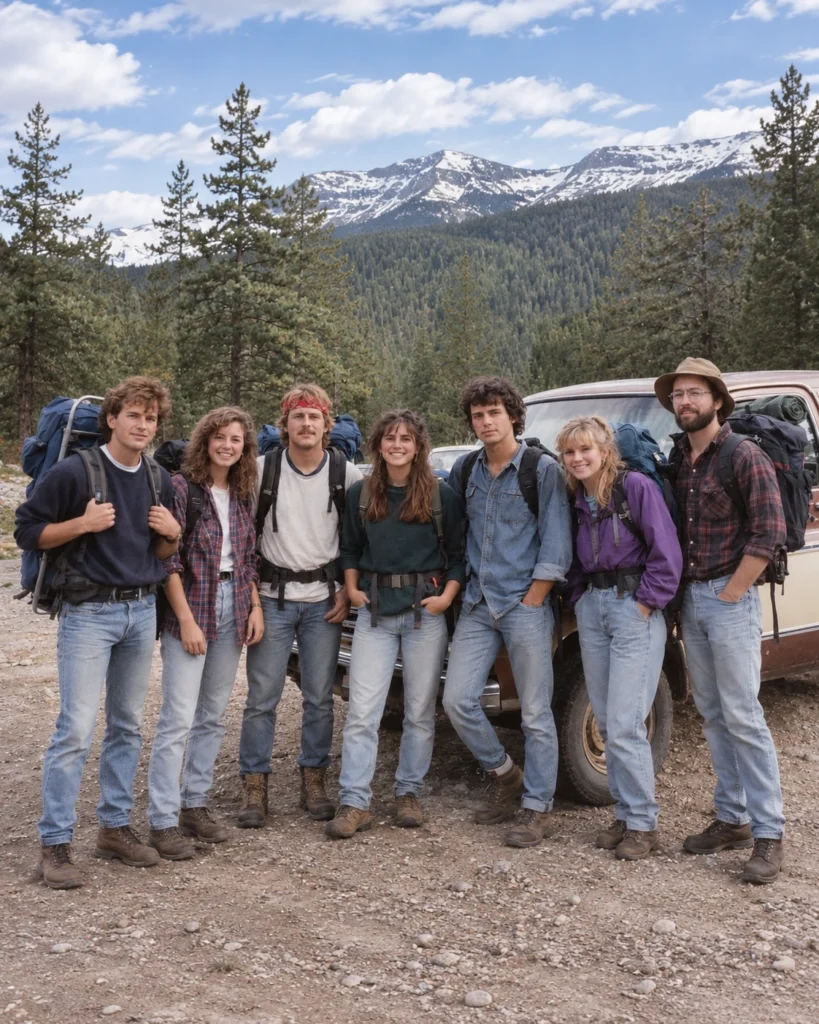
At the trail head, another visitor took a photograph of all seven standing beside their packs.
Daniel was looking towards someone on his left, smiling at something the photograph could not explain.
Clare would later use that image on missing person posters because it was the most recent picture she had.
After seeing it reproduced so many times, she found it difficult to remember the original photograph with the other six people still in it.
They were supposed to return the following Saturday.
Instead, six members of the group reached a paved road on Tuesday afternoon and stopped a passing driver.
They said their friend had left them after an argument the previous day and that they had been unable to find him, according to their account.
Daniel wanted to shorten the hike, while the others preferred to continue along the planned route.
The disagreement became heated and he eventually picked up his pack and headed downhill alone.
They believed the trail he took would lead him toward the vehicles, so they expected to catch up with him there.
That assumption explained why they had waited before raising the alarm.
They told police that Daniel was upset but capable of finding his way out and that nothing about his behavior suggested he intended to disappear.
Peter accompanied the first search team to a junction beside a creek and showed them where Daniel had supposedly left the group.
He identified the path Daniel had taken and described what he had been carrying.
With six witnesses agreeing on the location, searchers had little reason to begin anywhere else.
Teams followed the creek and worked across the slopes below it, checking places where someone might have fallen or stopped to rest.
Rain arrived during the first night, making the ground slippery and complicating efforts to identify tracks.
Volunteers returned the next morning and continued through wet brush, calling Daniel’s name and listening for a response.
They found old campsites and litter left by other visitors, but nothing that belonged to him.
As the search area widened, the absence of his equipment became another concern.
Even if Daniel had been badly injured, rescuers hoped they might locate his pack or some sign that he had tried to shelter.
Clare arrived while the search was still expanding.
She had left work as soon as she received the call and brought very little with her because she expected to take her brother home.
Seeing his friends at the search base reassured her at first.
They looked exhausted and several had scratches on their arms from the vegetation.
They answered questions and helped carry supplies.
Peter stayed near her while someone explained where the teams were working, and she remembers feeling grateful that Daniel had been with people who would not give up on him.
She asked each of them about the argument.
Their answers differed in small ways, but all described Daniel becoming frustrated and deciding to leave.
Clare knew her brother could be stubborn, especially when he was tired, so the account sounded possible.
She wondered whether something embarrassing had happened before the disagreement, something the others were reluctant to repeat.
When she pressed them, however, they returned to the same explanation.
Nobody thought he was in danger, and everyone expected to see him again near the vehicles.
Within a few days, Clare was explaining Daniel’s personality to strangers.
She told searchers that he might storm off when angry, but that he would calm down and try to make sensible decisions.
She worried people would assume he had been reckless and stop looking as carefully.
Much later, she would remember how quickly she had accepted the need to defend him.
The only evidence that Daniel had caused his own separation from the group came from the people who had returned without him.
You’re listening to UNK Files.
In this story, the account that shaped the entire search came from six people who appeared to have every reason to help.
Clare knew them personally, and for years, she relied on what they told her.
Her doubts began with something she noticed after they had all gone home.
When the organized search ended, Clare continued making calls and distributing photographs.
She kept a notebook beside the telephone so she could record possible sightings without searching for paper.
Some callers sounded certain they had seen Daniel, and she learned to ask about clothing and distinguishing features before allowing herself to believe them.
A sighting could occupy her for several days before she discovered that the person had been somewhere else or that the description did not match.
She kept the notes anyway because she was afraid of dismissing something that might matter later.
During that first year, she also tried to keep Daniel’s friends together.
Before the hike, they had rarely needed a reason to meet.
Afterward, arranging even a small gathering became difficult.
Someone would agree to come and then cancel after asking who else would be there.
Another would offer to visit Clare on a different day.
She understood that seeing one another might bring back memories of the trip, and she did not want to force anyone into a situation they found painful.
As the years passed, though, their avoidance began to seem unusually complete when one of the men married, none of the other hikers attended.
A woman in the group had a child and did not tell someone who had once been her closest friend.
They continued socializing with other people and appeared in photographs at parties and family celebrations, but Clare could find almost no occasion when two members of the hiking group had chosen to be together.
Several still visited her individually.
If she mentioned that another had been there recently, the conversation tended to change.
Clare eventually suggested that they return to the place where Daniel had left them.
She wanted to walk the route in daylight and hear their recollections while they were standing on the ground itself.
She offered to choose a date that suited everyone and make the arrangements.
None agreed to go.
The reasons were ordinary enough on their own, but changing the date did not help, and asking them separately produced the same result.
She started writing down what they told her.
By then she knew that memory could change without anyone intending to lie.
So she tried to be careful about what she treated as significant.
One person remembered the argument taking place shortly after lunch while another placed it later in the afternoon.
Details about where they had stopped and who was standing nearest to Daniel also shifted.
What never changed was the part that placed him alone on the trail with all his equipment.
Nobody admitted following him far enough to see what happened next.
Peter remained more involved than the others.
He called around the anniversary and asked whether police had received any useful information.
When Clare considered paying for a private search, he looked over the proposed area with her and questioned whether certain sections were too far from Daniel’s last known location.
She appreciated having someone who remembered the terrain.
She also appreciated that he still used Daniel’s name when other people had become uncomfortable mentioning him.
Clare’s life continued around the search.
She married and had a daughter who grew up recognizing Daniel from the photograph in their home.
Clare’s mother died without learning what had happened to her son.
Peter attended the funeral and stayed to help afterward just as he had when Clare’s father died.
His presence meant something to her because he remembered her family before the disappearance.