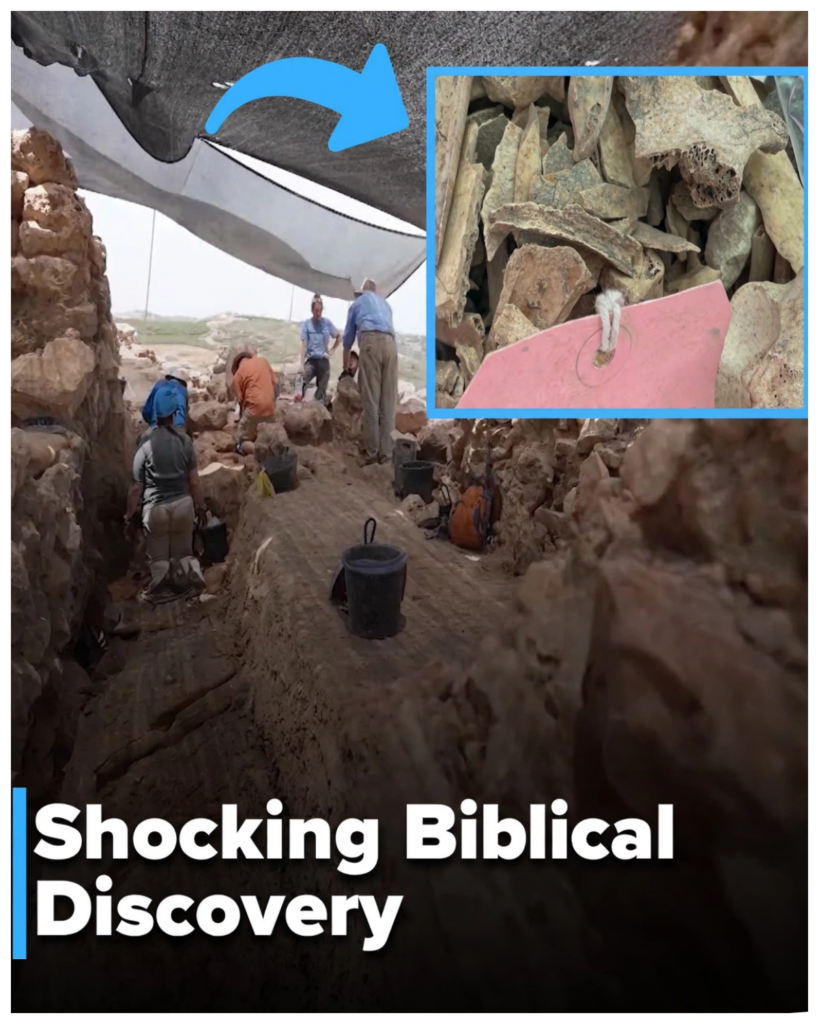
THE SECRET BENEATH THE KING'S THRONE
For several seconds, nobody moved.
The elderly man stood at the entrance of the underground passage, his face illuminated by Daniel’s flashlight.
His clothes were covered in dust. His hair was almost completely white, and deep lines crossed his cheeks. Yet his eyes remained remarkably sharp.
Daniel recognized him.
There was no doubt.
“Professor Cross?”
The man nodded.
“Daniel Mercer.”
Daniel took a cautious step forward.
“You’re supposed to be dead.”
A faint smile crossed Cross’s face.
“So I have been told.”
Miriam was staring at him as though she had seen a ghost.
“Where have you been?”
Cross glanced toward the stone chamber.
“Somewhere nobody should have gone looking.”
Samuel tightened his grip on his equipment.
“How did you get inside this excavation site?”
“Through the western entrance. It was open before your team arrived.”
Daniel frowned.
“That’s impossible. We surveyed the entire perimeter.”
Cross looked at him.
“You surveyed what the desert allowed you to see.”
The words hung in the air.
Daniel glanced toward the footprints.
“Those are yours?”
“Yes.”
“And the knocking?”
Cross nodded.
“I was trying to get your attention.”
Samuel looked unconvinced.
“Three knocks from beneath the chamber?”
“Would you have preferred that I shout?”
Nobody laughed.
Daniel raised the tablet.
“You know what this is?”
Cross’s expression changed.
For the first time, the elderly historian appeared genuinely frightened.
“Where did you find it?”
“Behind the stone panel.”
Cross closed his eyes.
“Then it has finally been uncovered.”
Miriam stepped closer.
“What does it mean?”
Cross looked at her.
“Before I answer, you need to understand something. The city above us was not simply destroyed and forgotten. Its final days were recorded by people who knew they were witnessing something extraordinary.”
Daniel held up the tablet.
“We already know that.”
“No,” Cross replied. “You know what the surviving inscription says. You don’t know what was removed.”
He pointed toward the passage.
“The missing record is beneath the throne.”
Daniel looked at Samuel.
“Where does this passage lead?”
Samuel examined the narrow opening.
“It descends farther. Much farther, judging by the airflow.”
Cross nodded.
“Then you have found the entrance.”
“Entrance to what?” Miriam asked.
Cross hesitated.
“The royal archive.”
The professor who disappeared
Fifteen years earlier, Nathaniel Cross had been one of the most respected historians studying the ancient kingdoms of the region.
His research focused on the relationship between biblical accounts and archaeological evidence.
He had spent decades comparing inscriptions, ancient maps, and historical records.
His greatest interest was a mysterious city mentioned in several ancient traditions.
He believed that its remains lay somewhere beneath the desert.
At first, his research attracted little attention.
Then he discovered an unusual reference in a damaged manuscript.
The manuscript described a royal archive containing records of a city that had received a warning before its destruction.
Cross believed the archive might contain a contemporary account of events described in biblical literature.
He organized an expedition.
But the expedition ended in disaster.
One member became seriously ill. Another was injured during a collapse. The equipment was damaged, and the team was forced to withdraw.
Cross returned alone several months later.
He never came back.
Newspapers reported that he had disappeared.
Some suggested he had died in the desert.
Others believed he had abandoned his research.
Now he stood before Daniel, fifteen years older, holding a scroll.
“What happened to your team?” Daniel asked.
Cross lowered his eyes.
“They went home.”
“And you?”
“I found the city.”
Miriam stared at him.
“You found it fifteen years ago?”
“Yes.”
“Why didn’t you report it?”
Cross looked toward the ceiling.
“Because I found something that made me afraid of what would happen if the discovery became public before it was understood.”
Daniel frowned.
“An archaeological site doesn’t become dangerous because it’s important.”
“You’re right. But people can become dangerous when they believe history threatens something they want to protect.”
He unwrapped the scroll.
It was old, but carefully preserved.
The writing appeared to be a later copy of an ancient text.
Miriam recognized several words.
“Where did you get this?”
“From the archive.”
Her eyes widened.
“You’ve been inside?”
Cross nodded.
“Once.”
“Then why did you leave?”
“Because I wasn’t alone.”
Silence returned.
Daniel studied him.
“Who else was there?”
Cross looked toward the passage.
“That is why we need to go down together.”
The road beneath the ruins
They entered the passage slowly.
Samuel led the way, checking the stones and the stability of the walls.
Daniel followed with a flashlight.
Miriam walked behind him, holding the ancient tablet.
Cross remained near the rear.
The passage descended at a shallow angle.
Its walls were made of carefully fitted stone blocks, unlike the rougher construction of the chambers above.
Every few feet, Daniel noticed small carved marks.
Some resembled numbers.
Others looked like symbols representing stars, animals, or royal titles.
“Who built this?” he asked.
Cross answered without turning.
“The people who served the king.”
“How do you know?”
“Because the construction changes as we descend. The upper chambers were designed for storage. These passages were built for something more important.”
Miriam touched one of the markings.
“These symbols are repeated.”
“Yes,” Cross replied. “They indicate direction.”
“Direction toward what?”
“The throne.”
They continued downward.
After approximately twenty minutes, the passage opened into a larger chamber.
Daniel stopped.
The room was magnificent.
Four massive stone columns supported the ceiling. Their surfaces were covered in carved figures.
At the center stood a rectangular platform.
Behind it was a wall decorated with an enormous image of a seated king.
The king wore a crown and held a staff.
At his feet were several smaller figures.
Some carried gifts.
Others appeared to be prisoners.
Daniel approached the wall.
“This is extraordinary.”
Miriam examined the inscriptions.
“The king’s name appears here.”
She traced the characters.
“Perhaps a ruler from the eighth century BCE.”
Cross nodded.
“That is what I believe.”
Samuel pointed toward the platform.
“What’s underneath?”
Cross stepped forward.
“The throne.”
Daniel looked at the stone platform.
“That is not a throne.”
“Not anymore.”
Cross moved toward one side and brushed away the dust.
A rectangular outline became visible.
He pressed his hand against a small indentation.
Nothing happened.
Then he produced a small object from his pocket.
It was a bronze piece shaped like a narrow key.
Daniel stared.
“Where did you get that?”
Cross placed it inside the indentation.
“From the first chamber.”
A faint metallic sound echoed through the room.
The platform shifted.
A narrow line appeared across its surface.
Samuel stepped back.
“That’s a concealed mechanism.”
The platform slowly separated into two sections.
Beneath it was a stone staircase.
Cold air rose from the opening.
Miriam looked at Cross.
“You said you entered the archive fifteen years ago.”
“I did.”
“Did you see what was down there?”
Cross nodded.
“I saw enough to understand why someone wanted it hidden.”
Daniel moved toward the stairs.
“Then let’s see it.”
Cross caught his arm.
“Before you descend, there is something you need to know.”
Daniel turned.
“What?”
“The inscription you translated upstairs mentions a witness.”
“Yes.”
“That witness was not the prophet.”
Miriam frowned.
“Then who was he?”
Cross looked directly at her.
“The king’s own son.”
The prince’s testimony
The staircase led into a circular chamber.
At its center stood a stone pedestal.
Upon it rested a large clay tablet, protected by a covering made of several overlapping stone pieces.
The walls were decorated with scenes of daily life.
There were farmers working in fields, merchants carrying goods, soldiers guarding gates, and families gathering near houses.
The city had once been alive.
It was not merely a royal monument.
It had been home to thousands of people.
Miriam examined the tablet.
“These markings are different.”
Cross nodded.
“Because they were written by someone who wanted to be remembered.”
Daniel looked at the carved scenes.
“Who was he?”
“The prince.”
Miriam began studying the text.
The tablet was damaged, but its central section remained remarkably clear.
She translated slowly.
“Before the great destruction, the king received warnings…”
She paused.
“Continue,” Daniel said.
“His advisers urged him to change course. The people were told to prepare. But the king refused.”
Cross lowered his eyes.
“That is the beginning.”
Miriam continued.
“The prince disagreed with his father. He believed the warning should be taken seriously.”
Daniel looked toward the tablet.
“Did he leave the city?”
Miriam shook her head.
“No. It says he remained.”
She studied the next lines.
Then she stopped.
“What?”
“The prince describes a meeting.”
“With whom?”
She read again.
“A messenger came through the eastern gate. He carried a scroll and spoke of judgment.”
Daniel felt a chill.
“Could this be the same messenger mentioned on the first tablet?”
“Possibly.”
Miriam continued translating.
“The prince asked the messenger whether the people could still be saved.”
She swallowed.
“What did he say?” Samuel asked.
Miriam read the next line.
“The messenger replied that the warning had not been given because destruction was desired. It had been given because there was still time to turn away.”
Nobody spoke.
The words seemed to change the atmosphere of the chamber.
Daniel looked at Cross.
“Is this the biblical connection you were searching for?”
Cross nodded.
“One of them.”
“What’s the other?”
Cross pointed to the lower section of the tablet.
“Keep reading.”
Miriam examined the final lines.
Her voice became quieter.
“The prince says that he was ordered to preserve the record.”
Daniel leaned closer.
“By whom?”
She looked at the inscription.
“His father.”
Daniel frowned.
“The king ordered him to preserve a record of the warning?”
“Yes.”
“Why?”
Miriam shook her head.
“I don’t know.”
Cross answered.
“Because the king knew he might be wrong.”
The words seemed almost impossible.
Daniel turned.
“Then why did he refuse to listen?”
Cross looked toward the carved image of the king.
“Because knowing the truth and accepting it are not the same thing.”
The king’s final night
The tablet continued with a description of the final days.
The prince recorded that the city had been divided.
Some residents believed the warnings.
Others considered them an insult to their ruler.
Merchants feared the collapse of trade.
Military commanders worried about losing power.
The royal court argued over what should happen.
And the king remained stubborn.
One passage described a conversation between father and son.
Miriam translated it carefully.
“The prince said, ‘Father, the gates are open. Let the people leave. Do not make their lives the price of your pride.'”
She paused.
Then she continued.
“The king answered, ‘A ruler who abandons his city is no ruler at all.'”
Daniel stared at the tablet.
“That’s heartbreaking.”
Miriam nodded.
The next passage described the prince asking his father to reconsider.
But the king refused.
He believed that abandoning the city would destroy his legacy.
He ordered the gates reinforced.
He commanded the soldiers to remain at their posts.
He forbade anyone from speaking publicly about the warning.
The prince wrote that the city became increasingly silent.
People stopped gathering in the markets.
Families began hiding their belongings.
Some residents left at night.
Others remained because they had nowhere to go.
Then came the final entry.
Miriam took a deep breath.
“The prince writes that the messenger returned.”
“Was he alone?” Daniel asked.
Miriam examined the text.
“No. It says he came with another witness.”
Cross looked at the floor.
“That’s what I never understood.”
“Why?”
“Because the second witness was never identified in the surviving record.”
Miriam moved to the next line.
Then she froze.
“What is it?” Daniel asked.
She looked at Cross.
“The second witness had the same royal emblem as the king.”
Daniel frowned.
“What does that mean?”
Cross did not answer.
Miriam translated the next words.
“The prince writes: ‘The one who came with the messenger carried the seal of my father’s house.'”
Daniel looked at the wall.
The king’s image seemed to watch them.
“Someone from the royal family helped deliver the warning.”
Cross nodded.
“Yes.”
“Who?”
Miriam looked down at the tablet.
“The prince never says.”
A secret hidden in the walls
Samuel was examining the chamber when he noticed something unusual.
“Daniel.”
He pointed toward the far wall.
A section of stone appeared to have been replaced.
Unlike the surrounding blocks, it was slightly lighter in color.
Daniel approached.
“Could be a repair.”
Samuel touched the edge.
“Maybe. But the joints are too clean.”
Cross stepped toward them.
“Don’t move it.”
Daniel turned.
“Why?”
“Because the last time I opened that section, something happened.”
“What happened?”
Cross looked uncomfortable.
“I found the second archive.”
Miriam approached.
“There’s another archive?”
Cross nodded.
“But it wasn’t built by the king.”
He removed a small brush from his bag and cleared away the dust.
Beneath it was a narrow inscription.
Miriam read the first line.
Then her face changed.
“This says the record was placed here by a woman.”
Daniel looked at Cross.
“A woman?”
Cross nodded.
“The queen.”
Miriam continued.
“It says she was instructed to preserve the testimony of the prince.”
Samuel examined the wall.
“Why hide it separately?”
Cross replied.
“Perhaps because the king wanted the official record controlled.”
Daniel looked toward the tablet.
“And the queen wanted the truth preserved.”
Cross said nothing.
Miriam studied the final line.
Then she looked up.
“The queen says the prince did not die.”
Daniel’s heart began beating faster.
“Wait. What?”
She read it again.
“The prince escaped the city before the destruction.”
Cross nodded slowly.
“That is what I believe.”
Daniel looked toward the staircase.
“Then the inscription upstairs…”
“If you found this, he survived.”
The words echoed in his mind.
For three thousand years, the message had remained hidden beneath the ruins.
And it had been telling the truth.
But if the prince escaped, where did he go?
The answer appeared to be in the second archive.
The queen’s chamber
They carefully removed the lighter stone blocks.
Behind them was a narrow opening.
It led into a small chamber.
Unlike the royal rooms, this space was simple.
There was no grand decoration.
No columns.
No enormous statues.
Only a stone bench, a small storage shelf, and several sealed containers.
Miriam approached the shelf.
“These are writing materials.”
Cross nodded.
“The queen’s personal archive.”
Daniel examined the containers.
“Can they be opened?”
“Carefully.”
They documented the objects before opening the first container.
Inside were several small tablets wrapped in layers of protective material.
The second container held a bronze ornament.
The third contained a folded piece of fabric.
Miriam examined the first tablet.
The writing was different from the royal inscriptions.
It was more personal.
More intimate.
The queen had written about her family.
She described the prince as a thoughtful young man who loved the people of the city.
She wrote that he often visited the markets without royal guards.
He listened to farmers complain about taxes.
He spoke with merchants about trade.
He spent time with children.
And he believed that a ruler’s responsibility was not to protect his throne.
It was to protect those who lived beneath it.
Daniel listened quietly.
“She loved him.”
Cross nodded.
“Very much.”
Miriam continued.
The queen described the final evening before the city was destroyed.
The prince had entered her chamber.
He told her that he had decided to leave.
He would take the warning to neighboring settlements and ensure that the story survived.
The queen begged him to remain.
She feared she would never see him again.
But the prince told her that the truth mattered more than his safety.
The queen wrote:
“My son said that a kingdom may lose its walls, its treasures, and its name. But if its people remember what happened, then its story has not ended.”
Miriam stopped reading.
Her eyes had filled with tears.
Daniel looked at the small chamber.
For thousands of years, the queen’s words had survived in darkness.
He imagined her sitting there, writing by the light of a small lamp, knowing that the city she loved might soon disappear.
“Keep going,” he said gently.
Miriam continued.
The final tablet contained a description of the prince’s departure.
He left through a concealed passage beneath the eastern gate.
Two companions went with him.
One carried the royal seal.
The other carried the warning scroll.
The queen remained behind.
She wanted the people to know that the royal family had not ignored their suffering.
But she also knew that the king would never permit the truth to become public.
She placed the records in the chamber and sealed the entrance.
Then she wrote one final sentence.
“Let whoever finds this remember that the greatest treasure was never gold. It was the life that could still be saved.”
Nobody spoke.
The unexpected visitor
A sudden noise came from the passage.
Samuel turned sharply.
“Did you hear that?”
Daniel raised his flashlight.
The sound came again.
Footsteps.
Several people were approaching.
Cross’s expression changed immediately.
“Put out the lights.”
Daniel hesitated.
“Why?”
“Now!”
They switched off their flashlights.
The chamber fell into darkness.
Through the opening, they heard voices.
At least two people.
One spoke in English.
“Check the lower chamber.”
Another replied.
“They’ve already been here.”
Daniel recognized the second voice.
He looked at Cross.
“Who are they?”
Cross whispered.
“The people I told you about.”
A beam of light swept across the passage.
Someone was coming closer.
Miriam clutched the tablets.
Samuel moved beside the entrance.
Daniel whispered.
“Professor, who are these people?”
Cross answered quietly.
“Fifteen years ago, I discovered that the royal archive contained more than historical records.”
“What else?”
“A document identifying the route taken by the prince after he escaped.”
Daniel looked toward the tablets.
“And they want it?”
Cross nodded.
“They believe it leads to something valuable.”
“Gold?”
“Not gold.”
Cross paused.
“They believe the prince carried a second record that could establish the location of an ancient royal sanctuary.”
Daniel frowned.
“Why would that matter?”
“Because the sanctuary is believed to contain objects of immense historical and cultural importance.”
Miriam whispered.
“Are these people archaeologists?”
Cross shook his head.
“No.”
The footsteps stopped outside the chamber.
A man’s voice spoke.
“Professor Cross. We know you’re in there.”
Cross closed his eyes.
Daniel looked at him.
“You know them?”
“One of them.”
The voice continued.
“You have something that belongs to us.”
Cross stepped forward.
“Nothing here belongs to you.”
A short laugh echoed through the passage.
“You’re still making the same mistake.”
A figure entered the chamber.
He was a middle-aged man wearing a dark field jacket.
Behind him stood two others.
Daniel recognized the leader.
It was Adrian Vale, a wealthy private collector who had funded several archaeological expeditions in the region.
He had met Daniel at a conference years earlier.
Vale smiled.
“Dr. Mercer. What a surprise.”
Daniel stared at him.
“What are you doing here?”
“Looking for history.”
“You’re trespassing on an archaeological site.”
Vale shrugged.
“History has a way of being discovered by the people willing to look for it.”
Miriam stepped forward.
“Those tablets are archaeological evidence. They cannot be removed.”
Vale glanced at the objects in her hands.
“Then I suppose we should discuss their preservation.”
Samuel moved between him and the archive.
“Nobody is taking anything.”
Vale looked at him.
“Please don’t make this difficult.”
Daniel understood immediately.
This was not an academic disagreement.
Vale wanted the records.
And he had brought people to take them.
The missing scroll
Vale stepped toward the stone shelf.
His eyes settled on the queen’s tablets.
“There it is.”
Cross shook his head.
“You don’t understand what you’re looking at.”
Vale smiled.
“I understand perfectly.”
“No. You see an object. You don’t see the lives behind it.”
Vale ignored him.
“Give me the scroll.”
Cross’s face hardened.
“I don’t have it.”
“Then where is it?”
Cross looked toward Daniel.
For a moment, Daniel thought the professor was about to reveal something.
Instead, Cross reached into his coat and removed a small folded piece of parchment.
Vale’s expression changed.
“Give it to me.”
Cross held it tightly.
“This is not what you think.”
Vale moved forward.
Samuel stepped in front of him.
The two men struggled briefly.
The parchment fell to the floor.
Miriam grabbed it.
Vale turned toward her.
“Don’t.”
She unfolded the document.
The writing was faded, but several lines remained visible.
Miriam began reading.
Then she looked at Daniel.
“This isn’t a map.”
Daniel frowned.
“What is it?”
She examined the text again.
“It’s a letter.”
“From whom?”
“From the prince.”
Vale’s expression darkened.
Cross nodded.
“Now you understand.”
Miriam continued translating.
The letter described the prince’s escape.
He had traveled toward a neighboring settlement, carrying the testimony of the royal court.
He intended to tell the surrounding communities what had happened.
But the most important part was at the end.
The prince wrote that he had not taken the royal treasures.
He had left them behind.
Instead, he carried something more valuable.
A record of the warning.
A testimony explaining why the city had fallen.
And a list of the families who had helped others escape.
Daniel looked at Cross.
“That’s what you’ve been protecting?”
Cross nodded.
“Yes.”
Vale laughed bitterly.
“You’re telling me you brought us all this way for a letter?”
Cross looked at him.
“Yes.”
Vale shook his head.
“You’re wasting everyone’s time.”
He reached for the parchment.
Miriam pulled it away.
Daniel stepped between them.
“That’s enough.”
Vale stared at him.
“You have no idea what you’ve found.”
“I think I do.”
“No. You think you’ve found a biblical connection. What you’ve actually found is evidence that could change the historical understanding of this entire region.”
Daniel answered quietly.
“Then it belongs to everyone.”
For the first time, Vale looked angry.
The chamber begins to shake
A deep rumble moved through the floor.
Dust fell from the ceiling.
Samuel looked upward.
“We need to get out.”
Another tremor followed.
The stone walls vibrated.
Cross turned pale.
“Not again.”
Daniel grabbed the tablets.
“What do you mean?”
“The lower passage is unstable.”
Vale looked toward the staircase.
“Then move!”
A crack appeared along one wall.
The lights flickered as the team hurried toward the exit.
A section of ceiling collapsed behind them.
Samuel pushed Miriam forward.
“Keep moving!”
Daniel followed with the tablets.
Cross struggled to climb the stairs.
Daniel turned and helped him.
Vale and his men were behind them.
Another heavy crash echoed through the passage.
The opening beneath the throne began to narrow.
Samuel shouted.
“Faster!”
They reached the upper chamber just as another section of stone collapsed.
The concealed platform shifted.
The staircase disappeared beneath a cloud of dust.
For a moment, everyone stood coughing and trying to understand what had happened.
Then Daniel looked at the objects in his hands.
The tablets were still there.
The queen’s testimony.
The prince’s record.
The letter.
All survived.
But Cross was staring at the collapsed opening.
“What’s wrong?” Daniel asked.
The professor shook his head.
“There’s another record.”
Daniel looked at him.
“Where?”
Cross pointed toward the wall.
“The one I never found.”
Miriam stepped closer.
“What’s in it?”
Cross swallowed.
“The final account of the city.”
“Isn’t that what we just read?”
“No.”
He turned toward the image of the king.
“The king’s own confession.”
Daniel stared at him.
“His confession?”
Cross nodded.
“Fifteen years ago, I found a reference to a hidden royal inscription. It said the king had left a final message after the destruction began.”
Miriam looked toward the collapsed stairs.
“Then it may be lost.”
Cross shook his head.
“Not necessarily.”
He pointed toward the stone image behind the throne.
“Look at the king’s hand.”
Daniel examined the carving.
The king was holding a staff.
But the lower part of the staff appeared to extend beyond the edge of the stone panel.
It looked like a handle.
Samuel approached.
“That’s not decoration.”
He pressed the stone.
Nothing happened.
Then Miriam noticed another marking.
A small symbol was carved into the king’s ring.
She examined it.
“It’s the same emblem as the tablet.”
Daniel looked at Cross.
“Does the bronze key fit here?”
Cross nodded.
Daniel retrieved it from the floor, where it had fallen during the collapse.
He placed it against the carved ring.
A quiet click echoed.
The wall shifted.
A narrow compartment opened.
Inside lay a small clay cylinder.
And beside it was a piece of parchment sealed with dark resin.
Cross stepped forward.
His eyes filled with tears.
“After fifteen years…”
Miriam carefully removed the objects.
The clay cylinder contained a short inscription.
The parchment appeared to be a personal letter.
Daniel looked at the professor.
“Is this it?”
Cross nodded.
“The king’s final confession.”
The words of a defeated king
Miriam opened the parchment.
The writing was badly faded.
She examined it under the light.
The first lines were difficult to read.
Then several words became clear.
She translated slowly.
“I built walls to protect my kingdom. I filled my halls with gold. I placed soldiers at every gate.”
She stopped.
Daniel waited.
“Continue,” he whispered.
Miriam read the next lines.
“But I could not protect my people from the consequences of my own pride.”
The room fell silent.
The king’s confession continued.
He wrote that he had received warnings.
He admitted that he had dismissed them because he feared losing authority.
He had believed that admitting his mistakes would make him appear weak.
He had valued the appearance of strength more than the lives of the people he ruled.
And when the destruction began, he discovered that his walls could not save him.
Miriam’s voice trembled.
“The king writes that he ordered the gates closed.”
Daniel looked toward the ancient gateway.
“To keep the enemy out?”
Miriam shook her head.
“To prevent people from leaving.”
Cross lowered his head.
The confession revealed that the king had feared mass abandonment more than the approaching catastrophe.
He believed that if the people escaped, his authority would disappear.
So he ordered the gates shut.
The prince begged him to reconsider.
The queen pleaded with him.
Even his generals warned him.
But the king refused.
Then, according to the final lines, the king saw the consequences.
Families were separated.
People were trapped.
The city fell into chaos.
And the king finally understood that the destruction he feared had already begun inside his own heart.
Miriam read the final sentence.
“Let my son live, if he has escaped. Let him tell the truth that I was too proud to speak.”
Daniel closed his eyes.
For three thousand years, the king’s confession had remained hidden.
It was not a declaration of victory.
It was an admission of failure.
Vale, who had been silent throughout the reading, finally spoke.
“So that’s it?”
Nobody answered.
He looked at the parchment.
“That’s the great secret?”
Cross turned toward him.
“Yes.”
Vale laughed.
“Three thousand years underground, and all we find is a guilty king?”
Cross’s expression hardened.
“No. We found something much more important.”
“What?”
“A man who finally understood what his pride had cost.”
Vale looked away.
Daniel watched him carefully.
For a moment, he wondered whether the collector understood the meaning of the discovery at all.
The truth reaches the surface
The team emerged from the excavation chamber several hours later.
The sun was setting.
The desert glowed orange beneath the horizon.
For the first time since entering the ruins, Daniel felt the open sky above him.
He looked back at the buried city.
Its walls were still broken.
Its streets were still covered in sand.
But its story was no longer silent.
Miriam placed the tablets carefully inside protective containers.
Samuel contacted the archaeological authorities.
The discovery would need to be documented, independently examined, and preserved under proper supervision.
Vale attempted to leave with his men.
But the site authorities arrived before he could disappear.
The objects were secured.
The excavation was temporarily closed.
And the first reports began reaching academic institutions.
Within weeks, researchers from several universities requested access to the inscriptions.
The findings were subjected to careful analysis.
Experts examined the language, materials, construction techniques, and archaeological context.
Some conclusions were encouraging.
Others remained uncertain.
The identification of the city required further study.
The connection between the inscriptions and the biblical passages could not simply be declared proven because of a resemblance in names or descriptions.
Daniel understood that.
He had spent his career warning people against turning archaeological possibilities into sensational certainty.
Yet the discovery was remarkable even without exaggerated claims.
It revealed a community that had preserved its own memory of crisis, leadership, fear, and survival.
And it contained something that Daniel believed was more valuable than any treasure.
A human story.
The final message
Three months later, Daniel returned to the excavation site.
The team had established a protected research area.
A temporary laboratory stood near the edge of the ruins.
Inside, specialists were examining the inscriptions and preparing detailed records.
Miriam was translating the remaining fragments.
Samuel was documenting the architectural structures.
Cross sat alone outside the laboratory, looking toward the desert.
Daniel approached him.
“How are you feeling?”
The professor smiled faintly.
“Like a man who has finally finished a very long journey.”
Daniel sat beside him.
“Do you regret disappearing?”
Cross considered the question.
“Every day.”
“Why?”
“Because I could have trusted other people with the truth. I thought keeping everything secret would protect the discovery.”
Daniel looked toward the excavation.
“And did it?”
Cross shook his head.
“No. It only delayed the moment when the truth could be examined.”
They sat quietly.
After a while, Daniel asked:
“Do you believe the prince survived?”
Cross looked toward the horizon.
“I believe the inscription says he escaped.”
“That’s not the same thing.”
“No.”
“Do you think we’ll ever know what happened to him?”
Cross smiled.
“Perhaps not.”
Daniel looked surprised.
“After all these years, you’re comfortable with that?”
The professor nodded.
“History does not always give us every answer. Sometimes it gives us enough to understand the people who came before us.”
Daniel considered that.
Then he remembered the queen’s inscription.
The greatest treasure was never gold.
It was the life that could still be saved.
The last tablet
Several weeks later, Miriam made another discovery.
She had been examining a fragment recovered from the edge of the underground chamber.
At first, it appeared to be an ordinary piece of broken clay.
But under magnification, she noticed several faint characters along its surface.
The writing was extremely small.
It appeared to have been added after the main inscription.
She called Daniel.
“Look at this.”
He approached the table.
“What have you found?”
“I think it’s a final note.”
“From the prince?”
“Possibly.”
She carefully translated the fragment.
The message was brief.
It described a journey beyond the city.
The prince wrote that he had reached a settlement where survivors were gathering.
He had delivered the warning.
He had shown them the royal testimony.
And he had asked them to remember those who had not escaped.
The final words were particularly striking.
Miriam read them aloud.
“I have lost my home, my father, and the kingdom I was born to inherit. But I have not lost the duty to tell the truth.”
Daniel sat down.
For a long moment, neither spoke.
The fragment did not reveal where the prince went.
It did not name his descendants.
It did not establish what happened to the royal family afterward.
But it gave the story something it had been missing.
An ending.
Not the end of a kingdom.
The beginning of a memory.
What the city left behind
A year after the excavation began, the archaeological team published its preliminary findings.
The report described the buried settlement, its architectural remains, the inscriptions, and the underground chambers.
It discussed the possibility of a connection with ancient biblical traditions while carefully distinguishing established evidence from interpretations that required further research.
Daniel gave several interviews.
Some journalists wanted him to declare that the Bible had been proven by the discovery.
He refused.
Others wanted him to describe the city as a lost treasure kingdom.
He refused that too.
Instead, he spoke about the people.
“The most extraordinary thing we found,” he explained during one interview, “was not a building or a royal object. It was evidence that ordinary people understood the consequences of leadership, pride, fear, and silence thousands of years ago.”
A journalist asked whether he believed the city had been destroyed exactly as described in the biblical account.
Daniel paused.
“We are still studying the evidence. Archaeology must be careful. But the inscriptions give us an extraordinary opportunity to examine how people in the ancient world remembered catastrophe and warning.”
The journalist asked another question.
“Do you believe the discovery will change history?”
Daniel looked toward the ruins.
“It may change some parts of our understanding. But I think the greater lesson is that history was never made only by kings.”
He continued:
“It was made by families, workers, farmers, children, and people whose names we may never recover.”
That statement became the most widely quoted line from the interview.
The room beneath the throne
Two years later, the underground chamber was finally stabilized.
A special conservation team completed the work.
The royal archive was documented in detail.
The inscriptions were photographed, scanned, and translated.
The objects were preserved under controlled conditions.
The chamber itself remained protected.
Daniel returned one final time.
He stood before the carved image of the king.
The stone figure still held its staff.
Its expression was difficult to interpret.
Perhaps it represented authority.
Perhaps fear.
Perhaps the sculptor had simply wanted to preserve the image of a powerful ruler.
Daniel looked at the small compartment where the king’s confession had been discovered.
He imagined the person who had placed it there.
Perhaps the king had ordered it hidden.
Perhaps the queen had preserved it.
Perhaps someone had wanted future generations to understand what happened.
Whatever the truth, the message had survived.
Daniel took out his notebook.
He wrote a final observation:
An ancient city can disappear beneath the earth, but the choices made by its people may continue to speak for thousands of years.
He closed the notebook.
Behind him, Miriam was examining the final section of the wall.
“Daniel.”
He turned.
“Yes?”
“There’s something else.”
He smiled.
“Another inscription?”
She nodded.
“One more.”
He approached.
The new inscription was small, almost invisible beneath a layer of mineral deposits.
Miriam had already translated part of it.
“It appears to be a dedication.”
“From the king?”
“No.”
She pointed toward the final line.
“From the people.”
Daniel leaned closer.
The message was simple.
It did not mention royal titles.
It did not praise military victories.
It did not describe wealth or power.
It said:
“To those who remember us, may you choose mercy before pride, truth before silence, and life before power.”
Daniel stood motionless.
The words seemed to bring the entire discovery together.
The king’s confession.
The queen’s grief.
The prince’s escape.
The warning.
The buried city.
For three thousand years, the ruins had waited.
Not merely to reveal where an ancient settlement once stood.
But to tell a story about the choices people make when fear becomes stronger than wisdom.
The meaning of the discovery
On the final evening before leaving the excavation site, Daniel and Miriam walked along the exposed ancient road.
The sunset stretched across the desert.
The stones beneath their feet had once been walked upon by merchants, soldiers, parents, and children.
They passed the remains of a doorway.
Miriam stopped.
“Do you ever wonder what the city sounded like?”
Daniel smiled.
“All the time.”
She looked toward the ruins.
“Children playing. People arguing in the market. Someone calling their family home.”
“And people making plans for tomorrow.”
Miriam nodded.
“Perhaps they thought the city would stand forever.”
Daniel looked across the buried streets.
“Most people do.”
They continued walking.
After a while, Miriam asked:
“Do you think the prince remembered this place?”
Daniel considered the question.
“I think he must have.”
“Even after leaving?”
“Especially after leaving.”
She looked at him.
“Why?”
“Because sometimes you understand the value of home only when you know you may never return.”
Miriam was quiet.
Then she asked:
“Do you think he ever forgave his father?”
Daniel looked toward the setting sun.
“I don’t know.”
He paused.
“But perhaps that was never the most important question.”
“What was?”
“Whether he allowed his father’s mistake to become his own.”
Miriam smiled faintly.
They reached the end of the exposed road.
Beyond it, the desert stretched toward the horizon.
The city disappeared beneath the evening shadows.
Daniel looked back one final time.
For years, he had imagined that the greatest archaeological discovery would be a lost treasure, a royal tomb, or an inscription that settled an ancient debate.
He had been wrong.
The most important discovery was a story.
A story about a king who was too proud to listen.
A queen who refused to let the truth disappear.
A prince who chose responsibility over inheritance.
And a city whose people had left behind a warning for generations they would never meet.
The Bible had preserved a memory of an ancient world.
Archaeology had uncovered stones, inscriptions, and fragments that could now be studied alongside that tradition.
The relationship between the two would continue to be debated.
But the human message was clear.
A civilization is not remembered only because of the walls it builds.
It is remembered because of the choices it makes.
And sometimes, the greatest evidence of a kingdom’s history is not found in its gold.
It is found in the words its people were desperate to leave behind.
The final lesson of the buried city
Three thousand years had passed.
Sand had covered its streets.
Wind had erased its footprints.
Its palaces had collapsed.
Its rulers had become names in fragments of ancient writing.
But the warning remained.
Pride can close gates that should remain open.
Fear can silence voices that need to be heard.
Power can protect a throne while abandoning the people beneath it.
And truth, even when buried, may survive longer than the monuments built to conceal it.
The prince had lost his kingdom, but he had carried its memory into the future.
The queen had lost her son, but she had preserved his testimony.
The king had lost everything, but in his final confession, he had left behind the one thing his power could never manufacture:
An honest admission of the truth.
Perhaps that was why the city mattered.
Not because every mystery had been solved.
Not because every biblical reference had been conclusively verified.
But because the discovery reminded the modern world that ancient people were not distant figures carved in stone.
They loved.
They feared.
They made mistakes.
They hoped.
And they wanted their children to live.
The desert had kept their story for nearly three thousand years.
Now, at last, someone was listening.
And perhaps that was the real treasure buried beneath the throne.
Disclaimer: This story is entirely fictional and created for entertainment purposes only. It does not represent any organization or individual, nor does it encourage inappropriate behavior. The content was generated with AI assistance.