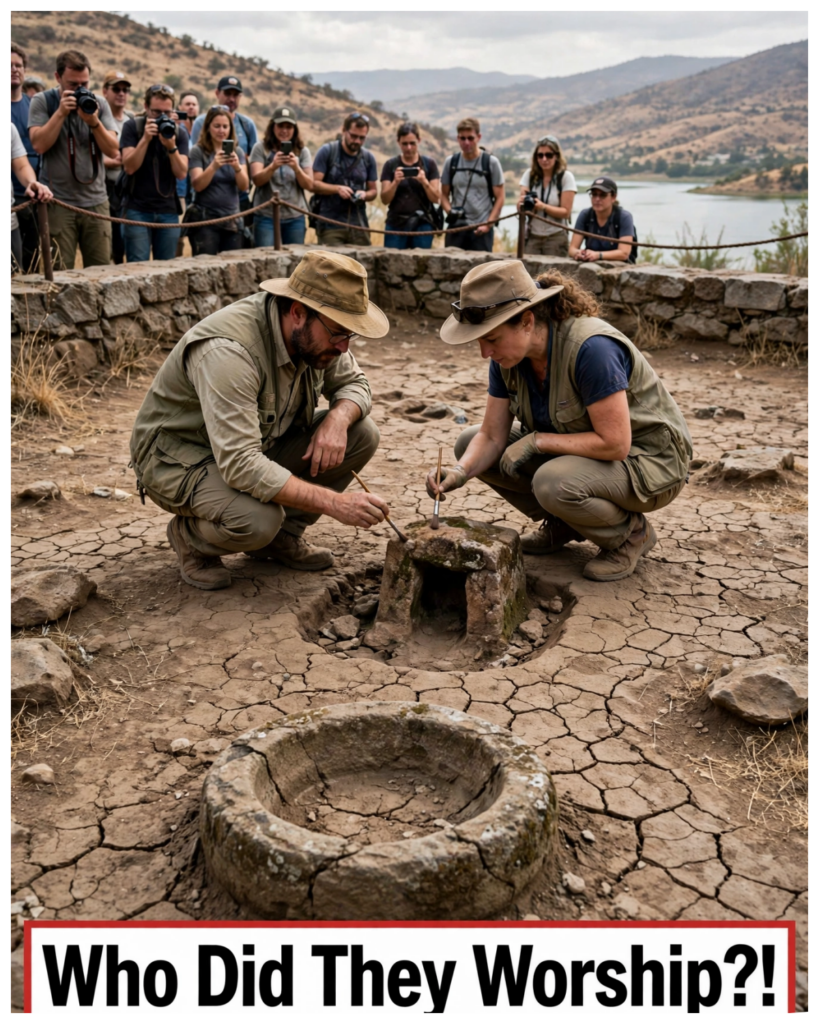
Archaeologists found a 5,000-year-old temple and two altars on a mound in eastern Turkey.
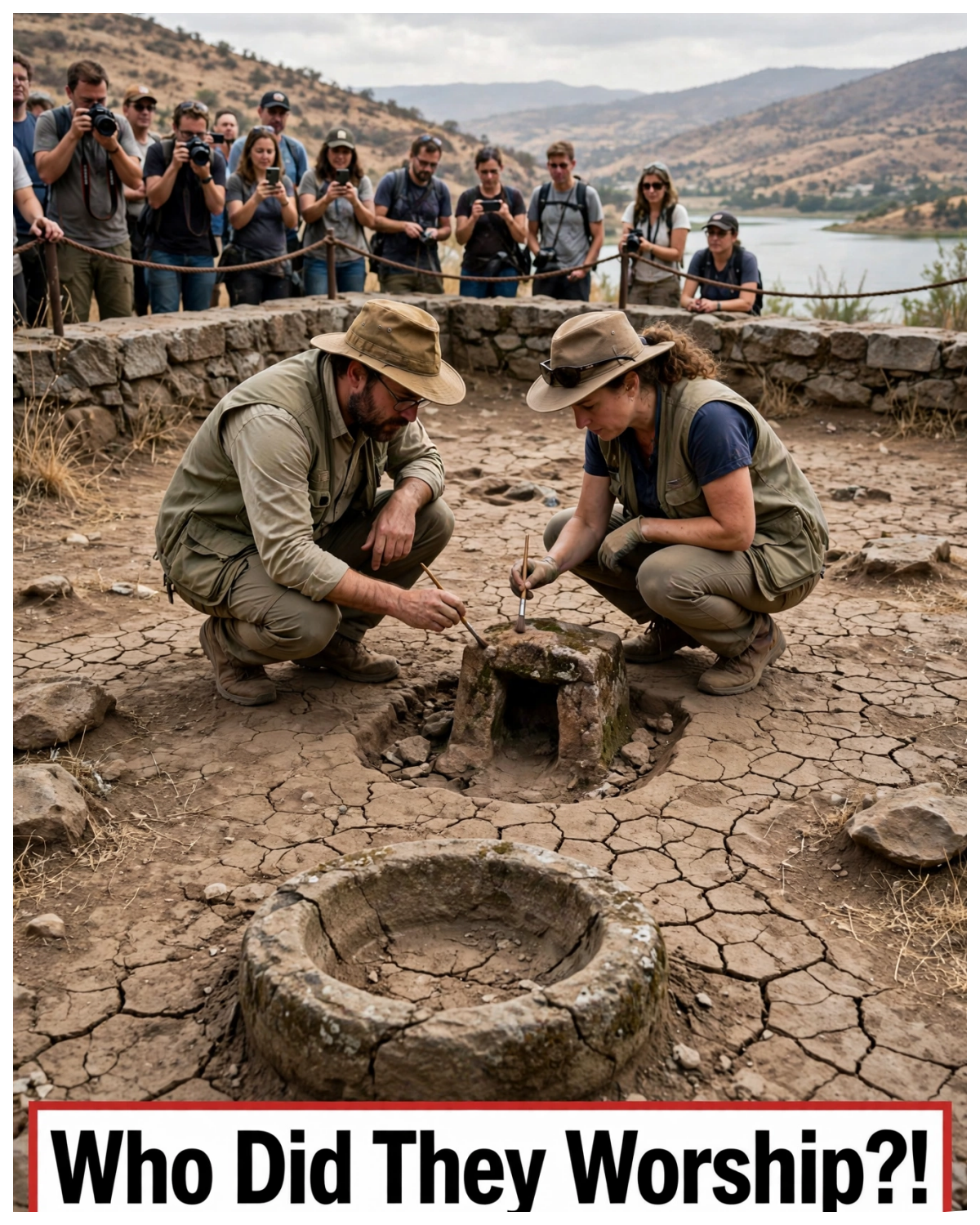
Farther along the Euphrates, the remains of another ancient sanctuary now lie beneath a reservoir.
A team recorded those ruins before the water covered them.
The same river flows into Iraq, past the ruins of ancient Babylon.
And when Babylon appears in Revelation 18, God’s people hear a warning that still speaks to Christians today.
By the end of this video, we’ll answer one question.
What does it mean to come out of Babylon when you live thousands of miles from its [music] ruins?
Our first clue is a pair of altars on a mound in eastern Turkey.
What did their position tell archaeologists about the building around them?
From there, we’ll follow the Euphrates to Babylon.
Imagine walking beside a wall lined with lions made of glazed brick.
One surviving panel is more than 7 ft wide.
Why put a lion that large beside a road?
Then we’ll look at a clay tablet you could hold in one hand.
Its lines record what happened to a king taken far from home.
We’ll see where that record meets the story in scripture.
Finally, we’ll open Revelation 18 and hear a voice calling to God’s people.
Listen for what the voice asks them to leave behind.
Our story begins in a mound near the Euphrates.
Archaeologists found two altars during a dig announced in July 2026.
The same excavation uncovered a temple area estimated to be 5,000 years old.
It was the second temple area reported on that mound.
What had the team found there the year before?
The mound rises about 115 ft above the surrounding ground.
Over time, people built in the same place and [music] left parts of their buildings behind.
Walls, [snorts] floors, and objects remained in the soil.
That is how one mound can preserve traces of people who lived many generations apart.
In July 2025, the Jerusalem Post reported that archaeologists had uncovered a temple area there.
They estimated it was about 6,000 years old.
Parts of its foundations and walls had survived.
The walls were made from bricks that had dried without being fired.
The excavation also brought to light pottery and [music] weights.
The walls marked the outline of the building.
The smaller finds helped show what people used there.
The next season brought the team to another period in the mound’s history.
Emra Caier, the archaeologist in charge of the site, described the finds announced in July 2026.
The team had uncovered a second temple area, its estimated age, placed it about a thousand years after the older one.
That second excavation is where the two altars come in.
The team also uncovered three hearths they interpreted as features used in rituals.
A hearth is simply a place where people kept a fire.
The word tells us what the feature was.
The archaeologists interpretation tells us how they believe it was used.
There is something familiar about the remains.
Families have gathered near hearths for warmth and cooked beside them for generations.
At this site, the team understood the hearths in the setting of a temple area.
The altars and hearths give us a few details about a place where people once worshiped.
Their names and the words they spoke there remain [music] unknown.
The book of Joshua gives us a name from a different account of worship near this river.
It belongs to a man whose son most of us know.
Terara was Abraham’s father.
And Joshua brings his name up while speaking to the people of Israel.
Joshua 24:2 in the King James version says, “And Joshua said unto all the people, thus saith the Lord God of Israel, your fathers dwelt on the other side of the flood in old time, even Terara, the father of Abraham, and the father of Nakor, and they served other gods.”
In this verse, the other side of the flood means across the Euphrates.
Joshua says that Israel’s ancestors once lived beyond that river and served other gods.
He begins with two words that bring the story close to his listeners.
Your fathers.
The altars in eastern Turkey give us a glimpse of ancient worship in the wider region.
Joshua tells us about Terara’s family.
The archaeological reports identify the place where the altars were found.
Scripture gives us the names and the [music] family history Joshua wanted Israel to remember.
Most of us know how much a family can pass down.
You may still remember the words your parents used when they prayed.
You may remember a grandparent who quietly brought a meal to a neighbor.
Some lessons come from what people tell us.
Others come from seeing what they do when someone needs help.
Joshua asks his listeners to [music] think about the faith their families handed down.
He brings that history up because they have a choice about whom they will serve.
The past explains where they came from.
It also gives them something to consider as they make choices of their own.
Paul gives believers a short instruction in 1 Thessalonians 5 21.
Prove all things.
Hold fast that which is good.
Here prove means to test or examine.
Paul asks believers to give careful thought to what they hear.
Then he tells them to hold on to what is good.
You can practice that the next time a friend sends you a story about the Euphrates.
Take a moment to find the original report before you share it with your family.
A date or a place [music] name can change how you understand the story.
The two temple areas in eastern Turkey were uncovered on a mound.
Farther along the Euphrates, another team worked on a mound that would soon be covered by a reservoir.
Their records preserve details of buildings that now lie beneath the water.
What did they find before the reservoir covered the site?
North of [music] Baressic in southeastern Turkey, a mound rose beside the river.
[music] Its name was Tilz Hoyuk.
The mound held the remains of buildings from different periods.
People who lived there had built on ground where others had built before them.
Their work left traces at different levels.
Seen from the riverbank, the mound was a single rise in the ground.
In the excavation, its layers gave the archaeologists a way to tell which walls belonged to which period.
In 1998 and 1999, the excavation team recorded remains from three phases of the early Bronze Age.
Near the center of the mound, the earliest sanctuary stood on a platform made of mudbrick.
Its walls were made of stone.
Inside was a clay altar shaped with horns.
[music] The materials give the building a distinct outline.
Brick formed the raised base, stone enclosed the space, and clay formed the altar within.
The researchers also identified a possible entrance on the east.
If their reading is right, the opening faced the side of the sky where the sun rises.
The remains of another sanctuary belonged to phase 2.
From phase 3, the team recorded a separate building that they interpreted as religious.
The later building showed signs of burning.
The surviving pieces gave the excavators different clues for each period.
In the earliest sanctuary, the altar helped explain how [music] the space may have been used.
In the phase 3 building, traces of burning helped distinguish its remains.
The researchers could describe those features directly.
Identifying the purpose of a room required them to consider what survived and where it lay.
Archaeologists recorded the ancient sanctuaries on dry ground.
Today, their remains lie beneath the Bessic reservoir on the Euphrates.
The water covered most of the mound in the summer of 2000.
Before then, archaeologists could stand beside the exposed walls and examine the ground around them.
A section of stonework could be seen in relation to the platform [music] beneath it.
The altar could be described in relation to the room around it.
Once the water rose, those details passed from view.
The excavation record preserves how the surviving pieces fit together when the site was still accessible.
Far downstream, the Euphrates reaches the land where Babylon stood in what is now Iraq.
Here, scripture gives us another place along the river with a story of its own.
Genesis 10 says, “And the beginning of his kingdom was Babel and Eric [music] and Akad and Kala in the land of Shenar.”
Genesis places Babel in Shenar.
The verse names four cities as part of the beginning of a kingdom.
Babel appears first among them.
The words are brief, but they give that beginning a place among cities in a named land.
By the time we come to Jeremiah, the city is addressed in very different language.
Jeremiah 51:13 says, “Oh, thou that dwellest upon many waters, abundant in treasures, thine end is come, and the measure of thy covetousness.”
Jeremiah describes Babylon through its waters and wealth.
The words evoke a city with water close at hand and riches gathered within it.
In the middle of that picture comes a sentence as plain as it is, solemn.
Thine end is come.
All that wealth could not keep Babylon [music] safe.
Jeremiah gives special weight to the word covetousness.
Alongside all that Babylon had gathered was a desire to possess more.
That desire can begin quietly.
A person may have enough for today and still spend the evening worrying over what tomorrow might take away.
A good harvest, a full pantry, or savings set aside for winter can bring real relief.
Each can be received with gratitude.
The question Jeremiah leaves with a believer is where the heart turns when those ordinary comforts can give no further assurance.
That question can feel close on an evening when the house is quiet and tomorrow is uncertain.
There may be bills on the kitchen table or a decision that has been hard to make.
Faith can begin there with a few honest words to God.
A person can name the worry, give thanks for what has been provided, and ask for wisdom.
There is room in that prayer for practical needs and for the weariness of carrying them.
Trust in the Lord can take the simple form of bringing those cares to him again.
The river gives Babylon a setting we can picture as we hear Jeremiah’s words.
From farther away, the city belongs to a broad river landscape.
From the road, the view would narrow as the walls came closer.
At walking pace, a traveler would see the outline of the entrance take shape against the wall.
The masonry nearest the road would come into clearer view first.
Then the opening itself would begin to fill the space ahead.
A city known for its waters and treasures would now be seen at the height of a person approaching on foot.
What would you have seen as you walked toward Babylon’s gate?
Before you reached Babylon’s gate, you [music] would have passed rows of lions made of glazed brick.
Why did Babylon line the road to its temples with these lions?
The lions stood along the processional way just north of the Ishtar Gate in the time of Nebuchadnezzar II.
This road ran from the inner city through the gate.
From there, it led to the building used for Babylon’s New Year festival.
On the gate itself, the brick work showed bulls and dragons.
Along the road outside the gate, the lions appeared one after another, each with a forpaw stretched forward.
Their bodies rose slightly from the brick surface.
As you walked past, you could see the shape of a shoulder, the curve of a tail, and the space between the paws.
The lions had a purpose.
In Babylon, the lion was associated with Ishtar, and its image was meant to guard the street.
The repeated figures also marked the course of the ceremonial processions.
People coming out of the city for the festival would pass through the gate and follow the road lined with lions.
Glazed brick made those figures stand out.
Stone was scarce in southern Mesopotamia, and builders used molded clay bricks to make raised designs.
By fitting the bricks together, they could give a long stretch of wall, both color and shape.
Robert Coldaway led excavations at Babylon from 1899 to 1917.
A surviving lion panel is now in the Metropolitan Museum of Art in New York.
The museum lists it as object number 31.13.2 and dates it to about 604 to 562 BC.
The panel measures 39 and 1/4 in high and 90 and 3/4 in wide.
That is just over 3 ft high and more than 7 and 1/2 ft across.
From close by, the joints between the bricks are easy to see.
They run through the body of the animal.
From farther back, the shape of the lion comes into view with its body stretched nearly the full width of the panel.
In 2013, the Met held an exhibition centered on the Cyrus cylinder.
The museum’s exhibition page describes the Babylonian lions as part of the backdrop [music] in its ancient neareastern galleries.
There, a visitor could stand near the brick work [music] and see how much wall a single lion occupied.
On the processional way, that same design continued beyond one panel.
A traveler would come alongside the lion’s outstretched paw, pass its body and tail, and then draw near to another lion.
The figures gave the road a rhythm that people could see as they walked.
The lions stretched along the road.
Elsewhere in Babylon, a great stepped [music] tower rose above its base.
It was called etani.
A tower of this kind is known as a ziggurat.
Its broad lower stage supported smaller stages above it, giving the building a rising outline.
Archaeological traces of etamani survive at Babylon.
In 2019, UNESCO’s World Heritage Committee described the tower as a probable inspiration for the story of the Tower of Babel.
That judgment concerns a possible connection between the ancient structure and the story.
In Genesis, the account gives particular attention to what the builders said before they began.
Genesis 11:4 says, “And they said, go to let us build us a city and a tower whose top may reach unto heaven, and let us make us a name, lest we [music] be scattered abroad upon the face of the whole earth.”
The builders speak as a group.
They want a place where they can remain together, and they fear being scattered.
They also want to make a name for themselves.
Their plans reach beyond the walls and the height of the tower.
They want the work [music] to say something about the people who built it.
The chapter lets us hear that desire in their own words while the city and the tower are still things they intend to build.
In Daniel, a king looks upon a city already built.
Daniel 4:30 says, “The king spake and said, is not this great Babylon that I have built for the house of the kingdom by the might of my power and for the honor of my majesty?”
Nebuchadnezzar’s words tell us what he saw when he looked at Babylon.
Its greatness seemed to him a measure of his own power.
Yet even a single lion panel points to the work of many hands.
Clay had to be shaped and bricks had to be fitted.
So the parts of the figure met.
Those workers are absent from the king’s words.
The builders in Genesis wanted to make a name for themselves.
Nebuchadnezzar spoke as though the finished city belonged to his name alone.
A piece of work can carry memories of people who helped us.
A kitchen table might bring to mind the father who showed us how to keep the legs even.
A family business might bring to mind the friend who took the first order when money was tight.
Years later, the table still stands or the business still opens its doors each morning.
The help is easy to overlook because it has become part of everyday life.
For a believer, the memory of those people can become a prayer of thanks to God.
Gratitude gives us a way to take pleasure in the work and honor the people who helped us finish it.
Daniel records what a king admired when he looked at Babylon.
In Revelation, merchants speak about the city after its fall.
They had brought goods there because Babylon had buyers.
Their grief reveals what the city meant to them.
When Babylon falls in Revelation, what loss makes the merchants weep.
Jesus knows how easily our hearts can cling to what we own.
If you want Christ to be your treasure, type Amen.
Take a moment to think about what you treasure.
Then listen to what Babylon’s merchants valued most dearly.
When Babylon fell, its merchants wept because no one bought their goods anymore.
Revelation takes us from a city that could afford costly cargo to the moment its buyers are gone.
The merchants know what they have lost.
Their grief comes down to a single sentence in Revelation 18 11.
And the merchants of the earth shall weep and mourn over her.
For no man buyth their merchandise anymore.
That sentence tells us whose voices we are hearing.
These are people who made their living by selling goods.
Babylon was a place where those goods could be sold.
The loss reaches far beyond the city walls.
A merchant might still have cloth to sell and a ship to carry it.
What he has lost is the market that made the voyage worthwhile.
John gives the cargo names.
There is gold and silver along with precious stones and pearls.
There is fine linen, purple cloth, silk, and scarlet.
The list moves from things a person could wear to materials a craftsman could work.
It names ivory, costly wood, brass, iron, and marble.
Each has a different weight and feel.
A length [music] of silk can fold into a small space.
A piece of marble takes strength to move.
In Babylon, there had been buyers for both.
Then come goods that could fill a room with their scent.
Cinnamon, ointments, and frankincense are among them.
Wine and oil appear alongside fine flour and wheat.
Those are things people could use up and buy.
Again, the list also names cattle, sheep, horses, and chariots.
Its size gives some sense of the trade that depended on Babylon.
A merchant dealing in spices had reason to mourn.
[music] So did someone whose business depended on selling animals or carrying grain.
One city’s fall could touch people whose goods had little else in common.
Near the end of the list, the language changes.
After the horses and chariots come, slaves and souls of men, the words belong to the same list as the pearls, the silk, and the wheat.
That is what makes them so hard to pass over.
A merchant could put a price on a bail of cloth.
Here, human beings had been treated as things that could also be bought and sold.
When the merchants mourn, their recorded complaint is that the buying has stopped.
The passage gives us no words of grief from them for the people who had been sold.
The scene then widens to include those who earned their living at sea.
Ship masters and sailors stand far off.
From that distance they can see smoke rising from the city.
Revelation 18 19 says, “And they cast dust on their heads and cried weeping and wailing, saying, Alas, alas, that great city, wherein were made rich all that had ships in the sea by reason of her costliness.
For in one hour is she made desolate.”
Their words tell us what Babylon looked like from a ship.
It was a place where a cargo could bring a good return.
For the people who carried those goods, the city’s expensive tastes meant work and income.
Now they stand at a distance with dust on their heads.
The chapter measures the change in a phrase they speak through their grief.
In one hour, a city they had counted on was gone before they had time to find somewhere else to turn.
There is a familiar kind of sorrow in losing work that has supported a household.
An empty order book can bring real worry.
So can a business that has to close after years of steady work.
A believer can take that worry to God plainly.
There may be rent to pay, wages to cover, or groceries to buy.
Those needs matter.
Revelation raises another question alongside them.
When money is at stake, how clearly do we see the people whose work makes our comforts possible?
That question can reach into a choice as ordinary as paying [music] someone for a repair.
A price written on a bill may represent an afternoon on a ladder or years spent learning a trade.
The person who did the work has a household and cares of their own.
A Christian can honor that person by paying fairly and keeping a promise.
Those small choices give substance to the way we speak about loving our neighbor.
They also help us see when the desire for a better price begins to crowd out concern for the person doing the work.
The merchants tell us what Babylon meant to the people who profited from it.
Their voices carry across the water as the ships stand far off.
Then Revelation lets another voice be heard.
It speaks to people whom God calls his own and its concern is what they might share in if they stay.
What did God ask his people to leave behind when he called them out of Babylon?
Revelation calls God’s people to leave Babylon so they will have no part in its sins.
Far upstream from that city, the Euphrates brings us to a different story.
In 2009, falling water along the river in western Iraq brought ancient buildings back into view.
A fisherman pointed out a shape that looked like a stone arch.
Muddy water moved against the stone while part of the structure stood above the surface.
The arch was one sign of how much ground the water had covered.
Along the newly exposed shore, archaeologists could examine places they had been unable to reach for years.
[snorts] In March of that year, NPR reporter Lordis Garcia Navaro traveled to Anbar province.
There she spoke with Ratib Ali al- Kubisi, the province’s director of antiquities.
He knew the area from excavations carried out before a dam changed this stretch of the Euphrates.
In the mid 1980s, the dam had flooded land along roughly 120 mi near Iraq’s border with Syria.
By the time of the report, officials said the reservoir had shrunk by about 90% since the previous summer.
Ground that had been reachable only by water was exposed again.
For Al Kubisi, that meant a chance to see what was left of sites [music] his team once knew.
He put the number at 75 or more, that many archaeological sites had been partly excavated before the area was flooded.
The work had covered remains from different periods.
Some went back as far as about 3000 BC.
Others belong to the Roman era.
Al Kubisi [music] said the water had badly damaged some of the remains.
Even so, he hoped to resume the excavations if resources became available.
Returning to a known site meant picking up a piece of unfinished [music] work.
Elsewhere along the shore, the falling water exposed ground the team could examine for the first time.
During the visit, Al Kubai and a colleague knelt by what appeared to be an old stone wall.
Broken pieces of pottery lay around them.
In previous excavations, he said this spot had been buried under soil.
Now enough was exposed for him to offer a first impression.
He thought it might be part of a Roman era irrigation ditch.
The line of stone and the pottery gave him a place to begin.
If his reading was right, those stones had something to do with moving water through the land.
A low stretch of masonry could hold a clue to how people once managed something they needed every day.
There was another view of the same river.
Sahad Naji, the fisherman who pointed out the arch, told NPR that the low water had left fishermen without work.
At that spot, the river was only about 3 or 4 ft deep.
The exposed stone drew [music] the attention of people interested in the past.
For Naji, the water still there was part of earning a living.
His account brings the river back to the scale of a household.
It was a place where people worked and a change at the W’s edge could change what they brought home.
Job also speaks of learning from the world close at hand.
Job 12:8 says, “Or speak to the earth, and it shall teach thee, and the fishes of the sea shall declare unto thee.”
Job speaks as though the earth and its creatures have something to say.
A little later, he speaks of every living thing being in God’s hand.
That gives his words a quiet force.
The ground beneath our feet and the life in the water are familiar enough to pass by every day.
In Job, those ordinary things can turn our thoughts toward the one who holds life.
Psalm 111:2 says, “The works of the Lord are great, sought out of all them that have pleasure therein.”
The psalm brings joy into the act of paying attention.
There is pleasure in looking closely [music] at something and seeing what escaped us before.
There is also pleasure in hearing someone explain a detail they have spent years learning to recognize.
On that shore in Anbar, there was a moment when a patch of stone and clay caught two people’s attention.
They stopped and bent closer.
The psalm gives us a way to carry that kind of patient attention into our own lives.
It can become part of how we give thanks.
In a family home, much of a life can be remembered through ordinary things.
A recipe card may carry a note written in the margin about how much flour to add.
A grandchild might recognize the handwriting and remember the person who taught them to make that dish.
An old measuring tape might bring back the sound of a grandfather working in the garage.
These things can raise questions a family has never thought to ask.
Who taught him that skill?
Why did she make that recipe every Sunday?
Sometimes the answer is still there in the memory of someone sitting at the table.
A family Bible can hold such details too.
A name or a date written on a blank page can give a grandchild a place to start.
A crease beside a familiar passage may bring back the sound of a voice reading it aloud.
Through details like these, a younger person can begin to understand how someone lived [music] and what mattered to them.
For a believer, that is one way faith can be remembered across generations.
It may come back through the words of a verse and the memory of someone who turned to it in a [music] difficult season.
At Anbar, a piece of pottery could prompt a question about the ground where it lay.
A piece of clay with writing on it can give us something more specific to ask.
The marks may preserve a name and the details someone thought worth recording.
The next story takes us back to Babylon where a king taken far from home appears in a record made on clay.
Can a clay tablet tell us what happened to a king taken to Babylon?
A clay tablet records the capture of Jerusalem’s king.
Another preserves his name on a list of oil rations.
What happened to the king of Judah after he was taken to Babylon?
Jehoakin [music] was 18 when he became king in Jerusalem.
He had been on the throne for only 3 months when the Babylonian siege ended his reign.
In 597b [music] C Nebuchadnezzar captured Jerusalem.
2 Kings chapter 24 says Jehoa Chin went out to the Babylonian king with his mother and his officials.
The young king was taken to Babylon.
His mother, his wives, and other members of the royal household were taken into exile as well.
Back in Jerusalem, Nebuchadnezzar put Jehoachchin’s uncle on the throne and changed his name to Zedekiah.
Judah still had a king in Jerusalem.
The young man who had worn the crown was now living in another kingdom.
The first clay record comes from the Babylonian side.
It is part of the Babylonian chronicle and the British Museum lists it as BM21946 D.
J.
Wise men published it in 1956.
The tablet is small enough to rest in an open hand.
Its account of Jerusalem appears on the back among entries arranged by the years of Nebuchadnezzar’s reign.
The scribe records that the Babylonian king besieged the city, captured it, and seized its king.
The date in the entry places the capture in 597b C.
The scribe then records the appointment of a replacement and the removal of tribute to Babylon.
The chronicle refers to the man Nebuchadnezzar seized simply as the city’s king.
His name is absent from that entry.
Second Kings supplies the name and follows him into exile.
To see how his name appears in a Babylonian record, we turn from the chronicle to another group of tablets.
These belong to the daily work of keeping track of supplies.
Their entries are concerned with who received goods and how much was issued.
That is where a man who once ruled in Jerusalem appears again.
Robert Coldaway’s excavation team found ration [music] tablets near Babylon’s Ishtar Gate.
E F Widner published the texts in 1939.
One entry lists oil for Yahukin, King of Judah.
Yahukin is the name scholars identify as Jehoa Chin.
The title is striking.
Zedekiah was ruling in Jerusalem.
Yet a Babylonian clerk still recorded Jehoachin as king of Judah.
The lists also record oil for five sons of the king of Judah.
For the clerk, the task was to account for what had been issued.
For us, those short entries give the exile a personal detail.
We can see a man from Jerusalem named among the people receiving provisions in Babylon.
Scripture carries Jehoachin’s story forward to a change the ration [music] lists do not describe.
Second Kings places his release in the 37th year of his exile.
By then a new king ruled in Babylon.
Scripture calls him evil Meridok.
In the first year of his reign, he released Jehoachin from prison and spoke kindly to him.
He gave Jehoachin a seat above those of the other kings who were with him in Babylon.
The young man who had gone out to meet Nebuchadnezzar in Jerusalem was now an older man.
His years away from home had lasted much longer than his brief reign.
2 Kings 25 29 says, “And changed his prison garments, and he did eat bread continually before him all the days of his life.”
The change of clothes is a small detail in an account that began with the capture of a capital.
It tells us what release meant to the man himself.
He set aside the clothes he had worn in prison.
He could sit before the king and eat bread at his table.
The kindness scripture describes took a form Jehoachin could feel each day.
Verse 30 says, “And his allowance was a continual allowance given him of the king, a daily rate for every day, all the days of his life.”
The oil lists record supplies issued to Jehoachin during his time in Babylon.
Here, scripture [music] describes the daily allowance that followed his release.
The closing words tell us how long that provision lasted.
The kindness reached beyond the first meal.
There would be a place for him when he returned to the table.
Maybe you moved closer to your children and left the church where you knew every face on Sunday morning.
You can still picture the pew where you used to sit.
You remember who sat across the aisle and who stayed a little longer to talk after the service.
At your new church, someone may smile in the lobby and you may still walk into the sanctuary alone.
Even a move you chose can leave you missing the people who knew the shape of your life.
After a few months, you may recognize the woman who always arrives early or the man who holds the door.
Then one Sunday, you see someone standing where you once stood, wondering where to sit.
There is room beside you.
An invitation can be as simple as you are welcome to sit here.
The following Sunday, that person may walk in already knowing one face.
A believer can offer that small kindness with particular warmth after being the one who needed it.
For Jehoachin, Babylon was the city where he spent his years in exile.
Its officials wrote his name in clay, and its king eventually gave him a place at his table.
Centuries later, long after that empire had fallen, John brought the city’s name into Revelation.
His readers would hear it in a book addressed to churches far from the streets Jehoachin knew.
Why would John use Babylon’s name centuries after its empire fell?
If you’re watching this with your family, think about a season when life took you somewhere unexpected.
What helped you keep your faith?
Then share one memory with each other.
Now, let’s hear why John brought Babylon’s name back again.
John brought Babylon’s name back in a vision of a city that ruled over kings.
Could the name of one city help early Christians recognize another?
For the churches that first heard Revelation, that question had a connection to where they lived.
Babylon belonged to the history they knew from scripture.
Rome belonged to the world they lived in.
Those two settings help explain why John’s choice of a name still draws readers in different directions.
In his 2014 commentary, Bible scholar Craig R.
Coaster places revelation among Christian communities in Asia Minor.
John addresses seven churches in that region in what is now western Turkey.
They include churches in Ephesus, Smyrna, and Philadelphia.
Each congregation lived in its own city with its own neighbors and concerns.
They shared a place within the Roman Empire.
When the book speaks of a city with power over kings, its first hearers already know what it means to live under authority exercised [music] from far away.
The city in John’s vision would have given them something to consider about their own world.
In Revelation 17, John sees a woman seated on a beast with seven heads.
An angel explains what John has seen.
Part of that explanation concerns where the woman sits.
Revelation 17:9 says, “And here is the mind which hath wisdom.
The seven heads are seven mountains on which the woman siteth.”
Yale Bible study connects those seven mountains with Rome’s renowned seven hills.
The outline of the city gives the image a familiar setting.
The guide also takes the explanation a step further.
The next verse associates the heads with kings and the guide sees a reference to Roman emperors there.
On this reading, the image brings the place and its rulers together.
The hills suggest the city.
The kings bring its political power into view.
The guide notes that interpreters differ over how to count the emperors.
The association with Rome can be understood without settling the identity of every ruler in the vision.
The chapter ends with another part of the angel’s explanation.
Revelation 17 18 says, “And the woman which thou sawest is that great city which reignth over the kings of the earth.”
The word reignth matters to readers who see Rome here.
It describes the city as exercising authority in the present.
The seven hills suggest a place early Christians could recognize.
The reference to reigning gives them a reason to connect that place with the empire around them.
On this reading, John uses Babylon’s name to say something about Rome.
The old name carries the memory of an empire that held power over God’s people.
John applies it to a city whose power his readers knew firsthand.
Babylon’s name gives those churches a way to hear Rome’s story in light of scripture.
The article on bible.org or gives more weight to the place named in the Old Testament prophecies.
[music] It looks especially at Isaiah 13 and Jeremiah chapters 50 and 51.
Those passages describe a judgment on Babylon that the author understands as sudden and complete.
The city’s ancient conquest, he argues, did not bring that kind of end.
People continued to live there after Babylon passed into other hands.
The article takes that continued habitation as a reason to expect a further fulfillment.
On that reading, the Babylon of Revelation 18 is a future city rebuilt at the ancient site [music] on the Euphrates.
The same article points to a detail in Zechariah 5.
In that vision, a woman representing wickedness is carried in a measuring basket to the land of Shenar.
A house is to be built for it there.
The author treats Shenar as a geographical [music] clue.
He also connects the basket, a measure used for goods with the commerce described in Revelation.
That helps explain why the future Babylon reading keeps returning to the ancient location.
Its case depends on how these earlier passages fit together and how their promises of judgment are understood.
Bible.org or also allows for a role for Rome in its interpretation of Revelation 17.
Its conclusion about a rebuilt Babylon is clearest when it turns to the political and commercial city in chapter [music] 18.
Yale Bible study reads the fall in that chapter as the fall of the city represented in the earlier vision.
It understands John’s use of older prophecies [music] as a way of describing Rome in the language scripture used for earlier empires.
The difference becomes clearer at that point.
One approach hears the words of the prophets applied to Rome.
The other hears those words pointing toward a future event at Babylon itself.
This can become a good conversation in a family where people have read Revelation for years.
One person may hear the seven mountains and think of Rome.
Another may have spent more time with Jeremiah and wonder how his words will be fulfilled.
If someone in your family reads this differently, ask which [music] words led them to that reading.
There is a warmth to that question when it is asked with real interest.
It gives the other person room to finish a thought.
You may hear why a verse has stayed with them or why they connect two passages you usually read apart.
Even if you come away with different answers, you can understand each other more clearly.
That kind of patience belongs in a conversation about scripture.
The angel’s explanation gives us mountains, a woman, and a [music] city with authority over kings.
Elsewhere in Revelation, a river enters the vision under its own name.
The next question [music] begins with the words John uses for that river and what he says happens there.
What does Revelation say when it names the Euphrates [music] directly?
When Revelation names the Euphrates directly, John sees its waters [music] dry up before the kings of the east.
When we hear about falling water levels on the Euphrates, what should we remember about the day and hour?
John names the river in Revelation 16.
When the sixth angel pours out his vial, the river has a specific place in the scene.
Its waters dry up so a way can be prepared for kings coming from the east.
Two chapters later in Revelation 18, the warning calls God’s people out of Babylon.
The warning concerns what they might share in by staying.
The sixth vial concerns what happens at the river and why a way is opened there.
Revelation 16:12 says, “And the sixth angel poured out his vial upon the great river Euphrates, and the water thereof was dried up, that the way of the kings of the east might be prepared.”
The verse gives the drying a purpose.
That purpose is in the words that the way of the kings of the east might be prepared.
The condition of the river matters because of what it allows in the vision.
A report about water levels can tell us about conditions along the Euphrates.
J’s words give us the reason the [music] river dries up in the scene, he describes.
In 2013, Catalin Voss and her [music] colleagues published a study of freshwater storage across a large part of the Middle East.
They used observations from a satellite mission called Grace.
The study ran from January 2003 [music] through December 2009, a period that included drought.
Across those 7 years, the team estimated that the region lost about 144 cubic kilm of freshwater storage.
A cubic kilmter is the volume of a cube, 1 km long, 1 km wide, and 1 km high.
The figure describes the combined loss across the area the researchers studied.
That area covered about 754,000 km.
It took in most of [music] the Tigress basin and the upper and middle parts of the Euphrates basin.
It extended across parts of Turkey, Syria, and Iraq and stretched east into western Iran along the northern edge.
It included all of Armenia and parts of Georgia and Azerbaijan.
Within those boundaries were rivers, lakes, reservoirs, and stores of water underground.
The number belongs to that whole region.
A single stretch of riverbank gives only a small view of what the researchers were studying.
Much of the loss happened below ground.
The team estimated that groundwater accounted for about 91 cm or nearly 2/3 of the total.
Groundwater is held beneath the surface in soil and rock.
A stretch of river may still have water in it while the stores below ground are becoming smaller.
The researchers also estimated changes in surface water, soil moisture, and water held in snow.
Those amounts helped them work out how much of the total decline came from groundwater.
The downward trend in groundwater coincided with the drought that began in 2007.
The study measures a change in how much water a region held over 7 years.
That is useful for understanding [music] what happened to the region’s water supply.
The measurements cannot establish that the event John describes [music] is taking place.
His vision gives the drying of the river a purpose involving the kings of the east.
When the condition of the river raises questions about Christ’s return, Matthew records what Jesus said about its timing.
Matthew 24:36 says, “But of that day and hour knoweth no man, no, not the angels of heaven, but my father only.”
Jesus says that only the father knows the day and hour.
Even the angels in heaven are outside that knowledge.
The answer is [music] brief enough to remember when a report about the Euphrates brings the question back.
Jesus leaves the timing with the father.
Later in the same chapter, he speaks of a servant entrusted with feeding the people of a household.
The master’s return is beyond the servant’s control.
The meal is something the servant can see to.
Jesus describes the faithful servant as the one his master finds carrying out that responsibility.
That picture takes waiting into an ordinary day.
Perhaps someone has an early appointment and you promised to drive.
Keeping that promise means being at their door when you said you would be there.
The person waiting may have spent the night worrying about the appointment.
Seeing your car pull up can ease one part of that worry.
There may be little to say on the way there.
Your presence has already said something they needed to hear.
The same kind of care can begin with a phone call.
A friend may [music] have said they were managing well and you may remember how tired they sounded.
There is time to call again.
[music] and hear how the week has gone.
They may need a ride, help with a meal, or [music] a few minutes to talk.
Faithfulness can take the shape of doing one small thing when it [music] is needed.
While we wait for Christ, we can keep our promises and care for the people who depend on us.
The servant in Matthew has a responsibility for the hours already in front of him.
Jesus brings our attention to those hours, too.
A promise made yesterday may come due this morning.
Someone we know may be waiting for help we can give.
The father knows the hour of Christ’s return.
We have the hours of this day in which to follow him.
If the day and hour remain unknown, what can we obey today?
The day and hour belong to the father, but the choice before us belongs to today.
What does leaving Babylon look like at your own kitchen table?
To answer that, we begin with people for whom leaving Babylon meant an actual journey home.
In 539 BC, Cyrus [music] of Persia conquered Babylon.
The city that had received captives from Judah now answered to a new king.
Ezra begins with a proclamation that opened the way for people to return to Jerusalem.
They were going back to rebuild the house of the Lord.
Ezra goes on to describe neighbors helping with silver, gold, goods, and animals.
Cyrus also brought out vessels that Nebuchadnezzar had taken from the house of the Lord.
Those vessels would travel back with the returning exiles.
The journey had a destination and a purpose.
There was a house to rebuild in Jerusalem.
In 1879, Hormus Rasam excavated a clay cylinder at Babylon.
Lines of writing run around its curved surface.
The object is known today as the Cyrus cylinder.
In 1993, historian Muhammad A.
Dandemay published a study of its inscription.
The text tells how Cyrus presented [music] his capture of Babylon and the work he undertook afterward.
It portrays him as a ruler who restored places of worship and returned displaced people to their settlements.
These are claims made in a royal inscription.
They show how Cyrus wanted his new subjects to understand his rule.
Ezra gives the return a particular destination.
In chapter 1 verse 2, Cyrus says, “Thus saith Cyrus, king of Persia, the Lord God of heaven, hath given me all the kingdoms of the earth, and he hath charged me to build him an house at Jerusalem, which is in Judah.”
The words at Jerusalem give the [music] proclamation a place and a task for the people who went leaving Babylon meant setting out for a city that needed work.
Ezra says that heads of families rose to go along with priests [music] and Levites.
Neighbors helped provide what they would need.
Some people would make the journey.
Others could put something into their hands before they left.
The first steps toward rebuilding began with decisions made among households.
When Revelation calls God’s people out of Babylon, the voice gives another reason for leaving.
Revelation 18:4 says, “And I heard another voice from heaven, saying, Come out of her, my people, that ye be not partakers of her sins, and that ye receive not of her plagues.”
The voice calls them, “My people.”
Then it tells them what they must refuse to share in.
For a believer today, the choice can arise in a familiar room with someone you love sitting across from you.
You may have only a few [music] seconds to decide what you will say.
Suppose your grown son comes over one evening.
He sets a form on the kitchen table and turns it so the signature line faces you.
One answer on the form is false and both of you know it.
He tells you that signing could save his family money.
You know how tight things have been.
You can hear the strain in his voice.
You also know what your name would say at the bottom of that page.
It would say that you stand behind the answers written above it.
You can set the pen down and say, “I love you.
Let’s find another way.”
He may be disappointed.
There may be a long pause before either of you speaks again.
You can stay there with him.
You can hear what he is worried about and offer to help him look for an honest answer.
[music] Setting down the pen is how you refuse to take part in the lie.
Staying at the table is how you show your son that you meant the first three words [music] you said to him.
Sometimes the harder moment comes later.
You may wonder if you could have spoken more gently.
If your voice was sharp, you can call him and say so.
You can ask how he is doing and offer the help you can give.
The answer on the form still needs to be true.
You can hold to that and make supper for him the next time he comes over.
Faithfulness has room for both the difficult word and the welcome that follows it.
That is what coming out of Babylon can look like at your own kitchen table.
The choice may cost [music] you something.
It may take time to work through the problem.
Honestly, the words, “My people still belong in that room.”
[music] Christ knows the pressure you feel when someone you love asks for an answer you cannot give.
You can bring that moment to him, including the part where you are unsure what to say next.
What is one choice you can bring before Jesus in prayer tonight?
Lord Jesus, give us courage to tell the truth when it would be easier to go along.
Give us gentle words when the person asking is someone we love.
Help us see what we can do for them with a clear conscience.
When we have already done wrong, give us the courage to admit it and make it right.
Thank you for hearing us and for giving us hope as we follow you.
Amen.
If this is your prayer tonight, type Jesus [music] is my hope.
When we say Jesus is my hope, we can ask him for the peace he promised.
Sometimes we need that peace in the few seconds before [music] we speak.
We know what we need to do and we are afraid of how it will be received.
Our thoughts run ahead to the conversation we might have tomorrow.
Jesus speaks to the [music] heart in that moment.
John 14 27 says, “Peace [music] I leave with you.
My peace I give unto you.
Not as the world giveth give I unto you.
Let not your heart be troubled, neither let it be afraid.”
Jesus calls it my peace.
He gives it to his disciples as he prepares them for his departure.
He knows they will face things they cannot yet understand.
His words give them something they can hold on to when that time comes.
We [music] can ask him for that same peace before a hard choice.
The prayer may be as brief as Jesus help me speak with patience.
There is time for those few words [music] even when someone is waiting for an answer.
Sometimes the need for peace comes after the choice is made.
The house is quiet and a conversation from earlier in the day keeps coming back.
We hear our own words again.
We wonder what the other person heard in them.
We can tell Jesus what is [music] still troubling us.
If there is something we need to put right, we can ask for help seeing it clearly.
Then we can pray for the person on the other side of that conversation.
They may be lying awake with worries of their own.
At the end of Revelation, John’s prayer turns toward the one he is waiting for.
Revelation 22:20 says, [music] “He which testifith these things saith, Surely I come quickly.
Amen.
Even so, come Lord Jesus.”
Jesus gives the promise.
John answers it with a simple prayer.
Even so, come Lord Jesus.
There is affection in those words.
John wants the Lord himself to come.
That prayer can belong to a person whose week has been full of good things.
[snorts] It can also belong to someone who has barely found the strength to get through the day.
Both can speak [music] the same words.
The hope of the prayer rests in the one who made the promise.
If your family is together, there may be a few quiet seconds before anyone is ready to pray.
Someone may be thinking about a choice they have to make this week.
Someone else may be carrying a worry they have kept to themselves.
Jesus knows what each person brings to these words.
[music] The prayer is short enough for a child to say alongside a grandparent.
Lord Jesus, [music] give us courage to do what is right.
Help us treat others with mercy.
Fill our homes with your peace.
Amen.
Paul gives us words to carry from that prayer into the weak.
Romans chapter 15 verse 13 says, “Now the God of hope fill you with all joy and peace [music] in believing that ye may abound in hope through the power of the Holy Ghost.”
Paul asks God to fill believers with joy and peace.
He prays for hope that grows through the power of the Holy Ghost.
Those words can come back to us on a morning when we are already thinking about everything that needs doing.
They can come back while we wash the breakfast dishes or get ready to leave the house.
A verse heard with family on a quiet evening may become a prayer.
One person says alone on Tuesday.
God of hope is enough to begin.
We can ask him for the joy and peace Paul prayed for right in the middle of the day we have been given.
As this evening ends, let the words of Jesus stay with you.
My peace I give unto you.
And when your heart turns toward the day, you will see him.
There is room for John’s prayer.
Even so, come Lord Jesus.
Prayer begins with the knowledge that we have a father who hears us.
Jesus gave his disciples a simple way to approach [music] him.
In Matthew 6:9, he says, “After this manner, therefore, pray ye, our father, which art in heaven, hallowed be thy name.”
The first words give us a place in the conversation.
We are speaking to our father.
The words that follow remind us whose presence we have entered.
Reverence and closeness belong together here.
You may have learned to pray from someone who always began by bowing their head.
Years later, you may remember how slowly that person spoke the first words.
There was time to remember who was listening.
That same care can shape the way we begin today.
A few moments spent praising God can give our concerns their proper place.
We are bringing them before the one who sees more [music] than we can see.
Before any request is made, there is something to give thanks for.
Through Jesus Christ, we can address God as our father.
That privilege is present on an unremarkable morning as surely as it is in a crowded church on Sunday.
The prayer Jesus taught makes room for both daily bread and the coming of God’s kingdom.
We can speak about the things a household needs.
We can also ask God to shape what our household desires.
Sometimes we know exactly what we want him to change.
A disagreement has gone on too long.
We can name the person and say plainly what has happened.
As we pray, we may remember a part of the story we have been quick to pass over.
Perhaps we made a promise and [music] forgot it.
Perhaps we have carried an offense so long that we now expect the worst from that person.
We can confess our own part before we decide how to address theirs.
Prayer gives us room to ask for forgiveness and to become willing to forgive.
That willingness may come slowly.
An honest request can begin with admitting how hard it is to make.
God already knows the whole matter, including what we have struggled to say.
We can bring him our gratitude with the same honesty.
A kindness received weeks ago may come to mind again.
Giving thanks for it lets us remember the care we received and the person who offered it.
Jesus also made room for prayer where nobody else could hear.
Matthew 6:6 says, “But thou, when thou prayest, enter into thy closet, and when thou hast shut thy door, pray to thy father which is in secret, and thy father which seeth in secret shall reward thee openly.”
The closed door makes a difference.
There is no one in the room whose opinion you have to consider.
A sentence can trail off while you find the words to finish it.
What you say may begin with a concern you have never mentioned to anyone.
There is time to speak about it without rushing.
A regular place for prayer can make it easier to give that time to God.
It might be a chair beside a window before the rest of the house [music] wakes.
What matters is the time you set apart to speak to your father.
The same relationship carries into the rest of the day.
A brief prayer can be offered while you wait for someone to answer the phone.
You may ask for [music] the grace to hear them.
A longer time alone later can give you room to pray for what they told you.
Praying in Jesus’ name means coming to the father through him.
The name we speak at the close of a prayer belongs to the savior we depend on throughout it.
We can ask boldly for help and [music] leave the outcome with God.
Jesus shows us both in Gethsemane.
He speaks openly about what lies ahead and entrusts his will to the father.
That gives us room to be specific when the outcome matters deeply.
A parent may ask God to open a door for a grown child who has lost work.
Weeks may go by without the answer that parent hoped to see.
In that [music] time, there may be an opportunity to listen to what the child wants to do next.
There may be someone who can help with an introduction.
Prayer can [music] make us attentive to those possibilities.
Sometimes another person’s practical kindness gives us reason to thank God.
Sometimes the need remains and we continue to ask.
We can [music] admit how long the waiting feels.
We can ask for wisdom about the next step we can take.
In either case, we can come back to our father with the whole situation because our access to him rests on [music] Christ.
There are also times when the words we have learned are the words we most need.
A person praying beside a hospital bed may begin with the Lord’s Prayer because each line is familiar.
A family offering thanks before a meal may use a plain sentence everyone understands.
The youngest person at the table can name one thing they [music] are thankful for.
Someone older can bring before God a concern the family shares.
A prayer spoken together gives each person a chance to listen [music] and agree.
It can also make visible a need that one person has been carrying quietly.
That need may become the reason somebody offers help when the meal is over.
Whether prayer is shared or private, there are days when finding words takes more effort.
Fatigue can leave good intentions scattered.
Grief can make it hard to finish a thought.
Those are times when the teaching of Romans becomes especially dear.
Paul speaks of the Holy Ghost helping us in [music] our weakness even when we scarcely know what to ask.
Our heavenly father knows the heart that turns toward him.
We can come before him with unfinished thoughts and trust that he understands what we are trying to say.
The Holy Ghost helps us in prayer and directs [music] our attention to Jesus Christ.
Before Jesus went to the cross, he prepared his disciples for the [music] time when he would be taken from their sight.
They had heard him teach and had been able to ask questions in his presence.
Soon they would have to remember what he had told them.
His promise of the comforter gave them reason to trust that they would receive help.
John 14:26 says, “But the comforter, which is the Holy Ghost, [music] whom the Father will send in my name, he shall teach you all things and bring all things to your remembrance, whatsoever I have said unto you.”
Jesus gives that remembrance a clear purpose.
His disciples will have his teaching brought back to mind when they need it.
We can see why that matters in our own reading of scripture.
A passage can seem familiar through years of hearing it.
Then something happens that helps us understand why those words were given.
A teaching about forgiveness may become clearer when we have very good reasons for holding a grudge.
In that moment, remembering what Christ [music] said can guide what we do with the hurt.
Christ also said that the comforter would testify of him.
This helps us understand where the Holy Ghost directs our faith.
The spirit points us to Jesus and helps us receive what the gospel says about him.
At Pentecost, that witness became public.
In Acts chapter 2, Peter stood before the crowd and spoke about Jesus.
He told them that God had raised him and declared him Lord and Christ.
The people who heard Peter felt the weight of what he said.
They asked what they should do.
Peter called them to repent.
The scene shows how close the witness about Jesus is to a change in the people who hear it.
Someone may have heard the gospel many times before facing what it asks of them.
The change can begin when [music] they finally admit their need for mercy.
For another person, hearing about the risen Christ may bring courage after years of fear about what lies ahead.
The message they hear concerns the same Lord.
The spirit helps them recognize why that message matters to the life they are living.
Their response begins to take shape in the choices they make and in the confidence with which they turn to Christ.
Paul gives a close description of the Spirit’s help in Romans 8 26 says, “Likewise, the Spirit also helpeth our infirmities.
For we know not what we should pray for as we ought, but the Spirit itself maketh intercession for us with groanings which cannot be uttered.”
Paul includes himself when he says, “We, even a believer who has prayed for years, can reach a day when the right [music] request is hard to find.”
Perhaps two people we love need different things and we cannot see [music] how both needs could be met.
We can tell God why we feel torn.
There may be a long silence while we sit with what we have said.
The words of Romans give us grounds for [music] trust in that silence.
The spirit helps in the very weakness that brought us there.
A person who has heard this verse often may discover its comfort most clearly on a day when prayer feels difficult.
There is freedom in bringing love and uncertainty before God together.
We can ask him to care for the people we cannot help as much as we would like.
The Spirit’s intercession gives us reason to entrust them to him.
The Spirit’s work can also become visible over time in the way a person treats others.
Paul calls this the fruit of the spirit in Galatians 5.
He names love, joy, peace, longsuffering, [music] gentleness, goodness, faith, meekness, and temperance.
These qualities can be seen in ordinary relationships.
A person who has always rushed to correct others may begin listening until they have finished.
Someone who has kept a careful account of favors may learn to give without bringing up what is owed.
Growth can be slow enough that people around us see it before we do.
An adult daughter may notice that her father asks more questions than he used to.
A sister may find that she can bring up a painful subject and be heard with patience.
Such changes often come through many small occasions to practice what we have heard from Christ.
We may remember a verse and take it seriously enough to alter one response.
The next time we may recognize the same choice a little sooner.
We can thank God for that growth and ask him to continue it.
The people closest to us often have the clearest view of what his work means in daily life.
There is a natural place for prayer and scripture together.
A passage about Jesus can give us a clearer understanding of what we are asking.
A prayer [music] for understanding can help us stay with a passage we might otherwise read quickly.
Someone reading John may come upon Christ’s promise of the comforter and remember a person who is alone.
That person now has a name in the prayer.
There may be a chance later to send a message or make a visit.
Someone else may read Paul’s words about gentleness and see a change they can make at work.
The next conversation becomes a place to begin.
In both cases, [music] the words of scripture have reached into a part of life that matters.
The father hears us there.
The Son gives us the words and example by which we learn to follow him.
The Holy Ghost helps us remember and live what Christ taught.
This is a good reason to return to prayer tomorrow with whatever the day brings.
There will be familiar concerns and needs we [music] did not expect.
We can bring them to our father in Jesus’ name, trusting the spirit to help us as we learn to pray.
The scriptures are among the greatest gifts [music] Heavenly Father has provided to his children.
Through sacred writings, we can discover eternal truths, understand God’s purposes, strengthen our faith, and receive guidance throughout our earthly journey.
Whenever the Lord’s authorized servants speak or write under the influence of the Holy Ghost, their inspired words become scripture.
From the beginning of human history, God has instructed his prophets to preserve records of his revelations, commandments, promises, [music] and dealings with humanity.
These records allow future generations to learn about his divine plan and understand the principles that lead toward righteousness, happiness, and [music] eternal life.
Throughout history, the Lord has commanded his servants to record the words he reveals.
In second Nephi, we learn that God speaks to people throughout the world and commands them to preserve his teachings.
These sacred records will serve as witnesses of his truth and establish the standards by which humanity will be judged.
Members of the Church of Jesus Christ of Latter-day Saints recognize [music] four principal books of scripture.
The Bible, the Book of Mormon, the Doctrine and Covenants, and the Pearl of Great [music] Price.
Together, these sacred volumes are known as the standard works and provide essential spiritual instruction.
The Bible contains sacred [music] writings that reveal God’s relationship with humanity across numerous generations.
Written by inspired prophets and apostles, it preserves accounts beginning with Adam and continuing through the earthly ministry of Jesus Christ [music] and the establishment of his ancient church.
The Bible consists of two major divisions.
The Old Testament and the New Testament.
The Old Testament contains commandments, historical accounts, prophetic revelations, and numerous promises concerning the coming Messiah.
These teachings prepared generations of believers to recognize the promised Savior.
The New Testament describes the birth, ministry, teachings, sacrifice, resurrection, and continuing influence of Jesus Christ upon humanity.
Latter-day Saints [music] believe the Bible is the word of God in so far as it has been translated correctly.
[music] Throughout centuries of transmission, certain important truths were lost or altered.
Through divine inspiration, the prophet Joseph Smith received greater understanding of various biblical passages.
His inspired work, commonly known as the Joseph [music] Smith translation, restored important teachings and clarified passages that had become difficult to understand.
Selected portions of this translation appear in Latter-day Saint editions of the Bible.
These inspired clarifications help readers appreciate the [music] consistency of God’s teachings and recognize the eternal principles revealed through his prophets across different generations.
The Book of Mormon is another sacred testament of Jesus Christ.
It contains records of ancient peoples who inhabited the American continents between approximately 2000 BC and AD 400.
[music] Within its pages are accounts of prophets, civilizations, spiritual experiences, divine revelations, and teachings concerning [music] salvation.
Its central purpose is to testify that Jesus Christ is the son of God and the redeemer of humanity.
One of its most remarkable accounts describes the resurrected [music] savior appearing among the people in the Americas.
During this sacred visitation, Jesus taught his gospel, ministered compassionately, blessed children, and established important principles of righteous disciplehip.
Joseph Smith translated the Book of Mormon into English through the gift and power of God.
He described [music] this sacred record as the most correct book on earth and the keystone of the restored religion.
He taught that individuals could draw nearer to God by faithfully living according to [music] its principles.
President Ezra Taft Benson further explained that the Book of Mormon serves as the foundation of our witness of Jesus Christ, our understanding of doctrine and our personal testimony.
Its teachings provide powerful evidence of the Savior’s divine mission while illuminating essential principles concerning redemption, repentance, faith, and salvation.
President Benson also emphasized that the Book of Mormon was prepared specifically to bless people living in the latter days.
Its teachings help believers recognize spiritual dangers, understand God’s expectations, and prepare faithfully for the second coming of Jesus Christ.
Through sincere and consistent study, individuals can discover spiritual strength [music] that extends beyond intellectual understanding.
The sacred teachings of this book can increase our ability to resist temptation, recognize deception, and remain committed to the covenant path.
As we apply its principles, [music] our relationship with Heavenly Father deepens, our testimony becomes stronger, and our confidence in Jesus Christ continues growing steadily.
The Doctrine and Covenants contains revelations given through [music] prophets during the restoration of the gospel in modern times.
Unlike ancient scriptural records, many of these revelations directly [music] address the circumstances surrounding the establishment and development of the restored church.
In its opening [music] section, the Lord declares that his voice extends throughout the earth, inviting everyone willing to listen to prepare for his coming.