The drill bit bors 20 meters into a boat-shaped ridge in eastern Turkey.
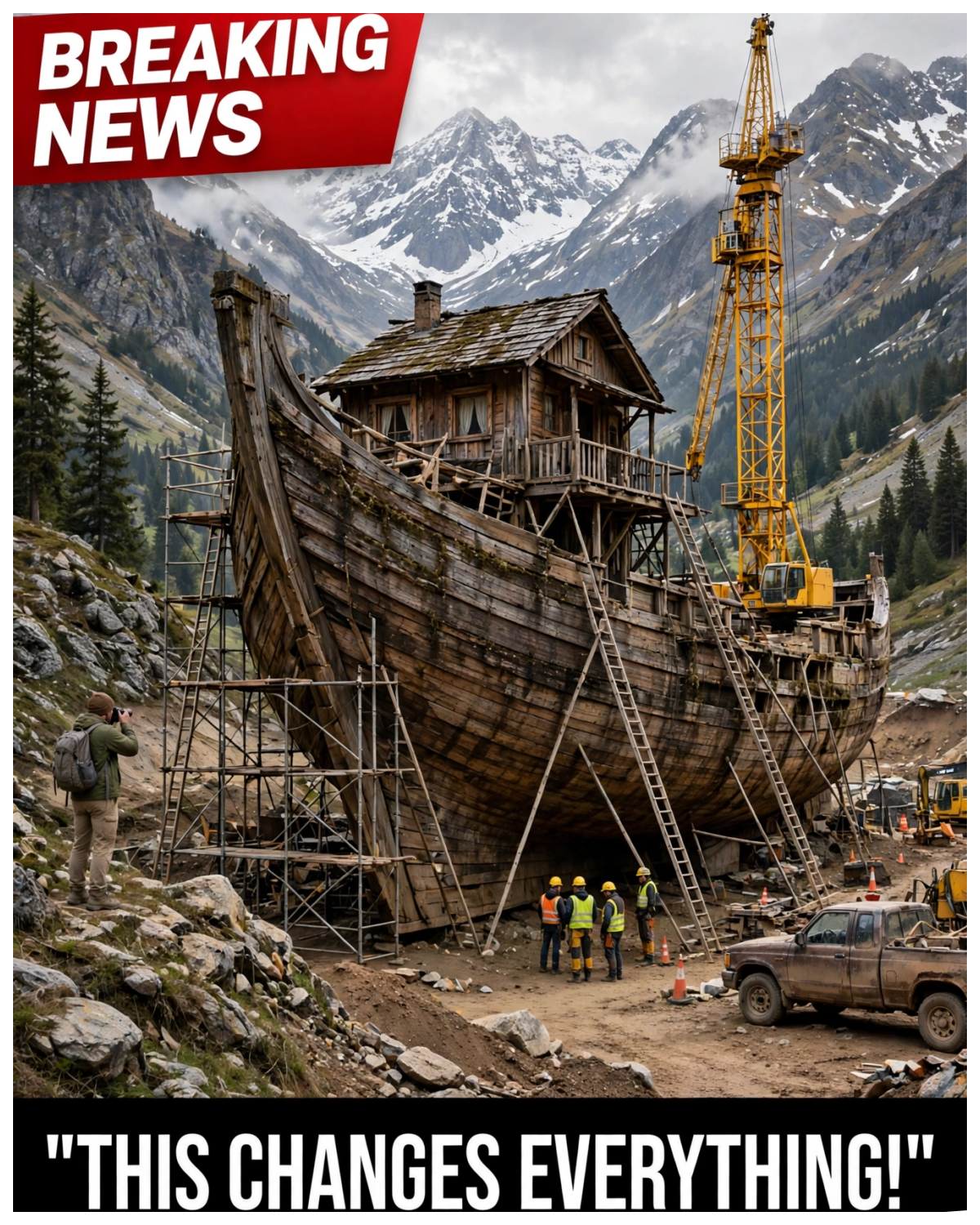
Dust lifts off the slope and then silence.
The team leans over the screens, reading signals they say plain rock should never give.
Three layers, square cornered chambers, and a length that matches Noah’s arc in Genesis to the cubit.
But what waits inside those sealed chambers, the story goes, made half the team refuse to go on because some doors they saw too late should never have been opened.
I’m Ambrose Wild and the drilling part of that story is real.
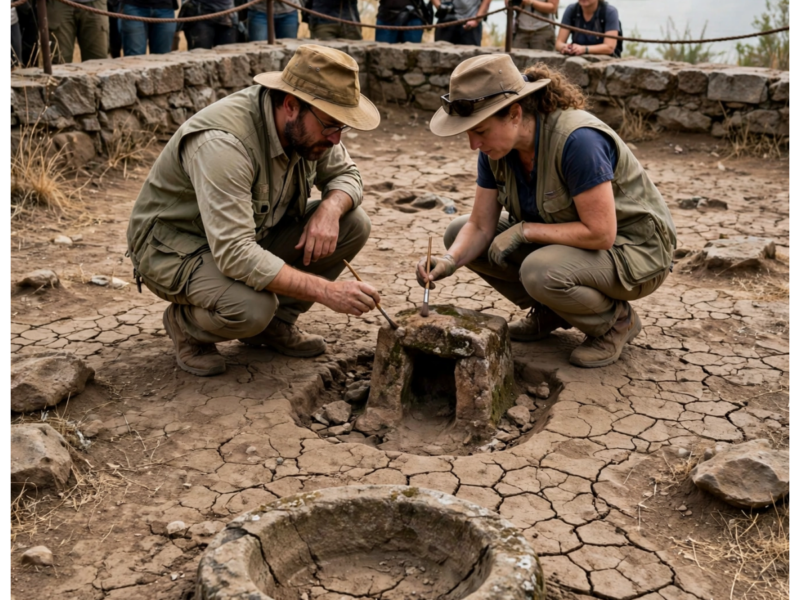
In September 2026, a team working with Noah’s Arc Scans and Turkish University researchers pushed core drills into this formation, reaching about 20 m down in some spots.
That’s roughly twice as deep as the last serious drilling here back in the late 1980s.
They pulled more than 300 soil samples from inside and outside the shape, and those samples are now in the lab being tested for traces of decayed wood and human activity.
The results are expected this winter.
So, after decades of arguing about the surface, someone is finally opening this hill from the inside.
And the questions they’re trying to answer go back thousands of years.
Eastern Turkey near the village of Usuzenili.
The formation sits on the slopes of Mount Tenderek at roughly 2,000 m above sea level about 29 km south of the summit of Mount Ararat and only a few kilome from the Iranian border.
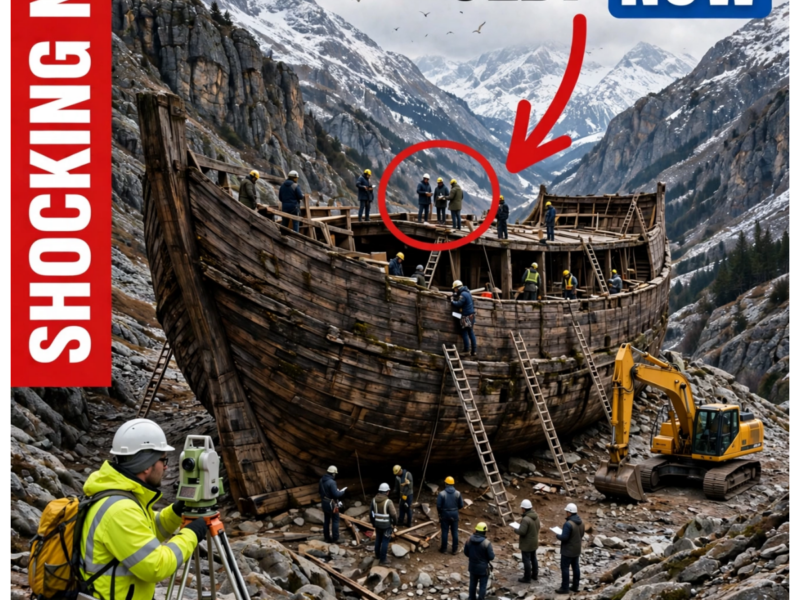
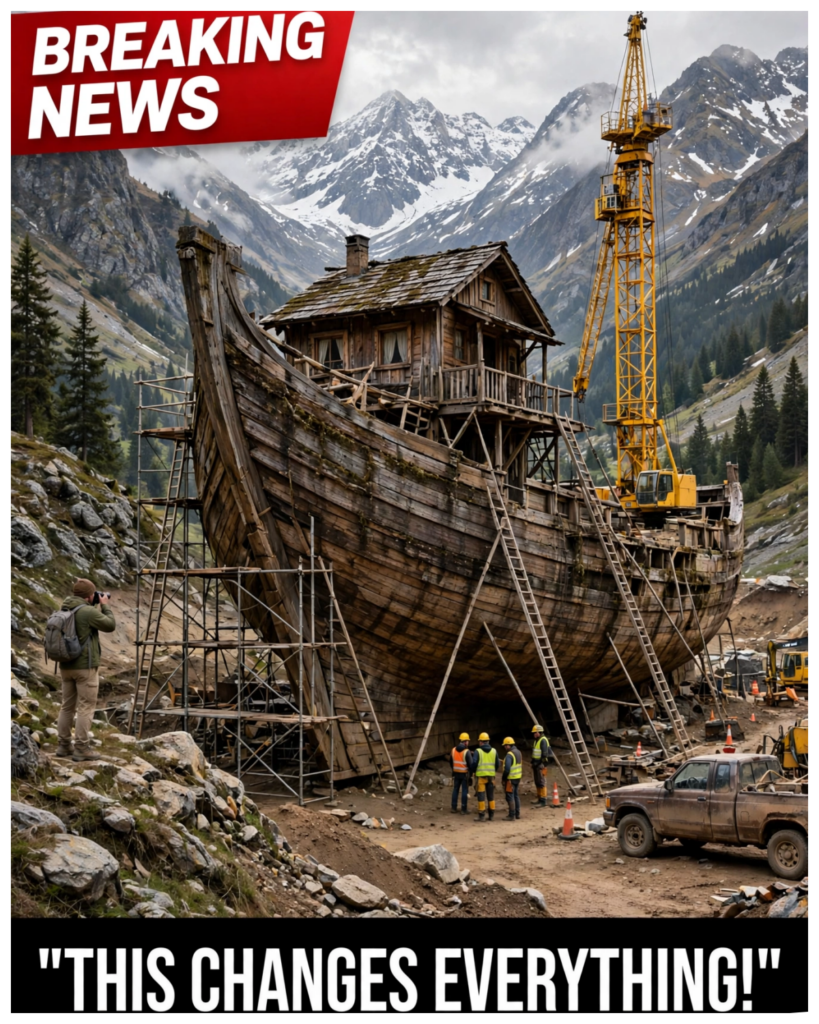
From the air, it looks like the outline of a ship’s hull pressed into the hillside.
It measures about 164 m long.
Here’s a detail that gets missed all the time.
Genesis 8:4 doesn’t say the ark landed on Mount Ararat.
It says the ark rested in the seventh month on the 17th day of the month upon the mountains of Ararat.
Mountains plural.
The next verse adds that the tops of the mountains weren’t seen until the 10th month.
So by the text own timeline, the ark settled nearly 3 months before a single peak showed above the water.
An Ararat is the Hebrew name for an ancient kingdom the Assyrians called Uratu.
A whole highland region, not one peak.
That matters because for more than 150 years, the search has focused on the big mountain itself.
Since 1856, around 200 people from more than 20 countries have claimed to have seen the ark up there in the ice.
Not one of those sightings has produced evidence a scientist could test.
Meanwhile, this ridge sat to the south, mostly ignored.
According to local accounts, it first showed itself in May 1948 when heavy rain and earthquakes stripped away the mud around it and a Kurdish shepherd named Rashett Sarhan noticed the shape.
Then in October 1959, a Turkish army captain, Ilhan Durupinar, was studying aerial photographs from a NATO mapping flight and saw it from above.
The site still carries his name.
A year later, in September 1960, an expedition arrived to settle the matter.
Led by the television evangelist George Vanderman and Arthur Brandenburgger, a specialist in measuring land from aerial photos.
They dug and they used dynamite for 2 days, and they came away with soil and rocks.
Life magazine reported that the surveys revealed no sign that the object was man-made.
Case closed, or so it seemed.
But the measurements wouldn’t leave people alone.
Genesis 6:15 says, “The length of the ark shall be 300 cubits, the breadth of it 50 cubits, and the height of it 30 cubits.”
Use the Royal Egyptian cubit of about 52.4 cm, and 300 cubits comes to about 157 m or roughly 515 ft.
The ridge comes in at 164 m.
And Andrew Jones, whose team you’ll meet in a moment, says the boat shape works out to exactly 300 of those Royal Cubits.
Close enough that for some it stopped feeling like a coincidence.
In 1977, an American amateur archaeologist named Ron Wyatt started promoting the site.
And in 1985, he came back with David Fold, a salvage expert, and the geoysicist John Balgardner.
They brought ground penetrating radar.
Fold reported a regular internal pattern, lines and spaces repeating at intervals which he believed was the framework of a buried ship.
He made nine trips to the site and in 1988 he published a whole book arguing it was the ark.
Then the story takes a turn even Fold didn’t see coming.
Within a few years he had changed his mind.
In 1996, he and the geologist Lawrence Collins published a paper in the Journal of Geoscience Education, calling the site a common geological structure.
Their microscope work showed the supposed iron bracket was weathered volcanic minerals.
The so-called timbers were andite and bassalt, and Collins said no fossilized wood or even traces of carbon had ever been found.
And in 1997, testifying under oath in an Australian court, Fel dismissed the ark claim in the bluntest words he could find.
And yet, according to his biographer, June Doors, he went back to believing he had found the ark before he died.
I mean, think about that for a second.
The man who measured this ridge then disowned it in court, couldn’t let it go.
Neither could anyone else.
In 2019, Jones and his California-based group, Noah’s Arc Scans, began surveying the site with modern ground penetrating radar and electrical resistivity, a method that maps how electricity moves through the ground.
Their scans, Jones says, show three distinct layers, and they show what looks like a central passage with side chambers and right angled corners running down to around 30 ft below the surface.
Three layers.
Now go back to Genesis 6:1 16 with lower second and third stories shalt thou make it.
For the people on that scene, that verse is the reason they keep coming back.
They also tested the soil.
Samples from inside the formation held about three times more organic matter than the ground outside it with 38% more potassium and a different acidity.
The team says that’s the kind of signature decayed wood would leave behind.
Remote sensing also picked up regular rectangular patterns about 6.7 m down.
Then came the university work.
In 2023, a joint team from Istanbul Technical University, Agri Ibrahim Sachen University and Andrews University in the United States reported clay-like materials, marine sediments, and the tiny fossils of sea creatures like mollisks in the samples on a hillside nearly 2,000 m up.
Their dating pointed to human activity in the area between about 5,500 and 3000 BC.
And to their credit, they didn’t oversell it.
Professor Far Ka, the vice director at Agri, said the results aren’t enough to show evidence of Noah’s ark, and that they were still a long way off.
There’s more lying around the site, too.
In the village of Arzap, not far away, stands several huge stones, each with a hole carved through near the top.
Fold believed they were drogue stones, heavy anchors that ancient ships dragged behind them to stay steady in a storm.
Geologists say they’re local volcanic rock.
And some think they’re simply grave markers.
But stand next to one and look at that hole and you can see why the idea stuck.
So that’s the record.
A ship-shaped ridge, a measurement that fits, radar patterns, unusual soil, and a long line of experts saying it’s a block of limestone that slid downhill and was shaped by erosion.
A Turkish geological engineer, Ezref at published that exact case in June 2025.
And mainstream scholars go further treating ark hunting in general as pseudoarchchaeology because after all these expeditions no scientific evidence of the ark has emerged.
But the version of Durupinar that spread far beyond the scientific papers goes much further and it’s the version that explains why some people say this site should have been left alone.
The story goes like this.
During a drone flight over the site in the summer of 2023, an operator spotted a narrow gap on the northeast flank, barely a meter wide, perhaps uncovered by erosion or a tremor.
A camera sent inside showed a passage with straight walls, sharp corners, and a coating of black pitch.
The team went in.
Within 72 hours, three of them had asked to be reassigned.
One left a written statement with a single sentence in it.
Some things are meant to stay buried.
The passage ran 47 m before opening into a chamber roughly 8 m x 12 with wooden beams still coated in that black pitch and marks on the ceiling and floor that suggested a level above and a level below.
The archaeologist in charge, a man the account calls Dr.
Ourk, wrote in his field notes that the smell inside was ancient, organic, and unlike anything I’ve encountered.
Further in, along a narrow corridor, they found words scratched into the pitch.
A linguist worked on them for 18 hours, and the first line she could read was a warning.
Do not proceed beyond the covered wood.
The team argued for hours about what to do.
Some wanted to turn back right there.
In the end, the ones who stayed went on.
What they found next is the part that still doesn’t make sense.
A second chamber, far bigger, lined with wooden pens of every size.
Some with gaps so narrow only the smallest animals could have been kept inside.
It sounds a lot like Genesis 7, where clean beasts go in by sevens and the unclean by two to keep seed alive upon the face of all the earth.
Clay jars along the back wall held traces of wheat and barley.
And underfallen debris lay a small bronze object, green with age, about 20 cm long, with workmanship that seemed far too advanced for where it was found.
Then a researcher’s radiation meter started ticking.
Low, steady readings coming from one direction.
Behind the far wall, the radar showed a third chamber sealed off from everything else.
By now, the account says half the team wanted nothing more to do with what lay beyond it.
Dr.
Osurk wanted specialists brought in before anyone touched that wall.
2 days later, on a Tuesday night, while only a skeleton crew was on site, someone cut through it.
Anyway, what they’re said to have found was a small square room reinforced with layer upon layer of pitch.
The floor was covered with metal containers, bronze and copper, and something that looked like gold, filled with bars, coins, and jewelry.
Against the back wall stood a stone platform.
And on it, laid out with care, were bones that matched no animal anyone could name.
Compressed ribs, vertebrae that twisted in a slight spiral, a jaw with alternating rows of cutting and grinding teeth.
Think about what that treasure would mean.
Gold sealed in the dark for thousands of years, useless to anyone, while the people who gathered it are long gone.
Jesus put it plainly in Matthew 6.
Lay not up for yourselves treasures upon earth, where moth and rust doth corrupt, and where thieves break through and steal.
And if the account is right, someone did break through to get at it.
Every wall carried the same three lines over and over.
Bind the corrupted, seal them for the fire.
Do not open until the day of judgment.
Before we go further, it’s worth being clear about the record.
None of this appears in any published finding.
This year’s team is still trying to see inside by drilling narrow holes and planning to lower a small robot called Gopher down them.
Dr.
Robert Ross of LRO University designed that robot, adapting it from machines built to explore wombat and armadillo burrows.
So, the sealed room, the bones, and the treasure have never been shown to anyone outside the story itself.
But here’s the part worth slowing down for.
The story didn’t come out of nowhere.
Its strangest details lean on real words in Genesis.
Genesis 6:4, there were giants in the earth in those days, and also after that, when the sons of God came in unto the daughters of men.
The Hebrew word there is nephilim.
And a few verses later, the earth also was corrupt before God, and the earth was filled with violence.
Bind the corrupted.
You can hear where that phrase comes from.
Then there’s the pitch.
In Genesis 6:14, Noah is told to pitch it within and without with pitch.
The Hebrew word for that pitch is kofheer.
It comes from the root kafa, which means to cover.
And the same word kofhe shows up in other books of the Bible meaning a ransom, the price paid so that a life is spared like the half shekele in Exodus 30 that every man paid so that no plague would come on the people.
So the coating on the ark kept the water out.
And in the language of the Bible itself, it was also a covering that stood between life and judgment.
And people noticed that covering a very long time ago.
The Jewish historian Josephus quotes an earlier writer named Barosus.
It is said there is still some part of this ship in Armenia and he adds that people would carry off pieces of the bumen and use them chiefly as amulets for the averting of mischiefs.
Josephus also quotes Nicolas of Damascus who wrote of a great mountain in Armenia called Baris where the remains of the timber were a great while preserved.
Even in the ancient world, people were chipping at the ark’s pitch and keeping it as protection against evil.
They weren’t the only ones telling a flood story either.
Mesopotamia had its own versions known from manuscripts going back to the second millennium BC, the Atrahasis epic, and the epic of Gilgamesh, where a survivor named Utnapishim builds a great boat.
What sets Genesis apart is its reason.
The problem is violence and corruption, and the story ends with God making a covenant with every living creature.
That’s the backdrop for the rest of the account.
In the story, the remains in the pens were tested for DNA and came back with the same result again and again.
No match found.
Deep scratches ran along one corridor wall, and the direction of the marks showed they’d been made from the inside, as if something had tried to claw its way out.
And in a hidden recess in the sealed chamber sat a set of rolled scrolls made of treated animal skin.
For comparison, the Dead Sea Scrolls are only about 2,000 years old, and they needed very particular conditions to survive at all.
Scrolls from Noah’s day would be at least twice that age.
Imaging is said to have pulled a few lines from their outer layers.
Before the water came, we recorded the names.
The seals must hold until the appointed time and then according to team members the scanning was halted, equipment was reassigned and access to the chamber was narrowed to a small circle of officials.
Some tellers say the Turkish government stepped in to bury the findings.
That’s a serious claim and there’s no document behind it.
The official picture looks different.
Back in 2011, Turkey’s parliament put research on the ark question under a board of five professors from Agri Ibrahim Seen University and a university regulation followed in October 2021.
The team drilling today says it works with government approval and with oversight from local universities and its own fundraising campaign aimed for $600,000, a reminder that most of what slows work at Durupinar is money, weather, and an active landslide zone.
So what did the drill actually hit this autumn?
The project director is Dr.
Sena Atilla of Civas Kumhuret University and the radar survey was led by an engineer named Kostro Baktar.
The team says its radar has traced what may be a hallway running more than 250 ft.
According to Jones, the cores didn’t run into one consistent block of solid rock.
They went mostly through soil with boulders in some spots.
Pottery found beside the formation, not inside it, has been tentatively dated from the copper age through the Iron Age.
And there are two ancient settlements nearby.
One of them never excavated.
Jones admits some of his friends who don’t believe think he’s looking for Santa’s house.
He thinks the drilling results should give skeptics pause.
He also says we still have the lab work to do.
And because the ridge sits in an active landslide zone, his rule for the dig is simple.
Preservation comes first.
Still, whether you take the sealed room as fact or as a parable, the warning it carries is old and it’s biblical.
God told Noah, “The end of all flesh is come before me.”
And Jesus himself pointed back to that moment.
But as the days of Noah were, so shall also the coming of the Son of Man be.
Then he described those days.
They were eating and drinking, marrying and giving in marriage, until the day that Noah entered into the ark, and knew not until the flood came and took them all away.
Notice what he doesn’t say.
He doesn’t describe a world in open chaos.
He describes ordinary life, dinner, weddings, plans for next year.
Noah’s neighbors had every chance to hear the warning, and they kept right on with their week.
Noah did something else.
Hebrews 11:7 says, “By faith, Noah, being warned of God of things not seen as yet, moved with fear, prepared an ark to the saving of his house.”
He didn’t wait for proof.
He didn’t need a core sample.
He was warned about something no one had ever seen.
And he started building.
The same verse says that by building it he condemned the world and became heir of the righteousness which is by faith.
That’s worth sitting with because the debate over durupanar can turn into the opposite.
Every new scan becomes a reason to wait for the next one.
And Jesus told his followers plainly what to do instead.
Luke 21:36.
Watch ye therefore and pray always that you may be accounted worthy to escape all these things that shall come to pass and to stand before the Son of Man.
The account has one last chapter.
On a Sunday afternoon, it says, “With access about to be cut off, the team ran one final scan on the deepest chamber.
At 5:12 in the afternoon, the thermal camera showed a cold spot, then a warm one pulsing at steady intervals.
By 5:34, the radar showed slight movement.
At 6:23, a dim shape seemed to drift toward the wall nearest the team.
At 6:31, the power failed, and by morning, the site was fenced off.
Whatever was in there, the story ends, is still moving.
It’s a chilling ending.
But Genesis tells a very different story about a door.
Go back to Genesis 7:16, the moment the animals were inside.
And they that went in went in male and female of all flesh as God had commanded him.
And the Lord shut him in.
[clears throat] Noah didn’t seal that door.
God did.
The one door the Bible says was sealed on the ark was closed by God’s own hand.
And he closed it to keep life safe inside while the judgment passed over.
That’s the answer to every story about doors that should never have been opened.
In Revelation chapter 3, Jesus calls himself the one that openeth and no man shutth and shutth and no man openeth.
And to a small church that had kept his word, he says, “Behold, I have set before thee an open door, and no man can shut it.”
The ark was a covering, a ransom, a way through judgment for anyone who stepped inside before the door closed.
As of this autumn, more than 300 samples from Durupanar are sitting in a lab, and the freezing ground has halted the drilling until next year.
The researchers expect to keep weighing the evidence into 2027.
Maybe they’ll find decayed wood.
Maybe they’ll find a landslide.
This story isn’t over, but the warning Jesus gave about the days of Noah doesn’t wait on a lab result.
And right now, that door is still open.
I’m Ambrose Wild and if you want more stories like this one where ancient scripture meets what’s being dug out of the ground right now, there are plenty more on the way.