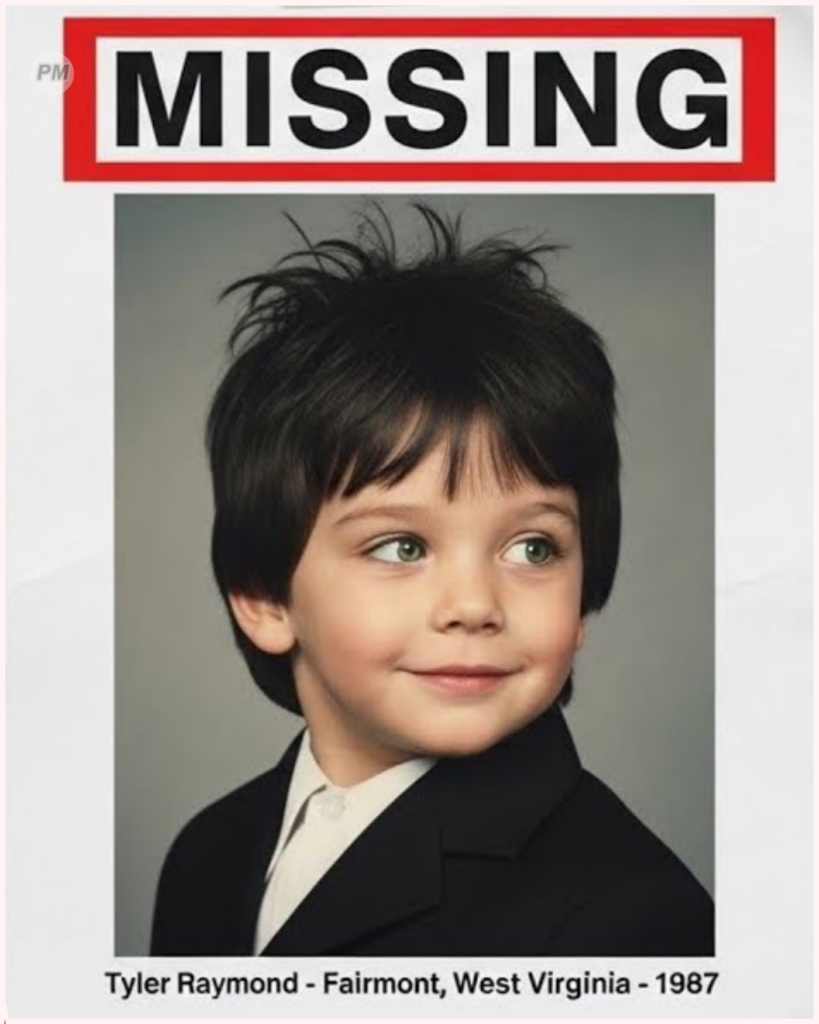
Cadaver dogs had searched the area extensively
Cadaver dogs had searched the area extensively. If Walter had hidden the body elsewhere, where?
His house had been searched. His personal vehicle had been searched. The hospital van had been returned to service after Tyler’s disappearance, used by other employees, eventually sold.
If there had been evidence in that van, it was long gone. Unless Tyler Raymond hadn’t died that day.
Roberta felt a chill as the alternative scenario formed in her mind. What if Walter had taken Tyler somewhere and kept him alive?
What if the $8,000 withdrawn in early February had been used to prepare a location, a basement, a cabin, somewhere isolated?
What if Walter had held Tyler captive, and if so, for how long? She pulled every property record associated with Walter Kinsloving in West Virginia and Ohio from 1987 to present.
His house on Adams Street in Fairmont had been sold in March 1987. His house in Columbus had been purchased in March 1987.
He’d owned that Columbus house until 2019 when he downsized to the retirement community after his wife’s death.
But, there was another property. A small cabin in Hocking County, Ohio, purchased in December 1986, 2 months before Tyler disappeared.
The purchase price was $9,000, cash transaction. Roberta felt her hands shake as she pulled the details.
The cabin was located in a heavily forested area near Hocking Hills State Park, 30 miles southeast of Columbus.
Remote, isolated, accessible only by a dirt road. Walter Kinsloving had owned that cabin until 2005 when he’d sold it to a private buyer.
Roberta immediately contacted the Hocking County Sheriff’s Office. “I need to locate a property and possibly search it in connection with a cold case investigation,” she said.
The sheriff, a man named Tom Bradshaw, was cooperative. “What’s the address?” Roberta provided it.
Bradshaw pulled up county records. “That property’s had several owners since 2005. Current owner is a couple from Cincinnati.
They use it as a vacation rental. Place is pretty rustic, just a one-room cabin with an outhouse.”
“I need to visit it. Can you arrange access?” “I’ll contact the owners. What are we looking for?”
“Evidence of a child being held there in 1987.” Bradshaw was quiet for a moment.
“36 years ago, any physical evidence is long gone.” “I know, but I need to see it anyway.”
Two days later, Roberta drove to Hocking County with Sheriff Bradshaw and a forensic team.
The cabin was exactly as described, a small wooden structure, barely 500 square feet, nestled in dense woods.
The current owners had renovated it extensively. New floors, new walls, modernized interior. “The original structure is mostly intact,” the owner said, “but we gutted the inside, replaced everything.”
Roberta walked through the space trying to imagine it as it had been in 1987.
One room, a wood stove, no running water originally. The outhouse was still functional in the back.
It was the kind of place where someone could hide for weeks without being discovered.
The forensic team searched anyway, checking for any traces that might have survived the renovations.
They found nothing conclusive. The renovations had eliminated any potential biological evidence. But, in the small crawl space beneath the cabin, accessible through a hatch in the floor, one of the technicians found something.
A child’s shoe. Small, deteriorated, partially buried in dirt. Blue canvas with white rubber trim.
“Bag it,” Roberta said, her voice tight. The shoe was sent to the state forensics lab.
DNA analysis was attempted, but the material was too degraded. However, the manufacturer was identified, Stride Rite, a common children’s shoe brand.
The style matched shoes produced in the early 1980s. Roberta pulled Tyler Raymond’s missing person report.
Among the details, Tyler had been wearing blue Stride Rite sneakers on the day he disappeared.
It wasn’t conclusive. Thousands of children wore Stride Rite shoes. But, finding a child’s shoe from the 1980s in a cabin owned by Walter Kinsloving in 1987 was beyond coincidence.
Roberta now had enough to justify bringing Walter Kinsloving in for questioning. On October 12th, 2024, two officers from the Worthington, Ohio, Police Department arrived at the Sunrise Retirement Community and asked to speak with Walter Kinsloving.
He was in the common room playing checkers with another resident when they approached. “Mr.
Kinsloving, we need you to come with us to answer some questions about an old case,” one officer said.
Walter looked up, his face pale. “What case?” “We can discuss it at the station.”
Walter didn’t resist. He stood slowly. He was 71 now. His dark hair long since turned gray.
His body thickened with age, and followed the officers to their vehicle. At the Worthington Police Department, Roberta Chen was waiting.
“Mr. Kinsloving, my name is Detective Roberta Chen. I’m investigating the disappearance of Tyler Raymond in Fairmont, West Virginia, in 1987.
You were interviewed as a witness at that time.” “I remember,” Walter said quietly. “I told them everything I knew.”
“I have some new questions,” Roberta said, “and I need to advise you that you have the right to an attorney.”
Walter declined the attorney. “I have nothing to hide.” “Let’s start with your finances in early 1987.
On February 2nd, you withdrew $8,000 cash from your savings account. What was that money for?”
Walter hesitated. “I don’t remember. That was almost 40 years ago.” “You withdrew $8,000 and you don’t remember why?”
“Maybe I was buying something, a car, maybe.” “You already owned a car, and according to records, you didn’t purchase another vehicle until you moved to Columbus in March.”
Walter was silent. “You also sold your house in Fairmont well below market value. Why the rush?”
“I wanted a fresh start. People in Fairmont suspected me of taking that boy. I couldn’t live under that cloud.”
“Understandable,” Roberta said, “except you’d already been cleared by the police. You passed a polygraph.”
“Polygraphs don’t change how people treat you.” Roberta placed a photograph on the table, the deteriorated shoe found in the cabin.
“Do you recognize this?” Walter looked at it, his expression unreadable. Should I? It was found in a cabin in Hocking County, Ohio.
A cabin you purchased in December 1986, two months before Tyler Raymond disappeared. Walter’s hands, resting on the table, began to tremble slightly.
Mr. Kinsloving, I have a witness who saw you leave Raymond’s General Store on February 15th, 1987, carrying something wrapped in a blanket.
The witness was a child at the time and was frightened into silence, but she’s an adult now and willing to testify.
I have financial records showing suspicious transactions around the time of the disappearance. I have evidence you owned a remote cabin where a child’s shoe from the 1980s was found.
And I have access to a white van, the hospital maintenance van you had keys to, that matches the description of the vehicle the witness saw.
Walter was breathing heavily now. “This is your opportunity to tell the truth,” Roberta said.
“What happened to Tyler Raymond?” The silence stretched for nearly a minute. Then Walter Kinsloving closed his eyes.
“I didn’t mean to hurt him,” he whispered. Walter Kinsloving’s confession took 3 hours to complete.
Roberta recorded every word. It had started, Walter explained, with his own unbearable grief. In November 1986, his wife, Linda, had suffered a late-term miscarriage, their third.
The doctors said she couldn’t have children. Walter had wanted to be a father desperately.
The loss destroyed something inside him. “I started thinking about Tyler,” Walter said, his voice hollow.
“He looked like what I imagined my son would look like, dark hair, green eyes, and Deborah was struggling as a single mother.
I thought I convinced myself that I could give Tyler a better life, that I could be the father he needed.”
The plan had formed slowly. Walter purchased the cabin in Hocking County in December, paying cash from savings.
He prepared it, bought a cot, stocked it with food, created a space where a child could live.
He withdrew $8,000 in February to ensure he had enough to disappear if necessary. On February 15th, he went to Raymond’s General Store, knowing Deborah and Tyler would be there.
Sunday afternoon shopping was their routine. He waited until the perfect moment. Deborah distracted, other customers not watching the front, Tyler playing alone.
“I crouched down next to him,” Walter said. “I told him his mom needed help getting something from my van.
He trusted me. He took my hand.” Walter had opened the front door slowly, minimizing the bell sound, and walked Tyler to the hospital van parked directly outside.
He’d placed the boy in the back, covered him with a blanket, and returned to the store within 90 seconds.
When Deborah started calling for Tyler, Walter had stood with everyone else, pretending to search, pretending to be concerned.
“What happened after you left the store?” Roberta asked. “I stayed until the police arrived, answered their questions, went home.
Around midnight, when I was sure the roads would be quiet, I drove to the hospital, got the van, and drove to the cabin.
Tyler was still in the back. He’d cried himself to sleep.” Walter had kept Tyler at the cabin for 3 weeks.
He’d told the boy that his mother had asked Walter to take care of him for a while, that she was sick and needed time to get better.
Tyler had believed him because 4-year-olds believe adults, especially adults they trust. “I thought I could do it,” Walter said.
“I thought I could raise him as my own. I brought toys, books, food. I visited every few days.
I told my wife I was working overtime, but Tyler kept asking for his mother.
He cried every night, and I realized I realized I’d made a terrible mistake.” “What did you do?”
Walter’s voice broke. “I tried to take him back. On March 7th, late at night, I drove him back to Fairmont.
I was going to leave him somewhere he’d be found, outside a church, maybe, or a police station, but he’d seen my face.
He knew my name. If I returned him, he’d tell people I took him. I’d go to prison.”
Roberta felt sick. “So, you killed him?” “No.” Walter shook his head violently. “No, I couldn’t.
I sat in the van outside Fairmont, trying to decide what to do, and Tyler was sleeping in the back.
I drove to a rest stop on Interstate 77 near the Virginia border. There were truckers there.
I waited until I saw a couple, man and woman in their 50s, getting coffee.
They looked kind. I wrote a note saying Tyler was an orphan, that his mother had died, that whoever found him should take care of him.
I pinned it to his coat, and I left him on a bench near where the couple was parked.”
Roberta stared at him. “You abandoned a 4-year-old at a rest stop?” “I thought they’d find him.
I thought they’d take him to authorities or maybe Walter trailed off. Maybe they’d keep him.”
Roberta finished. “You thought they might do what you tried to do, steal someone else’s child?”
Walter didn’t answer. “What happened to the shoe we found in the cabin?” “Tyler must have lost it there.
I didn’t notice until later. I kept it. I don’t know why.” Roberta stood abruptly and left the interrogation room.
She needed air. She needed to process what she’d just heard. If Walter was telling the truth, Tyler Raymond might be alive.
The FBI was contacted immediately. The rest stop Walter described was identified, a location on Interstate 77 near Bland, Virginia.
In March 1987, that rest stop had been a common stopping point for long-haul truckers traveling between the Midwest and the Southeast.
Agents began the painstaking task of trying to identify truckers or travelers who might have been at that rest stop on March 7th, 1987.
They cross-referenced missing person reports from Virginia and surrounding states for any children found abandoned or turned into authorities around that date.
They found nothing, which meant either Walter was lying about leaving Tyler at the rest stop, or the couple he’d seen had taken Tyler and never reported it.
The FBI launched a public appeal. “We’re looking for information about a child who may have been found at a rest stop on Interstate 77 in Virginia in early March 1987.
The child would have been approximately 4 years old with dark hair and green eyes.
He may have been taken in by a couple and raised under another name. If you have any information, please contact the FBI.”
The response was overwhelming. Hundreds of tips poured in. Most were dead ends, but one, received 3 days after the appeal was broadcast, stood out.
A man named David Thornton, age 41, living in Raleigh, North Carolina, called the tip line.
“I think you might be looking for me,” he said. David Thornton met with FBI agents in Raleigh on October 28th, 2024.
He brought his birth certificate, or rather, the document he’d always believed was his birth certificate, issued in Virginia in 1983, listing his parents as Robert and Margaret Thornton.
“I always knew I was adopted,” David said. “My parents told me from the beginning.
They said my biological mother had died and they’d taken me in when I was very young, but the details were always vague.”
“Where are your adoptive parents now?” The agent asked. “They died. Dad in 2015, Mom in 2019.
They were older when they adopted me, in their 50s. They were long-haul truckers, ran their own small transport business.
We moved around a lot when I was little, but eventually settled in Raleigh.” “Did they ever mention finding you at a rest stop?”
David hesitated. “Not directly, but there was this one time when I was maybe 10 or 11, I asked Dad exactly how they got me.
He said a woman had left me with them and asked them to take care of me.
I asked why they didn’t call the police. He said the woman seemed desperate, and they thought I’d end up in foster care, bouncing around the system.
They thought they could give me a better life.” The FBI requested a DNA sample.
David agreed. Deborah Raymond, now 69 years old, still living in Fairmont, was contacted. She was asked to provide a DNA sample as well.
She barely understood what the investigators were telling her. Tyler was alive? After 37 years, her son might be alive?
The DNA results came back on November 3rd, 2024. David Thornton was Tyler Raymond. The reunion took place at the FBI’s Pittsburgh Field Office, chosen because it was neutral ground between Fairmont and Raleigh.
Deborah Raymond sat in a small conference room, her hands clasped so tightly her knuckles were white.
Beside her was Clarence Raymond, now 82, his face weathered by age and coal dust, but his eyes bright with tears.
The door opened. David Thornton walked in. He had dark hair, now threaded with gray at the temples.
He had green eyes. He looked like Michael Raymond. The resemblance was uncanny, visible even in a stranger.
Deborah stood. For a moment, neither of them moved. Tyler, she whispered. I I don’t remember being Tyler, David said, his voice unsteady.
I don’t remember you. I’m sorry. You were 4 years old, Deborah said. You wouldn’t remember.
She crossed the room and hesitantly touched his face. He didn’t pull away. You have your father’s eyes, she said.
And then she was crying, and David, Tyler, was holding her awkwardly. This woman who was a stranger, but also his mother.
And the grief and relief and confusion were so overwhelming that words became impossible. Clarence stood in the corner, weeping silently, watching his sister hold the nephew he’d thought was gone forever.
Walter Kinsolving was charged with kidnapping, child endangerment, and multiple related offenses. Because Tyler had been found alive, murder charges weren’t applicable, but the prosecution sought the maximum sentence under West Virginia law.
The trial took place in Marion County in March 2025. Walter’s defense attorney argued that his client had acted out of mental anguish following the loss of his own children, and had never intended to harm Tyler.
The prosecution argued that Walter had deliberately targeted a vulnerable child, stolen him from his family, and caused 37 years of unimaginable pain.
Carol Mitchell testified about seeing Walter leave the store with something wrapped in a blanket, about his threatening gesture, about the fear that had kept her silent for decades.
Deborah Raymond testified about the moment she realized Tyler was gone, about the years of not knowing, about the torture of wondering if her son was alive or dead.
David Thornton testified about his life as someone else’s child, about learning his entire identity had been built on a lie, about the strange grief of losing parents who’d loved him, but who’d also been complicit in his theft.
The jury deliberated for 4 hours. Walter Kinsolving was found guilty on all counts. He was sentenced to 30 years in prison, effectively a life sentence for a 71-year-old man.
At sentencing, the judge addressed him directly. You stole not only a child, but decades of a mother’s life.
You stole Tyler Raymond’s identity, his history, his family. You caused immeasurable suffering. The fact that Tyler survived does not diminish the severity of your crime.
Walter, who’d been stoic through most of the trial, wept. David Thornton, he chose to keep the name, since Tyler Raymond felt like a stranger, struggled to integrate his two identities.
He met with therapists, tried to reconcile the happy childhood he remembered with the knowledge that it was built on kidnapping.
He visited Fairmont several times, walked through the town where he’d been born, stood outside the building that used to house Raymond’s General Store.
His relationship with Deborah was complicated. She was his biological mother, but they’d missed 37 years.
She wanted to know everything about his life, his childhood, his education, his career as a software engineer, his marriage, his two daughters.
He tried to share, but it felt strange to talk about the people who’d raised him when those same people had taken him from her.
They were good parents, David told Deborah during one visit. They loved me. I can’t hate them for that.
Even though what they did was wrong. I understand, Deborah said, though her voice was tight.
I’m just grateful you’re alive. I’m grateful I got to meet you, even if it’s 37 years late.
Clarence Raymond lived long enough to see the resolution of the case that had haunted him.
He died in August 2025 at age 83 from complications of black lung disease, the same condition that had killed his father and so many other men in Fairmont.
At his funeral, David, Tyler, gave part of the eulogy, talking about an uncle he barely knew, but who’d never stopped caring.
Carol Mitchell, the woman whose childhood testimony had eventually broken the case, visited Fairmont for the first time since 1987.
She stood outside the building where Raymond’s General Store had been, and cried. Roberta Chen, who’d made the trip from Charleston to meet her, put an arm around her shoulders.
You saved him, Roberta said. You were 8 years old and terrified, but you remembered.
And when you finally felt safe enough to speak, you saved Tyler Raymond’s life. It took me 36 years, Carol said.
That doesn’t matter. You did it. Fairmont, West Virginia, population now under 16,000, tried to make sense of the story.
The disappearance had been a wound that never healed, a rupture in the community’s sense of safety.
The resolution didn’t fix that. Nothing could. But it provided something the town had lacked for nearly four decades, the truth.
A small memorial was placed on Main Street near where Raymond’s General Store had once stood.
It read, “In memory of Tyler Raymond, taken February 15th, 1987, found alive November 20, 2024.
May we never forget that children are precious, and protecting them is our shared responsibility.”
The case became national news. Deborah Raymond gave one interview to a local West Virginia station, and then refused all other media requests.
“I just want to spend time with my son,” she said. “However much time we have left.”
She was 69. David was 42. If they were lucky, they’d have another 20 years.
It wasn’t enough. It would never be enough to replace what Walter Kinsolving had stolen.
But it was something. And sometimes, after decades in the dark, something is everything.


