It was a devastating dead end
It was a devastating dead end. Forensic science, the tool that had revolutionized cold case work across the country and put killers away decades after their crimes, had nothing to offer this investigation.
Whatever Gregory Johnson had done that morning in 1979, he’d either worn gloves, been extraordinarily careful, or simply gotten lucky in the way that only the most frustrating criminals do.
The detectives were back to square one. No witnesses willing to talk, no forensic evidence, no confession.
The same wall that had stopped investigators in 1979 and 1986 was still standing in 2005.
Sharf and his sergeant Dave Heitzman started thinking about the problem from a completely different angle.
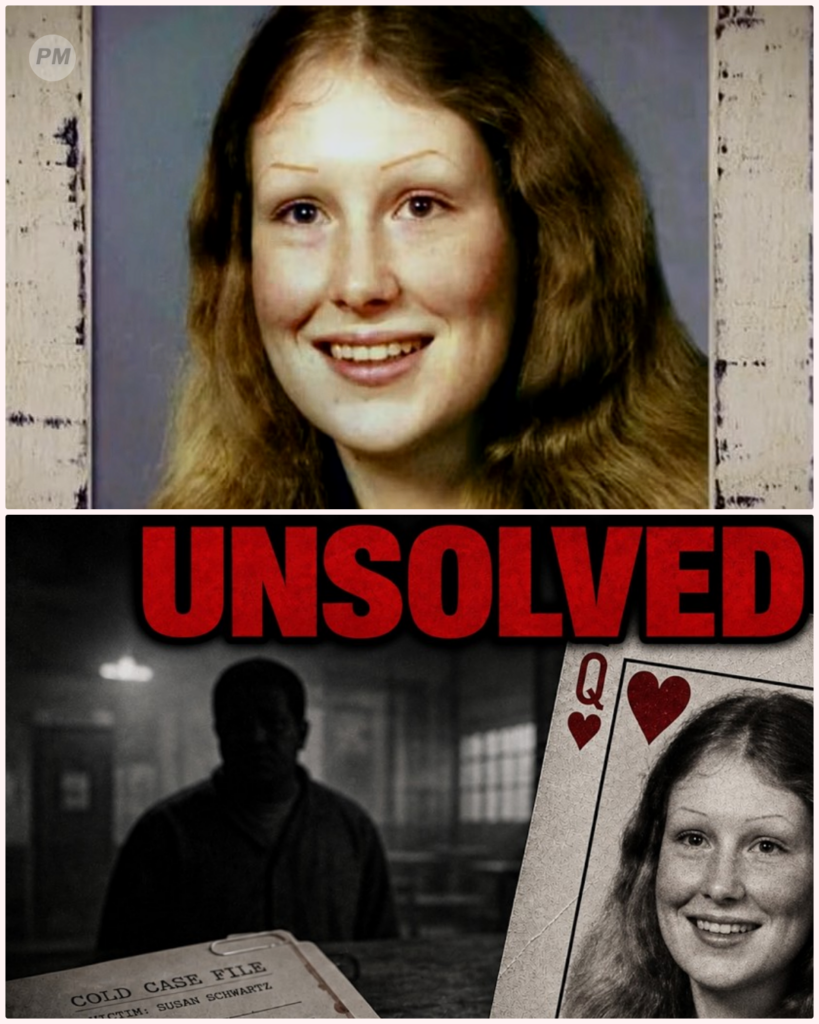
If traditional forensics couldn’t crack this case, maybe something far less traditional could. They’d read about a program in Florida where detectives had printed unsolved murders on playing cards and distributed them in prisons across the state.
The logic behind it was straightforward, almost disarmingly simple. Prisons are full of people who talk.
Inmates confess to cellmates during late night conversations. They brag in the exercise yard. They trade secrets for favors or for protection.
Information about crimes, including crimes committed by people currently behind bars, circulates inside prison walls constantly.
The question was whether you could get that information to flow in the right direction, from the inmates who had it to the detectives who needed it.
The concept clicked for Sharf and Heightsman. A deck of cards is cheap to produce, easy to distribute, and almost impossible to ignore.
Inmates play cards constantly. It’s one of the most common pastimes in any prison in America.
Every time someone picks up a deck, shuffles through it, and plays a hand, they’re looking at a victim’s face.
They’re reading a case summary. They’re being reminded that somebody out there is waiting for answers.
In 2008, the Snowomish County Sheriff’s Office released Washington State’s first deck of cold case playing cards.
52 cards, 52 unsolved homicides, and missing person cases, some dating back to the 1970s.
Each card featured a photograph of the victim on the front and a brief summary of the case on the back, along with a toll-free tip line and the promise of up to $1,000 for information leading to an arrest.
The first 5,000 decks were funded by a grant from the Stila Guamish Tribe of Indians, a federally recognized tribe based in Snowomish County.
It was an unlikely partnership, a Native American tribal government bankrolling a law enforcement tool.
But the tribe understood that unsolved violence is a community problem, not just a police problem.
Detective Vanderweist was deliberate about which victims went where in the deck. The aces and face cards, the ones players look at most often, the ones that carry the most weight in every hand, those went to the victims he considered the most sympathetic, the ones whose stories would hit the hardest, the ones most likely to make a guilty conscience speak up.
Susan Schwarz was placed on the Queen of Hearts. The decks went out to the Snowhomeish County Jail first, then spread to the Monroe Correctional Complex, one of Washington’s largest prison facilities, and to jails in Scadget and King counties across the region.
Guards handed them out in common areas and recreation rooms. Inmates passed them around cell blocks, traded them, stacked them on metal tables in dayrooms.
By 2010, more than 4,500 decks were in the hands of inmates, guards, and facility staff across Washington state.
That’s 4,500 decks of 52 cards each. Hundreds of thousands of individual moments where an inmate might turn over a card, see a face, and remember something.
Susan’s face was being shuffled, dealt, and studied by thousands of prisoners who might have overheard something, might know something, might have shared a cell with someone who talked too much after lights out.
The program was playing a numbers game. Distribute enough cards to enough people in enough facilities, and eventually one of those cards will land in the right hands.
Separately, another piece of the puzzle shifted in July of 2008. Sherwood Knight, Johnson’s half-brother, who was serving life for the Molly Mccclure murder, was ill.
He wanted money for an attorney, and he sent a cryptic, threatening letter to Gregory Johnson through their mother.
The letter warned that if Johnson didn’t help him financially, he’d spill the beans. It wasn’t clear exactly what beans he was talking about, but the implication was obvious to anyone who knew the history between the two brothers.
The mother forwarded the letter to Karen, Johnson’s ex-wife. Karen held on to it for 6 months, paralyzed by the same fear that had surrounded Gregory Johnson for decades.
Even after years of distance, even after leaving the state and building a new life, the shadow of Johnson’s violence kept her frozen.
When she finally found the courage, she mailed the letter to the Snowhomeish County cold case detectives.
The letter wasn’t enough to solve the case. It was too vague, too indirect, too easy for a defense attorney to explain away in court.
But it served a different purpose. It confirmed what detectives had suspected for years. Sherwood Knight knew something about Susan’s murder, and it pushed both Knight and Johnson back to the very top of the suspect list, exactly where they’d sat since 1979.
The cold case unit was circling. They just needed one more break. If you’ve made it this far, you already know this channel goes deeper than most.
Subscribe so you don’t miss the next case we cover. In March of 2011, roughly 3 years after the playing cards first entered Washington’s prison system, a man serving a life sentence picked up a deck in a prison day room.
Sherwood Knight was decades into his sentence for the murder of Molly Mccclure, the Seattle woman he’d killed in 1986.
He shuffled through the cold case cards the way inmates shuffle through any deck, idally, mechanically, passing time in a place where time passes slowly.
And then he turned over the Queen of Hearts. Susan Schwarz’s face stared back at him from the card.
