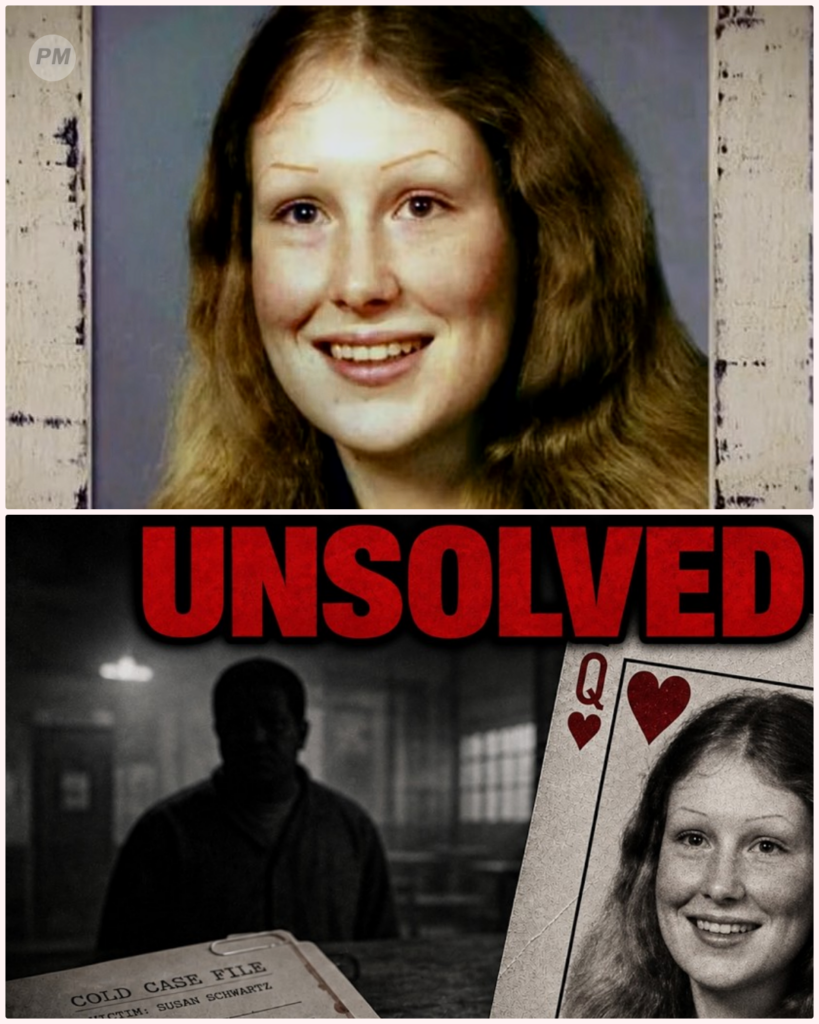
He walked through a home that was small and tidy,…
He walked through a home that was small and tidy, not the kind of place you’d expect to find a murder victim.
Some items were missing from the house. A stereo, a few valuables, the kind of things that might suggest a burglary gone wrong.
And for a brief moment, that’s exactly what the scene seemed to suggest. But Christensen wasn’t buying it.
Burglars don’t bind their victim’s hands with electrical cords. Burglars don’t gag the people they rob.
They don’t execute someone over a stereo system worth a couple hundred. The scene felt staged in a way that set off every alarm in a seasoned detective’s mind.
The house hadn’t been torn apart the way a real break-in looks. There was no frantic ransacking, no drawers pulled out and dumped, no closets rifled through.
It was too neat, too controlled, too deliberate. There was another detail that stuck with Christensen.
The plush carpet in the hallway showed shoe impressions in two different sizes. Two people had walked through that house.
Two people had been part of whatever happened to Susan Schwarz that morning. Christensen’s conclusion was simple and direct.
This was an execution. Susan was killed by somebody she knew, and the staged burglary was meant to throw investigators off the real motive.
The detectives already had a good idea who that somebody was. We’re just getting started on this one.
If this case is already pulling you in, drop a like so more people can find Susan’s story.
The investigation into Susan Schwarz’s murder moved quickly in the first days. Detectives at the Snowomish County Sheriff’s Office didn’t have to look far for a suspect.
Gregory Johnson’s name surfaced almost immediately, and everything the detectives learned pointed in his direction.
Karen told the police everything. She told them about the abuse, the violence, the years of being hit and controlled inside her own home.
She told them Johnson had a criminal history that included armed robbery, that he was the kind of man who solved problems with intimidation and force.
She told them about the friendship between herself and Susan, about how Susan had helped her escape to the shelter, about how Johnson blamed Susan for the breakup of his marriage.
Karen had returned to Washington from Minnesota and had been spending time with Susan again in the weeks before the murder.
She was weighing her options, possibly considering whether to reconcile with Johnson, possibly just wanting to be close to her best friend again.
Either way, Johnson would have known Karen was back, and he would have known she was spending time with the woman he blamed for everything.
Karen also told detectives something else. Johnson had a teenage girlfriend, a young woman who’d entered his life not long before the murder, someone who might know something.
Detectives wrote down names. They cataloged associates, family members, people in Johnson’s orbit. The teenage girlfriend’s name went into a file along with everyone else.
It was standard procedure, the kind of thorough groundwork that’s supposed to lead somewhere. They never interviewed her.
That single failure, that one door left unned, would cost this investigation 32 years. The one person who could have cracked the case wide open in the fall of 1979 was sitting right there in their notes, her name written in a detective’s handwriting, and nobody ever asked her what she knew.
Johnson, meanwhile, had a story ready. He told detectives he’d been fishing on the day of the murder out on a pier somewhere near Everett or Edmunds, depending on which version of the story he was telling.
He said he’d been with his brother. It was the kind of alibi that sounds plausible enough to hold up under casual questioning, but starts to wobble the moment you push on it.
The problem was that it didn’t wobble cleanly. The people Johnson named as his fishing companions couldn’t clearly confirm his whereabouts, but they couldn’t definitively deny them either.
Nobody could say with certainty, yes, Johnson was on that pier all morning. And nobody could say with certainty, no, he wasn’t.
It was the gray zone, the frustrating middle ground where a suspect’s story isn’t proven true but can’t be proven false.
And in the American justice system, that gray zone is where guilty men go free.
And then there was the physical evidence, or rather, the complete absence of it. The crime scene at Susan’s home on Locust Way yielded no usable fingerprints, no blood evidence connecting anyone other than Susan to the bathroom, nothing that could place Gregory Johnson inside that house on the morning of October 22nd.
In 1979, forensic technology was a fraction of what it would become in later decades.
There was no genetic genealogy, no kodus database, no DNA analysis that might have pulled a profile from the electrical cord used to bind Susan’s hands or the shell casings scattered across the tile floor.
Detectives had motive. They had suspicion. They had Karen’s testimony about the abuse and the resentment.
What they didn’t have was the kind of physical proof that a prosecutor needs to take a case to trial and win.
Without a confession, without an eyewitness willing to come forward, without forensic evidence tying Johnson to the scene, there was no path to a courtroom.
The Schwarz family waited for an arrest that never came. Gregory Johnson walked free. 7 years later, in 1986, detectives got what felt like a second chance at the case.
By then, Johnson was sitting in a Washington state prison, serving time for robbery. He’d kept up his criminal career without interruption after Susan’s murder, collecting convictions like a man who’d never once been afraid of consequences.
And in a coincidence so dark it almost defies belief, his half-brother, Sherwood Knight, was locked up in the same prison system, convicted of a crime that bore a sickening resemblance to Susan’s murder.
In 1986, Knight had killed a Seattle woman named Molly Mccclure. The details were chilling in their similarity to what had happened on Locust Way.
