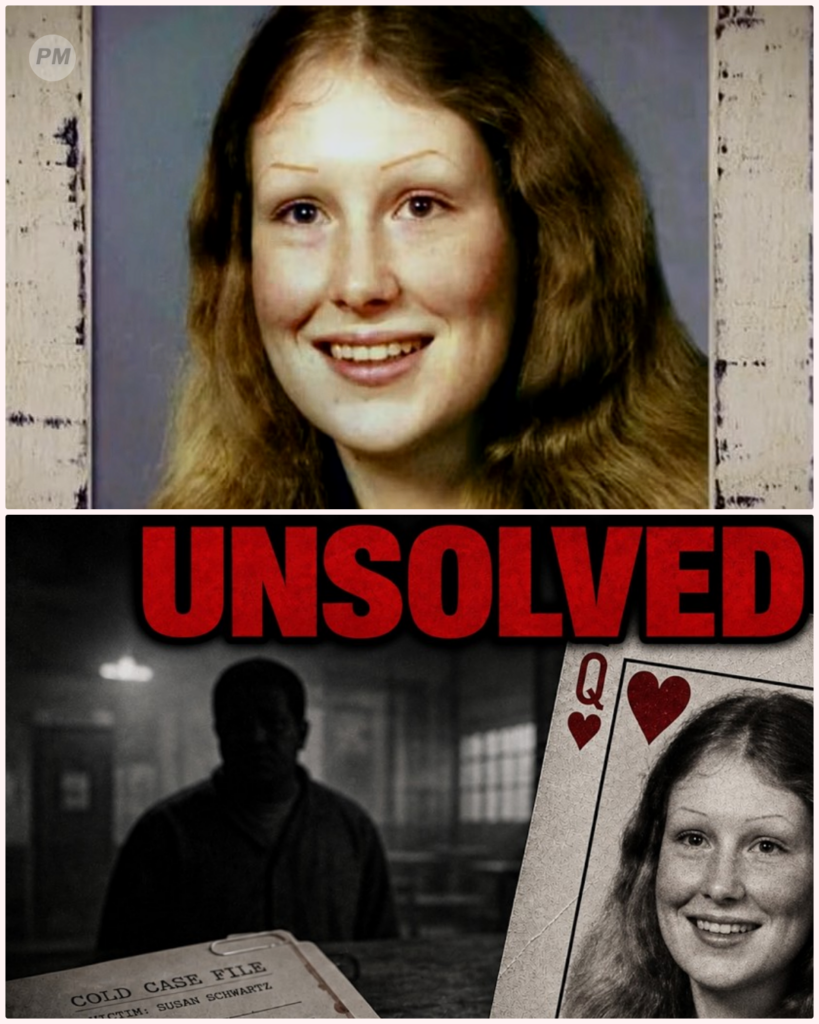
Someone who used intimidation the way other people…
Someone who used intimidation the way other people used conversation. The world he lived in operated on a different set of rules where loyalty was enforced through fear and problems were solved with threats or worse.
Susan saw through it. She recognized what was happening to her best friend and she refused to look the other way.
Where Johnson wanted silence, Susan pushed Karen to talk. Where Johnson wanted isolation, Susan showed up at the door.
She told Karen that this was not normal, that she deserved better, that she needed to get out before things escalated to a point where getting out was no longer possible.
Johnson noticed and he resented Susan for it. He worked to keep the two women apart, to drive a wedge between them, to maintain the control he’d built over his wife’s life.
Susan was a threat to that control, not because she was powerful or aggressive or connected.
She was a threat because she was the one person Karen trusted enough to listen to.
And in the world of a domestic abuser, trust between the victim and an outside party is the most dangerous thing that can exist.
And eventually Karen listened. Susan helped her best friend pack her things. She moved Karen into a domestic violence shelter, a safe house where Johnson couldn’t reach her.
The logistics of that move would have been quietly terrifying. Packing while looking over your shoulder, loading bags into a car while praying the wrong person doesn’t pull into the driveway.
Every domestic violence advocate will tell you that the most dangerous moment in an abusive relationship is the moment the victim tries to leave.
That’s when the violence escalates. That’s when people get killed. Karen survived that moment because Susan was there to help her through it.
And in 1978, Karen made the hardest decision of her life. She took her baby and left Washington State entirely, relocating to Minnesota to start over.
Far from the man who had been hurting her, Susan Schwarz had done something brave and selfless.
She’d helped a battered woman escape. She’d put herself between her friend and a violent man and said essentially, “I’ll take the risk.
You get out.” Gregory Johnson saw it differently. In his mind, Susan had destroyed his marriage, stolen his wife, and turned the mother of his child against him.
She’d meddled in his life, inserted herself into a situation that wasn’t her business, and cost him the family he believed he was entitled to control.
In Gregory Johnson’s world, people who meddled in his life paid for it. That rage didn’t go away when Karen left the state.
It didn’t cool down over the months that followed. It sat there building, festering, turning into something harder and colder than anger, something closer to a plan.
Roughly a year after Karen fled to Minnesota, she came back to Washington. She was spending time with Susan again, possibly weighing whether to give Johnson another chance, possibly just reconnecting with her best friend after months apart.
The two friends were back in each other’s lives, back in the same zip code, back within reach.
And Gregory Johnson knew it. This decision, seemingly small at the time, set the final events in motion.
The morning of October 22nd, 1979, started the same way most mornings did on Locust Way in Alderwood Manor.
Bill Hassler left for work, kissing Susan goodbye the way he always did, the way you do when you assume the person you love will still be there when you get home.
Susan was home alone in the little house they shared. The neighborhood was quiet, the kind of suburban silence that only deepens in the hours between school drop off and lunch when the streets empty out and the loudest sound is a sprinkler hitting a fence post.
Around 9:45 that morning, a neighbor heard a sharp squealing noise coming from near Susan’s home.
It was unusual enough to notice, but not alarming enough to investigate. In a quiet neighborhood, strange sounds get filed away and forgotten.
A car breaking too hard. A kid fooling around. Nobody called the police. Nobody walked over to check.
That noise may have been the last sound Susan Schwarz ever made. Hours passed. The morning turned into afternoon.
The sun crossed over the houses on Locust Way. Birds landed on the gutters and flew away.
Cars came and went. And inside the small, tidy house at the end of the block.
Susan Schwarz lay dead. Around 4:00 in the afternoon, Bill Hassler came home from work and walked through the front door.
What he found inside ended the life he and Susan had been building together. Susan was in the bathroom.
Her hands were bound behind her back with an electrical cord ripped from one of the appliances in the house.
A black bra had been used as a gag. She had been shot multiple times in the head with a22 caliber weapon.
Shell casings littered the tile floor. A pillow lay beside her head soaked with blood.
A bullet hole punched through it, likely pressed against her skull to muffle the sound of the shots.
She had lacerations on her head that suggested she’d been struck first. Hit with something hard enough to stun her before she was restrained and killed.
She was 24 years old. There were no signs of sexual assault. This was not a crime of opportunity by a stranger.
This was targeted. This was personal. Detective Ken Christensen was one of the first from the Snowhomeish County Sheriff’s Office to process the scene.
