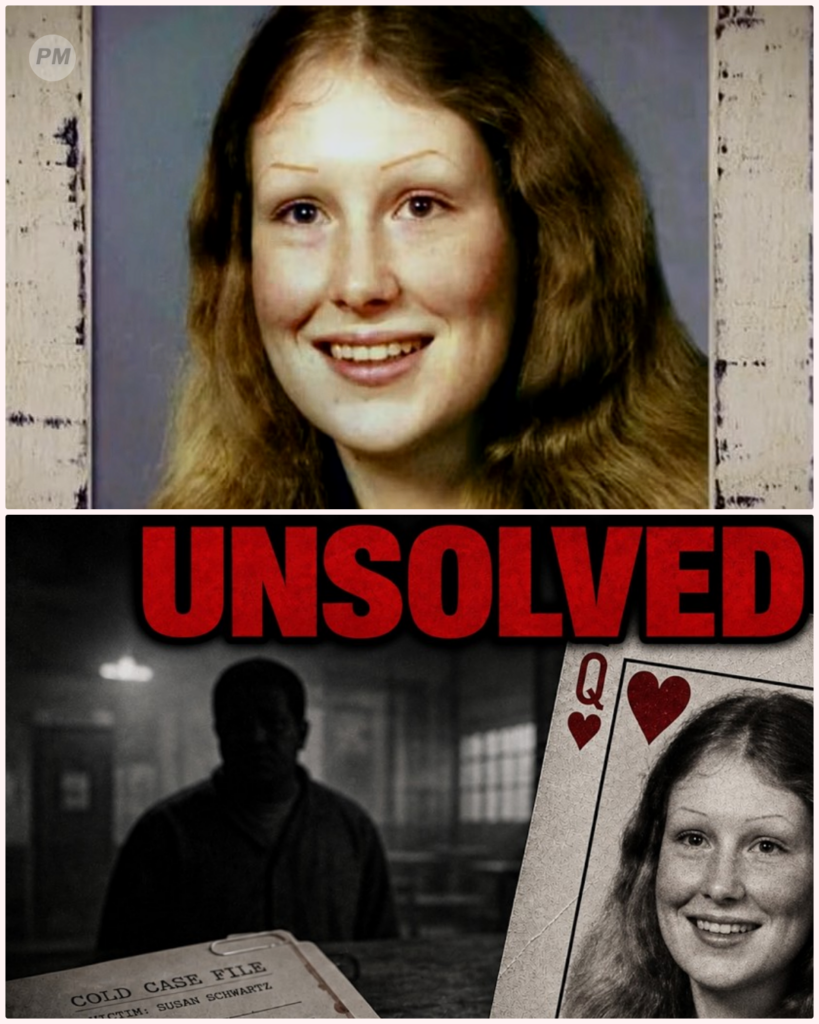
Susan Schwarz did what any good friend would do
Susan Schwarz did what any good friend would do. Her best friend was being beaten by her husband, and Susan helped her pack her things, moved her into a shelter, and got her out of Washington State with her baby.
That act of kindness cost Susan her life. On October 22nd, 1979, someone walked into Susan’s small home in Alderwood Manor, Washington, bound her hands behind her back, and shot her in the head.
She was 24 years old. Detectives had a suspect from day one. They just couldn’t prove it.
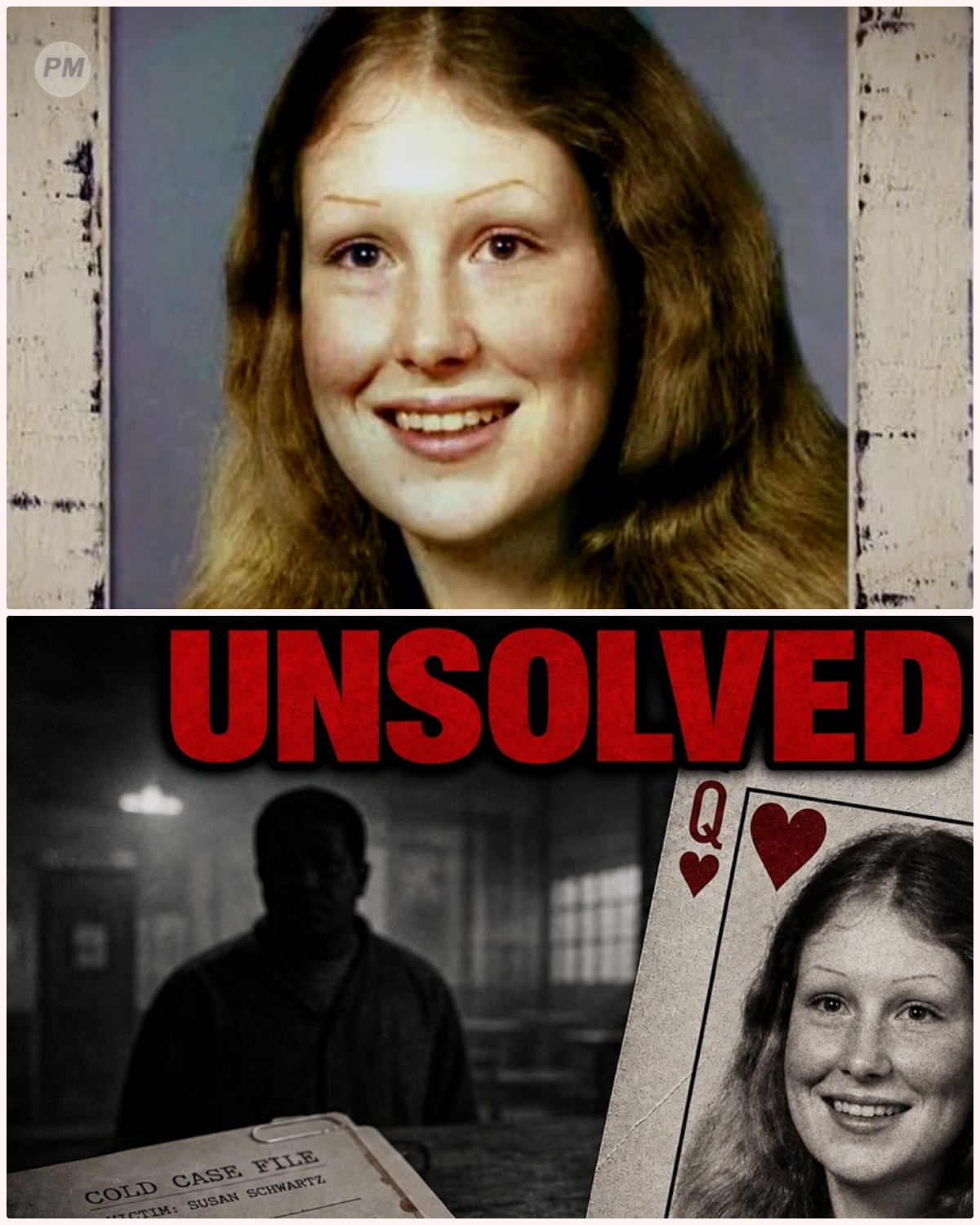
For 32 years, the man who killed Susan Schwarz walked free. And then a detective in Snowomish County had an idea so simple it almost sounds made up.
He printed her face on a playing card and handed it to prison inmates. Susan became the queen of hearts.
And that card did what three decades of police work couldn’t. This is her story.
If you’re the kind of person who sticks around for the full story, not just the headline, hit subscribe.
Cold case redemption goes deep on every case, and this one deserves it. Before Susan Schwarz was a cold case, before she was the queen of hearts, before her name appeared in newspaper headlines and television documentaries, she was just a young woman living a quiet life in a small house on Locust Way.
Alderwood Manor was an unincorporated pocket of snowhomeish county tucked between Lynwood and both in the suburbs north of Seattle.
It was the kind of neighborhood where people left their front doors unlocked and everybody recognized each other’s cars in the driveway.
The streets were lined with modest homes, most of them singlestory ranchers and split levels with small yards and chainlink fences.
The kind of place where a person could feel safe without really thinking about it.
Susan’s place was small and tidy, the kind of first home a young woman in her early 20s might rent while she figured out what came next.
Susan Marie Schwarz was born in 1955 and grew up in the suburbs north of Seattle.
She graduated from both High School, the same school her younger brother Gary attended. Her family was close.
Her father, Henry, lived in nearby Kirkland, a lakeside city about 15 minutes south of Alderwood Manor.
Her younger sister, Valerie, who was 13 years younger, looked up to Susan the way little sisters do when the age gap is just wide enough to turn admiration into something closer to worship.
Years later, when Valerie was asked to describe her sister for an A and E documentary about the case, she painted a picture that felt specific enough to be real.
Susan was tiny, barely 5t tall. She had reddish auburn hair and a quiet warmth about her that made people feel comfortable without her ever raising her voice.
Valerie called her a free spirit, the kind of person who moved through the world gently, but on her own terms.
She was private. She was kind, and she was fiercely loyal to the people she loved.
That loyalty was the defining feature of Susan’s character, the thread that ran through everything she did.
She wasn’t loud about it. She didn’t make grand gestures or dramatic speeches. She just showed up.
When someone she cared about needed help, Susan was there quietly and reliably without being asked and without expecting anything in return.
One of the people she showed up for most consistently was her boyfriend, Bill Hassler.
The two had been together since high school. Sweethearts in the way that word actually meant something in the late 1970s.
They shared the house on Locust Way, building the kind of ordinary domestic life that nobody thinks twice about until it’s gone.
Bill went to work during the day. Susan kept the house running. They had a routine, a rhythm, the kind of comfortable predictability that feels boring from the outside but precious from the inside.
And then there was Karen. Karen and Susan’s friendship stretched all the way back to their school days in the Both area.
They were the kind of friends who stayed close after graduation. The kind who called each other first when something went wrong.
Karen was part of Susan’s inner circle in a way that went beyond casual friendship.
They trusted each other with the ugly truths most people keep hidden. They knew each other’s secrets, each other’s fears, each other’s breaking points.
That trust would become the most important thing in Karen’s life and the most dangerous thing in Susan’s because at some point in the late 1970s, Karen married a man named Gregory Johnson.
And Gregory Johnson was violent. The abuse started early in the marriage and never stopped.
Johnson hit Karen. He controlled her. He dictated who she could see, where she could go, how she could spend her time.
He isolated her from the people who cared about her. A pattern that anyone familiar with domestic violence will recognize immediately.
Abusers don’t just hurt their partners. They build walls around them. They cut off the exits one by one, eliminating friends, family, anyone who might offer a way out.
They make sure there’s nobody left to call for help. Johnson had a criminal history that went well beyond the violence in his home.
He’d been involved in armed robbery. He was the kind of man who was comfortable with force as a tool.
