The boys didn't come home on Sunday
The boys didn’t come home on Sunday. By Monday morning, their families were calling the sheriff.
Nobody could get up to the high country while the storm was still blowing. Volunteers did find Josh’s pickup at the end of the plowed section of the road, half-buried in snow.
So at least they knew the boys had gone up. When the weather finally broke on Wednesday, the search went into full swing.
Volunteers went up on snowmobiles and skis, and a helicopter flew the area whenever the clouds lifted.
And they had help from the man who knew that country better than anybody, the district ranger.
I’m not going to use his name. I’ll just call him the ranger. In 1990, he was in his late 40s and had worked that district for almost 20 years.
He’d grown up there and knew every trail and every creek. He maintained the backcountry cabins, which meant he had the keys.
In a small community like that, he was a respected man, the kind who’d stop on the highway to help you change a tire.
So, naturally, he took a central role in the search. He helped draw up the search grids.
He briefed the volunteers on the terrain and marked the avalanche paths on [music] the maps.
And there’s one detail from that first briefing that several volunteers remembered years later. When somebody suggested sending a team straight up to the cabin, the ranger said no.
The last stretch of trail below the cabin crossed a steep, loaded slope, he said.
And after a storm like that, he wasn’t going to send volunteers across it. He’d go up himself, alone, on his snowmobile.
He knew the safe line. Nobody argued. It made perfect sense. He went up that same afternoon.
When he came back down, he reported that the cabin was empty. He said it was locked, the way it was supposed to be at that time of year, and that there was no sign anybody had been there.
No tracks, no ashes in the stove, no food wrappers. He wrote it down in the search log and signed it.
That one report changed the direction of the entire search. If the boys had never reached the cabin, something must have happened to them on the way up.
And the snowmobilers had seen them just 3 miles below it, right where the trail crossed several steep, open slopes.
So, the working theory became an avalanche. The boys had been caught by the weather, kept pushing toward the cabin, and been buried in a slide.
For the next three weeks, searchers probed the avalanche debris below the pass, walking in lines and pushing long poles down through the snow.
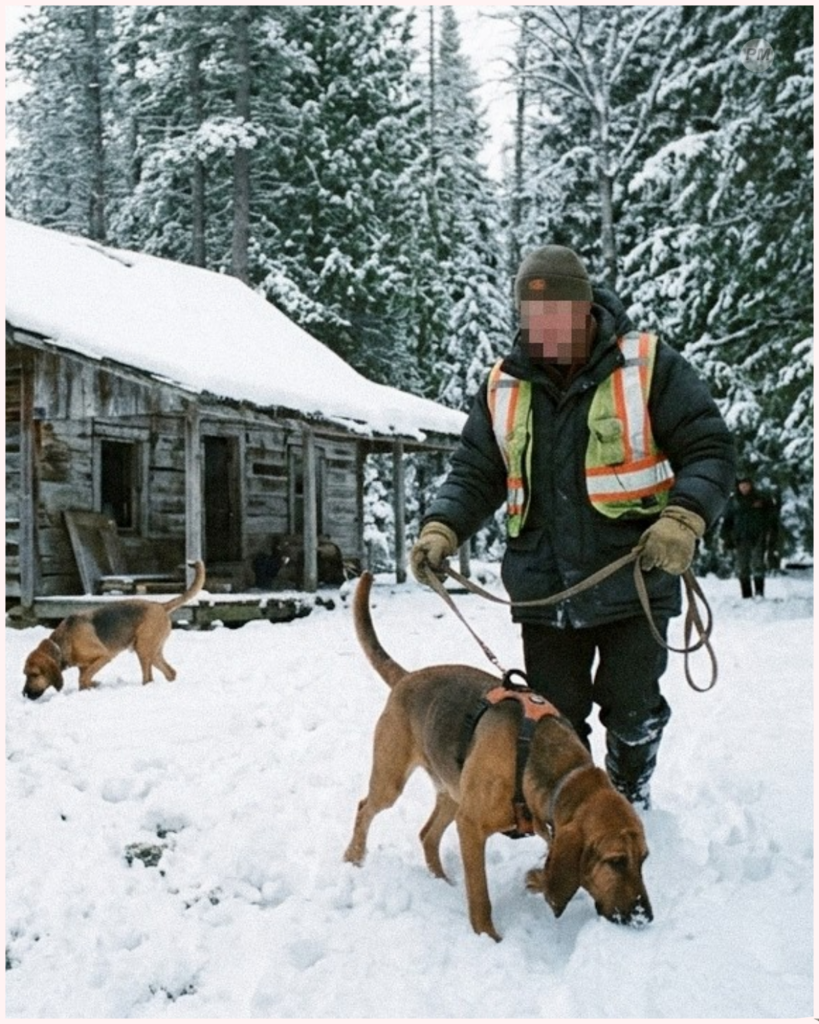
A volunteer handler brought up her search dog. And on one of those days, the dog did something odd.
It kept pulling away from the slopes and heading up toward the cabin, whining and casting around.
The handler mentioned it to the ranger that evening. He told her not to worry about it.
There was an old elk kill up there from the fall, he said, and martens and foxes had been dragging scraps around the cabin all winter.
The dog was smelling dead animals. She accepted that. Why wouldn’t she? And the ranger didn’t just run the search from a map.
He was there every day. He drove out to the trailhead at dawn and came back after dark.
He sat with the families in the fire hall where the search was coordinated. Danny’s mother later told a reporter that he brought her coffee every morning and promised her he wouldn’t stop looking until her son was home.