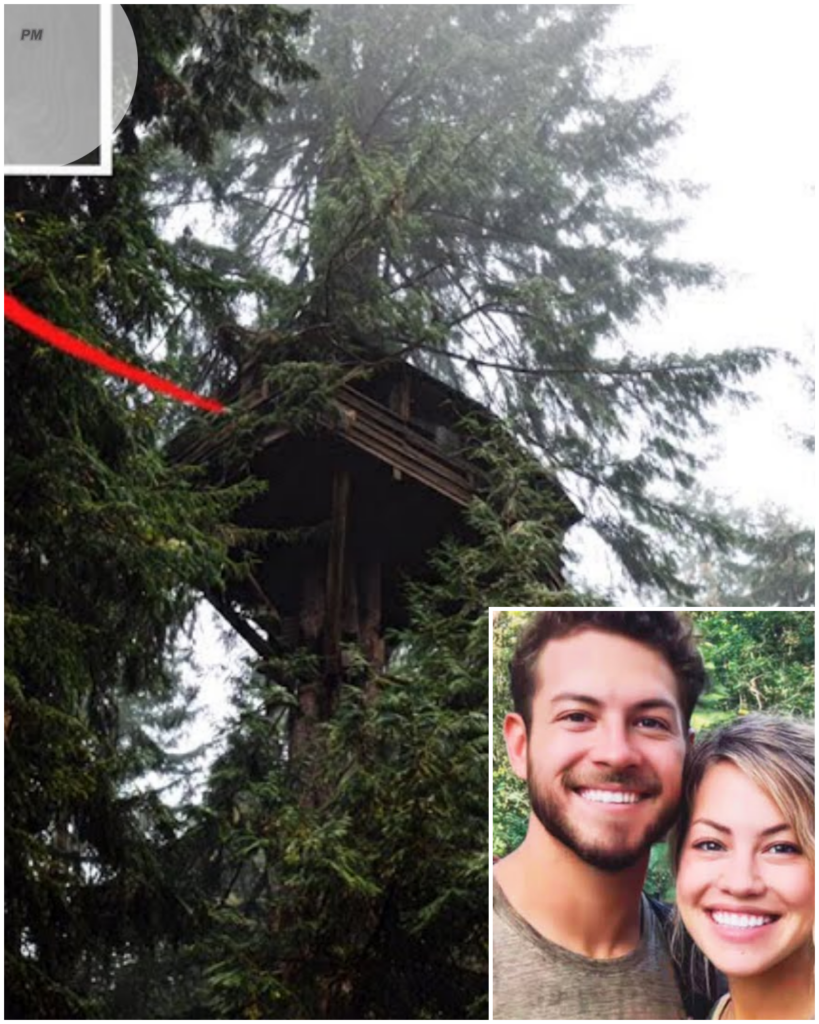
Detectives reviewed all known disappearances withi…
Detectives reviewed all known disappearances within a 30 mile radius over the past 20 years.
Some of them could have been coincidental, but several coincidences were striking. Almost all of the victims disappeared near river ravines or deep depressions where radio signals did not work.
Not once could the dogs pick up a stable trail. A psychological profile compiled by an FBI consultant described the possible perpetrator as a person with long-standing isolationist tendencies, possibly a former forestry [music] worker who left society after trauma or loss.
Such individuals often develop their own belief system related to nature. The case of Stoka is a classic example of this type of thinking.
Ritualistic actions, symbolic drawings, and the deification of trees. In an interview, Detective Grayson told reporters, “This is not just a hermit.
This is a man who has made the forest his home and his [music] god, and everyone who came here became trespassers for him.”
Despite an active investigation, no traces of a living person were found in the area of the hut.
Surveillance cameras placed on several trails recorded nothing but animals. However, some volunteers reported hearing impacts in the distance at night as if someone was hitting a trunk with a rock.
Others reported hearing whistling in the dark as they [music] walked back to camp. Detective Grayson’s report includes a short entry.
The area gives you the feeling of being watched. At that time, no one could say whether Stoka was a man, a fanatic, or just a shadow that was left behind.
But his presence was felt in every tree, in every sound that came from the depths of Opal Canyon.
And for those investigating the case, it became increasingly clear that the forest was [music] not just hiding its secrets.
It was protecting someone who considered himself a part of it. After several months of work, the [music] investigation team finally had a name.
Calvin Moss, a former logger from the small town of Redmond in central Oregon. His file was kept in the archives of the Forest Service Department.
Old records of an employee who left [music] his job in the mid ’90s. In the reason for leaving column, there was one word, personal circumstances.
Detective Noah Grayson came across the name by accident. While checking old [music] documents, he found a report on a fire in a logging camp in 96.
Among the victims was Calvin Moss, 32 years old, a logger. The note says that he lost his wife and young son that day.
Their house on the edge of the forest caught fire from lightning. The bodies were found next to each other.
After the tragedy, Moss quit his job, sold his property, and [music] left in an unknown direction.
Then his trail disappeared for decades. Only occasionally did he appear in police reports, either as a witness or as a person who was seen near forest areas without permission.
The last time he was mentioned was in 2009 when rangers met a hermit who lived near Opal Creek.
He introduced himself as Calvin and said that he watches over the trees because they are his family.
At the time, no one saw anything strange in this. When a cabin was found in the upper reaches [music] of the canyon in 2018, Moss’ name came up again.
The similarity of the descriptions was too striking. A tall man, a recluse, a tendency to silence, a habit of wearing a dust mask or bandana to avoid inhaling tar.
All of this matched the image of the rack, which was reconstructed based on the testimony of old hunters.
Detectives contacted Moss’ sister, Allison, who lived in Sisters an hour and a half away from the Jefferson Park area.
She confirmed that the brother did exist, but hadn’t made himself known for several years.
Calvin wasn’t a bad guy, she said. It’s just that after the fire, something broke in him.
He believed that the forest was alive and that trees could judge people. According to the sister, her brother would occasionally visit her in the winter, bringing her dried mushrooms or cones that he considered amulets.
At home, he was silent, slept on the floor by the fireplace, did not touch appliances, and never watched TV.
He said he heard noise in the city that the forest drowned out, Allison recalled.
The last time she saw him was in the spring of 2018. Calvin came in late at night, left his backpack in the garage, and asked for water.
He was wearing an old cloak soaked in smoke and carrying an axe. He said that it was time to go home.
In the morning, he was gone. He left a piece of paper on the table with a pencil writing, “The forest is standing.
I must stand with it.” Since then, Moss has not been in touch. The search for him lasted for several weeks, but to no avail.
The police then declared him missing. Only now, after the hut was found, did detectives realized that the timing was almost exact.
He had disappeared several months before the climbers came across the building among the branches.
Detective Grayson and FBI experts went to the sister’s house. They examined the garage and storage room where Moss had left his belongings.
In the boxes, they found hacksaws, bark fragments, and old notebooks with sketches of trees and short phrases.
They whisper when it’s cold. The roots know what we did. Whoever falls, the forest takes him.
These entries were messy, but they had an obsessive quality to them, as if Moss really believed he was part of the forest.
Psychologists have called this isolated ritualistic thinking, a condition where a person creates his or her own belief based on symbols of nature.
At the same time, investigators checked all the testimonies over the past 10 years about an unknown man who had been seen near Opel Creek.
