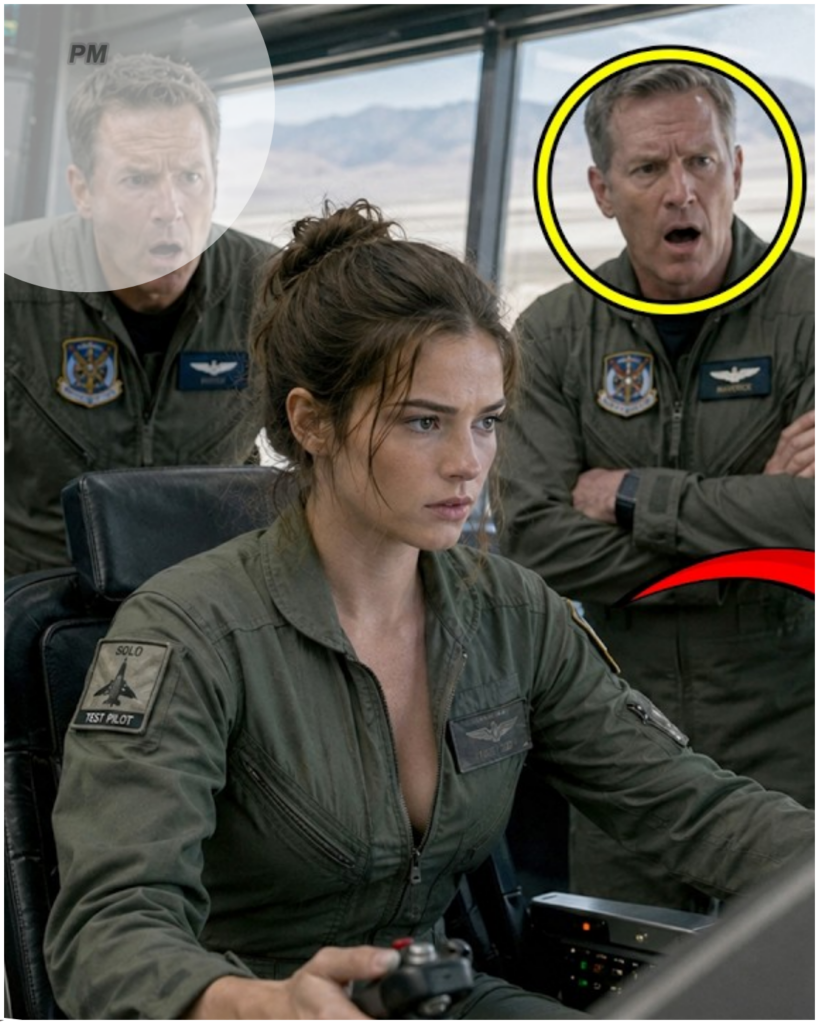
Four men with 30,000 flight hours between them swo…
Four men with 30,000 flight hours between them swore the math was impossible. They beat their fists against the console, drenched in sour sweat, condemning a man to die in the stratosphere.
They called it an unrecoverable, catastrophic failure. She called it a failure of imagination. The command center smelled like burnt wiring, stale coffee, and the distinct sour odor of male panic.
It was a windowless concrete bunker buried beneath the Nevada dirt, lit by the unforgiving glare of fluorescent tubes that hummed with a migraine-inducing frequency.
At the center of the room sat the simulator, a multi-million dollar hydraulically mounted replica of the X-44 cockpit.
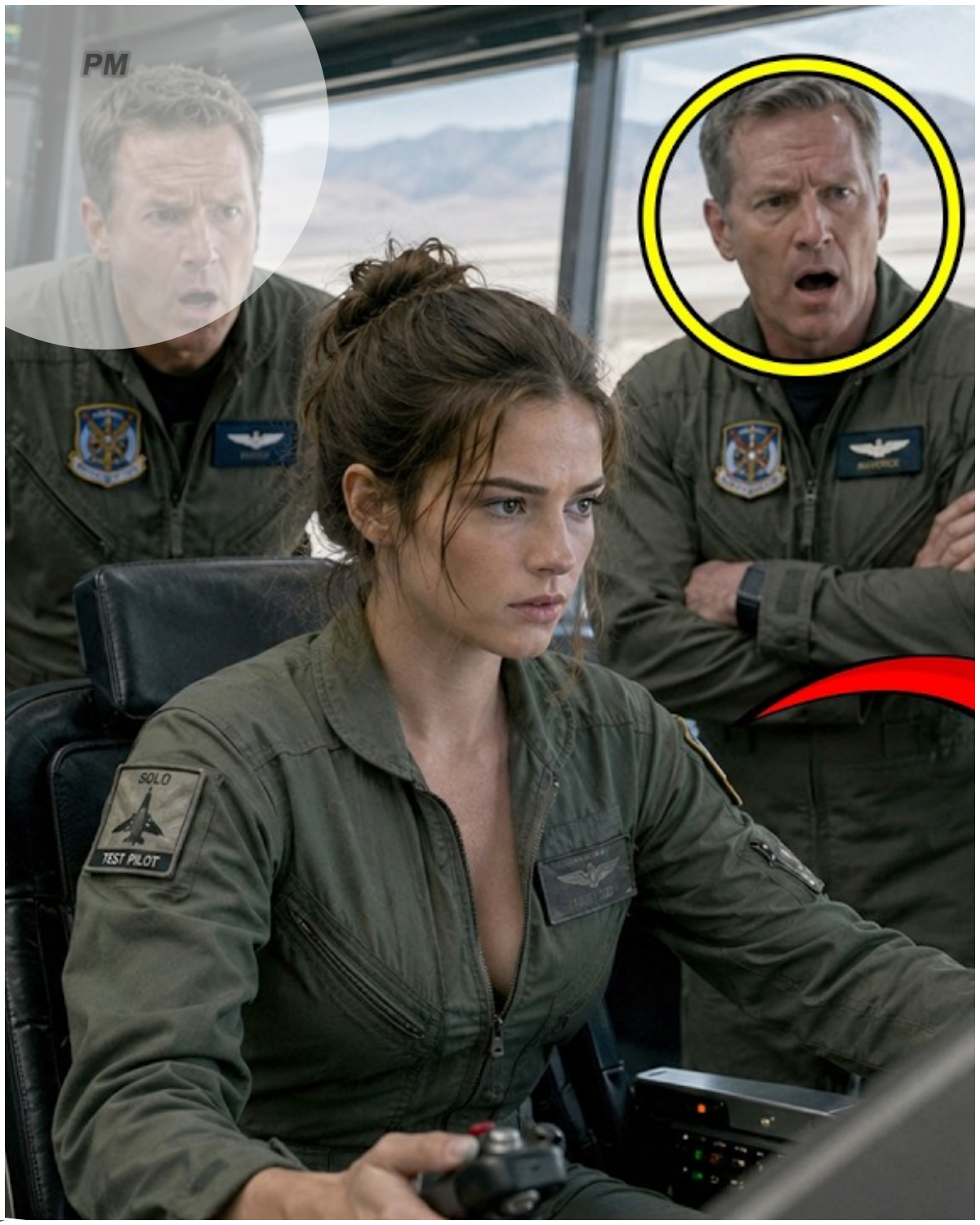
Right now, it was a coffin. The bunker had been built for a war that never came, a windowless box of poured concrete sunk beneath the Nevada dirt so that the secrets tested above it would never reach the sky.
Groom Lake did not appear on civilian maps. The men who worked there drove in through a gate with no name, past warning signs that did not bother to explain themselves, and parked beside hangars whose doors stayed shut in daylight.
The X-44 was the reason the base existed at all, a stealth prototype so new that its own test pilots still argued about what it could do.
It was not a fighter in the old sense. It was a flying computer wrapped around a pilot, an adaptive learning system that watched every input, weighed it against a library of flight envelopes, and decided, in milliseconds, whether the human at the controls was helping or hurting.
On a good day it made an average pilot look brilliant. On a bad day it decided the pilot was the problem and took the jet away from him.
Today was the worst day the program had ever seen. The command center was the heart of the bunker, a low room lit by fluorescent tubes that hummed at a frequency that got inside a person’s skull and stayed there.
Along one wall stood the simulator, a multi-million dollar replica of the X-44 cockpit mounted on hydraulic arms, its canopy open like a mouth.
Against the opposite wall, server racks breathed hot air and blinked. In the center, the telemetry console glowed, and above it the main screen carried a single jagged green line that fell and fell and never once rose.
Every man in the room had spent his career believing that a pilot with enough hours could fly his way out of anything.
They had thirty thousand hours between them, combat tours, test programs, ejection seats survived, dead-stick landings walked away from.
None of it mattered now, because the problem was not flying. The problem was a machine that had decided to protect its pilot by refusing to let him fly at all.
Commander Harrison had run test programs for twenty years, and he knew the shape of a bad day the way a sailor knows weather.
He had watched the green line since the first alarm, watched it bleed altitude in neat, merciless increments, and he had done everything the manuals allowed.
He had called the contractor. He had called the program office. He had put his best pilots in the simulator one at a time and watched each of them fail in a different way.
The fuel number on the screen was the only number that mattered now. One hour and forty-five minutes.
Then David Cole, the golden boy of the program, the face on three different defense contractor brochures, would become a debris field in the Mojave, and Harrison would be the man who had to write the letter.
He gripped the edge of the console until his knuckles went white, and he did not look at the corner of the room where the line pilot sat chipping her nail polish, because he had already decided she was not part of this problem.
He was wrong about that, and he would spend the rest of his career remembering the exact moment he learned it.
The contractor’s engineers were on the phone from California, and their voices had the thin, stretched quality of people who were watching their life’s work fall out of the sky on a screen two states away.
They had built the adaptive system to be the safest flight control logic ever flown, a system that could catch a pilot’s mistake before the pilot even knew he had made one.
What they had not built was a way for the system to admit it was wrong.
Harrison listened to them for exactly ninety seconds and then told them to stop talking and start thinking, because thinking was the only thing nobody in the room had tried yet.
The X-44 had first flown eighteen months earlier, and its maiden flight had been perfect, a smooth climb and a gentle landing that made the program look easy.
Nobody in the bunker that day had known that the jet’s greatest strength, its ability to learn, would become its greatest weakness the first time its sensors disagreed with each other at altitude.
Up on the main telemetry screen, a jagged green line charted a merciless descent. David Cole was 70 mi away, trapped inside the real X-44 at 38,000 ft.
His flyby wire system had suffered a cascading catastrophic lock. The jet had become an aerodynamic brick.
It was caught in a shallow, unrecoverable flat spin, bleeding 1,000 ft of altitude every 60 seconds.
Cole couldn’t fly it. Worse, he couldn’t eject. The explosive bolts on the canopy were dead.
If he pulled the ejection handle, the rocket beneath his seat would fire him head first into two inches of reinforced polycarbonate.
He would snap his neck before the jet even hit the desert floor. Down in the bunker, the best pilots the Air Force had to offer were trying to find a manual sequence to reboot the jet’s flight computers and restore hydraulic pressure.
They had exactly 1 hour and 45 minutes of fuel left before Cole became a crater.
They had spent the last 2 hours failing. Commander Harrison gripped the edge of the telemetry console, his knuckles bone white.
“Reset the sim,” he barked, his voice raw. Hayes, get back in there. Try the secondary bus.”
Major Brent Hayes peeled himself out of the simulator’s bucket seat. His Nomex flight suit was stained dark with sweat down the spine.
He looked gray. He was a man who had flown combat sorties in two different wars.
But right now his hands were shaking. “I tried the secondary bus,” Hayes rasped, wiping a line of sweat from his chin with the back of a blistered glove.
“The second I cut the main power to cycle the bus, the pitch-yaw compensator maxes out.
The computer thinks the jet is inverted. It throws the rudders hard left to correct a roll that isn’t happening.