A single droplet of blood roughly [music] the size…
A single droplet of blood roughly [music] the size of a quarter. According to the crime scene investigators who documented it, the droplet appeared fresh.
It was described in the arrest affidavit as glistening and partially wet, drying at approximately the same rate as the blood found near Iraima’s body in the kitchen.
Lab analysis confirmed what investigators suspected. That droplet did not belong to Irma Chavez. The blood came from an unknown Hispanic female.
Detectives believed the attacker had cut herself during the frenzy, stabbing over a hundred thrusts of a bladed weapon and left her own blood behind on that shelf without realizing it.
One drop, a quarter-sized circle of biological evidence sitting in the middle of a murder scene, like a signature the killer never intended to leave.
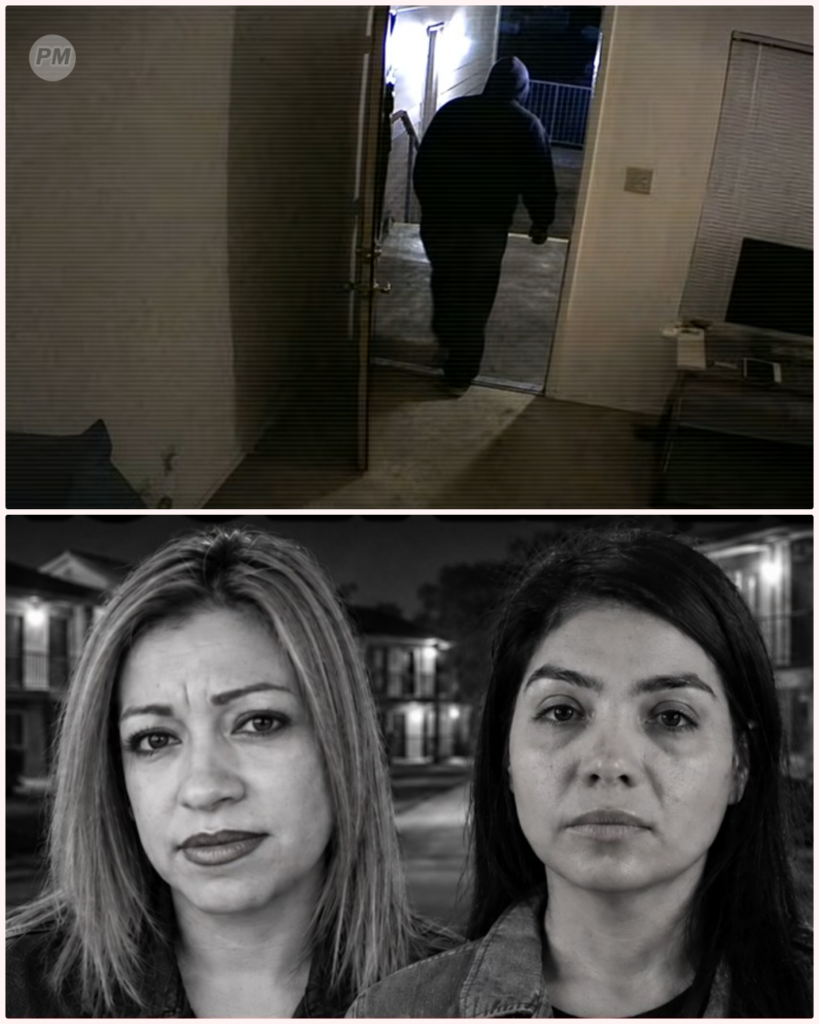
The surveillance footage also survived the attack. And here was the killer’s second mistake. She had taken the television from the living area, but the recording device connected to Irmaima’s security camera was a separate unit.
It was left behind. Whether the killer didn’t know the recorder was separate from the television or simply didn’t look for it in the chaos, that oversight preserved the only visual record of the person who walked through Iraima’s [music] door on the last night of her life.
So, detectives now had two extraordinary pieces of evidence. In the world of cold cases, [music] most investigators would trade a year of their career for even one of these.
A lot of unsolved murders have nothing. No DNA, no footage, no witnesses, just a body in a neighborhood that didn’t see anything.
The Chavez case had both. A visual record of the killer captured by the victim’s own security camera showing the exact moment she was let inside the apartment and a biological sample from the killer herself left behind at the crime scene [music] in the form of a blood droplet that could be genetically profiled with precision.
Detectives uploaded the genetic profile to Kodus, the combined DNA index system, the national database maintained by the FBI [music] that contains millions of DNA profiles collected from convicted offenders, [music] arrestes, and crime scenes across all 50 states.
If the woman who bled on that shelf had ever been in the system for any reason, a prior arrest, a previous [music] conviction, a DNA sample collected in connection with another crime, Cotus would find her.
With evidence this strong, a match should have been a matter of time, days, maybe [music] weeks.
The science was clear. The profile was solid. All the database had to do was return a name.
Detectives waited for the result and the system returned nothing. Cotus came back empty. No match.
The blood on the bedroom shelf belonged to someone who had never been arrested, never been convicted, never been entered into any law enforcement database anywhere in the country.
The killer, whoever she was, had no criminal history that would have placed her DNA in the system.
She was, in the language of forensic investigators, a ghost. Genetically present at the murder scene, completely absent from every searchable file.
In 2012, 7 months after the murder, Arlington police made a public appeal. They released the surveillance footage showing the hooded figure approaching Irma’s apartment door, standing briefly, and being led [music] inside.
Detectives asked the public for help. Did anyone recognize this person? The build, the gate, the clothing.
Tips filtered in. Some were promising. None led to a confirmed identification. The investigation continued, but without a DNA match and without a positive identification from the footage.
Detectives had no suspect. They had a case built on evidence that was simultaneously strong and useless.
A genetic profile that identified no one and a video that showed a figure too obscured to name.
Four years later in 2016, the department tried again. They submitted the DNA profile to Parabon NanoLabs, a Virginia based company specializing in DNA phenotyping.
Parabon’s technology could take a raw genetic profile and predict the contributor’s physical appearance. Things like ancestry, skin tone, [music] eye color, hair color, even approximate face structure.
The idea was to build a visual composite of the unknown woman whose blood had been found at the scene, a kind of genetic sketch that might jog someone’s memory or help narrow the field.
Parabon produced what they called a DNA snapshot. It was a computerenerated face based on genetic markers.
It was shared with investigators and it generated zero new leads. Arlington doesn’t have a dedicated cold case unit.
That’s an important detail and it’s not a criticism of the department [music] so much as a reality of how midsized city police departments work across the country.
Homicide detectives in Arlington carry active case loads. When the phone rings with a fresh killing, the cold file goes back on the shelf.
Nobody forgets about it. Nobody stops caring. But the new body takes priority because it has to.
Every detective who touched Irisima Chavez’s file over the years believed the answer was in that blood sample.
They just couldn’t reach it. The technology to crack it didn’t exist yet. And so the file sat technically open but practically frozen through year after year after year.
2013 became 2015. 2015 became 2018. [music] 2018 became 2022. The blood droplet waited in an evidence locker inside the Arlington Police Department.
The surveillance footage waited in a digital archive. The case summary waited in a filing cabinet, pulled out occasionally by a detective who had a spare afternoon between active homicides, then slid back in when the next call came.
Cold cases are strange that way. Nobody officially gives up. The file stays open. The evidence stays preserved.
The victim’s name stays in the system. But the active pursuit of justice gradually slows to a crawl, then to something that barely qualifies as movement at all.
It becomes a case that gets attention in the gaps between everything else. The second homicide of a Tuesday, the third followup of a Friday, the quiet morning when a detective pulls the file, reads through it for the hundth time, and puts it back because nothing has changed.
The technology of the era couldn’t break it. The witnesses who might have known something never came forward with enough specificity to point at a name.
And the DNA profile from the blood droplet kept sitting in Cotus like a question nobody could answer, waiting for the day when a match would finally appear in the database.
That day never came. Not in 2013. Not in 2016. Not in 20120. In Noevo Leon, Mexico, Iris’s sisters waited too.
They called when they could, asking if there had been any progress, any movement, anything new at all.
