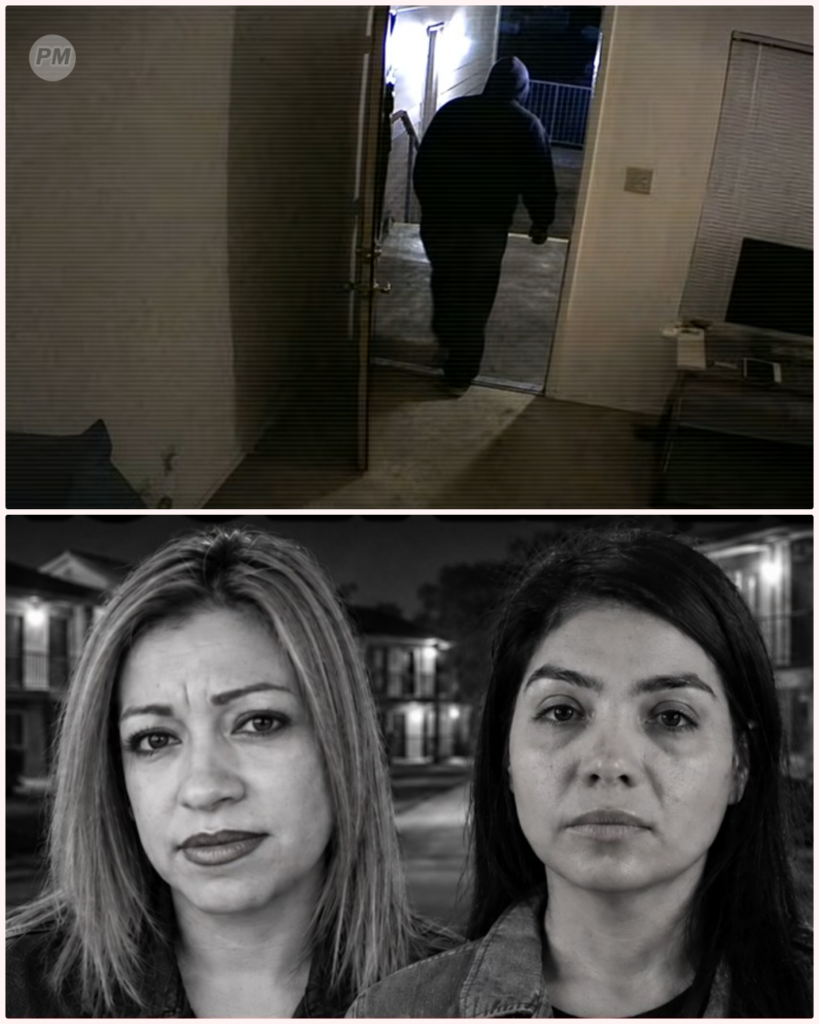
The figure's build was difficult to assess beneath…
The figure’s build was difficult to assess beneath the loose clothes. They stood at the door for a moment waiting.
Then the door opened from the inside. Irisima let them in. This detail matters more than almost anything else in the case.
The locks weren’t broken. The windows were intact. Nobody forced their way in. The person on the surveillance footage was someone Irma recognized.
Someone she felt comfortable enough to open her door for at 10:30 at night without hesitation.
About 10 minutes after the figure entered, the recording device connected to Irrima’s surveillance camera was disconnected.
The footage cut to black. Just like that, the one piece of technology that might have captured what happened inside that apartment was shut off.
Whether the visitor knew about the camera and went looking for the recorder or stumbled across it in the course of what happened next is not clear from the public record, but within 10 minutes of walking through that door, [music] someone made sure the camera stopped watching.
The footage that survives gives investigators a window of less than a quart of an hour.
An arrival, a door opening, a figure stepping inside, and [music] then darkness. Whatever happened between 10:30 p.m.
On January 19th, 2012, and the early hours of the following morning was not captured on film.
The violence that ended Irma Chavez’s life occurred in a gap in the record, a black hole in the footage where the camera should have been running, but wasn’t.
And what those missing hours contained would take 14 years to begin unraveling. The next morning, January 20th, 2012, Irisima’s sister kept her word.
She drove her teenage daughter across the Dallas Fort Worth Metro and dropped her off at the Aspenwood apartment so the girl could spend the day with her aunt.
Denise climbed the stairs to the second floor unit. She approached the door. She went inside.
Moments later, she came running back out, screaming for someone to call the police. >> [music] >> The scene she had walked into was one that no teenager, no person of any age should ever have to witness.
Arlington police officers responded at approximately 8:51 a.m. When they entered the apartment, they found Iraimma Chavez in the kitchen, unresponsive, surrounded by blood.
The Tarant County Medical Examiner would later determine she had been stabbed more than 100 times.
The violence was extraordinary, even by the standards of homicide investigators who see the worst of what human beings are capable of.
There was no weapon left at the scene. A television set was missing from the apartment.
And there were no signs of forced entry at any access point. Whoever killed Iraima Chavez had been invited inside.
The locks [music] weren’t forced. The windows weren’t broken. The door showed no signs of being jimmied or kicked.
[music] Irisima had opened that door voluntarily, just as the surveillance footage showed, and let her killer walk in.
That single fact narrowed the field of suspects dramatically, even if detectives didn’t have a name yet.
This wasn’t a random break-in. It wasn’t a stranger who picked an apartment at random and forced their way in to steal electronics.
The person who walked through that door was someone Ima trusted enough to let inside her home at 10:30 at night.
A friend, a family member, a boyfriend, girlfriend, or acquaintance, someone she recognized through the peepphole or the window and decided to welcome in.
And the level of violence they inflicted told investigators something just as important. Over a 100 stab wounds is not a burglary that escalated.
It is not a home invasion by a stranger who panicked when the victim screamed.
A hundred stab wounds is rage. That kind of sustained frenzied overkill. The kind where the attacker keeps going long after the victim has stopped moving, long after death has already occurred.
Almost always points to something deeply personal. Something between the attacker and the victim that existed before the knife came out.
Hatred. Jealousy, betrayal, a fury that couldn’t be satisfied by one wound or 10 or 50.
Investigators understood from the first morning that this crime was driven by emotion, not opportunity.
The stolen television might have been taken as an afterthought or to stage the scene as a robbery, but nothing about the attack itself, nothing about the ferocity of what happened in that kitchen, suggested this was about property.
The question, the one that would haunt this case for the next 14 years, was simple to ask and seemingly impossible to answer.
Who carried that kind of rage toward a 32year-old woman who, by all accounts, was liked by everyone who knew her?
The answer would take longer than anyone imagined to find. If this case is already pulling you in, drop a like on the video.
It helps the algorithm surface this story for more people and it helps us keep doing this kind of deep dive research on the cases that deserve it.
Now, as devastating as that crime scene was, the investigators who processed Iraimma’s apartment found evidence that should have blown the case wide open.
Crime scene technicians spent hours working every inch of the unit. They documented bloody shoe prints tracked through multiple rooms from the kitchen where Irisima was found through the hallways and living areas.
The prints were notably small, consistent in size with either a woman or a small framed male.
This was a detail that would later become contentious, but at the time it was logged as part of the physical evidence.
And then they found something on the lower shelf of a television stand in the bedroom.