Why walk into sieges
Why walk into sieges? Bryn was quiet for so long that Sloan thought she wouldn’t answer.
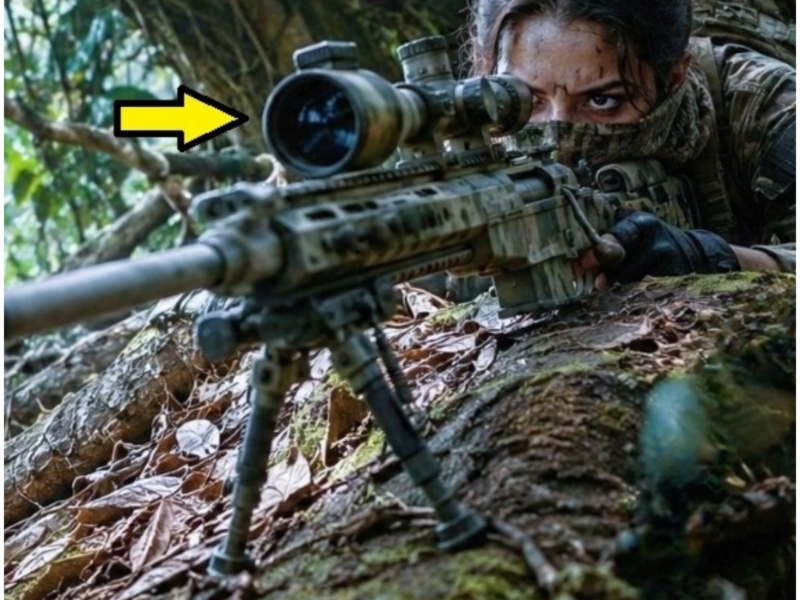
Then without moving from her shooting position, she spoke. Three years ago I killed 17 innocent people.
Wrong target. Wrong timing. Wrong decision. I’ve been trying to balance that equation ever since.
That’s not your fault. Bad intelligence happens in war. It was my trigger. My responsibility.
The colonel taught me that. He said if you’re going to be a sniper, you carry every death.
The righteous ones and the mistakes. You don’t get to choose what you remember. Sloan felt the burden in those words.
17 lives. 17 faces this woman probably saw every time she closed her eyes. How many have you saved?
I stopped counting after 80, but it doesn’t matter. The weight doesn’t lighten with arithmetic, Private.
It just gives you something to do while you’re remembering. Brin’s hand moved to the first round, loading it with practiced efficiency.
Now go. Get to safety. If I’ve calculated correctly, things are about to get very loud up here.
Sloan climbed down and ran across the compound. She found Commander Ashford in the operations center looking at the tactical display with Lieutenant Kincaid.
Sir, Callaway is in position. She has her ammunition. She told me to tell you the eastern gun was targeting medical.
She said next volley would have hit our wounded. Ashford looked at Kincaid, who pulled up trajectory analysis.
The computer model showed probable target zones based on observed mortar patterns. The medical tent sat dead center in the highest probability zone.
She knew that from watching? Kincaid’s voice carried disbelief. She calculated their next target from pattern analysis?
She said she’s been watching for 11 hours, sir. Said they adjust fire every 23 minutes in grid patterns.
Ashford pulled up the fire mission logs. Sure enough, incoming mortar rounds had landed in a precise grid, walking closer to high activity areas.
The next logical target was medical. Would have been medical except Brin Callaway had eliminated the gun crew before they could fire.
Sir, Kincaid pointed at the display. If she’s right about the patterns, that means she didn’t just take out a machine gun.
She prevented a massacre. Ashford sat down heavily. He thought about the seven wounded soldiers in that tent.
Thought about Corporal Reed, who’d been hit by shrapnel two days ago. Thought about Doc Sullivan, who’d been working 36 hours straight trying to keep people alive.
All of them would have died in the next mortar volley. Would have died if one woman with a rifle hadn’t been watching.
Hadn’t been calculating. Hadn’t pulled a trigger at 1,200 m and changed their survival odds.
“Sir.” Voss entered the operations center. “You need to see this.” He pointed out the window toward the north ridge.
Through his binoculars, Ashford could see Bryn Calloway’s position. Could see the morning sun illuminating her silhouette against the skyline.
And he could see every Taliban fighter on three ridges reorienting their weapons toward that single position.
She’d made herself a target. Drew every gun in the valley toward her location. While they focused on killing her, they weren’t organizing assaults, weren’t coordinating attacks, weren’t doing anything except trying to eliminate one woman who’d walked into their siege and started destroying their command structure.
“She’s bait.” Ashford said quietly. “She positioned herself where they can see her. Where they have to respond.
She’s turning herself into the biggest threat on the battlefield, so we’re not the biggest threat anymore.”
“That’s suicide, sir.” “No.” Ashford kept his binoculars trained on that distant figure. “That’s what happens when someone decides 97 lives matter more than one.
That’s what protection looks like when you strip away everything except the choice.” The first shot came at 04:37.
The sound rolled across the valley like distant thunder. Not loud where Ashford stood, but absolutely distinct.
The crack of a .50 caliber rifle firing at extended range. A sound that carried weight and intention and the promise of violence delivered with mathematical precision.
30 seconds later, enemy radio traffic exploded into chaos. Taliban communications lit up with urgent transmissions.
Ashford’s translator, a civilian contractor named Stevens, listened with growing disbelief. “They’re saying their communications officer is down.
Western Ridge, they’re calling for medics. They’re asking what happened?” Ashford grabbed his binoculars and focused on the western ridge where intelligence had identified an enemy command post.
Through the morning haze, he could see figures running. Could see the organized defensive position dissolving into confusion.
“Range to that position?” Kincaid checked the rangefinder. “1,207 m, sir.” 1,207 m. Ashford had qualified as expert marksman multiple times in his career.
He could hit a man-sized target at 500 m in ideal conditions. What Bryn Calloway had just done was three times that distance in morning thermals with crosswinds against a target she couldn’t have seen clearly with the naked eye.
“She said three rounds,” Voss murmured. “That was number two. She’s got one left.” They waited.
The compound held its breath. On three ridges, Taliban fighters were trying to locate the source of the shots.
Trying to figure out how their protected command positions were being eliminated from a range they thought was safe.
And on the north ridge, Bryn Calloway sat motionless. Eye pressed to scope, calculating survival for 97 American soldiers she’d never met.
The tactical display showed enemy forces beginning to shift. The organized assault preparations were fracturing.
Without clear command structure, without coordination, their three-to-one numerical advantage meant nothing. They were a mob now, not an army.
All because one woman understood something they didn’t. That warfare wasn’t about numbers. It was about precision applied at critical moments.
Ashford lowered his binoculars and looked at the men and women in his operation center.
Looked at soldiers who’d been preparing to die for 72 hours. Looked at faces that were starting to show something they’d lost days ago.
Hope. “All stations.” Ashford spoke into the radio. His voice carrying to every defensive position in the compound.
“Maintain alert status, but I want everyone to understand something. That woman on the north ridge just changed this fight.
She broke their command structure, disrupted their coordination. We’re not dead yet.” He paused, choosing his next words carefully.
“Colonel Whitmore trained me 28 years ago. Taught me that battles aren’t won by the side with the most guns.
They’re won by the side that refuses to accept that impossible means defeated. That woman up there learned from the same man.