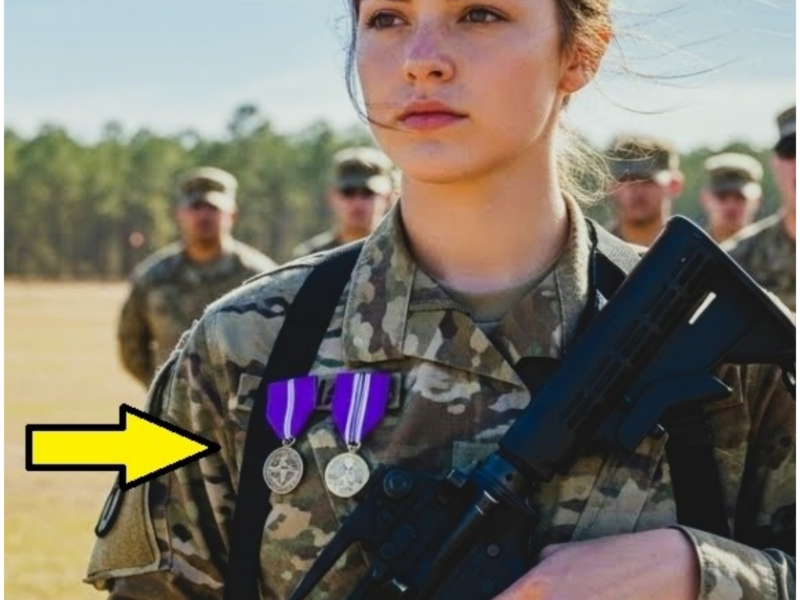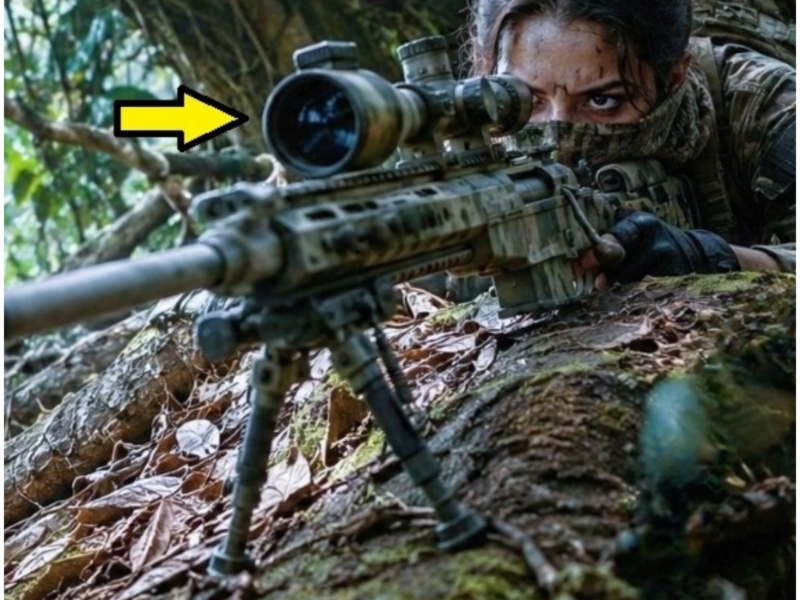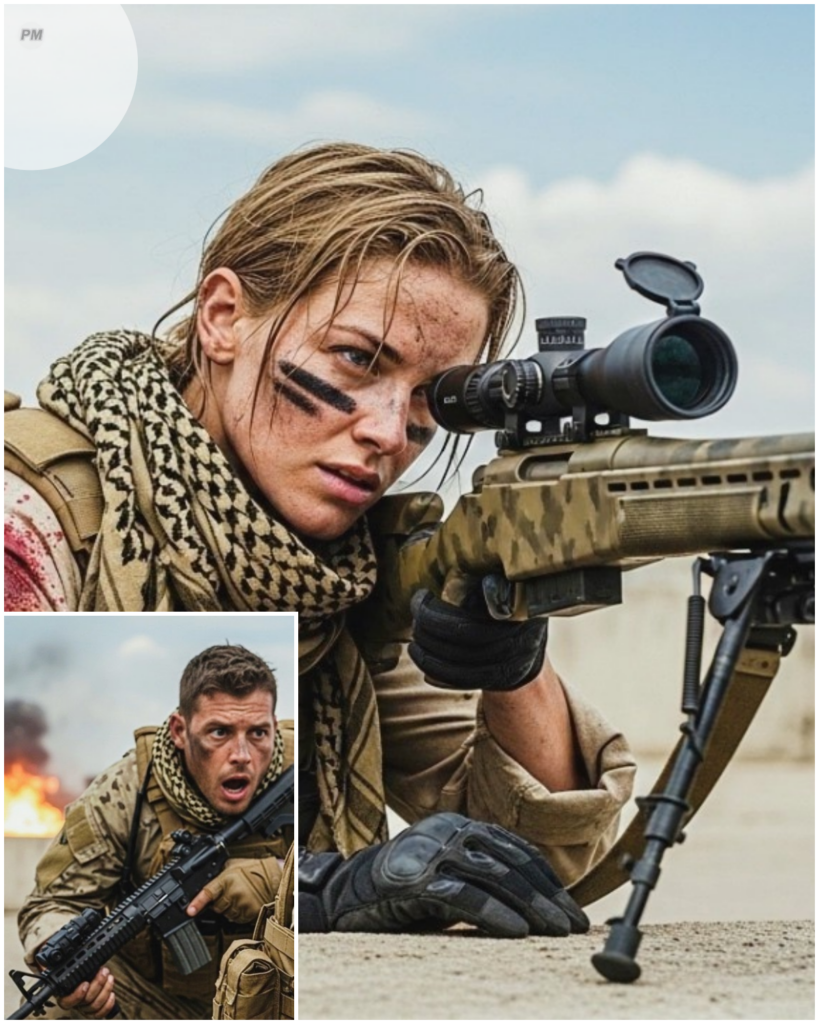
Three people stood watching her leave
Three people stood watching her leave. Voss, Reed, Barrett. Three witnesses to war learning that saving lives mattered more than taking them.
72 hours later, Brin Callaway sat in the back of a medical transport heading toward Bagram Airfield.
Her shoulder was healing. Her blood count was recovering. Doc Sullivan had cleared her for travel with strict instructions to report to Landstuhl for follow-up care and 3 weeks mandatory rest.
She had no intention of following those instructions. Corporal Reed sat across from her also heading to Bagram for flight home.
His [clears throat] wife had gone into labor 2 days ago. He was racing to meet his daughter who’d been born while her father was trapped in a siege.
“Ma’am,” he said quietly, “I never thanked you properly for what you did. My daughter exists in a world where her father is alive because of your shots.
Your daughter exists because you survived. Because you held the line. All I did was make it easier for you to keep holding.”
“That’s not what everyone’s saying. They’re saying you walked through Taliban lines like a ghost.
That you took impossible shots. That Colonel Whitmore sent his best student to save us.”
“Colonel Whitmore is dead. His students are scattered. And ghosts aren’t real, Corporal. I’m just someone who learned a skill and used it when needed.”
“Will you keep using it? Keep showing up at bases when things go bad?” Brin looked out the window at the Afghan countryside rolling past.
Mountains and valleys and villages where people were trying to survive in the spaces between wars.
I don’t know. I promise to try being something else. I owe it to Whitmore to try.
What would you be if not this? I have no idea. This is all I’ve been for 3 years, all I’ve known how to be.
She touched her shoulder where the wound was still tender. But maybe that’s the point.
Maybe Whitmore’s last lesson was teaching me that people like me need to know when the watch is done.
When to let someone else stand. The transport rolled through Bagram’s gates, organized chaos of a major military installation.
Helicopters taking off and landing, convoys forming and dispersing. Thousands of people engaged in the machinery of war.
Brin grabbed her pack, said goodbye to Reed, wished him luck meeting his daughter. Then she walked through the base toward the transient quarters where she’d stay before her flight to Germany.
She never made it to Germany. 15 years later, in the year 2026, Colonel Garrett Ashford stood in front of a classroom at the United States Army Sniper School, Fort Benning, Georgia.
He was 73 years old. Retired from active duty, but teaching part-time because sitting still had never suited him.
The class consisted of 35 students. 31 men, four women. All of them eager. All of them thinking they understood what it meant to be a sniper.
None of them really understanding until they pulled trigger on another human being and lived with what came after.
Today we’re discussing siege doctrine, Ashford began. Specifically, the defense of Forward Operating Base Sentinel, September 2011.
>> [clears throat] >> Anyone familiar with the engagement? Silence. Too long ago for most of these students.
Ancient history from wars they’d learned about in school, but never experienced. Sentinel was under siege for 72 hours.
300 Taliban fighters versus 97 American soldiers. Three to one numerical disadvantage, limited ammunition, no air support due to weather, QRF delayed.
By all tactical calculations, Sentinel should have fallen. He pulled up tactical maps on the screen.
Instead, zero casualties, complete defensive success. Enemy assault coordination collapsed. How? A female cadet raised her hand, 24 years old, sharp eyes.
Sir, the after-action report mentions sniper support, extended range precision fire. But no details, no names.
That’s right, Cadet Morrison. No names, but I was there. I commanded Sentinel, and I can tell you exactly what happened.
Ashford a single photograph, grainy, taken from distance. A figure behind a rifle, face obscured.
This is Bryn Calloway, trained by Colonel Thaddeus Whitmore. She walked through a Taliban siege and eliminated three enemy commanders with three shots.
Average range, 1,200 m. All in adverse conditions. The classroom buzzed with whispers. Morrison spoke up.
Sir, that’s not possible. Three for three at that range in combat conditions. No one’s that good.
No one should be that good, but she was. Because she’d been trained by the best instructor the army ever produced.
Because she’d been practicing one thing for six years. And because she was carrying weight that made missing unacceptable.
What weight, sir? Ashford hesitated, wondered how much to share. Then decided that truth served better than mythology.
Three years before Sentinel, she’d made a mistake, shot the wrong target. Seventeen innocent people died as a result.
She’d been trying to balance that ever since. Saving lives to compensate for the ones she took.
Sir, that wasn’t her fault. Bad intelligence happens. That’s what everyone told her. She didn’t accept it.
Colonel Whitmore didn’t let her accept it. He made her carry those names, made her understand that being a sniper means you own every shot.
Good and bad. Righteous and wrong. Morrison pressed, “Sir, where is instructor Callaway now? Why isn’t she teaching here?”
I don’t know. She disappeared after Sentinel, refused medals, refused recognition, just vanished like she always did.
Ashford pulled up more tactical data. But I’ve heard stories over the years, other bases, other sieges.
Always the same pattern. Someone appears, takes impossible shots, saves people, disappears before anyone can thank them properly.
He clicked through locations. Firebase Omega, Syria, 2013. Embassy extraction, Yemen, 2017. Training base fire, Jordan, 2021.
Refugee camp, Uganda, 2024. Always the same signature. Long-range precision. Zero casualties. Mystery shooter. You think it’s the same person?
I think some people can’t stop even when they try. I think Bryn Callaway promised Colonel Whitmore she’d rest.
But I think she’s still out there because that’s what happens when you find your calling.
It doesn’t end just because someone tells you it should. Ashford’s phone buzzed. Unknown number.
Text message. He opened it while the class discussed the Sentinel siege among themselves. The message read, “Saw your lecture online.