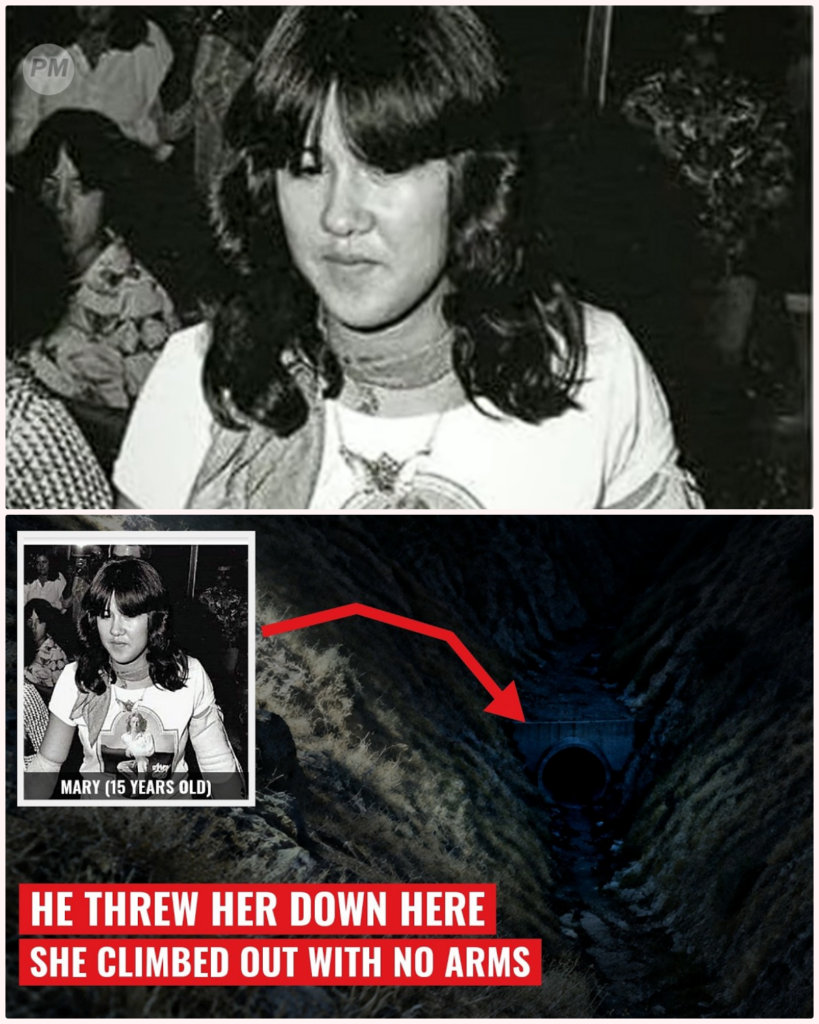
He was just a walking time bomb
He was just a walking time bomb. Nine days after he walked out of that hospital the bomb went off.
Roxanne Hayes was 31 years old. She lived in Tampa and she was the mother of three children, two boys and a girl.
Her life had been hard for for a long time. She worked the stretch of Hillsborough Avenue where women sold sex and she had been arrested many times.
That is how the newspapers described her in one line when it was over. The people who loved her described someone else.
Her family said she was a good person who cared about the people around her.
Her boyfriend Clifford Tyson put it this way. If any of those people could sit down with Roxie for 10 minutes, they would know she didn’t deserve what she got.
On February 19th, 1997, Lawrence Singleton picked Roxanne Hayes up and brought her back to his place in Orient Park.
That same afternoon, a house painter named Paul Hitson pulled up outside. Singleton had hired him to paint the house and Hitson had stopped by without calling to touch up the paint on the carport.
He called out Singleton’s name. From inside, he heard a muffled cry for help. He looked in and he saw Singleton hunched over a woman on the couch.
Hitson left with his uncle, drove to the nearest phone he could find, and called 911.
His mother later said the thing that haunted him most was that the man kept going right in front of him and didn’t not even care that he was there.
A sheriff’s deputy arrived. Singleton came to the door covered in blood. He told the deputy he had cut himself chopping vegetables.
The deputy looked past him and saw the couch. Roxanne Hayes had been stabbed seven times with a boning knife.
One wound reached her heart. The medical examiner would later test that she had tried to defend herself and that she stayed conscious for several minutes after the final blow.
19 years after he left a 15-year-old girl to die at the bottom of a culvert in California, Lawrence Singleton had killed a woman on the couch of his home in Florida.
And this time, nobody climbed out. That night, as officers led him out, Singleton spoke to the reporters gathered outside.
The clip played on television across the country. “They framed me the first time,” he said.
“But this time I did it.” Even then, 19 years later, in handcuffs with a woman’s blood on him, he would not admit what he did to Mary.
The news did not stay in Tampa. Reporters went straight back to 1978, to the culvert, to the sketch, to the hotel in Rodeo, to the trailer at San Quentin.
Time magazine called its story a recurring nightmare. In Contra Costa County, Nancy Fadden, the supervisor who had fought his parole, heard the news.
“It’s as if someday, somewhere, I was expecting something,” she said. “It’s very chilling.” And reporters went looking for Mary.
They found her in the gas station. What happened next is one of the few good turns in this story.
When people across the country learned how Mary Vincent was living, they started sending money.
More than $30,000 came in to a fund her lawyer set up in her name.
A prosthetics company called Novacare gave her a new pair of arms worth $15,000 for free.
“I’m overwhelmed by the love that’s out there,” Mary said. Her lawyer, Mark Edwards, called it a blood-curdling irony.
It took another woman’s death for anyone to notice how the first victim was living.
The donations bought Mary a Chevy van and a down payment on a house of her own.
She put a 6-ft fence around it. She got two mastiffs, and she started getting ready for Tampa.
The state of Florida charged Lawrence Singleton with first-degree murder. The first trial ended in a mistrial in December 1997.
>> [clears throat] >> The retrial began in February 1998 in front of circuit judge Bob Anderson Mitchum.
The prosecutor was an assistant state attorney named Jay Pruner. He had the painter. He had the deputy.
He had the knife. Singleton’s own defense lawyer John Sky did not try to say Singleton was not there.
Instead, Singleton told his own story. He took the stand and said he had taken prescription pills, antihistamines, and alcohol that day.
He said Roxanne had grabbed his wallet when he was giving her money for a cab, then picked up a knife he kept near the couch, and that she was hurt while he was trying to get it away from her.
>> [clears throat] >> His lawyers argued he was too drunk and too confused to have planned anything.
The jury did not believe him. In February 19, they found him guilty of first-degree murder.
Then came the hearing to decide whether Lawrence Singleton would live or die. And Jay Pruner wanted the jury to know who they were really dealing with.
Under Florida law, Mary Vincent didn’t have to come. She came anyway. She was against the death penalty.
The decision to testify was not easy for her. But she understood what was at stake.
“If I didn’t come forward,” she said later, “he could have been let go, and I would be his next victim.”
In the months before the trial, she lost 50 lb. She gave a deposition in a room at the Seattle Airport.
And then she flew across the country to Tampa. She was 34 years old. Nearly 20 years had gone by since she sat in a witness chair in California as a 16-year-old.
She walked into the courtroom and there he was again. 70 years old now, grayer, heavier, the same man.
The moment was so heavy that the judge forgot to swear her in and had to stop and do it.
She was on the stand for less than 10 minutes. She said what had been done to her in four short sentences.
I was raped. I had my arms cut off. He used a hatchet. He left me to die.

