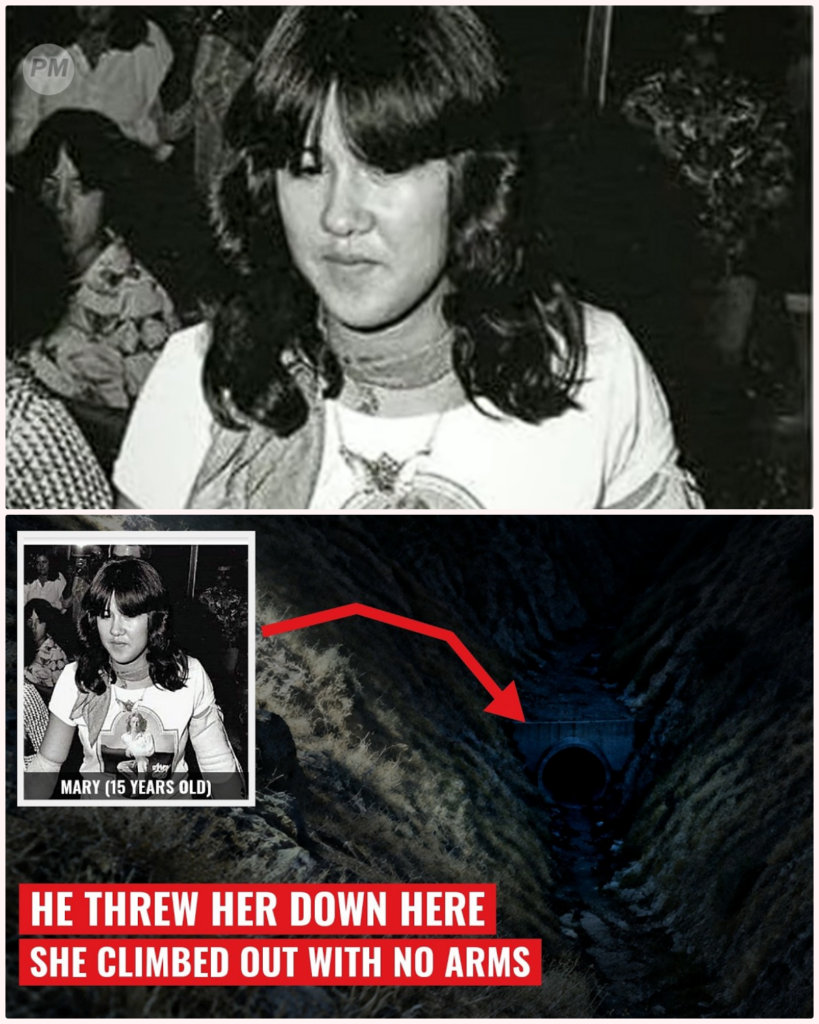
At that moment, she said, "There was no fear, just…
At that moment, she said, “There was no fear, just anger. I wanted to kill him.”
Then came a moment she has never forgotten. As she left the stand and walked past Singleton, he spoke to her quietly, just for her.
In her words, he said that if it took him the rest of his life, he would finish the job.
Forgave her as if she were the one who had done something wrong. The jury convicted Lawrence Singleton of kidnapping, rape, mayhem, attempted murder, and three other sexual offenses.
Then came the sentence, and this is the moment this whole story turns on. Under California law in 1979, there was a ceiling.
For everything Singleton had done to that girl, the maximum sentence a judge could give him was 14 years and a few months.
The judge gave him all of it. And then, according to reports at the time, he added something.
“If I had the power,” the judge said, “I would send him to prison for the rest of his natural life.”
He did not have the power. Nobody did. Mary Vincent was 16 years old. With good behavior, the man who had cut off her arms could be out before she turned 25.
Mary went back to Las Vegas and she tried to live. California gave her $13,000 from its fund for victims of violent crime.
Reports say the fund paid her because she was a child with no work history.
She sued Singleton in civil court and a jury awarded her about two and a half million dollars.
It sounds like justice. It was not. Singleton had almost nothing. By most accounts, he had about $200 to his name.
Mary never collected a cent. Her lawyer, a man named Mark Edwards from Santa Ana, became one of her closest friends.
At one point, a major television news program wanted to interview her. Edwards canceled it when he found out the show also planned to interview Singleton.
>> [clears throat] >> He was not going to let them sit her across from him, even on a screen.
Meanwhile, inside prison, Lawrence Singleton was a model inmate. He did not fight. He followed the rules.
He worked as a teaching assistant in a prison classroom and every good day behind those walls counted toward an earlier release.
That was how the system worked. Behave and the clock runs faster. According to Mary’s lawyer, he also wrote letters.
Threatening ones. Mailed out of his cell to the lawyer who had represented the girl he had left for dead, according to that lawyer.
Prison psychiatrists evaluated him before his release. Their conclusion is in the record. He remained, they wrote, an elevated threat to the safety of others inside prison and out.
It did not matter. In April 1987, after serving him about 8 years, Lawrence Singleton was paroled.
When Mary heard, she was terrified. She remembered what he had whispered to her on the way past the witness stand.
She was 24 now trying to build some kind of life, and the man who had promised to finish the job was walking free.
Her words years later were simple. I was terrified. No one is safe around him.
She moved. She went as far north as she could to the Gig Harbor area of Washington state near Tacoma.
She asked a friend to act as her bodyguard, and she was not the only one who was afraid.
The Department of Corrections had to put Singleton somewhere for his year of parole. The state chose Contra Costa County, east of San Francisco.
And when the people of Contra Costa found out who was coming, they rose up.
The first plan was to put him in Antioch. That fell apart. Then they tried Rodeo, a small town on the water about 25 miles from San Francisco.
Officials found him a hotel room, word got out, within hours around 500 people had gathered outside.
They chanted, they carried banners. One said, “Drop dead, Larry.” Another said, “Get the maniac out.”
Officers had to move Singleton out of that hotel under armed guard. So, the state tried somewhere else.
In Concord, officials looked at housing him in a building right across the street from city hall.
The protest started before he even arrived. That plan collapsed, too. They tried an apartment elsewhere in the county.
This time around 400 residents surrounded the building. When Singleton was brought out, he was wearing a bulletproof vest.
The local officials were furious and not only at Singleton. A county supervisor named Nancy Fadden said publicly that no police chief in the county would want to be responsible for supervising him.
An aide to one state assemblyman called the Department of Corrections the most stubborn, arrogant agency we’ve ever dealt with.
A correction spokesman, Bob Gore, tried to explain why the state kept failing. “You can’t do that.”
He said in a glare of publicity. If you had lived in Contra Costa County in 1987, would you have been outside that hotel with a sign?
Tell me in the comments. I want to know what you would have done. Look at what was happening.
A whole region of California was in the streets shouting at a man that he was not welcome.
And not one of those people could do the one thing that would have made sense.
They could not put him back inside. The law was finished with him. >> [snorts] >> Finally, the decision went all the way to the top.
California’s Governor, George Deukmejian, stepped in. “Mob rule,” the governor said, “has no place in our society.”
And the state with an answer that sounds like something out of a strange novel.
Lawrence Singleton would serve his parole living in a mobile home on the grounds of San Quentin State Prison.