Those four or five seconds were enough
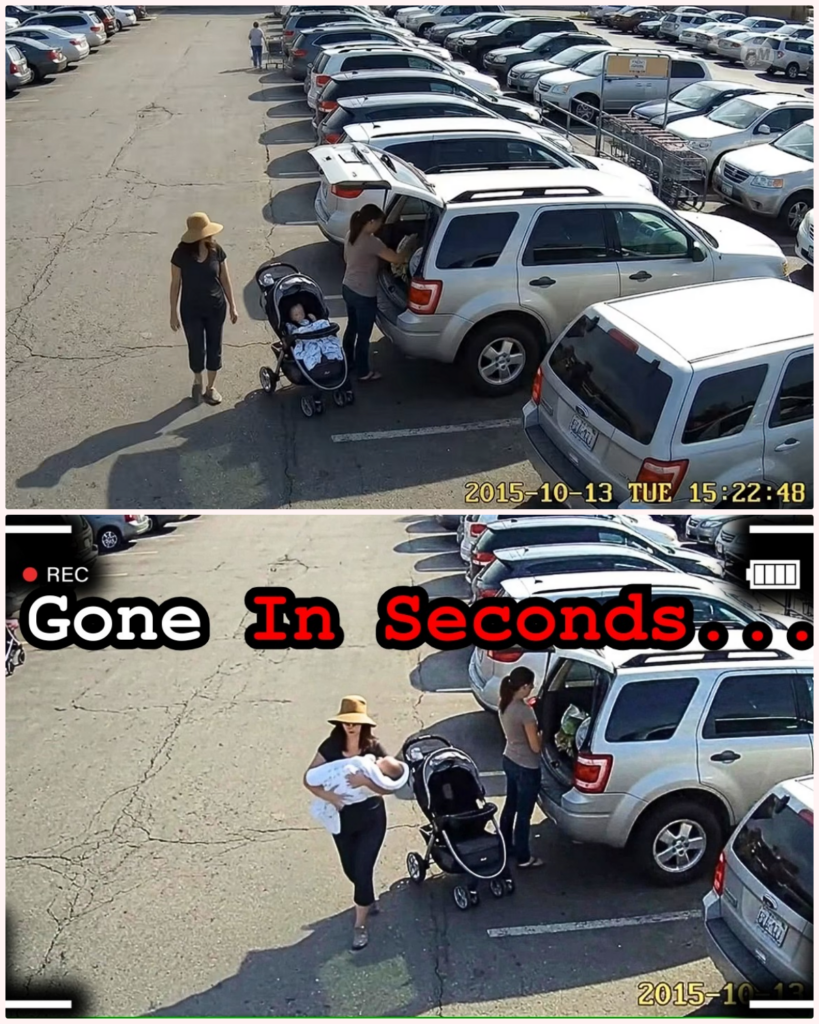
Those four or five seconds were enough. What you saw at the start of this video was captured by the parking lot’s overhead security system.
A wide-angle municipal camera covering the full row of parking spaces rather than any single vehicle specifically, which meant the footage, when investigators finally reviewed it, offered a clear timeline but a frustratingly distant, low-resolution view of the woman who approached that stroller.
She wore a wide-brimmed sun hat, unremarkable for a bright afternoon, and moved with a calm, unhurried confidence that, on later review, investigators would describe as the most chilling element of the entire tape.
Not a desperate, frantic snatch, but something closer to routine, practiced, as though she had rehearsed this exact sequence of movements many times before ever standing in that parking lot.
She lifted the infant from the stroller with the easy competence of someone experienced in handling a baby, settled the child against her shoulder, and walked, without any visible urgency, toward a sedan parked four rows away.
By the time the mother turned back around, closing the trunk and reaching for the stroller handle, both the woman and the child were gone, swallowed into the ordinary traffic of a busy shopping center parking lot on a Tuesday afternoon, indistinguishable from any other parent buckling any other child into any other car.
Store security footage from an adjacent camera, reviewed only after the initial wide-angle parking lot footage had already established the timeline, captured a slightly clearer angle of the woman’s final approach to her vehicle, though still not clear enough to establish a usable facial image.
What it did capture, investigators noted, was the woman pausing briefly beside her car door, adjusting the infant’s position against her shoulder with a small, practiced motion before opening the door and securing the child inside, a sequence so ordinary, so consistent with the thousands of identical moments unfolding in parking lots across the country every single day, that not one of the several dozen shoppers moving through that lot at the same time registered anything worth a second glance.
The mother’s scream, according to multiple witness accounts gathered in the chaotic minutes that followed was what first alerted nearby shoppers that something had gone catastrophically wrong.
Store employees initiated a lockdown within minutes. Local police arrived within 8 minutes of the first 911 call.
A response time later credited in part with preventing the case from becoming even more difficult to solve than it already was.
But 8 minutes in a case like this one is still an eternity. More than enough time for a vehicle to clear the immediate area and merge into the anonymous flow of a busy commercial corridor.
Bystanders who rushed to help in those first chaotic minutes described a scene of disorienting confusion.
A mother collapsed against her own vehicle, unable at first to form coherent sentences, surrounded by strangers attempting simultaneously to comfort her and gather usable information before it slipped away.
One shopper, a retired school teacher who happened to be parked two rows over, later credited her own instinct to immediately note the time on her phone as one of the few pieces of precise, reliable information investigators had to work with in the case’s opening minutes.
A small act of presence of mind that helped establish the exact abduction window against which all subsequent camera footage would eventually be cross-referenced.
What followed was one of the most intensive manhunts the state’s law enforcement apparatus had activated in years.