Tell her she was safe
Tell her she was safe. Tell her he was handling it. The pattern repeated. He would leave a note on her car while she was at work.
She would find it after her shift, call him immediately. He would drive to the library, meet her in the parking lot, bag the note as evidence, promise her he was close to identifying the suspect.
He was feeding her fear, then soothing it over and over. By September, Destiny’s mental state had deteriorated significantly.
She barely slept. She jumped at every sound. She saw threats everywhere, but she still trusted Marcus.
On September 12th, she called him one last time. I saw the car again, the sedan parked outside the library.
Marcus told her he would patrol the area that night. Personally, you’re safe, Destiny. I promise.
She thanked him. She told him she did not know what she would do without him.
Marcus Row told her not to worry. 2 days later at 10:54 p.m. He used the key he had made in July.
He entered her apartment. 11 minutes later, Destiny ran 4 miles 6 and 1/2 km through fields through back roads in complete darkness barefoot, carrying a purse that bounced against her side with every step.
This was not a jog. This was survival. Investigators later reconstructed Destiny’s route using witness statements and physical evidence.
She ran east from her apartment toward the main road, but she did not stay on pavement.
She cut through a field, tall grass, uneven ground, rocks, thorns. Her feet were torn apart.
At one point, she crossed a shallow creek. The water was cold, moving fast from recent rain.
She kept running. She ran past isolated houses with no lights on. She did not stop.
She did not knock. She was looking for one thing. A house with lights, people awake, someone who might answer.
The Brennan residence was the first house she found that met those criteria. It was 11:47 p.m.
When she reached their door. She had been running for 53 minutes. Her lungs were burning.
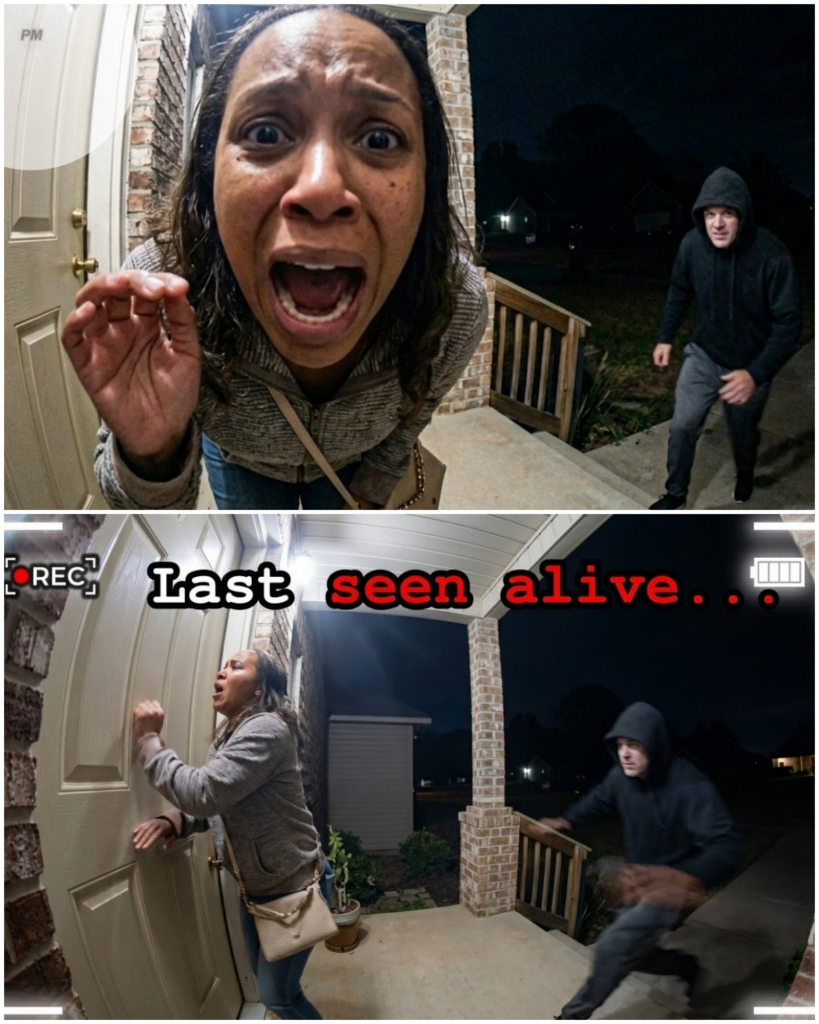
Her feet were bleeding. Her legs were shaking from exhaustion. But she pounded on that door.
She screamed, “Please, please open the door. Somebody help me. Please help me.” 3 seconds passed.
No answer. She turned, looked back, and he was there. Marcus had followed her the entire way.
He had not rushed. He knew she would tire. He knew she had nowhere to go.
He grabbed her. She tried to fight, but after 53 minutes of running, she had nothing left.
He dragged her away. That was the last time Destiny Porter was seen. Detectives worked the case for 72 hours straight.
They pulled every piece of evidence from Destiny’s apartment. Her phone, her folder, her notes.
They interviewed her co-workers, her parents, her neighbors. Everyone said the same thing. Destiny was quiet.
Reliable. She kept to herself. No boyfriend, no enemies, no reason for anyone to target her.
Then detectives found the detail that changed everything. Destiny’s apartment door had not been forced open.
There were no scratches on the lock, no damage to the frame. Whoever entered her apartment on September 14th had used a key.
Detectives compiled a list of everyone with access to her apartment. Her landlord, two maintenance employees, her parents, all were questioned.
All had alibis. Then detectives pulled Destiny’s phone records. In the 3 months before her disappearance, she had called one number 43 times.
Officer Marcus Row. The calls ranged from 30 seconds to 22 minutes. Text messages showed constant communication.
Destiny updating him on incidents. Marcus responding with reassurance and instructions. The last text from Destiny to Marcus was sent on September 12th at 4:47 p.m.
Saw the car again. Same one outside the library. Marcus’ response came 3 minutes later.
I’ll patrol tonight. You’re safe. I promise. Detectives requested a full audit of Marcus Rose activity.
Cell tower data placed his phone near Destiny’s apartment 14 times between July 9th and September 14th.
None of those visits corresponded with official police business. July 11th, 11:34 p.m. July 16th, 1:47 a.m.
July 23rd, 12:52 a.m. The pattern continued through August and into September. Traffic cameras captured his personal vehicle near her apartment multiple times.
August 3rd, 2:51 a.m. August 19th, 3:14 a.m. September 8th, 1:22 a.m. On September 16th, detectives obtained a warrant to search Marcus Rose residence.
The search began at 6:42 a.m. What they found left no doubt. Marcus Rose house was small, singlestory, quiet street on the southern edge of Carbondale.
The search team executed the warrant with precision. In the master bedroom, they found a laptop on the desk.
Forensic analysts opened it. Inside the documents folder, a subfolder titled DP. Inside that folder, 127 photographs of Destiny Porter.
None had been taken with her knowledge. Walking to her car, at the grocery store, on her apartment balcony, at the library.