Detectives reconstructed her final drive from priv…
Detectives reconstructed her final drive from private cameras. Valerie passed her sister’s street, circled a gas station, and entered the garden center lot.
She appeared to be checking whether the van was following. Dean parked behind her at an angle that blocked the exit.
The cameras did not capture the confrontation, but they recorded both vehicles leaving 12 minutes later.
Only the van returned to the main road. One resident near the abandoned service route remembered hearing a metal door slam after midnight.
Another saw headlights beyond the locked hospital gate. Dean possessed the only facilities key checked out that week.
When investigators searched his apartment, they found Valerie’s broken phone wrapped inside a scrub top at the bottom of a tool case.
The defense argued that someone had planted it. A forensic examiner showed that the phone connected automatically to Dean’s home router at 3:18 Monday morning.
That connection lasted 9 minutes, long enough for repeated attempts to unlock the device. Dean had brought the evidence into his own apartment and activated it without realizing the network event would remain in the router log.
The institution’s conduct received separate scrutiny. Three employees had previously reported unexplained chart changes connected to Bell’s program.
Two complaints were classified as software problems. A pharmacy technician who questioned missing vials was transferred to daytime reception.
Regulators concluded that administrators had built a culture in which discrepancies were corrected administratively instead of investigated clinically.
Nothing in that finding reduced Dean’s individual responsibility. It explained why his instructions met so little resistance before Valerie.
Staff had learned that raising a concern brought meetings, access restrictions, and accusations of disloyalty.
The scheme did not require every employee to participate. It required most of them to assume someone above them had approved what they were seeing.
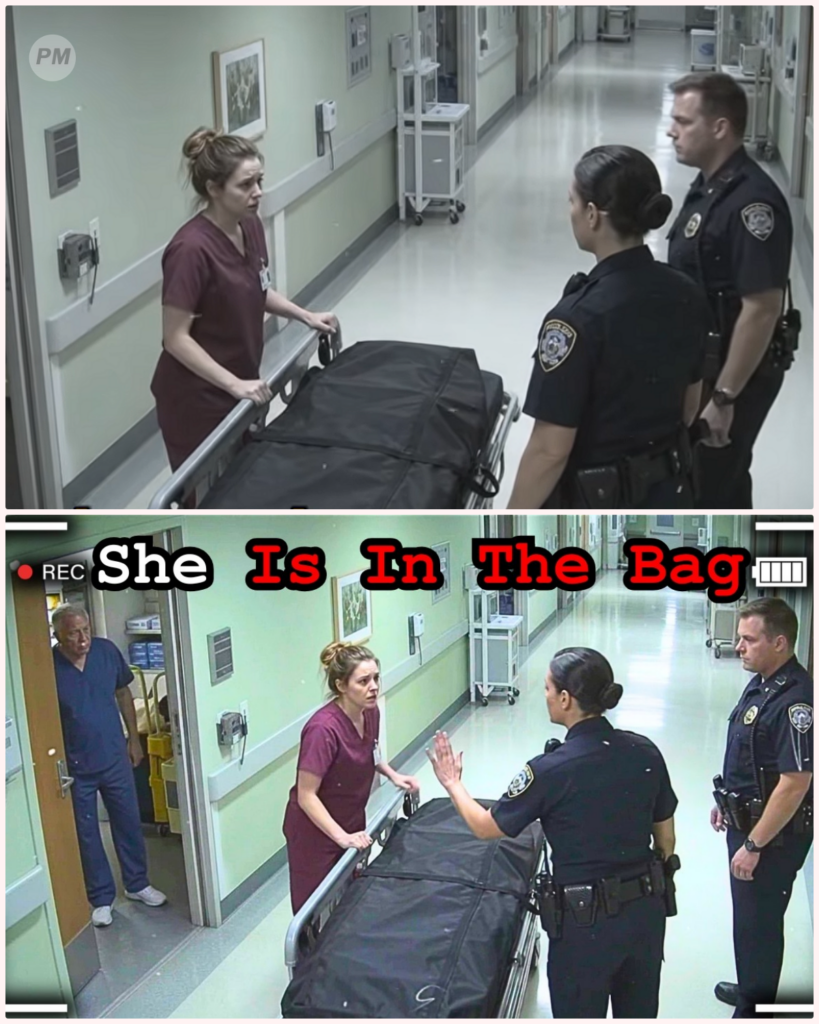
Officer Price later said Valerie’s expression in the corridor stayed with her. It was not the expression of someone surprised that police had arrived.
It was relief mixed with fear. Relief because an outside witness had interrupted the transport.
Fear because Dean was still watching from the doorway. Price kept the officers in the corridor despite repeated requests from management to move into a conference room.
That decision preserved the gurney, the unidentified injection site, and the original wristband. Had the bag reached the loading elevator, prosecutors believed Mary Ann would have been transferred to a private cremation service using documents prepared under another patient’s name.
The unrelated wandering patient was located 20 minutes later asleep in a family waiting room.
His brief absence brought the officers to the exact corridor at the only moment they could have stopped the removal.
The case turned on coincidence, but the convictions did not. Those rested on records Valerie preserved after chance gave her an audience.
Today, the former hospital service corridor is dark. The camera that captured Valerie was removed during the closure.
Its footage survives in the court archive. Eight silent seconds in which an apparently routine task stops looking routine.
The gurney rolls. A hand rises. Valerie freezes. Dean waits. Then Valerie looks back at him.
By the time investigators understood that glance, she was gone. By the time a jury saw it, the paper she hid had given the glance its full meaning.
She was not asking Dean what to do next. She was showing the officers whom she feared.