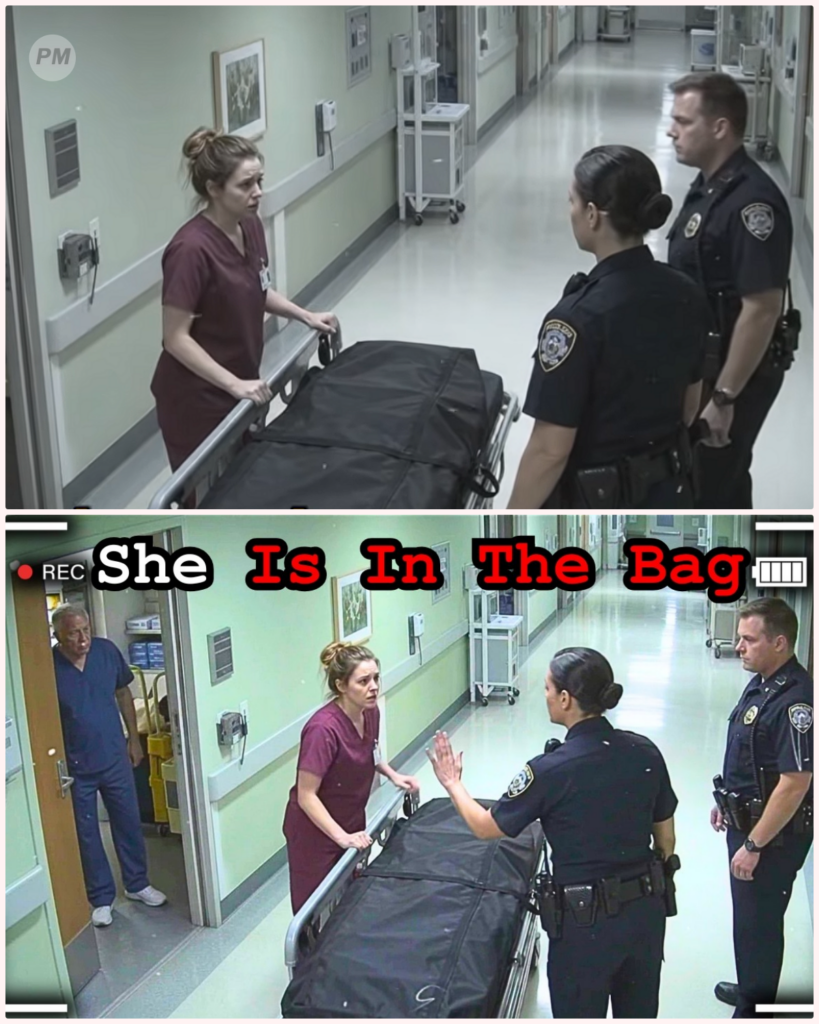
>> At 2:13 in the morning, two patrol office…
>> At 2:13 in the morning, two patrol officers entered the service corridor of St.
Alden Medical Center looking for a confused patient who had wandered away from the emergency department.
They never found that patient in the corridor. Instead, a security camera recorded them stopping a nurse named Valerie Larkin as she pushed a gurney toward the loading elevator.
A sealed black transport bag lay strapped on top. Valerie’s hands locked around the rail when the first officer raised his palm.
She looked at the bag, then over her shoulder toward a senior orderly standing in a doorway behind her.
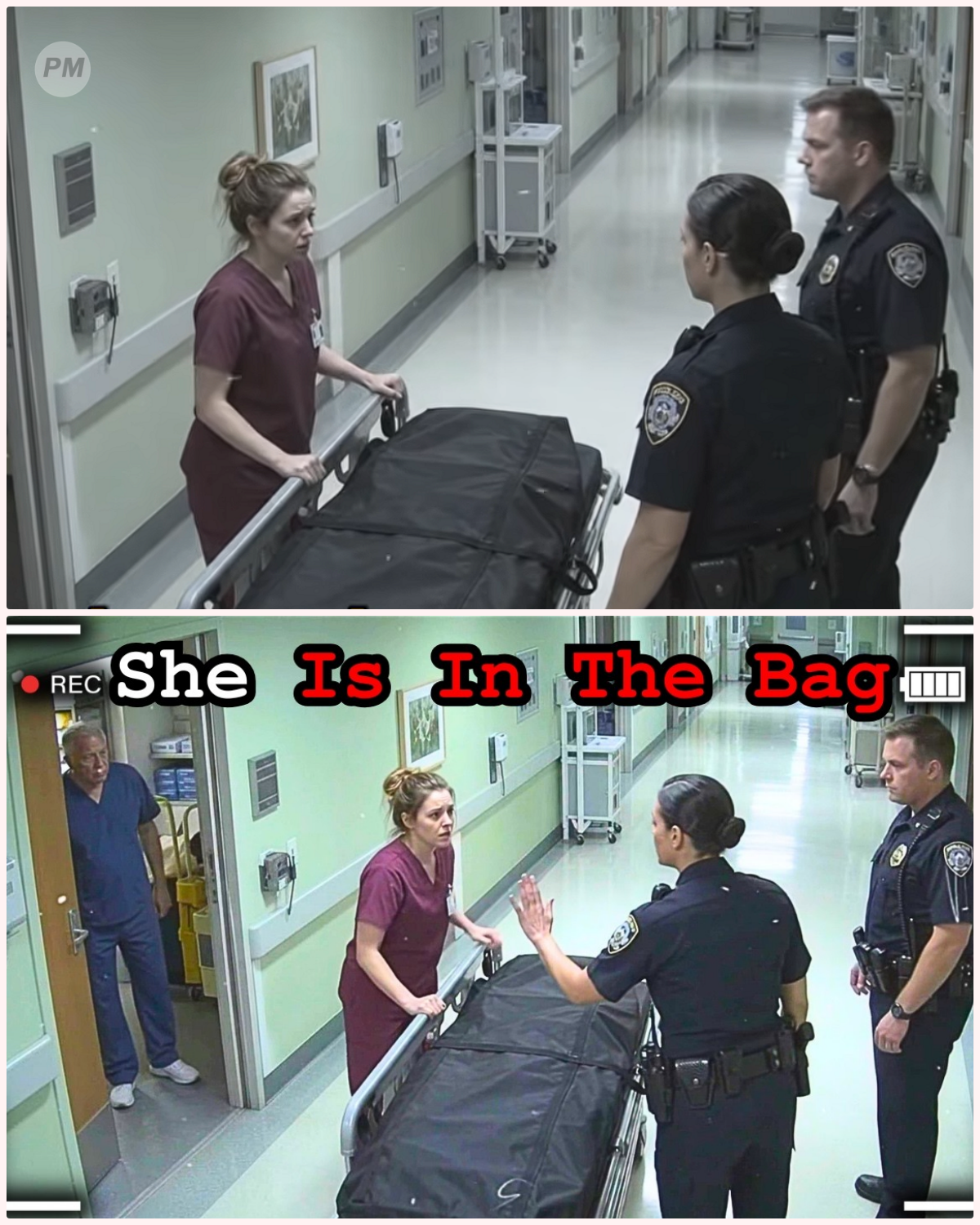
The officers asked for the deceased patient’s name. Valerie gave them a room number. When one officer checked the hospital system, the patient assigned to that room was not listed as dead.
She had been marked discharged 47 minutes earlier. Four days later, Valerie Larkin disappeared. The eight seconds captured in that hallway would become the opening of a case involving a falsified chart, a medication trial that did not officially exist, and a hospital employee who understood exactly how to make a death look like an administrative correction.
Yet the detail that exposed him was not inside the transport bag. It was a single paper copy Valerie had folded beneath the removable liner of her work locker.
St. Alden was a privately operated 78-bed hospital on the edge of Maple Crossing, North Carolina.
It served three rural counties and survived by doing several things at once. Emergency medicine, short-term rehabilitation, outpatient surgery, and a small behavioral health unit.
At night, was quiet enough that staff recognized one another’s footsteps. The elevator slowed. Printers jammed.
Everyone knew which doors needed an extra pull before the latch caught. Valerie had worked there for 9 years.
At 36, she was the nurse new employees requested when they were assigned their first overnight rotation.
She spoke softly, documented everything, and disliked shortcuts that turned patients into room numbers. Her younger sister, Tessa, said Valerie could remember a stranger’s allergy months after forgetting where she had parked her own car.
The patient in the sealed bag was 68-year-old Mary Ann Holt. Mary Ann arrived at the emergency department shortly after 6:00 that evening with dizziness, sweating, and an irregular heartbeat.
Her daughter, Paige, told the triage nurse that Mary Ann had begun a new blood pressure medication 3 days earlier.
Initial tests showed dehydration, but no immediate cardiac damage. At 8:20, she was admitted for overnight observation in room 214.
Valerie took responsibility for her at 11:00 p.m. Mary Ann was awake, frightened, and asking to call her daughter.
Valerie found no phone order restricting contact. She handed Mary Ann the bedside receiver, but the line produced no dial tone.
When Valerie reported it, senior orderly Dean Corbett offered to bring a portable phone. Dean had worked at St.
Alden for 17 years. He controlled the practical movements no chart fully recorded. Which patient went to imaging first?
Which bed entered storage? Which service elevator remained unlocked? Administrators praised him for solving problems before anyone filed a request.
His personnel record contained no formal discipline. At 11:32, Dean entered room 214 with a man Valerie did not recognize.
The visitor wore a white coat without a visible badge and introduced himself as Dr.
Klein. He said Mary Ann had consented to a medication adjustment under a remote cardiology order.
Valerie opened the electronic chart and found no such order. She refused to administer the syringe she carried.