Lorna Matson knew her husband’s knock. Two quick raps, a pause, and one slow one.
He knocked like that on every door in his life, even his own. For years after he vanished, she pictured him walking out to his deer stand in the dark, the morning after Thanksgiving, and never walking back.
Six men told it that way. Most of them had hunted with Ollie since he was a boy.
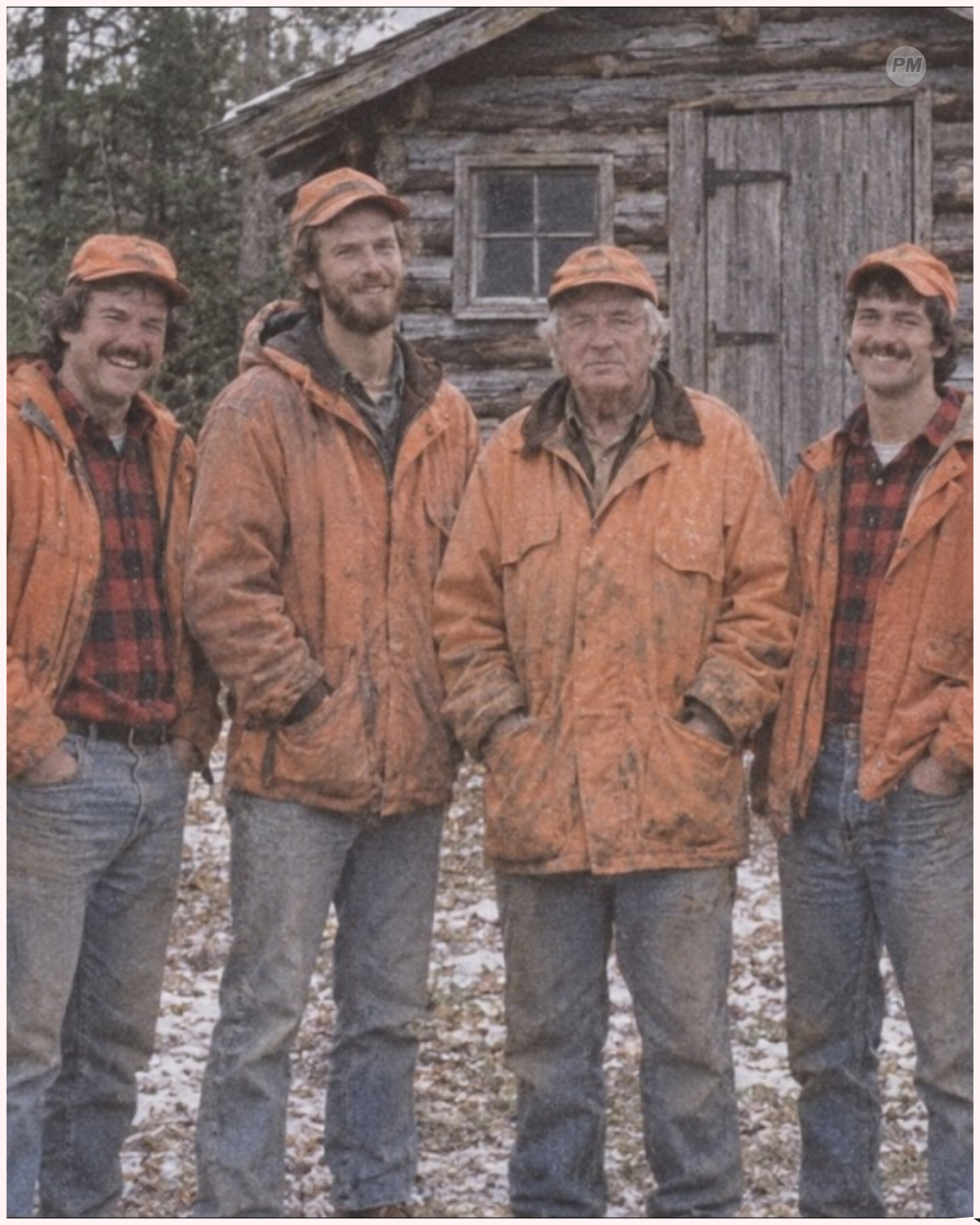
I worked that search. I wrote their story in my patrol log and signed my name under it.
22 years later, in September of 2018, the youngest of those six men called me.
He told me Ollie never went to any stand that morning. He told me Ollie was asleep in his bunk, snoring, when his knock came at the camp door.
Two quick, a pause, and one slow. And it kept coming all night long.
You will hear the rest of this from inside that camp with the door shut behind you.
I am Lars Hagen. I was [clears throat] a game warden in Northern Wisconsin from 1988 to 2020.
In the summer of 1994, the department moved me up to Iron County against the Michigan border.
In November, that country belongs to the deer hunters. Our gun season runs nine days.
It opens the Saturday before Thanksgiving. In 1996, that meant the 23rd of November. The afternoon before an opener, I always made the rounds of the camps in my district, checking licenses and rifles.
The Rennert camp sat at the end of a forest road east of the Potato River, above the falls near Gurney.
It was a long, low building of logs and tar paper. Behind it, the ground fell away into a cedar swamp.
That swamp was so thick that the snow under it stayed blue at noon. Otto Rennert built that camp in 1949.
By the time I knew it, his son Clem ran it. Clem was 70 years old.
He was a retired millwright from Hurley with hands like split firewood. He had hunted that same every November since he came home from the war.
I knocked a little before sundown, and Clem let me in. The heat hit me like a wall.
There was venison stew on the stove. There was a coffee pot that I am fairly sure had not been washed since the ice bowl.
Seven men sat around a plank table under a gas lantern, playing cribbage for nickels.
I counted them the way I always did. Seven men, [snorts] seven licenses, seven back tags.
In those days, the state made you pin a paper tag between your shoulders. Theirs were already pinned to the backs of their coats, and the coats hung on nails by the door, waiting for morning.
I remember every one of them. Clem sat at the head of the table. Bert Hokanson and Wally Duffy had hunted there since the ’50s.
Nils Sorenson carried mail out of Mercer. Hal Bauman sold feed in Ashland. Jimmy Ferris was 24, the youngest by a mile, there for his second season.
And then there was Ollie Matson. Ollie was Clem’s nephew. He was 44, a plumber from Hurley, the kind of man who filled a room just by laughing in it.
He poured me a cup of that terrible coffee and told me it would put hair on my chest.
I said I had plenty. He said then it would put hair on my hair.
While I sat there, Ollie pegged out and won the hand, and he knocked on the table to celebrate.
Two quick raps, a pause, and one slow one. The whole table groaned. Bert told me Ollie knocked like that on everything.
Doors, tables, truck hoods, the side of a fish house. Bert said you could hear Ollie coming from a mile off, one knock at a time.
On the shelf over Ollie’s bunk, he had a snapshot of his wife, Lorna, standing by a Christmas tree.
It was tucked into the frame of a little mirror. Two things in that camp stuck with me.
The first was the door. It was thick planks on iron hinges, and on the inside, it had a bar, a real one, a length of oak as thick as my arms, sitting in two iron brackets.
I had been in a lot of deer camps. Most of them had a latch you could open with a butter knife.
Nobody bars a deer camp from the inside. The second was a board over the door frame.
Somebody had painted words on it a long time ago. The white paint had gone yellow.
It said, After dark, the door stays barred. Not for a knock, not for a voice, not for your own brother.
I asked Clem about it. He smiled the way old men smile at a young man’s question.
He said his father painted it the winter he built the camp. He said it was a joke to keep the young fellows from sneaking off to the tavern in Gurney after dark.
Then he said something else. I wrote [snorts] it in my log that night because it sounded like a joke too, and I liked it.
He said, If you ever hear a knock, you know, look at the bunks first.
The man it belongs to is already in his. Everybody at the table laughed. Ollie laughed hardest and knocked his knock on the table again.
I finished my coffee, wished them luck, and walked out into the last of the light.
Behind me, I heard that bar drop into its brackets. In my patrol log, I wrote the date and the camp and one number, seven.
The season went the way seasons go. Clem shot a fat eight-pointer on Sunday. Wally got a spike horn on Tuesday.
I saw both deer at the registration station in Hurley. I saw Ollie there too, telling a story about a buck that had made a fool of him.
Thanksgiving fell on the 28th that year. A lot of camps went home for it.
The Renard camp did not. They had a turkey and a rooster on that wood stove.
From what I heard later, Ollie carved it. The next morning, a little after 9:00, the sheriff’s office called me on the radio.
A hunter was missing from the Renard camp. I got there before the deputies did.
The six men were standing in the yard in their orange, and the yard was a mess.
It had snowed in the night, maybe 3 in, and the snow had quit before dawn.
By the time I pulled in, that new snow was trampled flat. Boot prints ran everywhere between the camp and the outhouse, around the wood pile and the trucks, out behind the camp, clear back to where the cedar starts.
Clem did the talking. He said Ollie got up before daylight, same as every morning.
He ate a cold biscuit and walked out to his stand on the East Ridge.
He always came back in for breakfast by eight. This time he did not. They went looking and when they could not find him, they called.
It was a reasonable story. Men who are laid off a stand mostly turn up.
Then I talked to the others one at a time, the way I was trained to.
Bert said he heard the door go about five. Wally said it was near six.
Nils said Ollie took his thermos. Hal said the thermos was still on the table.
I looked and it was full and cold. Jimmy Ferris did not say much at all.
He kept looking at the cedar swamp behind the camp. Every time he did, Clem said his name quietly and Jimmy looked away.
Little things. People remember mornings differently. I wrote them all down and did not think much of them.
But I walked out to the East Ridge myself before the search teams came. I found Ollie’s stand.
It was a ladder stand on a big red oak with a cushion still strapped to the seat and there was not a single track under it.
Nothing coming in and nothing going out. Just 3 in of new snow, smooth as a bed sheet all the way around that tree.
When I came back and told Clem, he said Ollie must have changed his mind and walked somewhere else.
He said it fast, like he had been waiting for me to say it. So I walked the outside of that trampled yard all the way around, the slow way.
Every line of tracks that went out of it came back into it, out to the trucks and back, out to the road and back.
Every line but one. Along the back of the camp, the trampling ran straight into the cedar and did not come out again.
I told the sheriff that afternoon. Lorna drove up from Hurley about then. She was a small woman in a big parka.
She asked each of the six what happened and each told her the ridge a little differently.
She heard it, too. Then she looked at their faces and decided not to push.
Grief makes people kind in strange ways. The search ran four days. We had deputies, volunteers, a state plane, and two tracking dogs out of Ashland.
The six men from the camp searched harder than anybody. They walked that east ridge until their boots came apart.
They sent the volunteers north and south along the river. They kept everyone on the high ground.
On the second afternoon, one of the dog handlers led his hound around behind the camp.
The dog went straight to the edge of the cedar swamp. Then it turned and trailed back to the camp door, nose down.
Then back to the swamp. Then back to the door. Three times the same line.
Swamp to door and door to swamp. The handler said all those boot tracks had the dog confused.
Clem came around the corner and asked the handler to bring the dog up to the ridge where Ollie had been headed.
The handler did. I remember thinking a confused dog seldom runs the same line three times.
On the third day, the sheriff walked a line of volunteers along the edge of the cedar behind the camp.
They went in maybe 50 yards. Under the snow, there was black water, open and deep, and the first two men in line went through it to their hips.
The line turned back. >> [snorts] >> They left a cribbage board on the table and Ollie’s duffel under his bunk.
Nobody ever hunted the Rennert camp again. In January, I snowshoed back in once on a clear afternoon.
Snow had drifted across the floor. The cribbage pegs were still in the board. The oak bar was leaning against the wall and the snapshot of Lorna was still tucked in the mirror over the empty bunk.
I took it down and brought it to her. Keep that oak bar in mind.
22 years later, Jimmy told me where it sat that night and whose hands were on it.
Subscribe and wait with me for that phone call. In the years after, I watched those six men drift apart like ice in spring.
Before that November, they had stood up at each other’s weddings. After it, they could not stand to be in the same room.
Bert and Wally sold the fish house they had shared on Trudy Lake for 20 years.
Hal moved to Rhinelander. Nils switched his mail route so it no longer went past Clem’s house.
Jimmy Ferris moved to Minnesota inside of two years. Lorna called me every November. She asked if anybody had found anything.
And once, about 10 years in, she asked me something I could not answer. She asked why none of the men from that camp would come with her to put flowers by his stand.
She had asked every one of them. Every one of them said no. Not for a day, not in July, not with her walking beside them.
Clem Rennert passed away in 2004. Before he did, Lorna went to see him at the nursing home in Hurley.
He held her hand and cried and said he was sorry. She asked him what for.
He only said he had followed his father’s rule and he would follow it again.
I went back to my old log entry more times than I can tell you.
Seven. And that painted board. If you ever hear a knock, you know, look at the bunks first.
In September of 2018, the week archery season opened, Jimmy Ferris called me. He was 46 by then.
He had a wife and a business in Grand Rapids, Minnesota. And he had a voice that sounded like it had not slept in a week.
He asked if he could meet me somewhere nobody would see us. We sat in my truck at the boat landing on Lake of the Falls, empty on a weekday, with the engine running and the heater on.
He told me he was the last one who could still tell it. Bert and Wally were gone by then, and Hal too.
Nils had a stroke the spring before and could no longer talk. Jimmy said he could not carry it by himself anymore.
I asked him why me? Why a warden and not the sheriff or a priest or Lorna?
He said that was Clem’s doing. The morning they lifted the bar, Clem made all six of them promise one more thing.
If any of them ever had to tell it, they would tell it to the warden in daylight, never at camp and never after dark.
Clem said somebody would have to go in for Ollie one day, and a warden was the one man with sense enough to do it at noon.
Jimmy had driven 4 hours to sit in my truck at 10:00 in the morning.
He kept checking the sky. Here’s what he told me. Thanksgiving night they ate and played cards and turned in early.
Clem dropped the bar and its brackets after dark. He did that every night of every season.
Seven men in seven bunks and the stove ticking down. Sometime after 2:00 in the morning, Jimmy woke up.
Somebody was knocking on the door. Two quick raps, a pause, and one slow one.
Jimmy was half out of his bunk before he was awake. Nobody else in the world knocked like that.
He thought Ollie had gone to the outhouse and gotten himself barred out. He reached for the bar, and from the dark Clem said, look at the bunks.
Jimmy turned on his flashlight. Ollie Matson was in the bottom bunk by the stove.
He was under two wool blankets, sound asleep with his mouth open, snoring. The knock came again.
Two quick, a pause, and one slow, patient, like a man who knows you are home.
Then it moved. It came on the back wall behind Bert’s bunk. Two quick, a pause, one slow.
Then on the frame of the little window by the stove. Then something dragged along the outside of the logs, slow, the whole length of the camp, like a mitten run along a fence.
And then it was back at the door. Two quick, a pause, one slow. There was no word with it, no voice at all, just that knock, the same one Ollie had rapped on the table a week before, going around and around that camp in the dark.
Then Ollie woke up. He sat up, rubbing his eyes, and listened to his own knock at the door.
Jimmy said he would never forget Ollie’s face in that flashlight beam. There was more curiosity in it than fear, like a man who hears his truck start in the driveway and wants to see who is driving it.
Ollie got up and pulled on his boots. Clem stood up, all 70 years of him, and put his back against the door.
He said, not for a knock, Ollie, not for your own brother. Then Bert and Wally got up and put their hands on the bar with him.
And Ollie laughed and said, all right, all right, you old worrywart. And he sat down on his bunk.
Nobody lay down again. The lantern burned until dawn. The knocking stopped around 4:00. The snow stopped about the same time.
Jimmy figures he dozed off sitting against the wall, and he thinks every one of them did, sooner or later.
The next thing he knew, the windows were gray. Ollie’s bunk was empty. His boots were gone.
His coat was gone from its nail. His rifle was gone from the rack. And the door was still barred from the inside.
The oak bar sat in both brackets, exactly where Clem had dropped it. Nobody had lifted it.
All six men swore to that. Jimmy swore it to me in my truck with his hands shaking on his knees.
They lifted the bar and went out. There was one line of tracks in the new snow, Ollie’s boots.
The first print sat about 30 ft out in the yard, in the middle of nowhere, as if he had stepped down out of the air.
From there, the tracks walked straight into the cedar swamp, steady and unhurried, like a man walking out to his truck.
Jimmy started to follow them. Clem caught him by the collar and pulled him back.
Then Clem sat them all down at that plank table, and he told them about the November of 1949.
It happened late in that season, the first one his father ever hunted that camp.
A knock came at the door in the dark before morning. That time, it was Herman’s knock.
Herman Rennert, Clem’s uncle, who was asleep in his own bunk while it rapped. And Otto Rennert opened the door.
Clem never told them what came in. He only said that Herman walked into that swamp before morning.
A week later, two other men went in after him at night with lanterns to bring him home.
Only one of those two came back out. Otto painted that board over the door the week after.
So much for the tavern and gurney. Clem told them what they were going to say.
Ollie went to his stand on the East Ridge. That was all. If the searchers knew about the swamp, the searchers would go into the swamp.
Some deputy, some volunteer, somebody’s son with a flashlight at dusk, and whatever had learned Ollie’s knock would come knocking for the next one.
Then Clem sent all six of them out into the yard. He had them walk back and forth over every foot of it.
Out to the wood pile, out to the truss, and out along that one line of tracks into the cedar until the prince went into black water and there was nothing left to [ __ ] Only then did he drive to the tavern and gurney and use the telephone.
That was the secret. Those six men never lied to save their own skins. They lied to keep the rest of us up on the ridge.
They lied to keep me up on the ridge. And they stuck to it for 22 years while a grieving woman asked them every November to come stand by an empty tree.
I asked Jimmy why the others could not stand to be together afterward. He said every time two of them were in a room, both of them were the same thing.
Somebody should have held that bar tighter. Somebody should have sat on the end of Ollie’s bunk until it got light.
30 years on the job teaches you to check a story. I checked this one.
The old Hurley paper is on microfilm at the library. It took me two afternoons of cranking that machine.
In the first week of December 1949, there is a short piece on an inside page.
Hunter missing east of the Potato River. Herman Rennert, 51, of Hurley. Last seen leaving camp before daylight to walk to his stand.
A search was organized. He was never found. A week after that, there is a second piece, even shorter.
A man from Saxon who had helped with that search was missing, too. He was last seen at dusk, walking the edge of the cedar with a lantern.
Same camp, same story. Almost the same words. 47 years apart. I took all of it to the sheriff that same week.
He listened to every word. Then he told me, fair enough, that a story was not going to send people into that swamp in the middle of hunting season.
A few weeks later, the snow came. He said if I found anything in the spring, he wanted the first call.
In May of 2019, Jimmy drove back over from Minnesota. It was a bright, warm afternoon.
The swamp was full of marsh marigolds, and the peepers were going like sleigh bells.
It had been a dry spring, and the water was down. The two of us walked into the cedar behind the old Rennert camp in daylight.
Jimmy would not go any other way, and neither would I. We followed the line those tracks had taken, as near as Jimmy could remember it.
Cedar roots under our boots, and moss so thick it swallowed our steps. A quarter mile in, the cedar opened up into a little round hummock.
There was one old stump in the middle of it. Ollie’s rifle was leaning in the fork of a cedar beside that stump.
The stock had gone gray. The action stood open and empty. And on the flat top of that stump, standing upright in a neat line were five cartridges.
He had unloaded it carefully, one round at a time. He stood the shells up like little soldiers before he went on.
22 years of weather had turned his brass a dull brown. Jimmy got down on his knees in the moss.
Then I saw the second line. On the same stump, right beside Ollie’s, stood five more.
They were older and a different caliber. That brass had gone green and crusted. Moss had grown up around the bottoms of them.
Somebody had stood his shells on that stump long before Ollie ever did. The sheriff got his first call.
A deputy came out and photographed everything. He bagged it all by the book. The department searched the swamp around that hummock in daylight that week.
They found nothing else. I told Lorna myself a few days later. It was a sunny morning in June.
We sat at her kitchen table with the back door open and a robin going in the yard.
I told her all of it, the knock, the bar, the bunk, the two lines of shells on the stump.
She did not cry and she did not interrupt. When I finished, she rapped on the table very softly.
Two quick, a pause, and one slow. Then she said, so he was not alone that night.
Six men sat up with him. In 22 years, I had never once looked at it that way.
I have every day since. The sheriff’s office offered her the rifle that summer. She told them to keep it.
What she wanted was to know he walked out there on his own two feet, unhurried, the way he did everything.
I told her it looked to me like he did. I have thought a lot about Clem Renert with his back against that door.
I used to think the six of them abandoned Ollie. I do not think that anymore.
I think they held a door shut for 22 years. They did it so that nobody else would have to walk through it.
What rule did your family camper cabin keep that nobody would ever explain? And who started it?
Give me the exact words under this video and subscribe because I knocked on a lot more camp doors than this one.