They were professionals in their field, experience…
They were professionals in their field, experienced, reliable, and familiar with every trail. But even they could not have imagined that a routine workday would turn into a mystery that remains unsolved to this day.
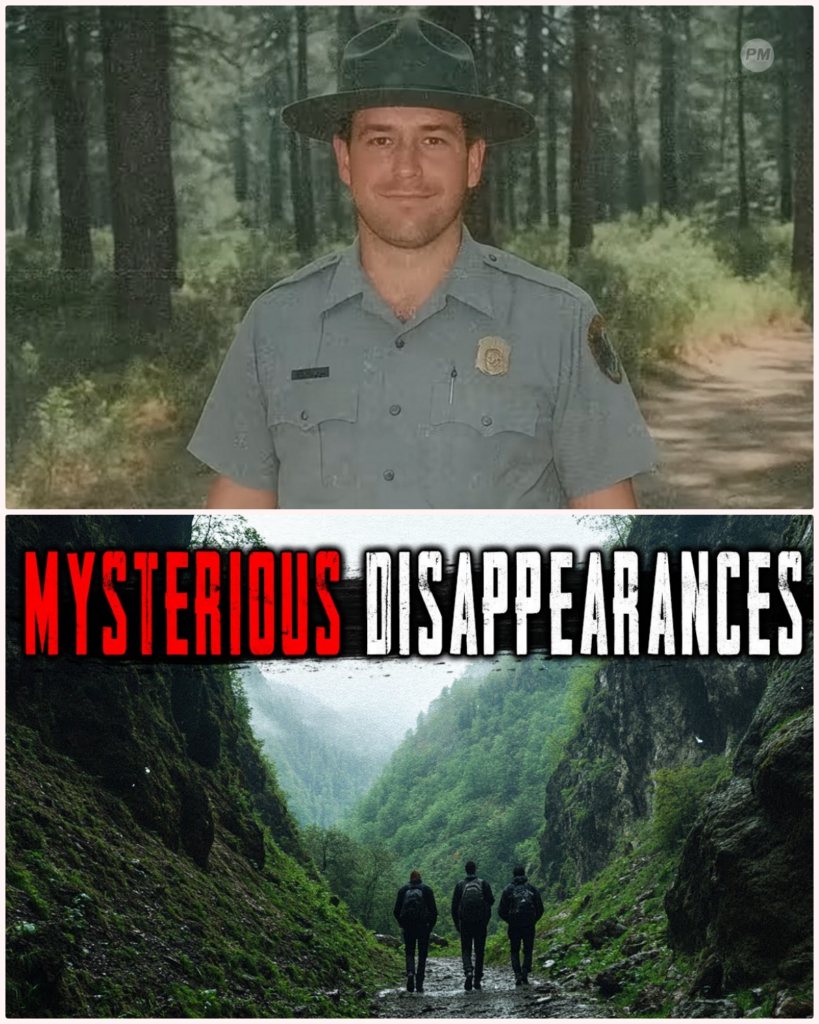
Rangers Jason Hol, Alef Campbell, and Andrew Holland are three men who vanished without a trace in US national parks under completely inexplicable circumstances.
One disappeared in broad daylight on a busy trail. Another vanished without a trace on a river patrol, leaving behind a boat with a running engine, and the third mysteriously got out of his car on a stormy night and disappeared into the darkness of the forest forever.
What happened to them? Is it possible that these places hold secrets we don’t know about?
Today, you’ll learn about three mysterious cases of rangers disappearing in US national parks that remain unexplained to this day.
Be sure to like and subscribe to the channel. In August 1999, Mount Reineer National Park in Washington State was experiencing one of its busiest seasons.
Clear weather attracted hundreds of tourists every day, and the trails were full of people eager to see the blooming alpine meadows and the majestic snowcapped peak.
One of the most famous and visited trails in this park is the Skyline Trail, a circular trail that allows you to experience the power and beauty of the Mount Reineer area in a short outing.
It was there that one of the strangest disappearances occurred when a 36-year-old ranger named Jason Hol vanished without a trace while on a routine patrol.
Jason was an experienced National Park Service employee with more than 10 years of service by 1999.
He was on the list of rangers who were particularly familiar with the western sector of Mount Reineer, where heavy snowfall is common and summers are short and deceptive.
His colleagues and friends described Jason as a calm, level-headed man who loved nature and respected all living things.
He was married and had two children. According to those close to him, he showed no signs of emotional distress.
He was looking forward to the arrival of sunny August. When the trails were cleared and his job seemed to consist mainly of telling tourists how to stay safe in the park.
On the day of his disappearance, approximately August 12th, 1999, Jason Hol went to the Skyline Trail to check the condition of the boardwalks and signs and to make sure that the vegetation was not being trampled by the large crowds of visitors.
This trail, named skyline for its panoramic views, passes through meadows of flowering grasses and leads to vantage points overlooking the snowcapped slopes of Mount Reineer.
The weather was clear. The sun was shining, although a breeze at the top of the trail brought cool air from the glaciers.
Tourists walking along the trail said they saw Jason several times that day. He stopped, gave advice on how to avoid falling off the trail, and warned of possible bears.
One of the last people to see him, a couple from Texas, said that at around 300 p.m.
They noticed Hol walking along the Skyline Trail at a leisurely pace, occasionally stopping to look at passers by, but at one point they saw him stop as if in thought, then descend from the trail toward a group of fur trees, looking deep into the forest.
The couple continued on, assuming the ranger had spotted something interesting. It was after this moment that Jason was last seen by other hikers.
When it became clear late in the evening that he had not returned, the ranger station turned on the radio, but Hol did not respond.
Several rangers immediately began searching the skyline trail, assuming that he might have suffered some kind of leg injury.
Perhaps he had broken his ankle and was unable to call for help. However, during their search closer to midnight and the following morning, they found no traces or sounds of distress.
The official search and rescue operation began at dawn the next day. More than a dozen employees and volunteers split into groups and began combing the suspected area.
The forest along the skyline trail is not particularly dense or difficult to navigate, and the weather remained dry.
However, they found nothing to indicate Jason’s presence. A helicopter was called in to search the surrounding meadows and woodlands, but to no avail.
The situation became even more puzzling for his colleagues when on the third day of the search, it became clear that there were no signs that the ranger had struggled or fallen accidentally.
The ground in those areas was not disturbed, and there was no blood or clothing fragments.
Dogs that were given Jason’s uniform to sniff led to the skyline trail, but the trail ended at the edge of the path.
One of the dog handlers noted that the dog circled several times as if it did not understand where to go next and returned to the beginning of the trail.
After about 5 days of intensive searching, park officials, in coordination with the county police, decided that in the absence of new clues, the search would be called off and only passive measures would remain, questioning locals, putting out alerts, and bringing in volunteers from time to time.
Jason’s relatives, including his wife and two children, were completely baffled. They couldn’t believe that he could have just disappeared like that on one of the park’s most popular trails in clear weather and among a fairly large flow of tourists.
It was believed that the case could be officially declared unsolved, but 2 weeks after his disappearance, a single event occurred that provided a strange clue.
At the edge of the forest, about three miles from where the ranger was last seen, a pack of dogs stumbled upon a pile of belongings.
Jason’s jacket, a water flask, a notebook with a schedule, and a radio. All these items were lying at the foot of an old tree, badly torn, with stains on the fabric that were initially mistaken for blood.
An examination later confirmed that the blood did not belong to a human being, but was animal blood.
The exact animal was not specified. This was not disclosed in the public report, possibly due to insufficient data.
Officials only stated, “This is animal blood, not human, of unknown origin.” This discovery only added to the mystery.
If Hol had been attacked by a wild animal, there would most likely have been traces of blood and human remains.
But the analysis showed the opposite. On the other hand, why would he take off and leave his jacket, flask, and radio?
No one understood how he could have covered three mi across difficult terrain and placed the items so neatly as if they had been planted there.
Perhaps Jason did it himself or someone else. The dog team searched the site again, but to no avail.
In the end, despite diligent attempts to clarify the event, a classic disappearance occurred without any signs of a struggle on a clear day in a fairly crowded area.
Colleagues like everyone familiar with the story are still discussing what could have happened. Did he lose consciousness?