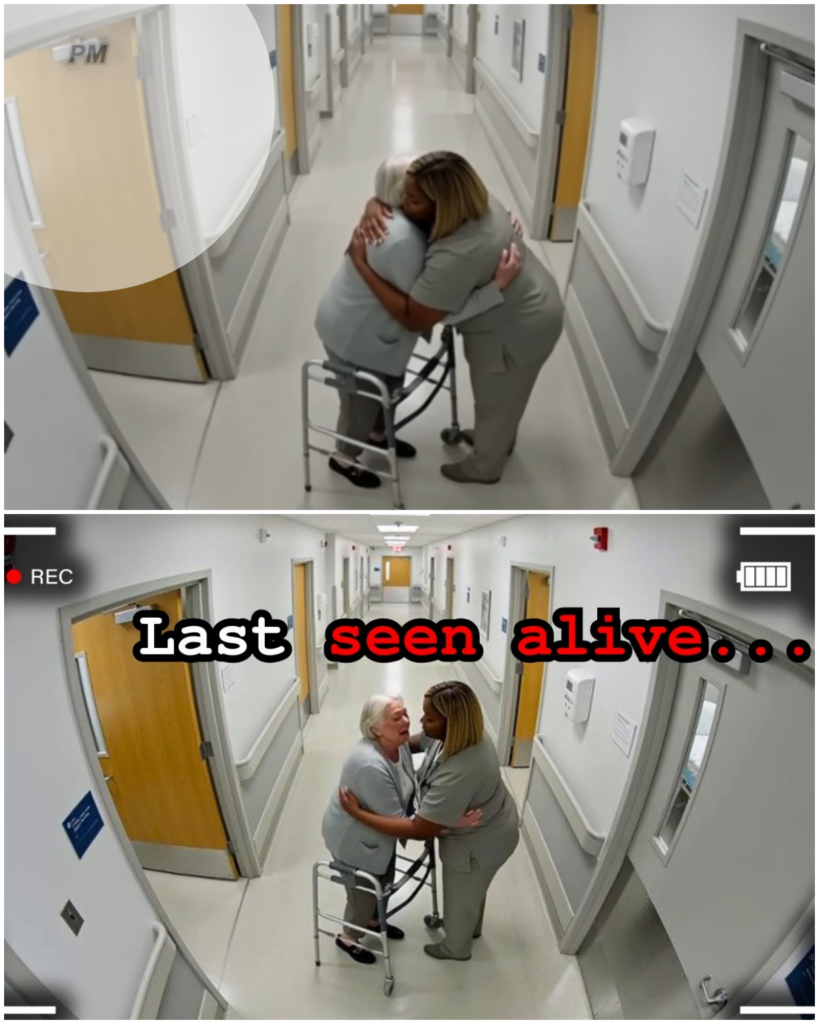
Pay attention to this security camera footage
Pay attention to this security camera footage. November 2019. A hospice care facility hallway.
The camera captures a corridor. A nurse in scrubs exits a patient room. Behind her, an elderly woman using a walker follows.
They move into the hallway. The elderly woman stops. The nurse turns around. They embrace.
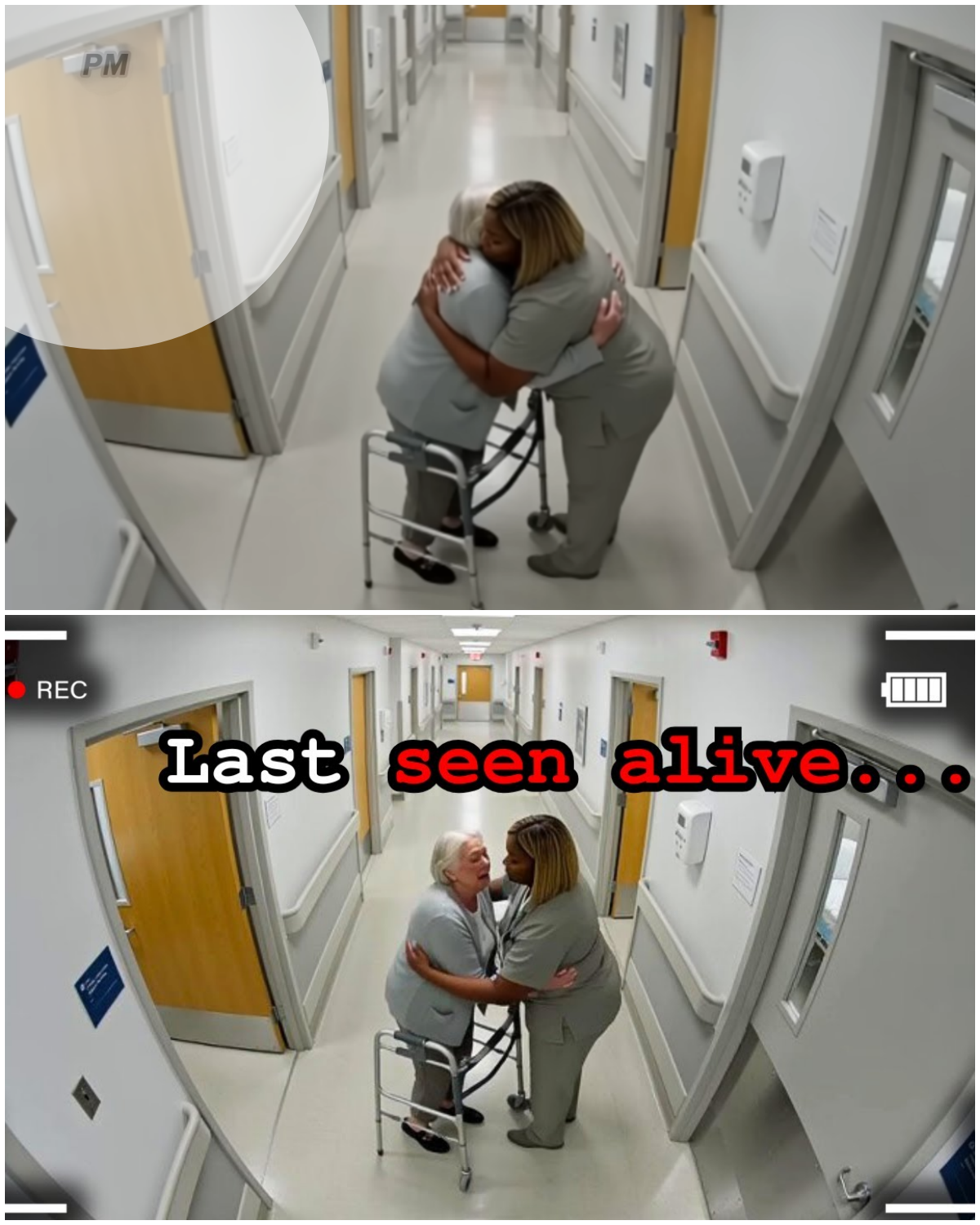
The elderly woman is crying. Her shoulders shake. The nurse holds her. The clip runs for 6 seconds.
Then it ends. That’s all it shows. An embrace. An elderly woman crying. A nurse comforting her.
6 seconds. This moment will become the center of a murder case. Because four years later, the nurse in that video will be found dead in the mountains of Montana.
And the elderly woman’s children will claim this footage proves manipulation, proves fraud, proves their mother was being exploited.
But what this footage actually shows is something simpler. Gratitude, connection, and the reason a dying woman chose to leave $8 million to the person who cared for her over the family who abandoned her.
April 19th, 2023, 7:42 a.m. Bridger Canyon, Montana. A hiker on a trail in the Bridger Mountains finds a body off the path.
Female, mid-50s. The hiker calls 911. Sheriff’s deputies arrive by 8:15 a.m. They identify the victim as Audrey Fisk, 53 years old, a hospice nurse who lived in Bosezeman.
Single gunshot wound to the back of the head. Execution style. The body has been there for less than 24 hours.
Her car is found 2 mi away, abandoned on a logging road. Her purse, phone, and wallet are still in the vehicle.
Her jewelry is still on her body. Wedding ring from a previous marriage. Watch. This wasn’t a robbery.
This was an execution. The investigation begins immediately. To understand who killed Audrey Fisk and why, you need to know who she was and who she cared for.
Starting with Audrey. Audrey Fisk, 53 years old in 2023, born and raised in rural Montana, grew up on a ranch outside Billings, wanted to be a nurse from a young age.
Put herself through nursing school working two jobs. Graduated in 1995. Spent her 20s working in hospital settings, ICU, emergency, high stress environments.
By her mid30s, she was burned out. In 2005, she transitioned to hospice care. It was a better fit, slower pace, more meaningful interactions with patients.
Audrey was known for her compassion, her patience, her ability to make people feel seen in their final months.
She worked for a hospice agency in Bosezeman. The agency sent her to patients homes.
She provided inhome care for terminal patients, pain management, comfort care, emotional support. Audrey was good at her job.
Patients requested her specifically. Families trusted her. She wasn’t just a nurse. She was a presence, a constant during the worst time in people’s lives.
In 2006, Audrey was assigned to a new patient, Estelle Bishop, a 67year-old woman who had just been diagnosed with stage 3 breast cancer.
Estelle lived in a large home on the outskirts of Bosezeman. Wealthy, her late husband, Langston, had been a successful real estate developer.
He died in 2005, left Estelle with a fortune estimated at $9 million. Estelle had two adult children, a son and a daughter.
Both lived out of state. Both had their own careers, their own families. Estelle’s prognosis was uncertain.
The cancer had spread to her lymph nodes. Treatment would be aggressive. Chemotherapy, radiation, surgery.
The hospice agency sent Audrey to provide supportive care during treatment. Audrey visited Estelle three times a week, helped with medication side effects, monitored symptoms, provided companionship during the hardest days.
Estelle and Audrey connected immediately. Estelle appreciated Audrey’s calm demeanor, her honesty. Audrey didn’t sugarcoat the reality of the disease, but she also didn’t make Estelle feel hopeless.
They talked about life, about Estelle’s late husband, about her children, about regrets and gratitude.
Over the months, they became close. Not just nurse and patient, friends. By early 2007, Estelle’s cancer went into remission.
The tumors had shrunk. Scans were clear. She didn’t need hospice care anymore. Audrey’s assignment ended, but Estelle and Audrey stayed in touch.
They exchanged phone calls, occasional visits. Estelle considered Audrey a friend, someone who had been there during the darkest time.
3 years later, in 2009, Estelle’s cancer returned. The breast cancer had metastasized, spread to her bones.
The doctors said treatment could extend her life, but wouldn’t cure her. Estelle called the hospice agency, asked for Audrey specifically.
Audrey was assigned to her again. This time the care was more intensive. Estelle was in more pain, weaker.
Audrey came four times a week, sometimes five. She managed Estelle’s pain medication, helped her with daily tasks, sat with her during the worst days.
Estelle’s children visited occasionally. Her son Julian came twice that year. Her daughter, Paige, came once.