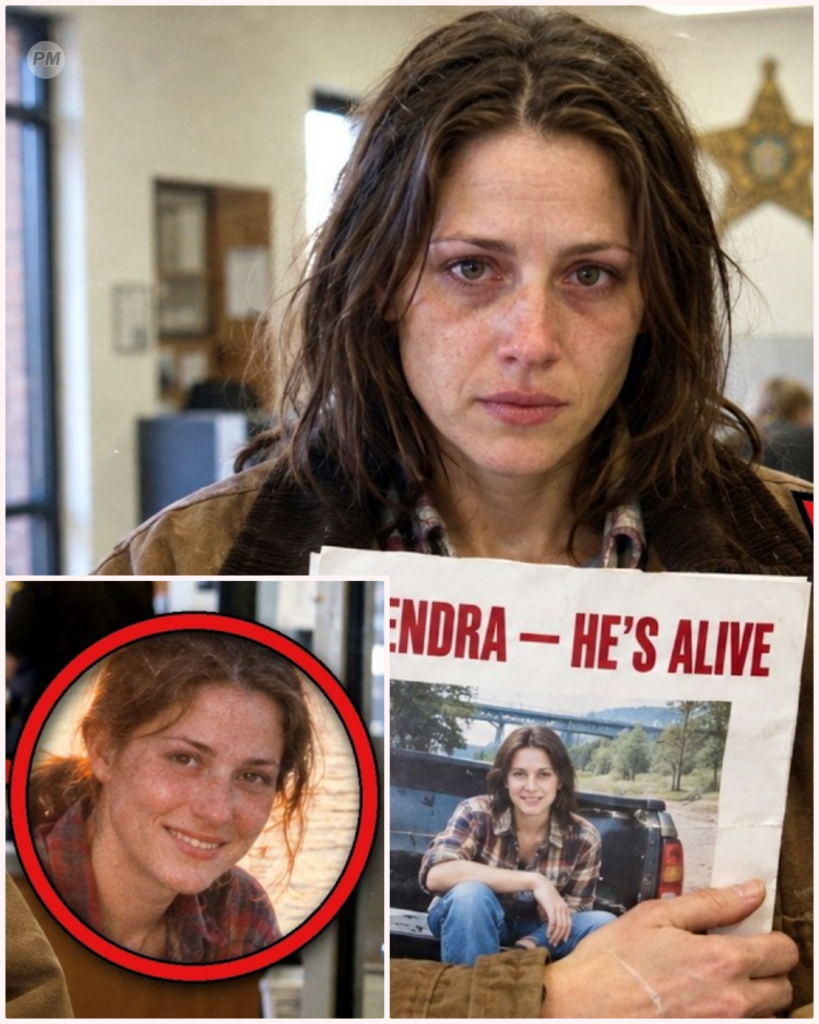
Tuesday, March 15th, 2005, 5 minutes past 9 in the morning, the Harrison County Sheriff’s Office in Coridan, Indiana, about 15 miles north of the Ohio River.
A woman in a man’s brown canvas work coat walks up to the front desk and unfolds a sheet of paper.
It has been folded and unfolded until the creases have gone soft. Across the top in red, one line.
Kendra, he’s alive. She presses one finger on that line. According to the deputy’s report, she asked one question.
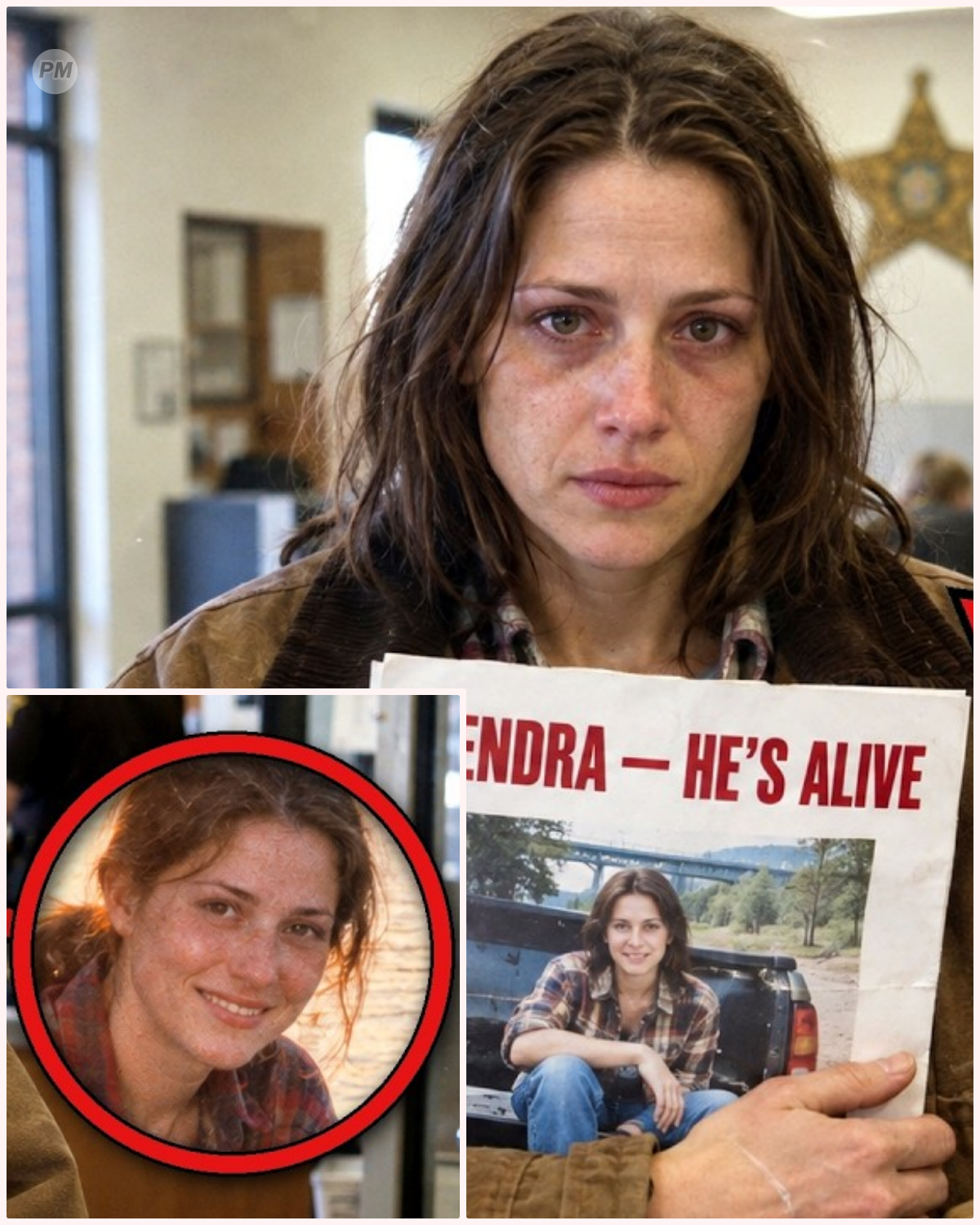
Is it true? The deputy behind the desk is Seth Feifer, 28. In November of 1996, as a 20-year-old volunteer firefighter, he spent three days walking the bank of the Ohio River at Mockport, looking for this woman in the water.
Her name is Kendra Reigns. She was 26 when she disappeared from a farmhouse outside Coridan on a Friday night in November 1996.
About 60 searchers, a tracking dog, three days of state police divers and sonar under the bridge.
No body was ever found. Her husband, Dustin Reigns, was convicted of her murder in 1997, 55 years without a body.
The state of Indiana proved Kendra Reigns was dead. It proved it with her blood.
Most of that blood was not hers. And there was a coat. The prosecutor told the jury Dustin Reigns got rid of the coat he wore that night.
Inside the collar of this woman’s coat is a small sewn tab with two letters, DR.
How do you convict a man of killing a woman who is still alive? Why did she need a poster to find out whether her husband was breathing?
And how did she come to be wearing the coat the jury was told he destroyed?
The answer starts on a gravel boat ramp under a bridge on the Ohio River.
Every time Kendra and Dustin Reigns had a fight, she drove down there to count the barges.
This is a dramatized story. The people in it are not real, but the places are, and so are the dangers.
A Sunday evening in July 1996, Kendra Reigns is sitting on the open tailgate of her car with her shoes off at the bottom of the public ramp at Mockport, Indiana under the bridge into Kentucky.
Out on the river, a toeboat is pushing a long block of barges upstream so slowly that it seems to stand still.
She counts it. One, why barges? Nobody in her family ever got a straight answer.
Her older sister Tanya later told investigators that was the deal. She drove to the river.
She counted three barges and she came home. Dustin used to say he could set his watch by it.
On a busy night, three barges took an hour. On a slow one, it took until dark.
Either way, she came home after the third. That July night, it was a fight about money.
The same fight they had been having all year. But what does a woman like that do on [music] the night she cannot get to the river at all?
By November, Kendra Reigns would find out. The next morning, Kendra Reigns, 26, was back behind the register at a feed and seed store in Coridan, the county seat and the first state capital of Indiana, a town of about 3,000 people.
She knew which farmers paid cash and which ones ran a tab until harvest. And she knew the name of every dog that rode to her door in the back of a pickup.
Her husband, Dustin Reigns, 29, was already at the grain elevator outside town, where the fall meant 12-hour days and the spring meant short paychecks.
They had been married since 1992. They rented a small farmhouse on a county road northeast of Coridan, a mile from the nearest neighbor, with a wood stove in the kitchen and a blue healer named Biscuit, who slept on the porch in any weather.
Tanya said her sister kept that kitchen the way she kept her cash drawer. Dishes done before bed.
A dish towel folded over the handle of the oven door. Always the oven door, never the counter.
If you hung it anywhere else, she’d move it back while you were still talking to her.
There was never much money. In the fall of 1996, there was less. At the end of October, Kendra’s car broke down in the driveway, and there was nothing to fix it with.
On Tuesday, November 12th, the phone went dead. The notice from the phone company is still in the case file.
Service terminated November 12th, 1996 for non-payment. Dustin’s mother, Glenda Reigns, lived on the other side of town.
She was a seamstress who worked out of her front room, hemming church dresses and letting out wedding suits.
That October, Dustin tore the sleeve off his old work coat on a grain augur, and Glenda bought him a new one.
Brown canvas, a corduroy collar, deep pockets. Before she gave it to him, she sat down at her machine and sewed a small cloth tab inside the collar.
Two letters, DR. She had done that with every coat her son owned since he was 9 years old.
Friday, November 15th, 1996. A light snow had fallen on Thursday, and some of it was still lying on the wood pile beside the porch.
At about 20 minutes to 6 that evening, the neighbors from up the road drove past on their way to a deer camp for the weekend.
They saw Kendra and Dustin carrying firewood into the house. Kendra waved. What happened inside over the next 5 hours would be argued about in a courtroom for years.
For now, there are only two facts that nobody disputes. That afternoon, Dustin had taken $140 out of a coffee can on the kitchen shelf, the money they had been saving for bills, and put it in the pocket of his new work code.
He was planning to pay the phone company in Coridan on Saturday morning. And at some point that night, his pickup left the farm and drove south toward the river.
Saturday, November 16th, 10 minutes past 7 in the morning. Tanya Huffford opened her front door in Coridan.
Dustin Reigns was standing on her porch. The left side of his head was split open above the ear and dried blood ran down the inside of his shirt collar.
According to Tanya’s statement, the first thing he said was, “Is Kendra here?” She was not.
Dustin had no phone at the farm, so Tanya called the sheriff’s office herself at 7:40.
At 8, she drove him to Harrison County Hospital where a doctor closed the cut with nine stitches.
At 9, two Harrison County deputies walked into the kitchen of that farmhouse. By the wood stove, there was a pool of blood about 4 feet by 3 smeared at one edge.
There was broken glass from a lamp globe on the floor. There were drops of blood on the porch steps and a smear of blood on the steering wheel of Dustin’s pickup.
Kendra’s purse was on the table with her driver’s license inside. Her own winter coat was hanging in the bedroom closet.
Biscuit was on the porch waiting at the door. Her car was still dead in the driveway.
On the kitchen shelf, the coffee can was empty. In the photographs from that morning, the handle of the oven door is bare.
Dustin told the deputies that his new work coat was gone and the money with it.
One of them wrote it down. The coat itself was never looked for. By noon, everyone in that kitchen thought they knew where it was.
The deputies were still photographing the kitchen when a report came over from the night patrol.
At 20 minutes to 3 that morning, 18 miles away, a Harrison County deputy had already met Dustin Reigns at a boat ramp on the Ohio River.
Tell us in the comments. A bleeding husband at a river at 20 minutes to 3 in the morning.
Searching for her or hiding something. Here is what the deputy wrote down. The night patrol log of the Harrison County Sheriff’s Office.
Saturday, November 16th, 1996. One entry. The time is written as 0240. 20 minutes to 3 in the morning.
Suspicious vehicle at the Mockport boat ramp. White male Dustin Reigns. Laceration to head. States slipped in kitchen looking for wife after argument.
Declined medical. Deputy Carl Ruckman had pulled onto the gravel because a pickup sat at the bottom of the ramp with its lights off.
In his report, he wrote that the driver was standing at the edge of the water with a flashlight, that the left side of his face was covered in dried blood, and that he refused an ambulance twice.
Dustin told him his wife always came down to this ramp after an argument. He asked the deputy to keep an eye out for a woman on foot, dark hair, about 5’5.
To a patrol deputy at that hour, it looked like a couple’s fight, and no one had reported anyone missing.
Ruckman told Dustin to go home and wait for her. 6 hours later, in the emergency room in Coridan, a nurse wrote down a different sentence.
Patient states wife pushed him. Reports loss of consciousness about 20 minutes. Slipped at 20 minutes to three, pushed at half 8.
To everyone who read those two pages, it was one man changing his story about one wound.
Which one was the lie? The search began that Saturday afternoon. Firefighters, deputies, and neighbors, about 60 in all.
A tracking dog took the scent at the porch, followed it down the driveway to the county road, and stopped on the shoulder.
It circled twice and lay down. The handler wrote that the trail ended at the pavement.
From Monday to Wednesday, state police divers searched the Ohio below the ramp with sonar.
They found a tire, a shopping cart, and a piece of an old dock. Nothing else.
The last confirmed sighting of Kendra Reigns was a wave from a neighbor’s truck at 20 minutes to 6 on Friday evening.
Everything after that came from one man. The case went to the Indiana State Police post in Sersburg and to Detective Sergeant Leland Ebs, 45, 22 years on the job.
Careful, patient, the last one out of the office. He typed his own summaries late at night, one page for every day of a case.
Eight years later, a public defender would read those summaries very differently. The tip line took 93 calls in the first three weeks.
A woman at a truck stop in Kentucky, a psychic in Ohio. 41 calls were marked unfounded.
Nobody went back to any of them. The lab report came back in December. Three stains.
The floor by the stove, the porch steps, the steering wheel. Human blood. Group O.
Kendra Reigns had type O blood. So did her husband. No one asked for DNA.
Not the state and not the defense. Dustin’s trial lawyer said years later he was afraid a test would only prove the blood was hers.
So, whose blood was on that floor? To everyone working the case, the answer seemed obvious.
An expert for the state measured the stain by the stove. More than three pints, he said not survivable without immediate care.
Dustin’s own interview from that first Saturday is in the file, too. When I came too, she was gone.
My coat was gone. The money was in my coat. When the detective asked about the floor, he added one more thing.
There was water on the floor by the stove. Nobody wrote anything next to that line.
On December 20th, Dustin Reigns was arrested for murder. On Monday, January 13th, 1997, a man from the same cell block asked to talk to the detective, Kenny Spurlock, 26, waiting on a burglary charge.
In a handwritten statement, he said Dustin had told him everything after Lights Out. She’s in the river by the bridge at Mockport.
He said a deputy found him down there at 2:14. 14 minutes past 2. The patrol log said 20 minutes to 3.
The defense pointed that out once. The prosecutor, Gordon Ool, called it about the same time, and the jury let 26 minutes go.
Can you convict a man of murder without a body? Most people believe you can’t.
In Indiana, you can. A confession alone is not enough. The state needs separate proof that a crime happened at all.
In this case, that proof was the blood. 10 years earlier in Floyd County, the next county east, a man had been convicted of murder on blood found in a house and no body at all.
The trial opened in September 1997 in the Harrison Circuit Court. Gordon Ool gave the jury seven things.
Blood, more than a person could lose. A woman who would never walk away from her dog, her purse, and her family on a November night.
A husband at the river at 20 minutes to 3 in the morning. A story about his wound that changed overnight, money trouble, and a $25,000 life insurance policy on Kendra through his job, a coat he had gotten rid of, and a cellmate who heard him say the river.
The defense had answers for three of them and a story of its own. They argued, “She pushed him, he fell, and she left.”
Gordon Ool answered with three questions. “Then where is she? Why leave her purse? And why has she never once called her mother?
The wound matched a fall and the hospital said so. The tracking dog lost the trail at the edge of a road the way a trail ends when a person gets into a vehicle.
And a man who has just thrown his wife into the Ohio River does not give his name to a deputy and ask him to watch for her.
What the defense could not answer was three pints of blood and a man who said he heard a confession.
On Friday, September 26th, the jury came back after five hours. Guilty. Several people in the room remembered one thing.
Dustin Reigns did not look at the jury. He turned around in his chair and looked for his mother.
On October 24th, the judge imposed the standard sentence for murder in Indiana at the time, 55 years.
With good time, the earliest Dustin Reigns could walk out was the summer of 2024.
He would be 56. Glenda Reigns sat in the third row that day, too. Before sentencing, the judge asked if Dustin had anything to say.
The court transcript records three short sentences. The last two were these. Find her. Tell her I’m alive.
Several people in that courtroom said later they took it for a performance. Glender Reigns took a pen out of her purse and wrote all three sentences on the back of an envelope.
Glenda Reigns printed the first poster in November 1997, a month after her son went to the Indiana State Prison in Michigan City, 300 m north.
She had it made at a copy shop in Coridan. 200 copies on bright yellow paper.
A photo of Kendra from the summer before sitting on a tailgate by the river.
Missing since November 15th, 1996. 5’5, dark hair, $500 reward. And Glenda’s own phone number at the bottom.
The $500 was everything in her savings account. Why would a mother hang posters for the woman her son was convicted of killing?
Glenda explained it to anyone who would listen and later to a public defender in the same few words.
If he didn’t kill her, she’s out there. If she ran, she ran with nothing.
So, she put the posters where a person with nothing ends up. Bus stations in Louisville, Evansville, and Indianapolis, truck stops along Interstate 64 and Interstate 65, emergency rooms, shelters, laundromats, the bulletin boards at the back of grocery stores.
Every spring and every fall, she drove a circle of a few hundred miles through southern Indiana and Kentucky with a stapler, a roll of tape, and a thermos.
The county did not thank her for it. In 1999, the pastor of her church asked her in a letter to stop pinning the posters in the fellowship hall.
Some members of the congregation found them upsetting. She kept the letter. Kendra’s mother, Phyllis Ox, lived four miles away.
For 8 years, the two women did not speak. To Phyllis, every yellow poster said the same thing, that her daughter had walked out on her dog and her family in the dark, and that the man who killed her was the victim.
Once in the spring of 2000, the two women met at the bulletin board of the grocery store on the main road.
Glenda had just pinned up a fresh poster. Tanya, who was with her mother that day, later said Phyllis took it down without a word, folded it in half, and handed it back.
Glenda pinned up another one as soon as they were gone. Every Sunday after church, Glenda wrote her son a letter.
Dustin kept all of them, more than 400 by the end. They are about the weather, the garden, a neighbor’s new baby, a cousin’s wedding dress she was taking in.
Every one of them ends with the same line. No word yet, still looking. In 1998, the appeal went straight to the Indiana Supreme Court.
In those years, any sentence over 50 years did. The court upheld the conviction. On paper, the case of Kendra Reigns was closed.
In a storage room at the courthouse, two boxes from the investigation sat on a shelf where they had been put in 1997.
The defense had never seen what was in one of them. Since the first poster went up, Glenda had paid a few extra dollars a month for caller ID.
She bought a little gray box that sat next to her kitchen phone and saved the last 30 numbers that called.
Her reason was simple. Her number was on every poster and she was afraid of missing the one call that mattered because she was out in the garden over three and a half years.
That box caught wrong numbers, a man selling siding, two teenagers laughing, and a woman in Kentucky who was sure she had seen Kendra at a gas station and had not.
Sunday, May 13th, 2001, Mother’s Day, a quarter 11 in the morning. Glenda had just come home from church and was still in her good shoes when the kitchen phone rang.
She picked it up and said hello. Nobody answered. She could hear something on the line, a wide open sound like wind and traffic far away.
She said hello again. Then, according to the statement she gave the state police the next morning, she said one word, “Kendra.”
The line went dead. Glenda sat down at the kitchen table and looked at the gray box, a 10-digit number she did not recognize.
The first three digits were 806. She called the number back at once. It rang more than 20 times.
That evening, she tried again and a man finally picked up. He told her she was calling a pay phone outside a laundromat and hung up.
She did not know the area code. The phone book did. She found it on the map at the front of the directory in the top corner of Texas, the panhandle.
The three digits after the area code belong to one city, Amarillo. Who calls a stranger on Mother’s Day and says nothing?
Glenda thought she knew. She drove to the state police post in Sersburg the next morning with the caller ID box in her purse.
Detective Sergeant Leland Ebs took her into a side room, wrote the number down, and thanked her.
His note is in the file. Probable prank. Mother of defendant. The night of the call, before she drove anywhere, Glenda had unplugged the gray box and wrapped the cord around it so that no new call could push that number out of its memory.
When she got home from Sersburg, it went into a kitchen drawer and she bought another one.
She also copied the number in pencil onto the back of a photograph of her son, the one from his high school graduation that stood on her television.
She thought about driving to Texas. She had $71 in the bank and a car with 200,000 miles on it.
In 2002, Leland Ebs retired after 28 years with the Indiana State Police. The state police never called that number.
Area code 806, the Texas panhandle. Glenda Reigns had never been west of St. Louis in her life.
On that Mother’s Day morning, a thousand miles west, a waitress from a truck stop diner on Interstate 40, had walked out on her break to a pay phone outside a laundromat.
She had stood there with the receiver against her ear for a long time. Then she hung it up and went back to work.
The name tag on her uniform said K. By the spring of 2003, here is what anyone could have known.
A woman disappeared from a farmhouse in southern Indiana in 1996. Her husband was convicted of killing her with no body.
His mother believes she is alive and all she has to show for it is a phone number from Texas that the police called a prank.
Tuesday, April 8th, 2003. Colleen Art, 37, a deputy public defender with the State Public Defender of Indiana, filed two pieces of paper in the Harrison Circuit Court.
The first asked the court to order DNA testing of the blood from the farmhouse under a new law from 2001.
The second asked for everything the investigators had collected in 1996 and 1997, not just what the defense had been given at trial, everything.
In June, two boxes came up from the storage room at the courthouse. Photographs of the kitchen, lab reports, 93 tip sheets, one for every call to the tip line, each with a typed note at the bottom.
Tip sheet number 58, was dated November 26th, 1996. The caller was Doris Kitell, 55, who sold tickets at the bus station in downtown Louisville.
She had seen Kendra’s photograph on the television news. On the morning of Saturday, November 16th, at about 20 minutes to 7, a young woman had come to her window, dark hair in a ponytail, [music] her left hand wrapped in a dish towel, a man’s brown work coat too big for her.
She paid cash, mostly in 20s, for a [music] one-way ticket to Amarillo, Texas. Across the bottom in Leland Eb’s typing, unfounded.
Description generic. Victim’s purse and vehicle at residence. Why would a detective call that description generic?
His own summaries from that week already called the case a homicide. A woman who walks away leaves with her purse and hers was on the table.
To a detective who believed that the woman at the ticket window had to be somebody else.
And because the tip was unfounded, it never went to the defense. Under a rule the Supreme Court of the United States set down in 1963, prosecutors have to hand over evidence that could help the accused.
Nobody handed over sheet 58. AR laid Glenda’s caller ID number next to the tip sheet.
A ticket to Amarillo in 1996. A call from an Amarillo pay phone on Mother’s Day 2001.
Two threads 5 years apart and they ran to the same city. But a ticket and a pay phone are not a person.
The pay phone was gone by then, and the phone company could only place it somewhere on the east side of Amarillo.
The state public defender had no money to send anyone to Texas on the strength of a call in which no one spoke.
Then she read the tip sheet again slowly against the photographs of the kitchen. A dish towel.
The oven handle in those pictures was bare. A man’s brown work coat. The coat Dustin Reigns said was missing, the coat the prosecutor told the jury he had gotten rid of, was brown canvas, and the cash, mostly in 20s, $140, had left that house in the pocket of that coat.
The DNA took more than a year. The report from the laboratory came back on August 10th, 2004.
The drops on the porch steps were a woman’s blood. The smear on the steering wheel was a woman’s blood mixed with a man’s.
The pool by the stove, the stain the state’s expert said held more than three pints, was not hers at all.
It was Dustin’s. That explained the steering wheel, too. He had come too on that floor in his blood and hers and driven with it on his hands.
So, who loses that much blood on a kitchen floor and walks away? According to the state, nobody.
According to the lab, Dustin Reigns had done exactly that and then driven 18 miles to a boat ramp.
Art hired a forensic biologist to explain how. The answer was the floor. Late on Friday evening, Dustin had carried in one last armload of wood for the night with Thursday’s snow still on it, and it melted by the stove.
A scalp wound bleeds hard, and blood landing in a thin layer of water does not stay where it falls.
It spreads. It thins. A stain from a pint can look like a stain from three.
In a sworn affidavit, the biologist wrote that there was no scientifically accepted method for estimating how much blood made a stain on a floor.
Not in 1997, not now. By then, Glenda Reigns already knew she might not live to see the end of it.
In July of 2004, a doctor in Louisville had found cancer in her pancreas. When she told Colleen AR, she said one sentence and Aunt wrote it down that day.
Then I’ll find her myself. A librarian in Coridan helped her print out the addresses.
Every diner, motel, church, and laundromat within 10 miles of Interstate 40 in Amarillo, 406 of them.
Glenda paid for the copies and the stamps by selling the second of her two sewing machines.
She designed the new poster herself at her kitchen table. The same photo of Kendra on a tailgate by the river.
And across the top in red, the words she had written on the back of an envelope in a courtroom 7 years earlier, cut down to the only part that mattered.
Kendra, he’s alive. Underneath in plain black type, Dustin is in prison for your murder.
Please come home. Harrison County, Indiana, and her own phone number. On November 1st, 2004, she carried 406 envelopes into the post office in Coridan in two grocery bags.
Three weeks later, the judge denied relief. Her blood was still at the scene and in the defendant’s truck.
The cellmate’s testimony still stood. The ticket window tip was not material, and no one in 8 years had seen Kendra Reigns alive.
Art filed an appeal the same week. Most of Glenda’s envelopes went into the trash unopened.
One went to a truck stop diner on the east side of Amarillo, where it sat for 4 months in a stack of church bulletins and seed catalogs behind the register.
On Thursday, March 10th, 2005, the owner of that diner, Lupe Garza, cleaned out the stack.
She told the state police later that she knew the face in the photograph at once.
She had been looking at it across her own counter every morning for eight years.
She did not say a word to anyone. She pinned the poster to the wall beside the pie case.
The first thing her opening waitress did every morning was fill that case. Friday, March 11th, 2005, 5:00 in the morning, a truck stop diner on the east side of Amarillo, Texas.
The waitress everyone there called Kay unlocked the back door, started the coffee, and went to fill the pie case the way she had every morning for eight years.
Pinned to the wall beside the case was a sheet of paper with a photograph of her on a tailgate by a river and a line in red across the top.
She read the red line twice. Then she read the line underneath it. She told investigators she read that one four times.
What follows comes from Kendra Reigns herself, a state police interview of more than 4 hours in March 2005 and her testimony in court that May, Friday, November 15th, 1996, a little before 11 at night.
The kitchen of the farmhouse outside Coridan. The fight was about $140. Dustin wanted to pay the phone company in the morning so they could have a phone again.
Kendra wanted to pay the electric first. The money was already in his coat pocket.
The coat was hanging by the door. She said he grabbed her by the wrist.
“Not hard,” she said. She pulled her arm free and pushed him in the chest with both hands.
The floor by the stove was wet. Half an hour earlier, Dustin had carried in one last arm load of wood for the night with Thursday’s snow still on it.
His boots went out from under him. He fell backward and the left side of his head hit the corner of the cast iron stove.
His arm knocked the glass globe off the lamp on the way down. “There was so much blood,” she testified.
“I’ve never seen that much blood come out of anybody. He was on his back with his eyes half open.
He did not move.” She knelt beside him and her left hand came down on a piece of the broken globe.
It cut her palm open. She pulled the dish towel off the oven handle and wrapped her hand in it.
Then she took his wrist and tried to find a pulse. Her fingers were wet with blood, his and hers.
She pressed and waited and pressed again. She told the state police she could not feel anything.
What does a person do in the next 60 seconds? There was no phone in that house.
Her car would not start. The keys to his pickup were in the pocket of the man on the floor, and she told investigators she could not make herself touch him again.
The river was 18 miles south. The nearest neighbors were a mile up the road.
She took the first coat off the hook by the door. It was his. She ran.
The neighbor’s house was dark. They were at deer camp for the weekend. She walked back out to the county road and stood there in the dark in a coat that came down to her knees.
I knew what a dead man looked like. She told investigators. I found my father when I was 19.
I thought I just killed my husband over a phone bill. She did not go back to the house.
She walked about 4 miles the other way to the gas station at the Interstate 64 exit.
There was a pay phone outside. She did not use it. You don’t call an ambulance for a dead man, she said.
You call the police. And I couldn’t. A driver heading east let her ride in his cab to Louisville.
She never learned his name. She had not thought about the money when she grabbed the coat.
At the bus station downtown, she put her right hand in the pocket to keep it warm and found it.
$140, mostly in 20s. At 20 minutes to 7, she walked up to a ticket window and asked how far west that money would go.
The woman behind the glass told her Amarillo. On the bus somewhere in Oklahoma, she saw a mailbox with the name Cobb painted on it.
K for the K in Kendra. By the time she got to Texas, that was who she was.
On her third day in Amarillo, she walked into a truck stop diner with a help wanted sign in the window.
The owner, Lupe Garza, paid her cash from the register at the end of every week and never asked for a social security number.
Kendra rented a room by the week at a motel, and later a trailer 2 miles from the diner.
She never got a driver’s license, never opened a bank account, never saw a doctor except once at a free clinic.
The cut on her left palm healed into a white scar. She wore the brown coat every winter.
Why didn’t she turn herself in? The investigators asked her that more than once. Her answer is in the transcript.
I was waiting for them to come for me every day for 8 years. Every time a police car [music] pulled into that lot, I thought, “This is it.”
When the television over the counter said Louisville, she changed the channel. She told the state police that if she never read his obituary, some part of her could believe he wasn’t dead yet.
Once she came close. Sunday, May 13th, 2001, Mother’s Day. On her break, she walked to the pay phone outside the laundromat and dialed the only number in Indiana she still knew by heart, Glenda’s.
She called the mother of the man she thought she had killed to tell her she was sorry.
“I had 5 years of sorry by then,” she testified. When Glenda picked up, Kendra could not make a sound.
Then she heard Glenda say her name and she hung up. Four years later, she was standing in front of a pie case reading that second line.
Dustin is in prison for your murder. Please come home. He was alive. That was the first line.
And he was in prison because of her. That was the second. On Saturday, March 12th, she asked Lupe Garza for a few days off and bought a ticket east.
The trip took the rest of the weekend and most of Monday. Twice on the way at bus stations in Oklahoma City and in Memphis.
She dialed the number at the bottom of the poster and hung up before it rang.
“I couldn’t do it on the phone again,” she said. “I’d already done that once.”
She spent Monday night on a bench in the bus station in Louisville, the same station a few feet from the window where she had bought her ticket in 1996.
On Tuesday morning, she paid a cab driver $50 to take her across the river to Coridan.
She could have gone to the police in Amarillo. She told the court why she didn’t.
The poster said Harrison County. I wanted to say it to the people who put him there.
Tuesday, 5 minutes 9. She walked up to the front desk in Coridan in his coat, unfolded the poster, and put her finger on the red line.
Is it true? In his report, Seth Feifer wrote down the only answer he had.
Yes, ma’am. He’s alive. He’s in prison for killing you. So, here is where things stood.
On the morning of March 15th, 2005, the woman Dustin Reigns was convicted of killing was sitting in an interview room in Coridan.
The blood that was supposed to prove her death was mostly his. And one question nobody could answer yet.
Why had a man sworn in writing and in court that Dustin told him where he put her?
Seth Feifer asked to be the one who drove her to the state police post in Sersburg that afternoon.
In his report, he added one sentence that had nothing to do with procedure. I looked for her in that river for 3 days.
At the post, a technician swabbed her cheek. On March 18th, the lab called her DNA matched the profile from the porch steps pulled out of that blood in 2004.
The same blood the state had used to prove Kendra Reigns was dead now proved she was alive.
Her coat went into an evidence bag that Tuesday. The inventory describes it in one line.
Man’s brown canvas work coat, corduroy collar, cloth name tab sewn inside collar, letters DR.
For eight years, the jury had been told that coat was gone. It had spent those eight years in Texas on her back every winter.
That evening, Tanya brought their mother to Sersburg. According to Tanya, Phyllis Ox held her daughter for a long time without saying anything, and the first thing she finally asked was whether Kendra had been warm enough out there.
When they got back to Coridan that night, Biscuit was asleep on Tanya’s porch. He was 11 and deaf in one ear.
Colleen Art drove almost 200 miles north to Michigan City to tell her client in person.
She wrote down his first words on her legal pad and the page is in her file.
Does she know I’m not dead? That Sunday, Glenda Reigns wrote her son the usual letter.
It was about the weather and the garden like all the others. The last line was different.
Found her. Done looking. Then AR went back to the two pages from that first morning.
Saturday, November 16th, 1996. 20 minutes to 3 in the morning. The patrol log states slipped in kitchen.
The same Saturday, half 8 in the morning, the emergency room. Patient State’s wife pushed him.
At trial, those two lines had been the state’s proof that Dustin Reigns changed his story when it suited him.
Now, in a recorded interview, the only other person who was in that kitchen described the same few seconds.
She pushed him. He slipped on the wet floor. Both sentences were true at the same time.
At the river, he had given the deputy only the half that did not blame his wife.
Aunt asked him about it at the prison. I wasn’t going to tell a deputy my wife put me on the floor.
He said, “I figured she’d be home by morning.” For 8 years, the state called that a lie.
It was the most accurate thing anyone said that night. That left the cellmate. Until March, nobody on Dustin’s side had read Eb’s summaries for anything but the word homicide.
Art laid three sheets of paper side by side on a table in her office in Indianapolis.
The first was the night patrol log written by Deputy Carl Ruckman at the ramp, 20 minutes to three.
The second was the summary Leland Ebs had typed himself late that Saturday night. He had not been at the ramp.
Ruckman told AR he had phoned Es that afternoon and read him the log. In the third paragraph describing the encounter at the ramp, Eb typed the time as 0214, 14 minutes past 2.
Arts guess was the simplest one, say 240 and 214 out loud on a bad phone line.
The third sheet was Kenny Spurlock’s handwritten statement from January 13th, 1997. He said a deputy found him down there at 214.
No other paper in the case had that time on it. Not the deputy’s log, not the nurse’s chart.
Before Spurlock wrote it, it existed in one place. And that place was a mistake in a detective’s private summary.
So where did a man in a jail cell get 14 minutes past 2? The jail visitor log for January 1997 is still in the county’s records.
Detective Sergeant Leland Ebs visited Kenny Spurlock twice that month. The second visit was on Monday, January 13th, the day the handwritten statement was signed.
Within a few months, Spurlock’s burglary charge was settled for far less than he had been facing.
None of that proves what was said in that room. A visitor log only shows who came and how long they stayed.
But a mistake like that does not travel by itself. There was one more piece of paper.
In 2004, answering a routine question in the first petition, Leland Ebs had signed a sworn affidavit that he had never shown any witness any part of the case file.
In April, AR took Eb’s sworn testimony in a conference room in Jeffersonville. He was 53, retired, in a sport coat with a lawyer beside him.
The first question was how long he had served with the Indiana State Police. He answered it, 28 years.
The second question was whether he had shown his case summary to Kenny Spurlock. His lawyer leaned over.
Ebs read a sentence from a card. On the advice of council, I declined to answer on the grounds that it may incriminate me.
Art asked about the visitor log. The same sentence. About the time in his summary, the same sentence.
About tip sheet 58, the ticket to Amarillo, the word unfounded, the same sentence. Why would a man who had nothing to hide refuse to say where a number came from?
Under the law, anyone may refuse to answer a question that could incriminate him, and a refusal on its own proves nothing.
Whatever happened in 1997 was long past any time limit. The affidavit he signed in 2004 was not.
Leland Ebs used that right 26 times in a single afternoon. He never explained the number.
He never has. Kendra’s life had already set Dustin free in every way but on paper.
Paper takes a hearing and the first open date on the court’s calendar was May 17th.
What her life could not explain was the confession. If the man who heard it was lying, somebody had given him the words.
The state police found Kenny Spurlock in the second week of April. He was 34, working nights at a tire shop in Jeffersonville.
10 minutes from the conference room where Ebs had refused to answer. He agreed to testify.
He told the investigator who found him that he had nothing to hide. Tuesday, May 17th, 2005, the Harrison Circuit Court in Coridan, the same courtroom where Dustin Reigns was sentenced in 1997.
On the table in front of Colleen Art, lie three sheets of paper face down.
The patrol log, the detectives typed summary, and a handwritten statement from January 1997. Dustin Reigns was not in the courtroom.
His lawyers had asked that he not be brought down from Michigan City. A transport meant a night in a holding cell, and most of a day on the road, and nothing the court had to decide that morning needed him in the room.
Kendra Reigns sat in the second row next to her sister. Glenda Reigns sat across the aisle in the third row where she had sat for the trial.
The first witness was Kenny Spurlock. He was 34 in a clean workshirt and he answered the state’s opening questions easily.
Yes, he had shared a cell block with Dustin Reigns in January 1997. Yes, he had written a statement.
Yes, he stood by it. Then Aunt stood up. First, she asked where the time in his statement came from.
He told me 214. I remember because it was weird a time like that. Then she asked if anyone had ever shown him a police report about the case.
Nobody showed me nothing. I never saw a police report in my life. Then she asked what exactly Dustin had said about the place.
He said the bridge. He said the ramp at Mockport. Three answers. Each one ran straight into something Art was holding face down.
The deputy on that rant had written [music] 20 minutes to 3 and only one paper in the whole case said 14 minutes past 2.
AR turned over the first sheet and handed it to him, the patrol log with 20 minutes [music] to three on it.
Then the second, Leland Eb’s summary with 14 minutes [music] past 2 in the third paragraph.
She asked him one question. How did a mistake in Detective Ebs’s private summary end up in his memory of a conversation [music] in a jail cell?
The transcript records a pause. Then his lawyer stood and asked for a recess. What could a man in that chair do now?
His lawyer explained it to him in the hallway and later with his permission to the court.
Anything Kenny Spurlock had said under oath in 1997 was beyond the reach of the law.
The time limit for charging it had run out years earlier. But anything false he left standing today in this courtroom would be a brand new crime.
After the recess, Kenny Spurlock sat back down and asked to correct his testimony. He had a paper, he said.
The detective, he read me the times off it and the bridge and the ramp.
He said if I remembered it right, my case would go a lot easier. He was asked whether Dustin Reigns had ever told him anything at all about his wife.
No sir, he never talked about her. He just cried at night. The state did not try to save the conviction.
There was nothing left to save. But the deputy prosecutor wanted one thing on the record, and he said it plainly.
This woman had not been held anywhere. On any one of the more than 3,000 days between November 1996 and March 2005, she could have walked into a police station and ended it.
Then Kendra Reigns took the stand. She described the kitchen, the wet floor, the blood, the dark house up the road, the ticket window.
When the deputy prosecutor asked whether she understood that she could have come back at any time, she answered in one sentence.
The transcript has it. Yes, sir. I’ll know that every day I have left. At the lunch recess, Glender Reigns crossed the aisle for the first time.
According to Tanya, she did not say a word about the 8 years. She took Kendra’s left hand, the one with the white scar across the palm, in both of hers, and said three words.
You came back. On Friday, May 20th, 2005, the judge signed the order. The court found that Kendra Reigns, the person the defendant had been convicted of murdering, was alive.
The conviction was vacated. The same morning, the Harrison County prosecutor moved to dismiss the charge, and the court granted it.
A copy of the order went by fax to the Indiana State Prison in Michigan City.
At noon that day, Dustin Reigns walked out through the front gate with a paper bag.
He was 37. He had been arrested at 29. From the day of his arrest to that gate, 3,73 days.
Colleen AR drove. Glenda sat in the front seat with a blanket over her knees because by then she was always cold.
It is about 300 m from Michigan City to Coridan, almost 6 hours. According to AR’s notes, for the first hour, nobody in the car said very much at all.
Indiana clocks were a mess in those years. Michigan City ran on Chicago time, Coridan on Louisville time, and near the end of the drive, the clock jumped ahead an hour.
They stopped once for gas. Somewhere south of Indianapolis, Glenda asked her son where he wanted to go first.
Home, she meant her house and the bed she had kept made for him for 8 years.
He did not ask to go home. He knew where she would be. He asked his mother to drive to a gravel boat ramp under a bridge on the Ohio River.
They got there a little before 8 in the evening with an hour of daylight left.
There was one truck at the bottom of the ramp with the tailgate down. A woman was sitting on it with her shoes off looking out at the water.
She was counting barges. Colleen Art stayed up by the car with Glenda. What she saw from the top of that ramp, she wrote down the same night and the pages are in her file.
Aunt had called Kendra that morning with the time he would walk out. Tanya said later that after that call, her sister could not sit still in the house and when Kendra could not sit still, she went to the river.
Dustin Reigns walked down the gravel with his paper bag. Kendra stood up on the tailgate then climbed down.
For a long time,” Aunt wrote. Neither of them said anything at all. Then Dustin took an envelope out of the bag and handed it to her.
His mother had given it to him in the car somewhere south of Indianapolis. On the back in Glenda’s handwriting, were the three sentences he said in a courtroom in October 1997.
Glenda had built her poster out of the last one. The first one, nobody in that courtroom had believed.
Somewhere out there, my wife thinks she killed me. Find her. Tell her I’m alive.
Kendra told Aunt later what she said to him first. That she knew. A deputy had told her and a lawyer and a sheet of paper on a diner wall, but she had never heard it from him.
So, he said it. Two words. I’m alive. Kendra Reigns was never charged with anything.
In Indiana, leaving is not a crime. And any charge for the shove in that kitchen had run out of time years before she came home.
Kenny Spurlock was never charged either. The law could not reach anything he had said in 1997.
And what he finally said in 2005 before that hearing was over was the truth.
He still lives in Clark County. In 2006, a special prosecutor reviewed the affidavit Leland Eb signed in 2004 and decided not to charge him.
That same year, Dustin Reigns sued him in federal court for violating his civil rights.
In 2009, a jury found for the detective. The visitor log showed he had been in that room.
It could not show what he said there. And the only man who could tell them had already admitted to lying under oath once.
The rules that put Dustin Reigns in prison and the rules that got him out are real.
The idea that there is no murder case without a body is a myth. It goes back to England in the 1600s when three people were hanged for killing a man who walked back into his village 2 years later.
A former prosecutor who tracks these cases has counted more than 600 murder trials in the United States without a body, and most of them ended in a conviction.
A victim walking in afterward is one of the rarest things in American law. And jailhouse informants turn up in about one in six cases where DNA later freed an innocent person.
One more thing, and it is the one that matters most. If someone you love is lying still and bleeding from the head, do not trust your own fingers at their wrist.
Check whether they are breathing. Call 911 even if you are sure. Head wounds bleed far more than they seem to have any right to and people come back from them every day.
So, who owed the apology here? Should Kendra Reigns have faced charges for those 8 years, or was the state of Indiana the only one that owed it?
Tell us what you think. In 2005, Indiana had no law to pay a person who had been wrongly imprisoned.
Dustin Reigns walked out with what was in his paper bag. In 2019, the state finally passed one.
$50,000 for every year behind bars, paid out over five years. Dustin applied in 2020.
The first payment came in 2021, 16 years after he walked through that gate. His mother did not live to see it.
In January 2006, Phyllis Ox drove to the hospital in Louisville where Glenda Reigns was being treated.
According to Tanya, the two women talked for about an hour with the door closed.
Phyllis never told anyone what was said. Glenda died in February. The little gray collar ID box from her kitchen is in a drawer at her son’s house.
It has not been plugged in since Mother’s Day 2001. The number at the top of its memory still begins with 806.
The brown coat came back from the evidence room in 2006. It hangs on a hook by their front door.
On paper, Kendra and Dustin Reigns had never stopped being married. No one had ever filed for divorce, and no one had ever declared her dead.
They are still married. They rent a house on the north side of Corridin. Dustin went back to work at a grain elevator.
Kendra works the register at a feed store in the next county. Tanya says they still have the same fight about money about once a month.
When they do, he drives her down to the river. Back to that first evening at Mockport, Friday, May 20th, 2005.
A little after 8, ART’s notes end with one more line. A toeboat came around the bend from downstream, pushing a long block of barges up the Ohio so slowly it seemed to stand still.
It was the third one that evening. Kendra Reigns put her shoes back on and they went home.