>> Pay attention to this footage. Memphis, Tennessee, January 14th, 2023, Highway 51.
A car is on fire. A man is trapped inside. And then, someone runs toward the flames, pulls him out seconds before the car explodes.
The man who was saved is Harland Crow, 70 years old, self-made millionaire. The man who saved him is Gideon Hargrove, 60 years old, homeless.
This is the moment that changed both of their lives. 7 months later, there is a second piece of footage.
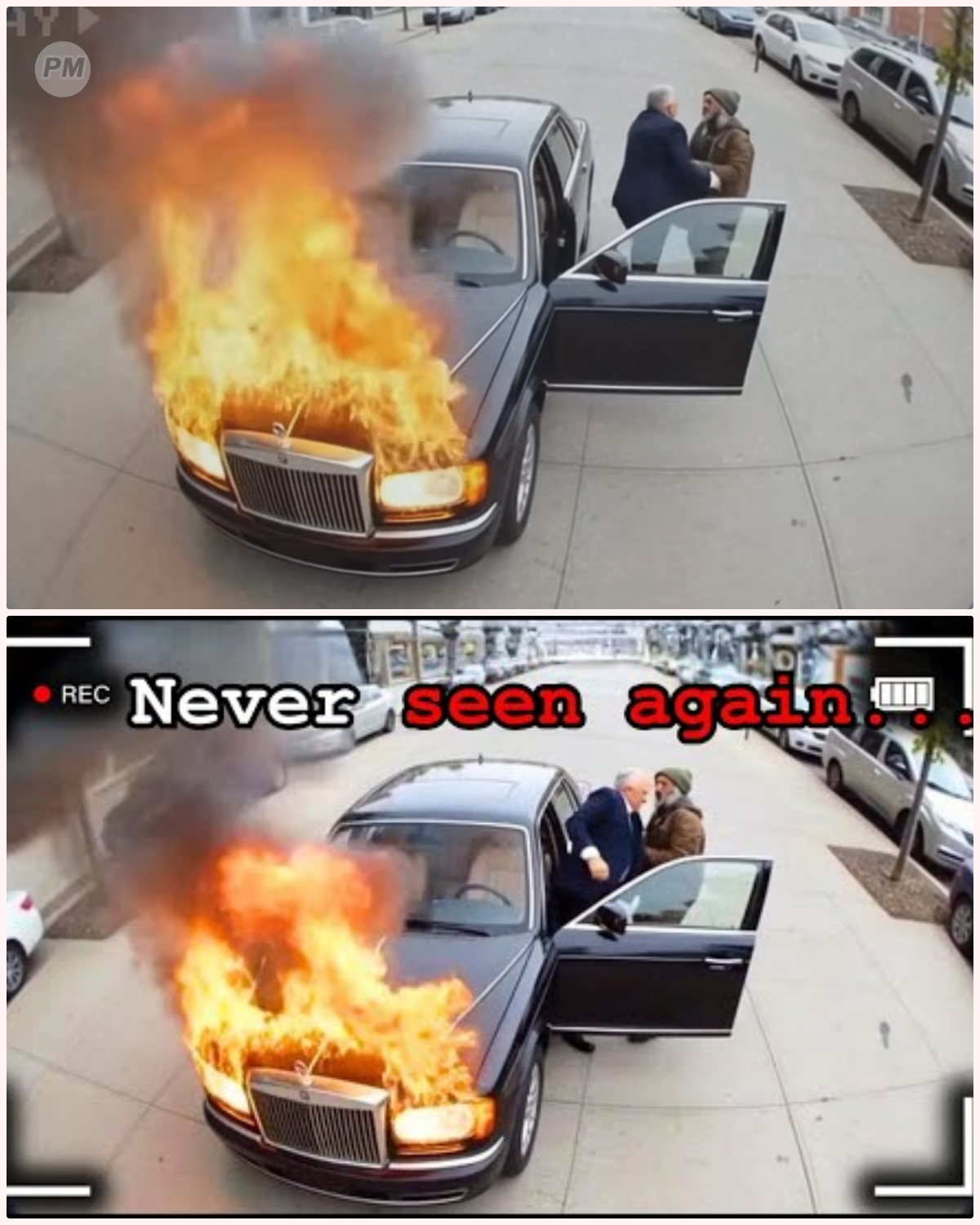
A street corner in Memphis, August 3rd, 2023. Gideon Hargrove is confronted by a man in a suit.
The conversation escalates. The man steps closer, aggressive, threatening. And then, he walks away. That footage captures the last time anyone saw Gideon Hargrove alive.
10 days later, his body was found in the woods. But to understand how a homeless man who saved a millionaire’s life ended up dead, you need to go back to the beginning.
Because what happened between those two pieces of footage is a story about friendship, betrayal, and a decision that would cost Gideon Hargrove everything.
Harland Crow was born in Memphis in 1953. He grew up in Frasier, a working-class neighborhood on the north side of the city.
His father was a construction laborer. His mother cleaned houses. Harland was the second of five children.
The family had almost nothing. But what they had was work ethic. Harland’s father told him the same thing every morning before he left for a job site.
“You want something in this life, you build it yourself. Nobody is going to hand you anything.”
Harland believed that completely. He dropped out of high school at 16 and started working construction, framing houses, pouring concrete, 12-hour days in the Memphis heat.
By the time he was 25, he had saved enough money to buy his first piece of equipment, a used backhoe.
He started taking small jobs, digging foundations, grading lots. By 30, he had a crew.
By 40, he had contracts with the city. By 50, he owned Crow Construction, the largest privately held construction company in Memphis.
He built schools, hospitals, shopping centers. He employed over 300 people. And by 2023, at 70 years old, Harland Crow was worth approximately $14 million.
Harland married young. His wife’s name was Diane. They had one son, Ronan Crow, born in 1983.
Ronan grew up with everything his father never had. Private schools, new cars, summer trips to the Gulf Coast.
Harland wanted to give his son opportunities. He wanted Ronan to have an easier life than he did.
But what Harland gave Ronan was not gratitude. It was entitlement. Ronan never worked a job that his father didn’t arrange, never paid a bill that his father didn’t cover.
By the time Ronan was 40, he had spent his entire adult life living off Harland’s money.
He drove a $70,000 truck that Harland bought. He lived in a house that Harland paid for.
He had no job, no career, no ambition beyond spending his father’s wealth. And Harland knew it.
Diane had died in 2018. After her death, Harland tried to get Ronan to take an interest in the business, to learn the company, to prepare to take over one day.
Ronan showed up to the office twice. Both times, he left after an hour. He wasn’t interested in work.
He was interested in waiting. Waiting for his father to die so he could inherit everything.
And Harland knew that, too. Gideon Hargrove was born in Nashville in 1963. He came from a different world than Harland Crow.
His father was a judge. His mother was a professor at Vanderbilt. Gideon went to good schools.
He graduated from the University of Tennessee with a degree in political science. He went to law school at Emory.
By 30, he was a practicing attorney in Memphis. Corporate law, contracts, real estate deals.
He was good at his job. He made partner at his firm by 35. He married a woman named Claire.
They had a daughter, Emma. For 20 years, Gideon Hargrove had a life that looked perfect from the outside.
And then, it all fell apart. In 2008, the financial crisis hit. Gideon’s firm lost major clients.
The partners started fighting over the remaining business. Gideon made bad investments trying to cover the shortfall.
By 2010, he was bankrupt. He lost his partnership. He lost his savings. The stress destroyed his marriage.
Claire filed for divorce. Gideon started drinking. By 2012, he had lost his law license for ethics violations related to client funds.
And then, in 2015, the worst thing that could happen happened. Claire and Emma were driving to Nashville for Thanksgiving.
A truck ran a red light on I-40. The collision killed them both instantly. Gideon was alone, broke, disbarred, and drowning in grief.
By 2018, Gideon Hargrove was homeless. He had no family left, no friends who would take his calls, no money, no prospects.
He lived under the Hernando de Soto Bridge in Memphis. He slept on cardboard. He ate at shelters.
He had been a lawyer, a partner in a firm, a husband and father. Now, he was invisible.
Just another face in the long line of people society had decided didn’t matter. But Gideon still had one thing, the instinct to help.
On January 14th, 2023, Gideon was walking along Highway 51. He was heading to a church that gave out free meals on Saturday mornings.
And that’s when he saw the car. Smoke pouring from the hood. And then, flames.
He saw the man inside, slumped over the wheel, unconscious. And Gideon didn’t think. He just ran.
He pulled the door open. The heat was overwhelming. He reached in and grabbed the man under the arms.
He pulled him out, dragged him away from the car. And then, the gas tank exploded.
The man Gideon pulled from that car was Harland Crow. He had been driving to a job site when he suffered a minor heart episode.
The car drifted off the road. The engine overheated. And if Gideon Hargrove hadn’t been walking on that highway at that exact moment, Harland Crow would have died in that fire.
Think about that for a moment. Gideon Hargrove had lost everything. His career, his family, his home.
Society had decided he didn’t matter anymore. He was invisible. And yet, when he saw a stranger trapped in a burning car, he didn’t hesitate.
He didn’t think about what he had to gain. He just acted. That’s not desperation.
That’s character. And it raises a question that most people don’t want to answer. How many of us would do the same?
How many of us, if we had lost everything, would still have the courage to risk what little we had left to save someone we didn’t know?
Gideon Hargrove did. And that single act of courage is what set everything else in motion.
Harland woke up in the hospital 3 hours later. Smoke inhalation, minor burns on his hands, but alive.
The paramedics told him what happened. A homeless man pulled him out, saved his life.
Harland asked where the man was. They didn’t know. He had left before they arrived.
Harland didn’t let it go. He asked the hospital staff. He asked the police who responded to the scene.
And finally, a week later, a patrol officer told him he thought he knew who Harland was talking about.
A man named Gideon lived under the bridge on Riverside Drive. Harland drove there. He found Gideon.
He introduced himself. He thanked him. He asked if there was anything he could do to repay him.
Gideon said no. He didn’t want anything. He was just glad Harland was okay. But Harland kept coming back.
Once a week, then twice a week. He would bring food, coffee. They would sit under the bridge and talk.
And over the course of the next 6 months, something happened that neither of them expected.
They became friends. Harland learned about Gideon’s life, the law career, the bankruptcy, the loss of his wife and daughter, the years on the street.
And Gideon learned about Harland, the construction business, the pride in building something from nothing, the disappointment in a son who had never worked a day in his life.
The two men were from completely different worlds, but they understood each other. Harlan saw in Gideon the kind of man Ronan could have been if he had been willing to work, to sacrifice, to care about something other than money.
And Gideon saw in Harlan the kind of father he had wanted to be. The kind of man who built a legacy not just for himself, but for others.
By June of 2023, Harlan was visiting Gideon almost every day. He offered to get him an apartment.
Gideon refused. He didn’t want charity. But Harlan didn’t see it as charity. He saw it as paying a debt.
“You saved my life,” Harlan told him. “Let me help you rebuild yours.” Gideon still said no, but he appreciated the offer.
And he appreciated the friendship. In April of 2023, Harlan was diagnosed with pancreatic cancer, stage four, inoperable.
The doctors gave him 6 months, maybe less. Harlan didn’t tell anyone at first, not Ronan, not his business partners, but he told Gideon.
They were sitting under the bridge on a warm afternoon in late April. Harlan said it plainly, “I’m dying.
I have a few months.” Gideon didn’t know what to say. He just sat there.
And then Harlan said something that surprised him. He said, “I’ve been thinking about what happens to everything I built, the business, the money.
And I realized something. The person I trust most in this world is sitting right here.
You.” Gideon thought Harlan was joking, but he wasn’t. Over the next 3 months, as Harlan’s health declined, he made a decision.
He was going to leave the majority of his estate to Gideon Hargrove. Not because Gideon asked for it, but because Harlan believed that Gideon, more than anyone, understood what it meant to lose everything and still have the courage to help someone else.
And because Harlan knew that if he left everything to Ronan, his son would waste it within 5 years.
On July 8th, 2023, Harlan Crow died at his home in Memphis. He was 70 years old.
He had refused hospice care. He wanted to die in his own bed. Ronan was there at the end.
He had spent the last 3 months hovering, visiting more than he had in the previous 3 years combined.
Harlan knew why. Ronan was waiting. Waiting to find out how much he was going to get.
The funeral was held on July 12th. Over 200 people attended. Business partners, employees, city officials, people whose lives Harlan had touched through his work and his generosity.
Ronan stood at the front of the church and delivered a eulogy. He talked about his father’s work ethic, his commitment to family, his legacy.
It was a good speech, well rehearsed, and completely hollow. Because Ronan didn’t care about Harlan’s legacy, he cared about Harlan’s money.
And he was about to find out that he wasn’t getting it. On July 15th, 2023, Harlan’s will was read at the offices of Rook and Associates, a law firm in downtown Memphis.
The attorney handling the estate was Silas Rook, 42 years old. Silas had been Harlan’s lawyer for 15 years.
He had also been Ronan’s friend since college. They played golf together. They went to Grizzlies games together.
Silas was the kind of lawyer who knew how to work the edges, how to find loopholes, how to bend rules without breaking them.
Ronan trusted him. And Silas knew that when Harlan died, Ronan was going to be a very wealthy man.
Which meant Silas was going to have a very wealthy client. Except that’s not what happened.
Silas read the will aloud. Harlan’s estate was valued at approximately $14 million. The business, Crow Construction, was to be sold.
The proceeds, along with all other assets, were to be distributed as follows. $2 million to be divided among Harlan’s employees as bonuses.
$1 million to various charities. $1 million to Ronan Crow. And $10 million to Gideon Hargrove.
The room was silent. Ronan stared at Silas. He didn’t move. He didn’t speak. And then he said, “Who the hell is Gideon Hargrove?”
Silas explained. Gideon was the man who saved Harlan’s life in January, the homeless man Harlan had befriended over the past 6 months.
Harlan’s will stated clearly that Gideon Hargrove was to receive the majority of the estate in recognition of his selflessness and character.
Ronan’s face went white, and then red. He stood up. He started yelling. “This is insane!
My father left $10 million to a homeless man? A stranger? Someone he knew for 6 months?
And I get $1 million?” Silas tried to calm him down. He explained that the will was legally sound.
Harlan had been of sound mind when he drafted it. There was nothing Ronan could do to challenge it.
But Ronan wasn’t listening. He walked out of the office. He got in his truck.
And he called Silas 20 minutes later. He said, “We need to talk, in person, tonight.”
Harlan Crow spent 50 years building a fortune. He could have left it all to his son.
That’s what most people do. That’s what society expects. But Harlan understood something that most wealthy people refuse to accept.
Blood doesn’t guarantee character, and money doesn’t create worth. Gideon had proven his character when it mattered most.
Ronan had proven the opposite his entire life. So Harlan made a choice that most fathers wouldn’t have the courage to make.
He looked at his son and decided that the homeless man who saved his life deserved his fortune more than the son who had spent 40 years taking from him.
And that choice is what cost Gideon his life. Because when people who feel entitled lose what they believe they’re owed, they don’t accept it.
They eliminate the obstacle. That night, Ronan and Silas met at a bar in East Memphis.
Ronan was furious. He told Silas that there was no way he was letting some homeless guy walk away with $10 million that should have been his.
Silas told him there was nothing they could do. The will was ironclad. But Ronan wasn’t asking for legal advice.
He was asking for something else. He said, “What if Gideon doesn’t make it to the payout?
What if something happens to him?” Silas knew exactly what Ronan was suggesting. And he should have said no.
He should have walked away. But Silas had his own debts, his own problems. He owed money to people who didn’t take no for an answer.
And if Ronan was willing to pay him to make Gideon Hargrove disappear, Silas was willing to listen.
They talked for 2 hours. They made a plan. Silas would approach Gideon. He would try to convince him to sign away his inheritance.
Offer him a smaller amount. 50,000, 100,000. Enough to get him off the street, but far less than $10 million.
And if Gideon refused, Silas would make sure he never got the chance to collect.
On August 3rd, 2023, Silas Rook found Gideon Hargrove. Gideon was still living under the bridge.
He had heard about the will. Silas had sent him a letter informing him of his inheritance.
Gideon didn’t believe it at first, but when he realized it was real, he didn’t know what to feel.
He was grateful, but he was also overwhelmed. He had no idea how to navigate the legal process, how to claim the money, how to manage that kind of wealth.
He was a 60-year-old homeless man who hadn’t had a bank account in over a decade.
Silas approached him on the street near the bridge. He introduced himself. He told Gideon he needed to discuss some details about the will.
Gideon agreed to talk. They walked to a quiet side street. And that’s when Silas made his offer.
He told Gideon that Ronan Crow was planning to challenge the will, that it could be tied up in court for years, that Gideon might never see a dollar.
But Silas could make it easy. He could offer Gideon $200,000 right now. Cash. No legal fees.
No waiting. Just sign a document waiving his claim to the estate, and walk away with more money than he had ever seen in his life.
Gideon looked at Silas. And he said no. Gideon told Silas that Harlan gave him that money for a reason, that it wasn’t about the amount.
It was about what it represented. Harlan believed in him, trusted him. And Gideon wasn’t going to dishonor that by signing it away to a son who Harlan himself had chosen not to leave it to.
Silas tried again. He raised the offer. 300,000, half a million. Gideon kept saying no.
And then Silas’s tone changed. He stepped closer. He told Gideon that he was making a mistake, that people like him didn’t get to keep money like this, that the world doesn’t work that way, that if Gideon didn’t take the deal, he would regret it.
Gideon looked at Silas and said, “Are you threatening me?” Silas didn’t answer directly. He just said, “I’m telling you how things are.
You’re a homeless man. Nobody is going to believe you deserve this money. Nobody is going to protect you.
Sign the paper or deal with the consequences.” And then, Silas walked away. That conversation happened on a street corner in Memphis at approximately 4:47 p.m.
On August 3rd, 2023. A security camera from a nearby business captured the entire exchange, and it would be the last time anyone saw Gideon Hargrove alive.
Gideon disappeared that night. He didn’t return to the bridge. His few belongings were left behind.
Nobody saw him leave. Nobody heard from him. For 10 days, Gideon Hargrove was simply gone.
And then, on August 13th, a woman walking her dog in Shelby Forest, about 15 miles north of Memphis, found a body.
It was partially concealed under brush. The body had been there for days, maybe more than a week.
The woman called 911. Police arrived. The body was identified through fingerprints as Gideon Hargrove.
Cause of death was blunt force trauma to the head. He had been beaten and then left in the woods to die.
But, there was something else. During the autopsy, the medical examiner found tissue and skin cells under Gideon’s fingernails.
He had fought back. He had scratched his attacker. And when the DNA from those samples was analyzed, it came back with a match.
Silas Rook. The Memphis Police Department had been investigating Silas Rook for weeks before Gideon’s body was found.
Not for murder, for financial crimes. An unrelated case involving tax fraud and misappropriation of client funds.
Detectives had been building a case, watching Silas’s movements, tracking his phone. And in the process, they noticed something strange.
Silas had been spending a lot of time near the Riverside Drive area, where Gideon lived.
They pulled security footage from businesses in the area, and that’s when they found the video from August 3rd.
The confrontation between Silas and Gideon. The aggressive body language, the pointing, the words they couldn’t hear, but could see.
And when Gideon’s body was found 10 days later, Detective Nora Callahan, the lead investigator on the financial case, immediately requested the footage.
She watched it. And then, she got a warrant for Silas Rook’s DNA. The DNA evidence was undeniable.
Silas Rook’s skin cells were under Gideon Hargrove’s fingernails, which meant Gideon had scratched him during a struggle, which meant Silas had been there when Gideon died.
Silas was arrested on August 16th, 2023. He was charged with first-degree murder. He denied everything.
He said he never touched Gideon, that he didn’t know how his DNA got under Gideon’s nails.
His lawyer tried to argue contamination, transfer, anything. But, the evidence was too strong. The video showed the confrontation.
The DNA showed the physical contact. And phone records showed that Silas had called Ronan Crow twice on the night of August 3rd, once at 6:14 p.m., once at 9:47 p.m.
Prosecutors believed that Silas had followed Gideon after their confrontation, that he had attacked him, that he had killed him to prevent him from claiming the inheritance, and that Ronan Crow had been involved in the planning.
Ronan Crow was questioned. He denied everything. He said he knew nothing about Gideon’s death, that Silas had acted on his own, that yes, they had discussed the will, that yes, Ronan was upset, but he never told Silas to hurt anyone.
And legally, there wasn’t enough evidence to charge Ronan. The phone calls weren’t proof of conspiracy.
The conversations at the bar had no witnesses. Silas refused to implicate Ronan. He knew that if he stayed quiet, Ronan would take care of his family, pay his legal fees, make sure he was protected.
So, Silas took the fall alone. And Ronan Crow walked free. This is what happens when people believe that wealth is a right instead of a responsibility.
Ronan Crow didn’t see $10 million as his father’s legacy. He saw it as his inheritance, something he was owed.
And when that was taken away, he didn’t accept it. He eliminated the obstacle. That’s not greed.
That’s entitlement. And entitlement, when combined with desperation, becomes dangerous. It becomes lethal. Ronan Crow spent his entire life believing that his father’s money belonged to him, that he didn’t have to earn it, that he didn’t have to deserve it.
It was his by birth. And when his father decided otherwise, Ronan didn’t question his own character.
He didn’t wonder why his father chose a homeless stranger over his own son. He just decided that the homeless stranger had to die.
That’s the mindset of someone who has never been told no, who has never been held accountable, who has never had to face the consequences of being unworthy.
The trial of Silas Rook began in Memphis on February 12th, 2024. The prosecution presented the security footage, the DNA evidence, the timeline, the motive.
Silas’s defense argued that the evidence was circumstantial, that the DNA could have been transferred during the confrontation on August 3rd when the two men were talking, that there was no proof Silas had been in Shelby Forest, that there was no murder weapon, that the case was built on assumption.
The jury didn’t agree. On March 1st, 2024, after 2 days of deliberation, they returned a guilty verdict.
First-degree murder. Silas Rook was sentenced to life in prison without the possibility of parole.
He showed no emotion when the sentence was read. He was led out of the courtroom in handcuffs.
And Ronan Crow, sitting in the back row, walked out a free man. But, Ronan Crow didn’t walk out with $10 million because Harlan Crow had anticipated exactly what would happen.
In his will, there was a clause, a single paragraph that Silas had glossed over when he first read the document.
The clause stated that in the event Gideon Hargrove was unable to claim the inheritance due to death or incapacitation, the $10 million would not revert to Ronan Crow.
It would instead be donated in full to the Memphis Union Mission, a homeless shelter that had been operating in the city for over 100 years, the same shelter where Gideon had eaten meals, where he had found refuge on cold nights.
Harlan had written that clause because he knew his son. He knew that if something happened to Gideon, Ronan would be behind it.
And he wanted to make sure that even if Gideon never got the money, Ronan wouldn’t either.
Harlan Crow knew his son. He knew exactly what Ronan would do if Gideon inherited that money.
And so, he built a fail-safe, a clause that ensured even if Gideon was killed, Ronan would never benefit.
That’s not just legal planning. That’s a father’s final judgment on his son’s character. And it raises an uncomfortable truth that most people don’t want to face.
Sometimes, the people closest to us are the ones we trust the least. Harlan spent his entire life building something meaningful, something that could provide jobs and security for hundreds of people, something that could help his community.
And in the end, he made sure it went to people who would use it to help others, not to a son who would waste it on himself.
That’s a level of moral clarity that most parents never reach. Most parents look at their children and see only potential, only hope.
Harlan looked at his son and saw exactly who he was, and he acted accordingly.
On April 10th, 2024, the executor of Harlan Crow’s estate transferred $10 million to the Memphis Union Mission.
The shelter used the money to expand its facilities, to hire more staff, to provide job training and addiction counseling, to give people like Gideon Hargrove a chance to rebuild their lives.
Ronan Crow received his $1 million and and nothing more. He tried to challenge the clause.
He hired lawyers. He filed motions. But, the will was clear. The clause was enforceable, and the courts upheld it.
Ronan spent over $200,000 in legal fees trying to break his father’s will. And in the end, he walked away with less than a million dollars.
The son who had spent his entire life waiting for his father to die so he could inherit a fortune, ended up with a fraction of what he expected.
And the money he wanted so badly went to the very people he had looked down on his entire life, the homeless, the forgotten, the invisible.
Gideon Hargrove was buried in a quiet cemetery in Memphis. There was no family to attend the funeral, no friends, just a few people from the shelter who had known him over the years, and Detective Nora Callahan.
She attended because she felt that someone should be there. Someone should acknowledge that Gideon Hargrove’s life had mattered, that he had saved a man’s life, that he had been a good person in a world that had been cruel to him, that he had died because someone decided he didn’t deserve a second chance.
The headstone is simple. Gideon Hargrove, 1963 to 2023. And underneath, a line that Harlan Crow had requested be added.
He saved my life and I will never forget. Gideon Hargrove died because someone decided a homeless man didn’t deserve a second chance.
But in death, Gideon gave hundreds of homeless people the chance Ronan tried to take from him.
That’s not irony. That’s justice. Every person who walks through the doors of the Memphis Union Mission is there because of Gideon Hargrove.
A man who had nothing, who lost everything, who saved a stranger’s life. And who, even in death, gave more to the world than the people who killed him ever will.
Ronan Crow walks free, but he doesn’t walk away with his father’s fortune. He walks away with the knowledge that his father trusted a homeless stranger more than he trusted his own son.
And that knowledge, for someone like Ronan, is a sentence worse than prison. Because every day he wakes up, he has to live with the fact that he killed for money he will never have.
That he destroyed a good man’s life for an inheritance that went to the very people he despised.
And that his father knew, long before Ronan ever acted, exactly who his son really was.
Silas Rook is serving his sentence at a maximum security prison in Tennessee. He has filed multiple appeals.
All have been denied. Ronan Crow still lives in Memphis. He sold the house his father bought for him.
He drives a used car. He works, for the first time in his life, at a mid-level sales job.
The money is gone. And he will never see the $10 million he killed for.
The Memphis Union Mission continues to operate. It serves over 500 people a day. It provides shelter, food, hope.
And every person who walks through those doors is there because one man decided that character matters more than blood.
That compassion matters more than entitlement. And that even a homeless man living under a bridge can be worth more than a son who spent his entire life taking and never giving back.