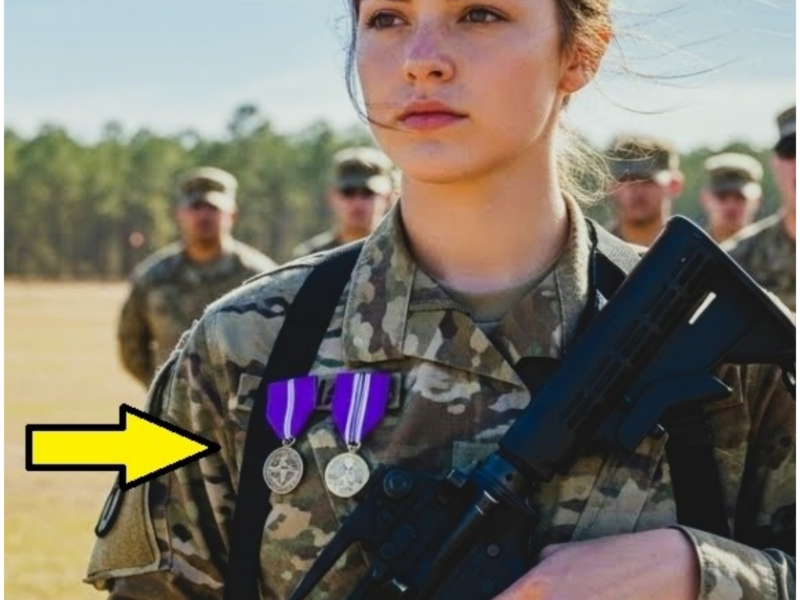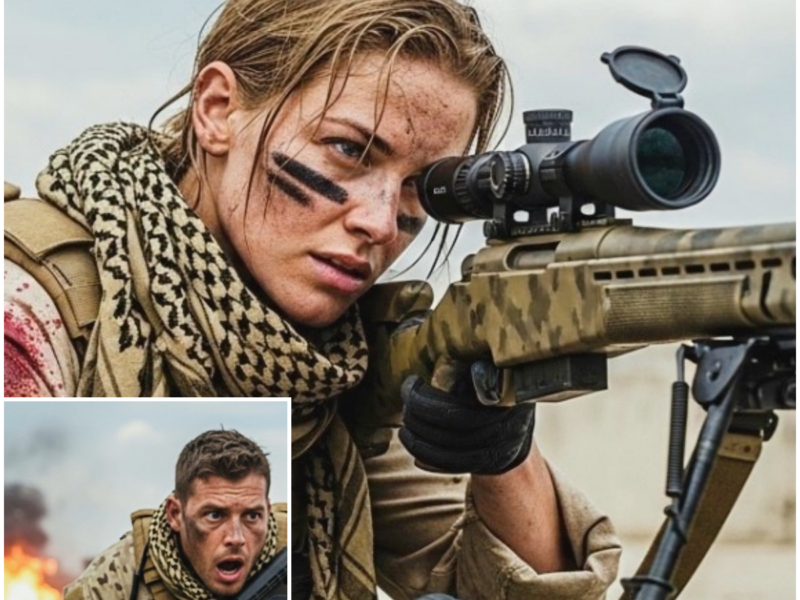
Do well and she was lucky
Do well and she was lucky. Do poorly and she was proof. So, she didn’t try to win the first 90 seconds.
She had stopped trying to win them a long time ago. She just found her seat, sat down and and “Captain Carter,” said the officer at the head of the table, “glad you could join us.”
“Sir, you know why you’re here?” “I was told there’s a mission that needs a pilot, sir.”
A ripple went around the table, a few glances exchanged, and a man near the far end, broad-shouldered, gray at the temples, with the kind of face that had spent a career being obeyed, leaned forward.
“There’s a mission,” he said, “that needs the right pilot. That’s a different thing.” That was the first time Emily Carter ever heard the voice of Colonel Marcus Vance.
“And you don’t think I’m the right pilot, sir?” She said. “I don’t know what you are yet, Captain.
I know what your file says. Files and pilots aren’t always the same thing.” “No, sir, they’re not.”
Emily held his gaze. “Sometimes the pilot’s better than the file.” The room went very quiet.
Somewhere, someone coughed, and Colonel Vance studied her the way a man studies a card he suspects might be marked.
The mission had a name, Operation Northern Shadow, and the briefing that followed was the kind that made even experienced officers go still, because what they were describing was not a normal tasking.
It was, by every honest measure, a suicide assignment. A hostile special forces unit, well-equipped and highly trained, had crossed into remote Alaskan territory and established hidden positions near a strategic communications facility.
The mission required a single pilot to fly deep into enemy controlled terrain in the worst weather the region could produce, deliver sensitive intelligence equipment to a forward observation team, and then maintain aerial support until reinforcements could arrive.
Alone, in a valley the enemy already controlled. Emily listened to all of it without changing her expression, and when the briefing officer finished, she asked one question.
“Who’s flown this valley before?” Silence. “I mean recently, sir, under these conditions. Who on the roster has actual hours in this specific terrain in this specific weather pattern.
More silence and then from the far end of the table Vance said, “Nobody. That’s the problem.”
“No, sir.” Emily said, “That’s the answer.” She looked around the room. “I have 240 hours in this valley.
Search and rescue, mostly in conditions the manual says you don’t fly in. I know where the downdrafts are.
I know where the passes close in a storm and where they stay open. I know which ridgelines lie to you on instruments and which ones tell the truth.”
She turned back to Vance. “You don’t need the pilot with the most combat time, sir.
You need the pilot who knows this ground and that’s me.” It was, everyone in that room later agreed, the most confident thing any of them had heard a captain say in years.
And it was also the moment Colonel Vance decided he did not like her. Because Vance had spent his entire career in a world where confidence was earned in blood and years.
And here was a 28-year-old woman claiming it like it was already hers. It offended something deep in him.
It felt to a man like Vance like a threat. Though he would never have used that word.
“You have talent, Carter.” He said. “I’ll give you that. But talent isn’t experience. Talent gets people killed when it thinks it’s ready before it is.”
Emily didn’t flinch. “Then give me the mission, sir, and I’ll show you the difference between the two.”
The room seemed to hold its breath. And Colonel Marcus Vance, looking at the young woman across the table, made a decision that he told himself was about the mission, but was really about something much smaller and much older in his own chest.
He decided he would give her the assignment. He decided he would send her into the most dangerous valley in the theater alone and he decided he would watch what happened.
Because if she failed, and men like Vance were always quietly certain that women like Emily would fail, then he would be proven right.
And the roster would go back to the way he thought it should be. And if she somehow survived, then maybe maybe he would finally give her the respect she kept demanding with those level eyes and that steady voice.
He told himself it was fair. He told himself it was the mission. He was lying to himself and some part of him knew it.
“All right, Captain,” he said, “the mission’s yours.” “Thank you, sir.” “Don’t thank me yet.”
Emily stood, gathered her things, and walked toward the door. And just as she reached it, Vance said one more thing, the thing that would echo in his own mind for the rest of his life without him understanding why.
“Carter, when you’re out there alone and it goes bad, and it will go bad, don’t expect the cavalry.
Out there, the only person who’s coming to save you is you.” Emily stopped. She turned.
And she gave him a small, calm smile that a wiser man would have found terrifying.
“Sir,” she said, “I’ve always known that.” And she walked out. Over the next 6 months, Captain Emily Carter did something that none of the men who doubted her ever saw, because it happened in the places they never looked.
She prepared. Not the way a nervous person prepares, running the same drills over and over to quiet their fear.
She prepared the way a predator prepares, patiently, thoroughly, learning everything. She flew the valley in simulation until she knew it in her sleep.
She studied the enemy units’ known tactics, their equipment, the signatures of their movement. She talked to the two men who would be waiting at the forward observation post, learned their voices, their habits, the way they thought.
She read every weather record for the region going back a decade until she understood not just what the storms did, but why they did it.
Until she could look at a bank of clouds and know what it was going to become an hour before it became it.
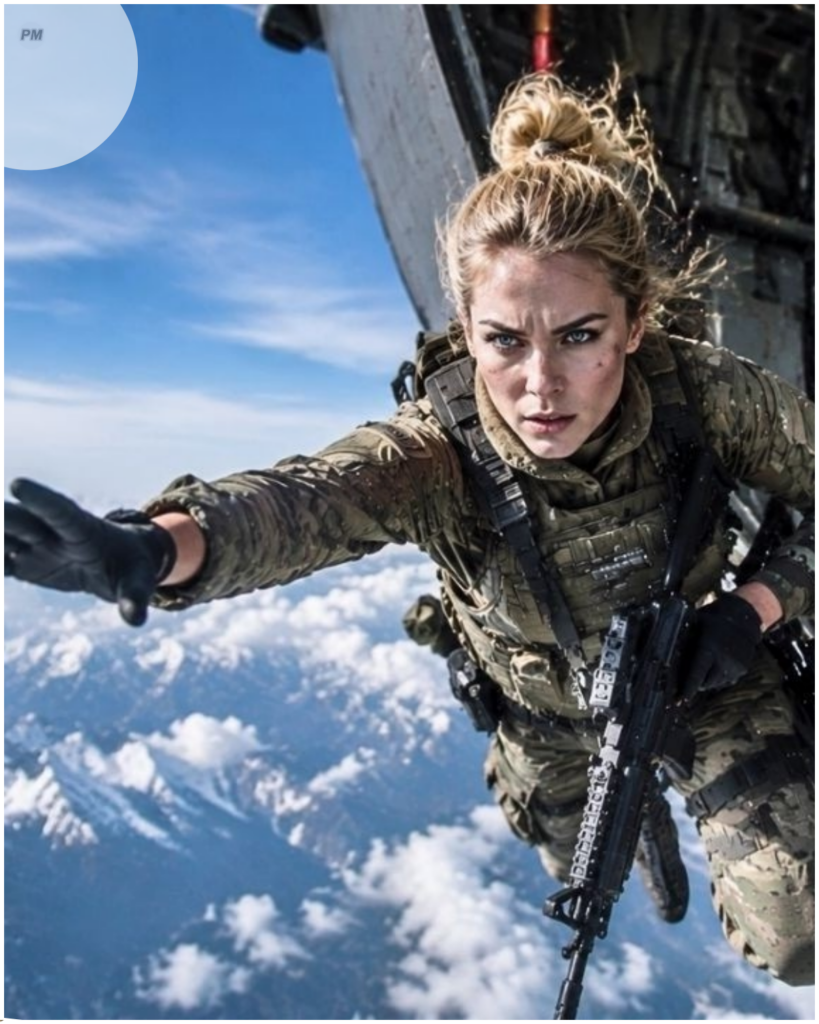
And she did one more thing, the thing that mattered most, the thing that would eventually save her life when she went out that helicopter door.