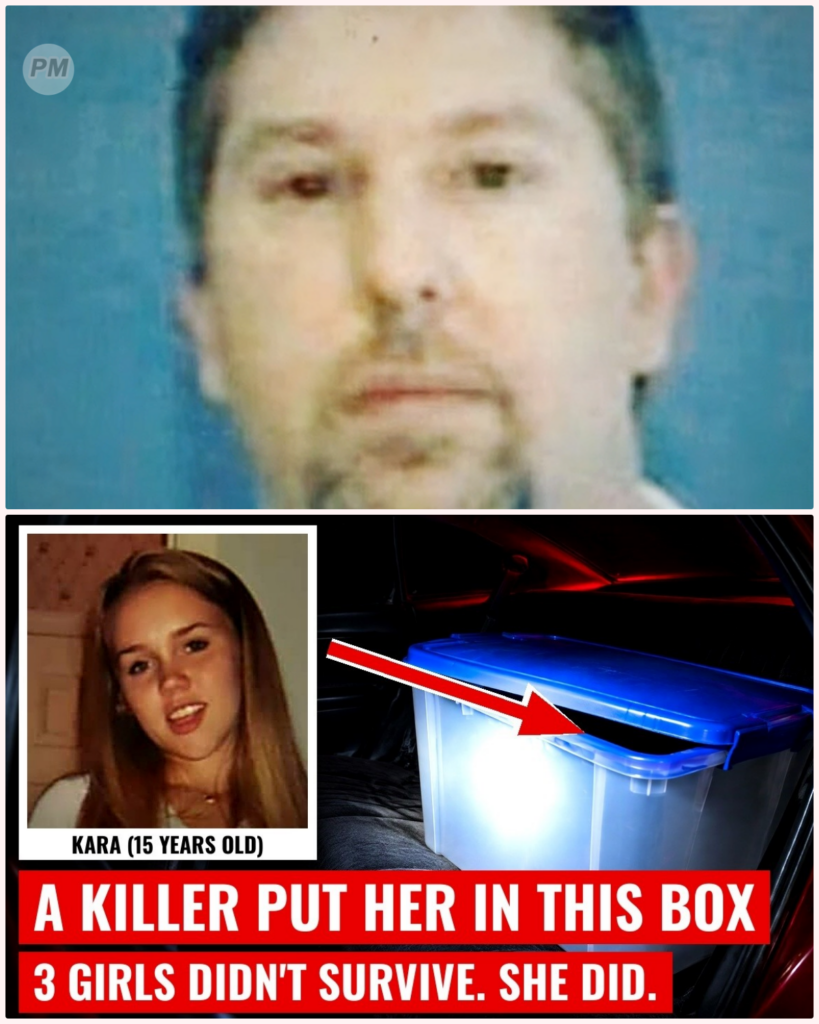
That road was known at the time for a run of incid…
That road was known at the time for a run of incidents in which a man in a pickup truck tried to get women to pull over, blamed on someone called the Route 29 Stalker.
Alicia Showalter Reynolds was found near there in 1996. Investigators and writers have wondered about evidence in connection with those cases, but nothing has confirmed it.
The same goes for the disappearance of Anne McDaniel. More recently, Deirdre Enright of the University of Virginia has been examining seven other cases for possible links to him.
They include Justin Turner in 1989 and 12-year-old Sarah Cherry in Maine in 1988 when evidence was stationed there.
Be Be with that one because another man, Dennis Dechaine, was convicted of that crime and remains the convicted man.
Law enforcement has not linked evidence to any of these seven cases. So here is where it honestly stands.
Three murders are officially his. One kidnapping is his, proven by the girl he took.
Everything else is a question. Those families are still waiting. And if the answers ever come, they will come from old files and old evidence.
It will be the same kind of evidence that sat waiting for five years until the teenager gave it a name.
Cara did not leave that work to others. Later, Bonnie began telling her story on TikTok and Cara’s followers kept tagging her.
So Cara sent Bonnie a message on Instagram. Here she wrote, we have something in common.
They ended up on the phone for two hours. The girl he kidnapped and the girl he married then went looking together.
Their three-part series, The Serial Killer Connection, follow through the places he lived and the cases that may be tied to him.
Cara has told Bonnie she believes she was his first victim. She also believes that many of his other victims resembled Bonnie, though she calls that her own theory.
And to the question everyone asks, how could his wife not know? Cara answers with a question of her own.
Law enforcement did not know either, and they are trained to. For years, Cara did not talk about it much in public.
She had a job and a family. She has three children now. Her sons know at an age-appropriate level that someone once took their mother away from her mommy and daddy.
After meeting Elizabeth Smart, she began to think about what the story could do in the open.
She started a TikTok at the beginning of 2020 because it was the one place a newcomer could still be heard.
She talked about her escape and about how good law enforcement had been to her at a moment when that was not a popular thing to say.
It spread very fast. People sent her messages. She has said a girl wrote to her from inside a trafficking situation and that Cara walked her through leaving it message by message through her inbox.
Oxygen made a documentary Escaping Captivity in 2021. She was an executive producer. Lifetime made a film called The Girl Who Escaped in 2023 and she was involved from the first day to the last.
She has insisted on one thing over and over. People who tell these stories should treat the people in them with care and survivors should have a say.
It is a fair thing to ask of anyone who tells them including this channel.
Her current work comes back to the same questions. She hosts Somebody Knows Something a series on unsolved cases and she gives keynotes mostly to police on how to talk with survivors.
Her advice sounds simple. Lead with curiosity. Let them tell it. Almost never ask why because why makes a person justify the worst day of their life?
And she tells survivors not to hang their healing on a conviction because most offenders never serve ever serve jail time.
She knows that one from both sides of the desk. She never got her day in court and her life on anyway.
She also thinks about what we tell children. The only advice she had growing up was stop, drop and roll and don’t talk to strangers.
But what do you do, she asks, when a stranger comes up to you in broad daylight, stays at a respectful distance and sets off no alarms?
Her own children now learn at their age why the rules are the rules. She also has a rule for anyone who hears her story.
She opens with it. People hear what she did, she says, and they think I could never do that.
And she tells them they have no idea. Nobody knows what they can do until they are in it.
She was an average kid in cheerleading shorts. Nobody had trained her. She simply had a will to survive.
And she says everyone has one. She is also very firm about the word victim.
To say you are a victim, she has said, means someone took something from you.
Nothing was taken from her, she says. She refuses to give that man that power.
And that brings us to the classroom. Years after that June, Cara was a cadet at the Law Enforcement Academy.
She was just another person in the room. She sat through a class one day where the instructor began teaching a case study.
It was the case of a 15-year-old girl kidnapped by a serial killer. The instructor was teaching Cara’s kidnapping to Cara and had no idea she was in the room.
Cara sat through all of it. When the class was over, she walked up to the front and said this.
I just want you to know that Cara is me. The instructor’s face went blood red.
Oh my god, she said, I’m so sorry. At her graduation, the academy gave her an award for courage and bravery.
Richard Evanitz has picked a 15-year-old watering the plants. He never knew she was reading the number.
