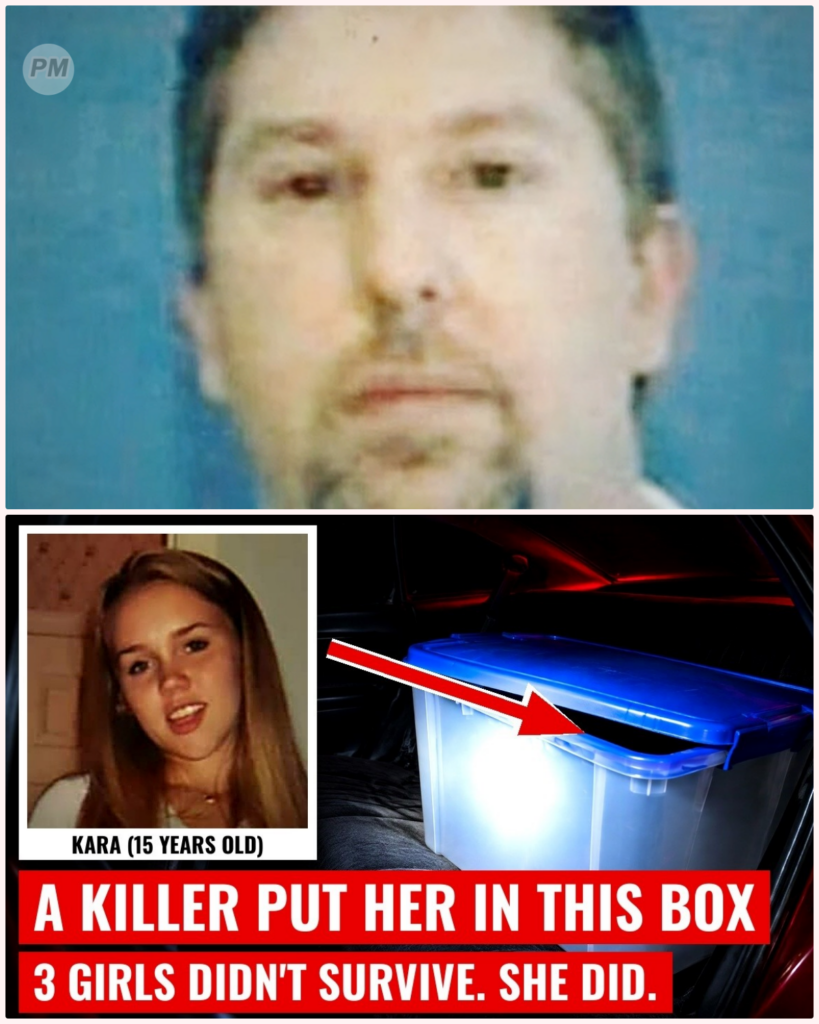
Then the news came
Then the news came. She was 15. She was going into her next year of high school, and she had just ended the career, career of a serial killer.
She said that exact sentence herself, and she has earned it. Investigators have been open about what they thought of her.
She knew what was going on, Lieutenant Joe Polizzi of Richland County told the Freelance Star just days afterward.
Years later, Sheriff Lott told People magazine that she controlled her emotions to the point where she was able to develop a plan.
She went on to meet the families. When people ask her about the friend whose house it was, Kara tells them what her friend told her.
She felt it should have been her. Years later, filming at that house, Kara went inside and found the friend’s mother, the woman who had asked the girls to water the plants.
She told Kara she had always felt guilty. Kara hugged her. Please don’t blame yourself, she told her.
You cannot hold on to this anymore. Kara has said she may have been the least affected of anyone.
She was shut off, and everybody around her was not. Her parents, her best friend, and her boyfriend each had to carry it awake.
There was a reward. Law enforcement awarded Kara $150,000 for her part in closing those cases.
But the real difference in her life came from two men with the same job.
She was kidnapped from one county and escaped in the next. So she dealt with two different sheriffs.
About 24 hours after her escape, one of them came to her house. She has not named him in the interview where she told the story.
He said to her, well, you know that guy was going to kill you, right?
You should be dead right now. Nobody had even connected evidence to the Virginia murders yet.
There was no purpose to saying it. She was 15 and she was home for one day.
The other sheriff was Leon Lott of Richland County, whose department had handled the case.
He told her he was proud of her and that she was brave. He took her with him when he gave an award to the two men who had driven her to the station.
The same men who forgot the apartment. He gave Kara awards for bravery as well.
And then the next summer he called her mother. Would Kara like a summer job at the sheriff’s department?
She took it. She did administrative work there all through high school and college. He would show up at her desk every semester and say, let me see your report card.
He has daughters. And she became, in her words, another one of them. When she was in her final year of college majoring in psychology and thinking of switching to teaching, he told her she would always have a job there.
He asked if she wanted to be a school resource officer. She said she would try it.
Everybody wants a certain version of this next part, she has said. They want her to say she became a cop for justice, for payback for girls like her.
She laughs at that. She had grown up a tomboy driving go-karts. The academy was the adult version of that.
Liked driving the cars. Worked as a school resource officer. She moved to investigations, working child cases and sex crimes.
Later she became a sworn victim’s advocate, sitting beside people on the worst days of their lives and knowing precisely what those days are like.
She met her husband at that same sheriff’s department and they were married within a year.
>> I formed a relationship with many people in law enforcement through my case and worked there all through high school and college.
>> For years she told everyone she was fine and she believed it. She had no PTSD that she could name.
Then after the birth of her second child, she felt like she was drowning. She realized she was not feeling the full depth of joy.
Anger was the only thing she felt with any regularity. She looked hard at herself and came to a conclusion.
She had never left fight or flight. She had just been living there for all those years.
The the thing that started to change it was a conversation with Elizabeth Smart. Cara asked her if she knew the look people give you when they find out who you are.
Oh, Elizabeth said, I know the look. Cara has called it the first time she felt seen.
Cara’s anger at evidence has changed over the years. For a long time she was furious that she would never see him in court.
Then she has said she came to be grateful for one part of it. With no trial, there were details of those 18 hours that her parents, her friends, and her boyfriend never had to hear.
But the anger found a new reason. [clears throat] She is sure that he did more.
He told his sister as much on that phone call from the road. Believes would have confessed in the end, and that some family out there has been waiting ever since for what he took with him to Sarasota.
The FBI thinks the question is open as well. In 2008, the bureau’s violent criminal apprehension program issued an alert on him.
It is still on the FBI’s website, and it is a remarkable thing to read about a man who had been dead for 6 years.
It lists the 22 states he is known to have been in or traveled through, and it asks police everywhere to go back through their old files with him in mind.
He had lived in Florida, Maine, Virginia, and South Carolina. Sheriff Lott’s team looked for other victims and has said it did not find any.
It is also said that um this does not rule them out. Remember the directions to US 29 in Culpeper County?
