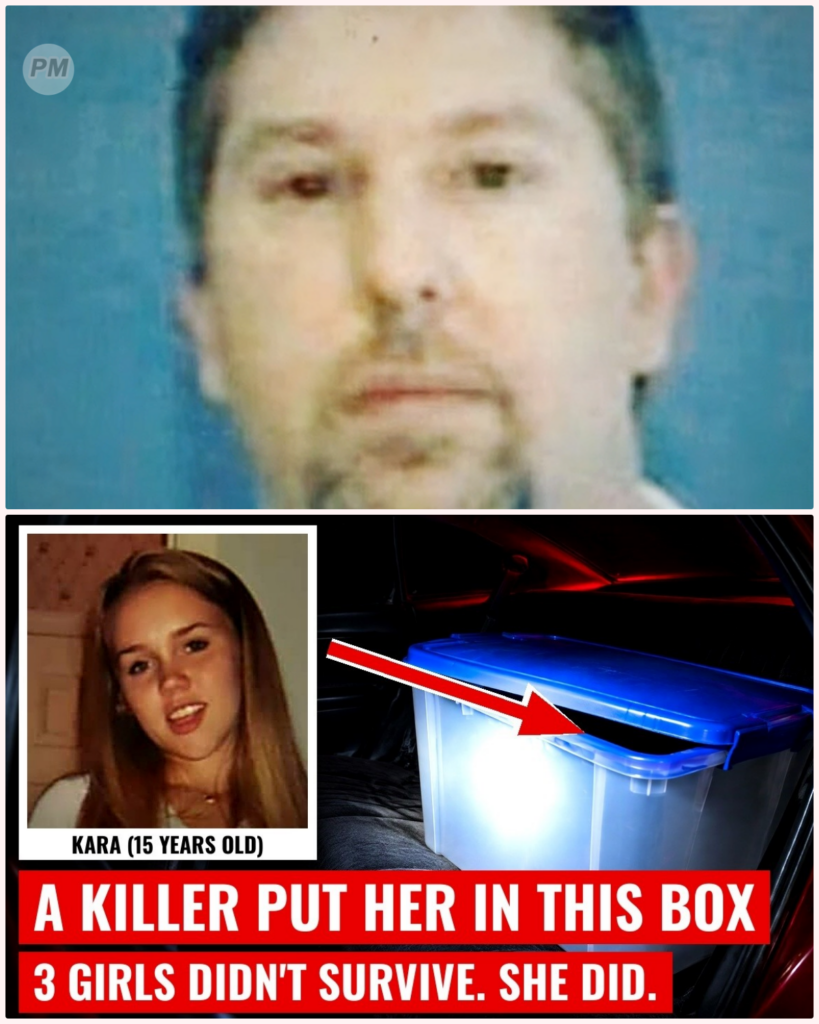
They did not hunt Richard Evonitz for five years
They did not hunt Richard Evonitz for five years. They hunted a man with no name, and they did it about as hard as anyone could.
Sheriff Ronald Knight’s department in Spotsylvania worked with Virginia State Police and the FBI. The task force ran through more than 12,000 leads.
It compared the case against 45,000 other unsolved cases. The lab evidence was checked against 1.2 million DNA profiles.
Doug Diedrich, one of the FBI’s top trace experts, worked on the fibers. And they had evidence.
They had hairs and fibers from the girls. All of it could be matched the moment someone gave them a person to match it to.
No match ever came. The DNA of the man they wanted was not in the national database.
By May 2000, three years after the Lisk murders, the sheriff’s office said tips were down to an average of three a week.
Then there were the wrong men. The Washington Post reported in 2002 that a man had been erroneously indicted in Sophia’s killing and had sat in jail for months before it fell apart.
And in an October before that May 2000 report, a 29-year-old carpet cleaner drew heavy publicity as a suspect, and DNA tests cleared him.
A former FBI profiler called him a good suspect, no doubt about it. And on April 29th, 2002, DNA excluded another man, Daryl Rice, in the Lisk case.
By then, almost five years had passed since the sisters were killed. The task force had lost another name.
Here is the part that still hurts. The same Post article reported that Richard Evonitz >> Bonnie has spoken publicly about those years.
She describes being cut off from the people around her and rages she learned to work around.
She shared a bed with this man for about eight years and has said she never suspected what he was.
She has said she was sheltered and that at the time she thought I guess this is what marriage is.
The most she ever suspected near the end was that he might be having an affair.
That is why she left. The Freelance Star reported they legally separated on November 26th, 1996, 11 weeks after Sophia was taken.
After the truth came out, she found something she had not known about. It is one of the most chilling details in the whole case.
Behind another picture, inside a frame, he had hidden a photo of Bonnie. She was 11 years old in it.
This comes from Bonnie alone and we can only report it as she told it.
But think about what that photo means and how long he kept it. What came next in his life is on the record.
The Lisk sisters were taken in May 1997. He filed for bankruptcy that same year.
His home was foreclosed on in 1999. Eventually, he moved back to South Carolina near where he had grown up.
He married again. His new wife Hope was years younger than he was. They lived in the small apartment at the Crossroads complex.
Cara has since learned that he tried to approach a couple of other girls on the very day he came to her street.
Those girls got lucky and they may never have known it. He had stalked girls in the past.
Cara was simply where he happened to drive next. She has called herself his victim of opportunity and she she was the worst opportunity he ever took.
When Virginia’s investigators came to South Carolina in June 2002, they came with years of evidence.
And for the first time, they had somewhere to take it. The first thing to mention is the paper.
Besides the newspaper in the foot locker, there were clippings. There were handwritten notes about four girls, unnamed, with directions on how to reach them.
[snorts] One set of directions went to Block House Road where the Lisk sisters had lived.
Another set of directions went to US Route 29 in Culpeper County, close to where another woman had been found in another unsolved Virginia killing.
[clears throat] We will come back to that. Then came the lab work. Doug Deidrick and the FBI’s people had been holding pink fibers from the Lisk case for five years.
They compared them with a pink bath rug belonging to Evonitz. They matched. They had dark blue fibers too.
And those matched a set of his belongings from the apartment. They found a hair in Coty’s sock, a head hair that had traveled with her.
They tested the DNA against evidence. It matched. Two other hairs matched too. Then there was the trunk lid.
On it, examiners found four small fingerprints, and they matched Kristen Lisk. She had left the proof there, and it waited.
Remember Kristen was 15, the same age as Cara. Five years apart, the same man.
One of them got to tell the police herself. The other one told told them through her fingertips.
In all, there were three hairs, 190 fibers, and 600 items of lab work. The FBI compared them all.
In mid-August 2002, about 10 weeks after a teenager ran out of that door, police and the FBI announced that the murders of Sophia Silva, Kristin Lisk, and Caddy Lisk were closed.
The Washington Post headline said it in five words. Three slain girls cases closed. The man responsible could never be tried, and so the FBI made clear what it had.
A conviction was not possible because he was dead. But the evidence pointed one way.
Kara has said she learned the whole of it gradually. All she knew that first week was that the man had vanished and then died.
