When Rodney came to, it was around 1:00 in the mor…
When Rodney came to, it was around 1:00 in the morning and Carla was gone.
He sped to the Walkers’ house, less than a mile away, and drove right up over the curb onto the front lawn.
Blood ran down his face. Layton and Doris were still awake, playing dominoes with relatives.
Jim and Cindy were watching television. Rodney pounded on the door and shouted that someone had taken her and was going to hurt her.
Layton grabbed his pistol and raced to the bowling alley. Doris called the police. Officers found two things in the parking lot, Carla’s purse and the magazine from the attacker’s gun.
Searchers scoured the city and some looked down from helicopters. For four days, her family waited.
Cindy later said they simply couldn’t imagine Carla was dead. They figured someone would bring her home.
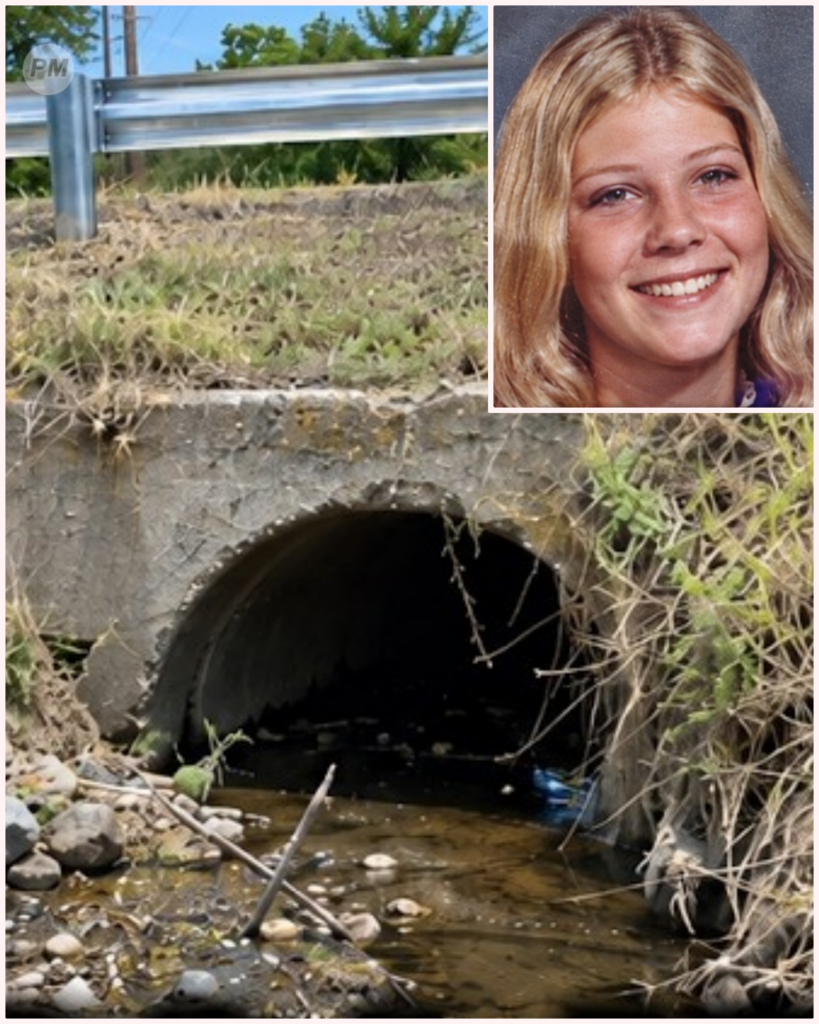
On February 20th, two officers searching a remote road near Benbrook Lake, about 5 miles southwest of the bowling alley, noticed a concrete culvert.
They stopped and looked inside. Carla was lying there. She had been strangled. Her family was asked to come identify her and Jim went with his parents.
He said the sound his mother made that day has never left him. Her funeral drew more than 1,250 people, far more than the small church could hold.
Her friends were heartbroken and they were frightened. Kids stopped cruising their favorite strip. Some wouldn’t leave home after dark.
The PTA organized self-defense classes. Fort Worth formed a task force of detectives from several departments.
They had very little to work with and they knew it. No usable fingerprints were found on Carla or her clothing.
The blood on her dress turned out to be Rodney’s. There were traces of bodily fluid, but DNA identification did not exist yet.
As one detective said years later, the departments didn’t even have computers. There were no parking lot cameras and no license plate readers.
What they did have was a tip line, and it lit up. Callers named marijuana dealers, a carnival worker from the stock show, and a quiet young man who bowled alone at that very alley.
Another caller wouldn’t give his name, but claimed to know the killer. The letter from that anonymous caller was later released to the public.
Detectives even hired a hypnotist to help Rodney remember more. The most he could add was that the man might have worn a brown or tan cowboy hat.
When Rodney came out of it, he broke down crying. He was a scared kid who blamed himself for not saving her.
Detectives also noticed another unsolved case. A year earlier, in February 1973, a young woman named Becky Martin had disappeared after a night class at a community college campus in Fort Worth.
Her body was found nearly 7 weeks later in a culvert just outside the city.
It was too decomposed to determine how she died. Two young women in two culverts, a year apart.
A detective said it seemed too coincidental. The task force said nothing publicly, but they quietly started looking for a serial killer.
Their one real lead was the magazine from the parking lot. It fit a newer model .22 Ruger pistol.
The task force asked the federal ATF for the names of Fort Worth buyers of that gun, and the agency came back with a list of a couple dozen people.
One name on that list belonged to a 31-year-old truck driver named Glen McCurley. Here’s what was known about Glen McCurley in 1974.
He had married his high school sweetheart, Judy, in 1963. They had two sons. They had moved to West Fort Worth in 1972.
He drove trucks, he attended a Baptist church, and he mowed the church lawn on his days off.
He fixed neighbors’ car engines and rewired their houses. As a teenager, he had been sent to a boys’ home.