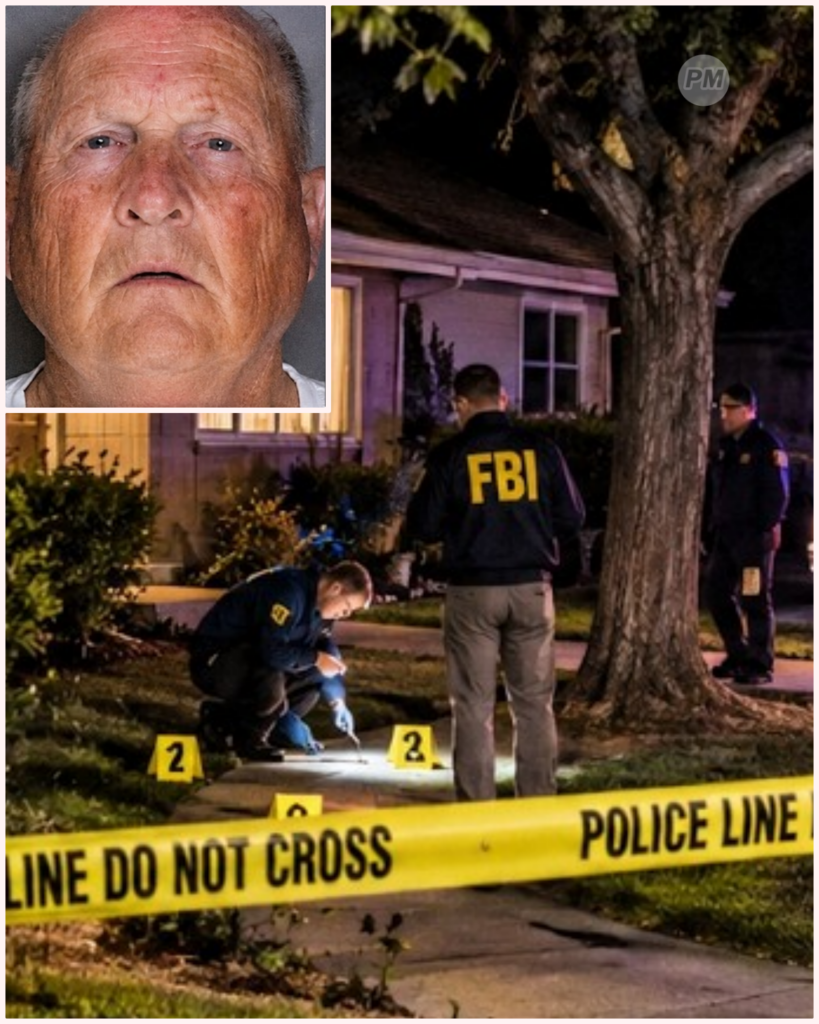
On April 24th, 2018, a 72-year-old man walked out of his home in Citrus Heights, California, and was surrounded by police.
His neighbors knew him as a quiet, retired mechanic. They said he’d helped them build a fence and fix a garage door.
His daughters and grandchildren visited. He kept a tidy yard. But for the past 40 years, investigators had been hunting a ghost, a man who broke into homes in the dead of night, a man who stalked his victims for weeks before attacking, a man who, authorities said, had committed at least 12 murders, more than 50 rapes, and over 120 burglaries across California, and had vanished in 1986 without a trace.
He had been a police officer. The man who cracked this case didn’t use fingerprints, a confession, or a witness.
A team of investigators uploaded a sample of DNA to a free public genealogy website, and they built a family tree.
They found a man who had lived within a few miles of many of the crimes, and then they waited outside a craft store parking lot to collect something he had touched.
This is the story of the Golden State Killer and of the people who refused to stop looking, including a writer who didn’t live long enough to see her work pay off.
We cover the cases that deserve to be remembered for the people at their center.
This case has many victims. We’ll tell it carefully and we’ll keep the focus on the people he harmed, not on him.
The story starts not in Sacramento, but in Visalia, a small city in California’s Central Valley.
In 1974 and 1975, residents there began to report a strange series of break-ins. A man was entering homes often while families were away and going through their belongings.
He didn’t just steal. He moved things, rearranged them, and left behind a sense that someone had been inside watching.
Police him the Visalia ransacker. Then on September 11th, 1975, the crimes turned deadly. Claude Snelling, a professor at College of the Sequoias, heard his teenage daughter’s cries.
A masked man had abducted her from the family’s home. Snelling chased the intruder and was shot and killed.
His daughter survived. It was the first murder later connected to the man who would become the Golden State Killer.
Investigators have said the Visalia ransacker and the crimes that followed were the work of one man.
And the suspect disappeared from Visalia. He reappeared, authorities believe, about a year later, 160 miles north.
In June 1976, a series of sexual assaults began in the Sacramento area. The attacker wore a ski mask.
He carried a flashlight and a weapon. He usually struck in the middle of the night, often targeting homes where he’d made sure a woman was alone or with a partner whom he could tie up.
The press called him the East Area Rapist. What made him so terrifying wasn’t only what he did, but how he did it.
Investigators learned he stalked his victims in advance. He would prowl neighborhoods and their homes in advance and make hang-up calls.
He knew when families were away and when they’d return. He sometimes took small items like coins or jewelry or left behind a strange calling card.
As the attacks multiplied, Sacramento became a city under siege. People bought guns, installed locks, adopted dogs, and slept with weapons by the bed.
Neighbors organized watch groups. Many had been told for months to be on the lookout for a man, and they didn’t know who to look for.
From 1976 to 1979, he attacked dozens of victims across Sacramento, Contra Costa, and Alameda Counties in the East Bay.
By late 1978, he began to In February 1978, Brian and Katie Major, a young married couple, were out walking their dog in Rancho Cordova.
They were shot and killed. Investigators believed the attacker had been prowling the neighborhood and the couple surprised him.
Then, just as suddenly as he’d arrived, he vanished from Northern California. In late 1979, a similar series of attacks began in Southern California.
The press eventually called him the Original Night Stalker, a nickname created to distinguish him from another killer, Richard Ramirez, who had been dubbed the Night Stalker in the mid 1980s.
In December 1979, in Goleta, Dr. Robert Offerman and Deborah Alexandra Manning were killed. In March 1980, in Ventura, Lyman and Charlene Smith, a couple in their 30s, were killed in their home.
In August 1980, in Dana Point, Keith and Patrice Harrington, newlyweds, were killed. In February 1981, in Irvine, Manuela Whitthuhn was killed.
In July 1981, in Goleta, Sherri Domingo and Gregory Sanchez were killed. His last known murder came in May 1986, when 18-year-old Janelle Cruz was killed in her home in Irvine.
Then, nothing. The attacks stopped. That’s 13 people. They were doctors, newlyweds, a professor, a teenage girl, and a woman who had just moved into a new place.
Each of them had a family, and for decades, none of those families had an answer.
For years, there were suspects, tips, and theories. Law enforcement agencies across the state reviewed hundreds of leads.
Because the crimes were spread across so many jurisdictions, no one realized at first that they were connected.
Then came a breakthrough in 2001. DNA from the Southern California murders was matched to DNA from East area rapist crime scenes in Northern California.
It confirmed that the East area rapist and the original Night Stalker were the same man.
It was a landmark moment and also a frustrating one. They now knew it was one offender responsible for crimes in at least 10 counties.
They had his DNA profile, but he wasn’t in any criminal database. The DNA couldn’t tell them who he was.
For the next 17 years, the question remained, Who? If you’re following this story, take a moment to subscribe.
We bring you new crime and cold case stories every week, told with respect for the people at their center.
Now, let’s talk about two people who wouldn’t let this case die. Paul Holes was a criminalist and later an investigator with the Contra Costa County District Attorney’s Office.
He first picked up the East area rapist file in the mid 1990s. He worked it for about 24 years.
He has described it as the case that defined his career. Michelle McNamara was a Los Angeles-based true crime writer.
She became fascinated by the case and began researching it in 2011. She went through old police files and interviewed survivors, former detectives, and amateur sleuths.
In a 2013 article for Los Angeles Magazine, she coined a new name for the man who’d haunted California, the Golden State Killer.
The name stuck because it was the first one that acknowledged he was a single person.
Michelle worked on a book. She collaborated with Holes and she believed with a certainty that startled her friends that DNA would eventually catch him.
On April 21st, 2016, Michelle McNamara died suddenly in her sleep at the age of 46.
She never finished the book. Her husband, the comedian Patton Oswald, and two researchers completed it.
I’ll Be Gone in the Dark was published in February 2018. Within 2 months, the man she had been chasing was arrested.
Michelle did not live to see it. But the book had re-energized public attention, and her influence on the case is widely acknowledged by investigators.
By 2017, Paul Holes was running out of options. The DNA profile didn’t match any criminal database.
There was little evidence left to test, and the crimes were so old that many of the original detectives had retired.
Then, in a conversation with a colleague, Holes learned of another case. In 2002, a genetic genealogist named Barbara Rae-Venter had used a genealogy website to help identify a kidnapping victim.
Holes wondered if the same approach would work to identify an offender. In late 2017, Holes got in touch with Rae-Venter.
They agreed to try. It would be a lengthy process, and the DNA they’d use would be from the 1980 murders of Lyman and Charlene Smith in Ventura.
Here’s what they did. They created a profile from the killer’s DNA and uploaded it to GEDmatch, a free website where people share their genetic data to find relatives.
They weren’t looking for the killer himself because he had never uploaded anything. They were looking for his cousins.
They found several distant relatives, third cousin level and further. From there, Rae-Venter began building family trees, researching every branch.
Over about four and a half months, she and Holes narrowed it down. They looked for men of the right age and ethnicity and who had lived in the right places at the right times.
They ruled out suspects one by one using DNA from relatives. At one point, Holes said later, investigators eliminated several candidates who looked promising but didn’t hold up.
Finally, they came to the name Joseph James DeAngelo Jr. He fit. He was born in 1945.
He had lived near Visalia and then in the Sacramento area. He had a connection to Southern California.
And one detail stood out above the rest. DeAngelo had been a police officer. So who was Joseph DeAngelo?
By most accounts, he’d had an unremarkable life. He was born in Bath, New York in 1945.
He served in the Navy during the Vietnam War. After the service, he went to college and in 1973 he joined the Exeter Police Department near Visalia, which was the ransacker’s territory.
In 1976 he moved to the Auburn Police Department near Sacramento. He was a police officer in both towns while the crimes were occurring.
In 1979 he was fired from the Auburn Police Department after being caught shoplifting a hammer and a can of dog repellent from a drugstore.
It was a petty crime and a surprising one, but it was also, as investigators later noted, around the time the crimes in Northern California stopped.
After that, he worked as a mechanic at a grocery distribution center for decades. He married, had three daughters, and bought a house in Citrus Heights, a suburb of Sacramento in 1979.
He lived there for nearly 40 years. His neighbors were stunned. One said that DeAngelo was always polite and friendly.
Some described a man with a temper who would sometimes yell at people. But no one suspected he was the killer who’d terrified the state.
As Holes would say later, DeAngelo never came up as a suspect in the original investigation.
He wasn’t a name in the files. But a family tree is not proof. Investigators needed to confirm it with a sample from the man himself, and they needed to do it without alerting him.
In early 2018 deputies began watching DeAngelo’s home. According to arrest and search warrant documents later unsealed, on April 18th, 2018 detectives followed him to a Hobby Lobby craft store parking lot.
While he was inside, they swabbed the driver’s side door handle of his car. The sample was sent to a lab.
It matched the DNA left at several of the crime scenes. On April 23rd, the day before the arrest, detectives collected multiple items from a trash can outside his house.
A single tissue contained enough DNA to test. That too matched. According to Paul Holes, the final set of DNA results came back just hours before the arrest.
Holes has said he sat outside DeAngelo’s house in his car one night, wondering if he should simply walk up and knock on the door.
He was relieved afterward that he hadn’t. A confrontation, he said, could have turned violent.
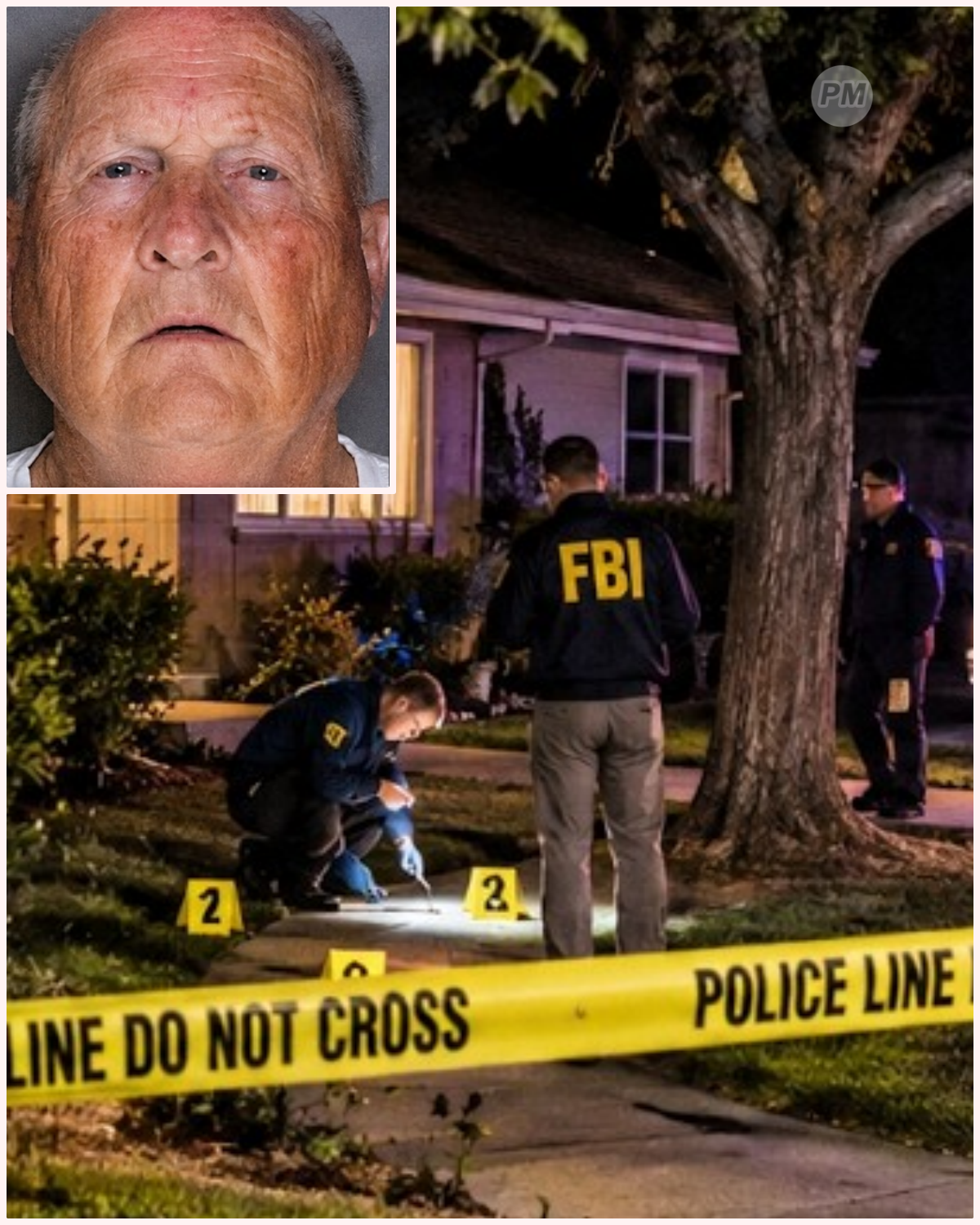
On April 24th, 2018, Sacramento police and FBI agents arrested DeAngelo outside his home. He was 72 years old.
He was charged initially with two murders. Soon, prosecutors added more. Later, Holes would say it was a good feeling to see DeAngelo in the interview room.
He described him as utterly defeated. Prosecutors weren’t sure if the case would go to trial.
A trial would have been huge, dozens of victims, 40 year old evidence, and years of litigation.
The families wanted answers. Some were elderly. On June 29th, 2020, in a large ballroom at California State University Sacramento, set up to allow social distancing during the pandemic, DeAngelo, 74, sat in a wheelchair and said what the families had waited decades to hear.
He pleaded guilty to 13 counts of first degree murder and 13 related charges. In exchange, the death penalty was taken off the table.
He also publicly admitted to dozens of other sexual assaults and burglaries. Prosecutors could not charge him for those because the statute of limitations had expired, but they wanted them on the record.
Judge Michael Bowman asked DeAngelo to confirm each of the 13 murders. As the prosecutor read the name of each victim, DeAngelo said one word.
Guilty. The judge held a four-day hearing for victim impact statements. Survivors and families of victims addressed him.
Some described the attack, the fear that followed, and how it affected their lives, their marriages, and their children.
One said he had stolen her sense of safety. Another said that she’d fought to take back her life.
On August 21st, 2020, DeAngelo stood from his wheelchair, removed his mask, and addressed the court.
He said, I listened to all your statements, each one of them, and I’m truly sorry for everyone I’ve hurt.
Judge Bowman sentenced him to 11 consecutive life terms without the possibility of parole, plus 15 life terms with the possibility of parole, and eight additional years.
The judge said that DeAngelo deserved no mercy. The courtroom erupted in applause. DeAngelo was transferred to state prison, and he will die there.
Let’s separate what’s confirmed from what isn’t. The arrest of Joseph DeAngelo changed American law enforcement.
For the first time, investigators had publicly used a consumer genealogy database to identify a violent offender from DNA left at crime scenes.
It opened the floodgates. Since April 2018, investigators have used forensic genetic genealogy to solve hundreds of cold cases, from murders to sexual assaults to unidentified remains.
Several of the cases we’ve covered on this channel were solved using the same technique.
It also set off a heated debate. Privacy advocates raised concerns about police access to databases built for family history.
Some people hadn’t realized that their DNA could be searched by law enforcement. In the months afterward, GED match changed its policies and required users to opt in before their data could be used for police investigations.
That debate continues today. But for the victims, the debate was never really the point.
Many of them had waited more than 40 years. Some wondered whether they’d live long enough to see it.
In the courtroom, survivors faced the man who had terrorized them, and they told him that he no longer had power over them.
And Michelle McNamara’s name has become part of the story. The book she left behind became a bestseller.
An HBO documentary followed in 2020, and her work is credited with keeping the case alive at a time when many people had forgotten it.
Before we go, if this story stayed with you, please like and subscribe. We bring you new crime and cold case stories every week because every victim deserves to be remembered.
Claude Snelling, Brian and Katie Majori, Robert Offerman and Deborah Manning, Lyman and Charlene Smith, Keith and Patrice Harrington, Manuela Whit Hune, Sherry Domingo and Gregory Sanchez, Janelle Cruz.
They had jobs, families, plans, and futures. And for 32 years after the last murder, their families waited for a name.
It took a retired investigator who refused to quit, a genealogist who knew how to read a family tree, a writer who made sure the world didn’t forget, and a technology that didn’t exist when the crimes began.
We tell the stories of the victims who were forgotten and of the people who refused to let them stay that way.
The next case is already waiting.