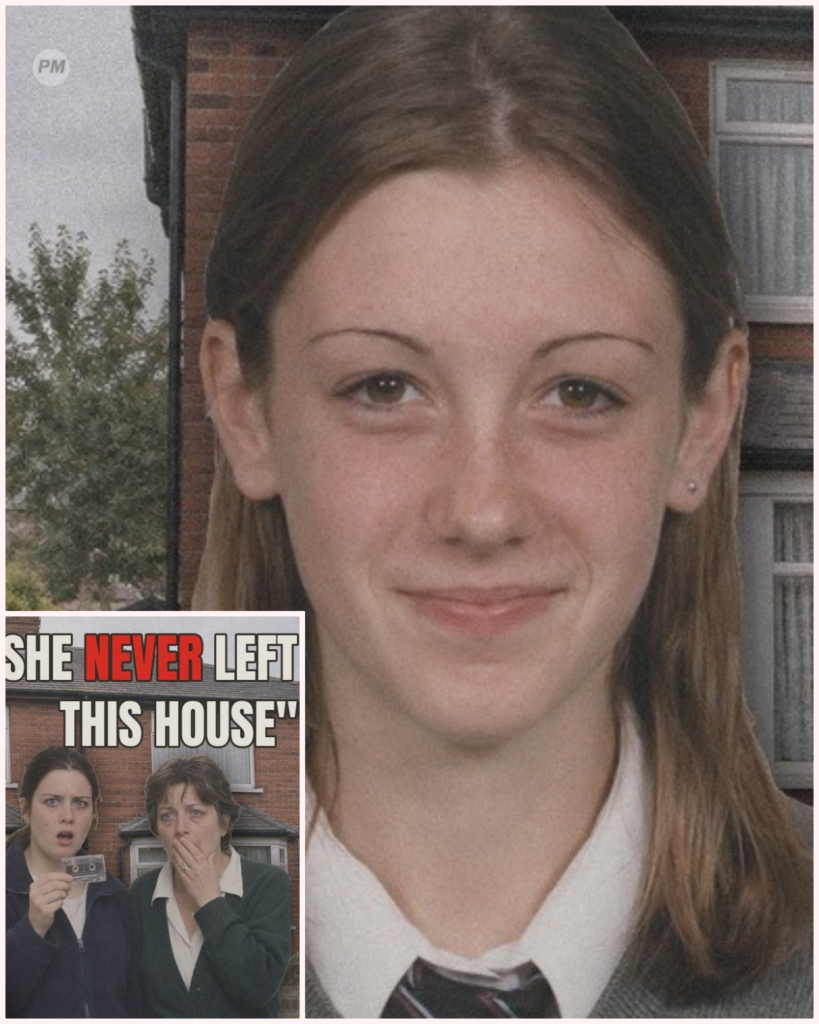
On Saturday, the 2nd of December, 2023, a 28-year-old woman named Gemma Sutcliffe was dragging an old mattress down the stairs of her late mother’s house when the [music] seam split open and something heavy dropped out onto the carpet.
It was a freezer bag folded over and over. Inside the bag was a cassette tape.
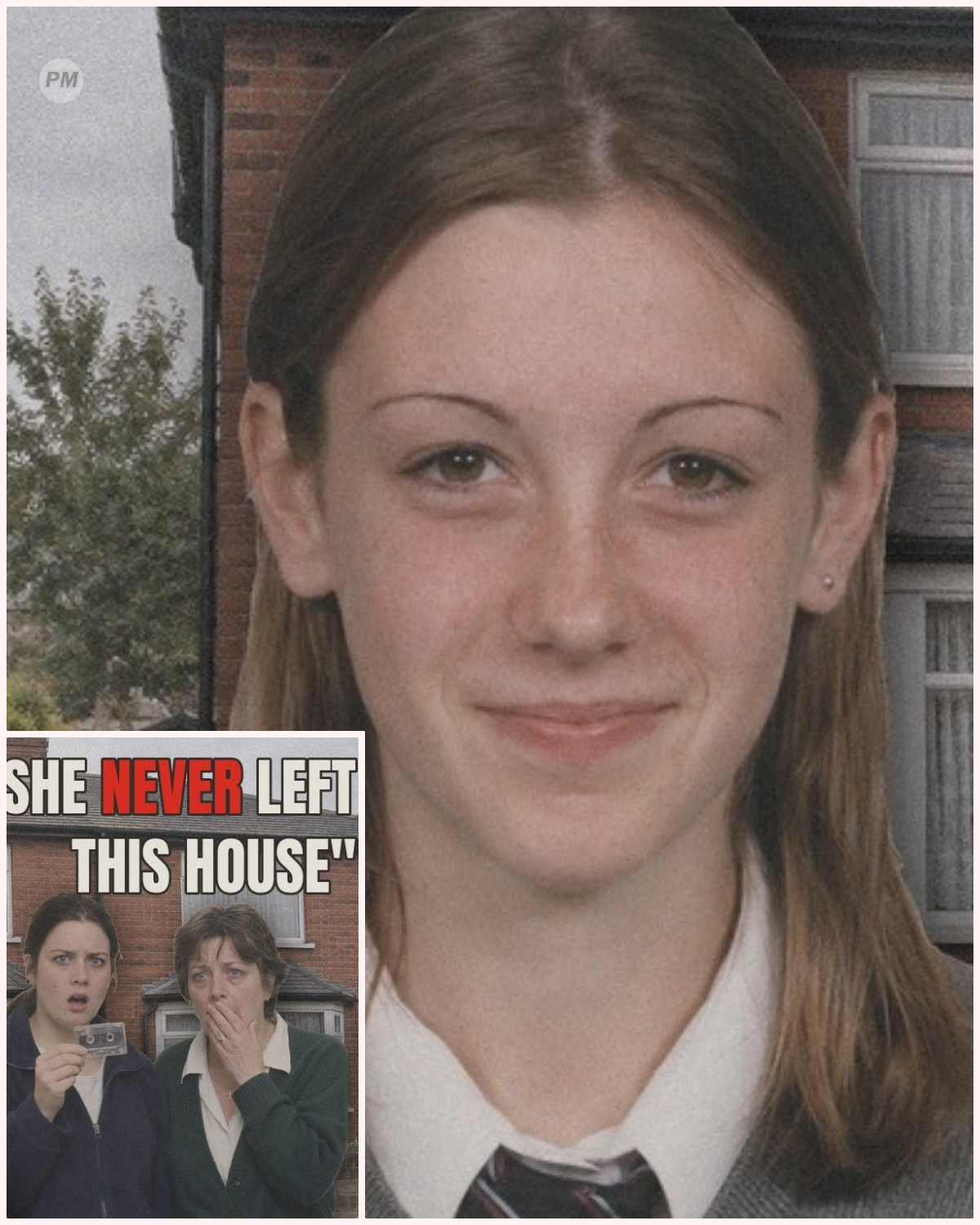
The label on it was written in green gel pen in handwriting that Gemma would have known anywhere and the seam of the mattress that it had fallen from was sewn in a stitch she had not seen in 19 years, a neat red blanket stitch.
She stood on the stairs with the cassette in her hand and she realized that it had been sewn into the bed of her sister, a 15-year-old girl who had vanished in 2004 and had never been found.
What was on that tape would break open a case that the police had closed for good.
But before we get to that, I want you to know who Jodie Fothergill was.
If you enjoy true stories like this, subscribe and hit the bell and tell me in the comments where in the world you’re watching from and what time it is there.
This is a dramatized story. The names and some of the details are fictional. Now, let me take you back to the beginning.
Jodie Fothergill was born on the 5th of June, 1989 and she grew up in Sowerby Bridge, a stone mill town in the Calder Valley in West Yorkshire where the canal runs under the bridges and the hills go up steeply on both sides so that everybody’s back garden seems to be on somebody else’s roof.
She lived in a terraced house on a street that ran down to the water.
Her mom, Pauline, >> [music] >> cleaned offices and sometimes houses. Her dad, Keith, had left in 2001 and nobody in the family had ever said his name very loudly since.
She had a little sister Gemma called Jim who was 6 years younger and the two of them shared a bedroom with a bunk bed.
Jody slept on the bottom bunk. Jim was on the top and she was 9 years old and she thought that her big sister knew everything in the world.
Jody was 15, bossy, funny, and quick. She was the sort of girl who did her homework on the bus and her eyebrows in the dark.
She loved three things and I’ll ask you to remember all of them. The first was a pen.
Her Nana Edna had given her a green gel pen for her 12th birthday [music] and Jody had used nothing else since.
She labeled everything with it. Her school books, her sister’s lunch box, >> [music] >> the CDs that she copied.
The second was a stitch. Nana Edna had also taught her to sew at the kitchen table with a biscuit tin full of thread and there was one stitch that she did better than anyone, a tight blanket stitch in red cotton.
She hemmed her own jeans in it. She mended Jim’s teddy [music] with it. She said that anything sewn in red thread would never come undone.
And the third was a recorder, a small blue cassette recorder with a gold star stuck on the front which Pauline had bought her for her 14th birthday [music] second hand from a stall on Halifax market.
In the autumn of 2004, Jody’s school took part in a project called Valley Voices.
It was a local oral history scheme paid for by a heritage grant in which teenagers were sent out to record the memories of old people in the valley, the mills, the war, the canal, the winters when the river froze.
The tapes were to be copied and kept in the library forever. Most of her class did two or three interviews and gave up.
Jody did 13. She took it seriously. She wrote numbers on each cassette in green pen, VV1, VV2, and so on.
She carried the blue recorder in her bag like a weapon. She interviewed a 90-year-old who’d been a mill hand at 9 years old, a lady who remembered the bombs on Halifax, and a man who had worked the locks on the canal for 40 years.
Her third interview, VV3, was with the handyman at a care home on Wharf Street, a big, slow-spoken man who had been mending the place for years, and who, she said, had a story for every wall in the building.
She was proud of that one. She gave it to the librarian early, along with the first two, >> [music] >> and the librarian filed all three on a shelf in the local studies room.
It was because of the project that Jodie got a job. The care home was called Beach Lodge, a large Victorian house at the top of Wharf Street that had been a mill owner’s mansion and was now home to about 20 elderly residents.
In September, she started working two evenings a week, Tuesdays and Fridays, helping in the kitchen from 4:00 until 7:00.
She told her mom it was for the money. It was also because the residents were better than any history book, and nobody ever minded being interviewed by somebody [music] who brought them a cup of tea.
She had one more secret, and it is the reason that the police would spend the next 2 weeks looking in the wrong place.
Jodie had a boyfriend. His name was Craig Illingworth, though everybody called him Sparky because he was an apprentice electrician and had once fused every light on Wharf Street.
He was 19. Pauline didn’t approve, >> [music] >> not so much of Craig, who was a perfectly nice lad, but of a 19-year-old with a 15-year-old, which she thought was a bad idea, and she’d [music] said so.
So, Jodie and Craig met in secret on the canal towpath near the lock. Only Jim knew.
Jim had been sworn to silence with a bag of Haribo and she kept it.
By November 2004, the girls’ bedroom had settled into a kind of rhythm. The lamp went off at half past nine, the bottom bunk creaked.
A voice in the dark would say, “Jim, are you awake?” And she would say, “No.”
And Jody would tell her about the old people she’d interviewed that day. The soldier with the glass eye, the woman who’d met Winston Churchill in whispers until they both fell asleep.
On the morning of Friday, the 19th of November, Jody got up at 7:00 and ate a bowl of cereal standing at the sink.
She was in a good mood. She was going to see Craig on Saturday and she’d been told that her final Valley Voices tape had been accepted for the library.
She had a school bag over one shoulder and the blue recorder in her coat pocket.
She put her head round the bedroom door where Jim was still half asleep in the top bunk >> [music] >> and said, “See you later, Jim.
Don’t touch my stuff.” “I won’t.” Said Jim. It was the last thing she ever said to her sister.
The day began like any other Friday with a maths lesson and a school dinner and a bus into town.
At 4:00, Jody arrived at Beach Lodge for her shift. She washed up, laid out the tea trays and [music] chatted with the residents.
At 5:00, she took a call in the hallway from her mum who said that she would be late home from work and that there were fish fingers in the freezer.
At 10:00 to 7:00, she took off her apron. She put on her coat. At 5:00 past 7:00, a woman walking her dog along Wharf Street saw a girl in a green parka going downhill in the rain towards the canal.
That was the last time anybody saw Jody Fothergill. Pauline Fothergill got home from work at 10:00 past 8:00 that Friday night in the rain and found the house dark.
She put the oven on for the fish fingers and thought nothing of it. Jim was at her friend’s down the road and Jody would be on her way back from Beach Lodge, probably dawdling.
At 9:00, Pauline rang the care home. A voice said that Jodie had left at 7:00 on foot, as she always did.
At half past 9:00, Pauline rang the only number she had for the boyfriend she wasn’t supposed to know about, which she had found written in biro on the back of the bus timetable.
And a young man who sounded as though he had been crying said that he hadn’t seen her.
He swore to God he hadn’t seen her. At 10 past 11:00, she rang 999.
I’d like you to hold on to what happened next, because for 19 years everything that went wrong in this case went wrong in the same way.
The police believed what they were told by the first people they spoke to. They interviewed everyone who had been at Beach Lodge on the Friday, from the cook to the cleaner, and every one of them said the same thing.
Jodie had left at 7:00 on foot in her parka. It was raining. Nothing had seemed wrong.
The woman who ran the home confirmed it. And then, because a woman walking her dog had seen a girl heading downhill in the direction of the canal, the officers followed her down the hill >> [music] >> and never really looked back up it.
By Saturday morning, there were 60 people at the Sowerby Bridge police station, and by Saturday afternoon, there were 200.
They searched the towpath, [music] the lock, the old railway cutting, the playing fields, and the allotments.
On the Monday, a team of divers went into the Calder and Hebble Navigation and dragged the stretch of canal between the lock and the next bridge twice.
They found a bicycle, a pram wheel, and a lot of bottles. Then, there was the moor.
Above the town, the hills rise to a high wild stretch of heather and gritstone called Norland Moor, with old quarries and abandoned coal workings scattered across it.
A volunteer called Roy came forward on the Saturday morning. Roy was 56, the handyman at Beach Lodge, a big quiet man with a flask of tea and a pair of walking boots, who said that he knew every yard of Normanton.
He had mended Jodie’s bicycle chain in the summer. He had been interviewed for her project.
He was shaken, he said. They were all shaken. And for 3 days, he led a line of 40 volunteers across the moor in the cold, calling her name.
Name. Pauline thanked him. She made him a sandwich. He said it was the least he could do.
They found nothing on the moor, and after the third day, the police declared it searched.
By then, the investigation had found something else. On the second Sunday, a woman from a flat that overlooked the towpath came forward to say that on Friday evening at about 20 past 7:00, she had looked out of her window and seen a girl in a green parka by the lock, arguing with a lad in a dark jacket.
She couldn’t see his face. She said he was young. She said the girl seemed upset.
There was only one young man in Jodie’s life whom the police knew about, and it was Craig Illingworth.
Sparky said he was at home. He said it again and again in a small room with a tape recorder going, and he said that he had been waiting to see Jodie on the Saturday, but his mother had been out at bingo.
There was nobody to say he’d been there. And he owned a dark jacket. He was arrested on the 26th of November.
He was released without charge after 36 hours. He was arrested a second time in December and released again.
Somebody put [music] a brick through his mother’s front window. For the rest of that winter, people in the town crossed the road to avoid him.
Nobody ever charged him, and nobody ever apologized. But the police never really stopped thinking it.
The file kept his name at the top of it for 19 years. [music] I want to tell you about two things that happened in those weeks that nobody paid any attention to at the time.
The first was something that Jim said. She was nine and she was frightened and confused.
And one evening in the first week, she told a policewoman in a small voice that Jodie had been sewing in the night.
She said she had woken up very late on the Thursday in the top [music] bunk and seen her sister sitting on the edge of the bottom bed with a torch in her mouth >> [music] >> and a needle and a bit of red thread.
When she asked what she was doing, Jodie had said, “Mending. Go to sleep.” The policewoman wrote it down [music] and patted her on the shoulder.
Gem added, because she wanted to be helpful, that Jodie had been crying the week before about an old lady at work, a Mrs.
Lum, who had liked to tell her about the war and who had died. The policewoman wrote that down, too.
Pauline said that Jodie was always mending something. It was one of the things that she did.
Nobody looked at the mattress. A detective lifted it in the search of the room and put it back.
And the second thing was the weekend after the vigil. On Friday, the 3rd of December, exactly 2 weeks after Jodie went missing, the church held a prayer vigil for her.
Pauline and Gem went and so did [music] half the town. It lasted about an hour and a half.
When they got home, they found the back door forced open. Someone had been in the house.
Drawers were pulled out, the beds had been pushed around and the mattresses dragged onto the floor, but it was the strangest burglary that the officers had ever seen because almost nothing had been taken.
The television was still there, the jewelry was still there, a tin with 60 pounds in it in [music] the kitchen was untouched.
The only thing missing was a shoebox from the shelf under the girls’ window, which held Jodie’s cassettes, the Valley Voices tapes, all of the ones that she hadn’t yet given to the library.
A detective constable said that the thief must have thought they were music. “Burglars,” he said, “take what they can carry.”
It went down in the file as opportunistic. And that, as far as the police were concerned, was that.
Nothing more happened. That is the dreadful thing about a case like this one. Time goes by and nothing more happens.
Sowerby Bridge put up posters. Then the posters faded. A wreath appeared on the lock every November and then it didn’t.
The valley in 2006 for a job in Leeds and never came back. The police reviewed the file in 2009 and again in 2014 and each time wrote that there were no further lines of inquiry.
Pauline never moved house. She never moved Jodie’s bunk bed. She did not even change the sheets on the bottom bunk for years until Jim asked her to.
Jim grew up and trained as a dental nurse and met a man named Liam and moved to a flat in Halifax and every Sunday she went back to the old house for her tea.
In the spring of 2023, Pauline was diagnosed with lung cancer. She was 62. She died in October in a hospice on the 21st holding her younger daughter’s hand.
She asked at the very end whether Jim had found Jodie yet. And Jim, who had been telling her the same lie for 19 years, said, “Not yet, Mom.”
A month and a half later, on the first Saturday in December, Jim and Liam hired a van and went to the house by the canal to clear it.
They did the kitchen first and then the front room and then the loft. By the middle of the afternoon, there was only one room left.
Why would a 15-year-old girl sew a cassette into her own mattress? What was on it that she could not trust to a drawer [music] or a school bag or even to her own mother?
And who, 19 years ago, did she believe was going to come looking? If you want to know, stay with me, hit like, and subscribe because what Gemma heard on that tape was only the first part, and the second part is what turned a closed police file into a murder inquiry.
Gem sat on the stairs with the freezer bag in her lap, and for a while, she did not move.
Liam came out of the bedroom with a bin bag in one hand and saw her face and put the bag down.
She held up the cassette without saying a word. It was a 90-minute tape, a cheap one.
The plastic case was gone. Across the white label in green gel pen, in her sister’s small forward-leaning writing, it said, “VV14 Mrs.
L Private.” Gem had known there was a 13th tape. The whole family had known.
The police had known. The Valley Voices cassettes had numbered 1 to 13, and the last 10 of them had been stolen in the burglary on the night of the vigil.
But nobody had ever heard of a 14th. There was something else in the bag, too, folded small, a page torn out of a school exercise book.
Gem opened it with her thumbnails because her hands were shaking. It was in the same green ink.
Gem, if you found this, it’s for the police. Don’t play it to anyone else first.
If I’m not back, it’s not because I wanted to be. Love you more than chips.
Joann. She read it three times. Then she looked at the mattress still lying half down the stairs, split along its edge, and at the seam that had given way.
It was blanket stitch in red cotton, small and tight and even the kind of stitch that Nana Edna used to say would outlast the house.
She could see her sister’s hands doing it, and she remembered quite suddenly and completely, as if somebody had turned a light on, a night in November when she was 9 years old, on the top bunk, and a torch in a mouth, and a voice saying, “Mending, go to sleep.”
She told Liam about it. And then she said something that frightened him a little.
She said, “She told me. She told me. >> [music] >> And I told them.
And nobody listened.” Gem was not the sort of woman who made scenes. She was 28, practical, a dental nurse, the kind of person who sorted the recycling and remembered everyone’s birthdays.
But she said that she was not going to hand that cassette to anyone [music] until she knew what was on it.
Liam said that was a bad idea. He said that something 19 years old could be damaged just by playing it.
But Gem said that she had waited her whole life to hear her sister’s voice, and she was going to hear it first.
They drove to the Halifax Hospice Shop, which shut at 5:00, and they got there at 22.
On a shelf at the back, between a bread maker and a box of Christmas lights, there was a silver cassette player with a handle.
It cost £4. They bought four batteries from the newsagent next door, and they sat in the van outside the house with the engine off and the rain on the roof, >> [music] >> and Gem put the cassette in.
The first sound was hiss, then a click, >> [music] >> and a rustle, and then, so close that Gem felt it in her ribs, a voice, her sister’s voice, 15 years old, a little hoarse, as if she’d been whispering for a while.
It’s Thursday night, the 18th of November. This is VV14, and it’s not an interview.
I left the recorder on in the office this afternoon by accident, >> [music] >> and I’ve listened to it twice now, and I don’t know what to do.
A pause, a breath. Mrs. Lum didn’t die of her heart. I know what I heard.
I’m going to take this to the police on Monday. I’m going to give it to Mr.
Holly first, [music] and then the police. If you’re listening to this, it’s because I didn’t.
Gem put her hand over her mouth. Liam in the driver’s seat did not say a word.
Another click. Then the sound of a room, a faint radio somewhere, the wheeze of a duster being pushed across a desk, a door >> [music] >> opening, footsteps.
Two people came in and spoke in low voices quickly, the way people do when they think they are alone.
A woman, brisk, [music] tired, in control, and a man, slow and gruff, with the flat broad vowels [music] of someone who’d lived all his life in the Calder Valley.
The woman said, “I’ll rewrite the page tonight.” It was a double shift, there was a mistake, and she was 87.
Nobody’s going to ask. The man said, “And if the doctor does?” The woman said, “The doctor signed it.
Take the book home with you. I want it out of the building.” And then there was a horrible grinding squeal and the player went silent.
Liam said, >> [music] >> “Switch it off.” Gem hit the button. And when she opened the flap, the tape was a ribbon of brown, [music] wound round the spindle and stretched like taffy.
The machine had eaten it. She did not cry then. That came later in the kitchen of the empty house at about midnight.
What she felt in the van was something colder. She had heard two voices that had said what they said without the slightest idea that a child was listening.
And she had heard her sister say, “I’m going to give it to the police on Monday.”
Which she never had. Because on Friday, she had walked down Wharf Street in the rain, and nobody had ever seen her again.
On Sunday morning, Gem rang her mum’s sister, Auntie Maureen, who was 70 and lived in Brighouse.
She told her everything. There was a long silence at the other end of the line.
Then Maureen said, “Gem, love, I know what you want. We’ve all wanted it. But your mother’s not been in the ground 6 weeks.
Leave her be. And leave Jodie be. You’ll only open it all up again. It’s a tape.
It was probably something to do with her project. Auntie Maureen, she sewed it into her mattress.
She was a girl, Maureen said. Girls do daft things. On Monday, the 4th of December, Jim took the tape to the police station in Halifax in its freezer bag with Jodie’s note.
She asked at the front desk for someone from major crime. The desk sergeant was a pleasant man who listened with great patience for about 90 seconds, then asked if she had an appointment.
She explained again. He said kindly that the file on Jodie Fothergill was closed. It had been reviewed twice.
He said, “A cassette, love?” He wrote her name in a book. He gave her a reference number on a slip of paper, and he said that somebody would be in touch.
“Don’t you want to keep it?” Jim said. “We’ll log it when someone comes down.”
He said. She did not give it to him. She did not like the way he said when.
She put the freezer bag back in her handbag, and she walked down the steps into the rain.
She had got as far as the bus stop when her phone rang. A number she didn’t know.
A woman’s voice, very steady, quite young, said, “Mrs. Sutcliffe, my name’s Farah Mahmoud. I’m a detective sergeant with the major crime review team.
The desk sergeant has just forwarded me your name, and I’ve read what he wrote on the log, and I’d like to hear that tape today if I can.
Don’t go anywhere.” Detective Sergeant Farah Mahmoud was 34 years old, and in December 2023, she had been on the major crime review team for 11 months.
Her job was to read old files, the kind that other officers had stopped reading.
She was, by her own admission, not the sort of person who got excited. But when she sat in the passenger seat of Liam’s van that Monday afternoon outside Halifax police station and held Jody’s torn note in a gloved hand.
She did something that Gem noticed and never forgot. She stopped writing in her notebook.
“Can you tell me exactly how this was found?” She said. Gem told her the mattress, the stairs, the seam, the red thread.
Farah asked her to describe the stitch. She asked who had slept on that bed after November 2004.
And Gem said, “No one. It had room under a sheet for 19 years.” She asked whether the mattress had ever been turned or cleaned.
Gem said her mom would never have turned it. Her mom had barely been able to walk past the door.
Then Gem told her about the player in the van and the tape that had been eaten.
And Farah closed her eyes for just a second. “I’m not going to tell you off.”
She said. “Everybody does it. You’ve waited all your life and I’d have done the same.
But the next person who touches this has to be somebody who knows how to touch it.”
The cassette went into an evidence bag that afternoon. And on Wednesday, it was driven to a private forensic audio laboratory in Leeds because the force’s own technicians had a 4-month waiting list.
A man named Dennis Aubrey, who had been restoring tapes for the court since the days of reel-to-reel, took the ribbon out of the machine, wound it back onto a new spool by hand, and then baked it.
That is a [music] real technique. Old tape is sticky because the binder breaks down with age and he put it in a low oven for hours >> [music] >> at a temperature that sounded to Gem like a Sunday roast until the oxide would stop shedding.
Then he played it through once >> [music] >> very slowly onto a computer. It took until Friday the 15th of December.
[music] Farah rang Gem at lunchtime and said, “Can you come in? Bring Liam if you’d like.”
They sat in a small office with a laptop between them. Dennis Aubrey was a stooped, calm man with half-moon glasses.
And he said that the tape [music] was in remarkable condition. The seal helped. The freezer bag.
Your sister kept it dry and kept it dark, and that’s what saves the tape.
I’ve had ones that lasted 50 years in worse. He pressed a key. Jodie’s voice came out of the speakers, clear this time.
Not a whisper anymore, but a girl talking >> [music] >> with the Yorkshire in her vowels and the little cough that she always gave before she started.
Jim had to look at the floor. When it got to the word “Mrs. Lum”, Dennis stopped it.
“There’s more”, he said. “In the middle, there’s a stretch that isn’t her at all.
It’s a room [music] recording made with a machine left running, and the voices are a little distant.”
He played that part again. >> [music] >> The man and the woman whose words Jim already knew by heart.
“I’ll rewrite the page tonight. And if the doctor does, the doctor signed [music] it.
Take the book home with you.” Then Dennis played the section at [music] the end, which had been the Eaton part, and which none of them had heard.
Jodie again. It was quieter, and it was later, perhaps after midnight, because she was whispering again.
“It’s me. I can’t sleep. I keep thinking about [music] it. Mrs. Lum used to tell me about her husband who died in Burma.
She never missed her tablets. She used to do her own tablets, and she’d show me the box with the days on it.
I saw it on Tuesday, and it was all there. Wednesday, Thursday, Friday, the whole row.”
A pause. “On Thursday, the 11th, she was dead, and the book says she took the wrong dose.
That’s a lie. I’m going to give this to Mr. Holley on Monday. If I tell the police, it’s his job to take it on.
He’s from the council. I think I’m going to be sick.” The tape ran for a few more seconds of hiss.
Then it clicked off. Nobody in the room said anything for a time. Liam took Jim’s hand.
Farah wrote something in her notebook, then underlined it twice. “I’m going to be honest with you both,” she said.
“I think this is genuine. I think your sister recorded something she should not have heard, and I think she was brave about it.
And it gives me, at the very least, a falsified medication record at a care home in 2004, which is an offense, and an old lady’s death that was written up as an accident.
That’s worth reopening.” “And Jody?” Said Jim. Farrow did not answer immediately. “The tape stops on the 18th,” she said at last.
“It doesn’t say anything about the 19th.” She took it up the chain. That was what she told Jim, and it was true.
And it was also the beginning of a cold 3 weeks. The detective inspector listened to the tape and said it was remarkable.
He said it was the best piece of evidence in the Fothergill file by a distance.
And then he said, kindly, that it proved a cover-up, not a killing. That was the Crown Prosecution Service’s view, too, in a written note that arrived on Wednesday, the 20th of December, 2 days before Christmas.
A medication record had been falsified in 2004. [music] That was a crime, and perhaps two, but the woman who ran the home could not be named from her voice alone.
The man could not be named at all. Mrs. Lum had been cremated in 2004.
The doctor who signed her certificate was dead. Beech Lodge had been demolished in 2011 and was now a car park for a supermarket.
Without a body, or a witness, or a name, nothing in that tape could be said to have anything at all to do with a girl who had walked downhill [music] in the rain.
Meanwhile, the file did what it had always done. It turned back to the name on the first page.
On Tuesday, the 19th of December, two officers in plain clothes knocked on a door in a Leeds suburb and asked Craig Illingworth whether he would mind answering a few more questions.
He was 38 now, a heavy-set electrician with a wife and a 2-year-old daughter, and he stood in the hallway for a long time without speaking.
Then he said, in a voice that Farrah later described to Gem as the quietest she had ever heard from a grown man, “It’s 19 years.
Is it never going to stop?” He went with them. He answered everything again, and then he went home.
And his wife did not speak to the officers on the doorstep. Farrah, who had been in the car, rang Gem that night and told her she didn’t have to.
She said she wanted Gem to hear it from her first. “I don’t think it’s him,” Farrah said.
“I never have. But I need a proper reason, and the only way I’m going to get one is to find who that man on the tape is.
Everyone who worked at Beach Lodge in 2004 is on [music] a list. I’ve got 11 names, and four of them are dead.
The woman I think I know, the man’s the problem. All I’ve got is a Calderdale voice, a fairly heavy one, a man in his 50s or 60s, and he could be anyone of half a dozen.
I’ve got no recording of any of them to compare.” Gem was standing in her kitchen >> [music] >> with the phone against her ear and her free hand flat on the work surface.
She looked at the calendar on the fridge. It was a charity one with photographs of canal boats.
“Say that again,” she said. “I’ve got nothing to compare it with. If there was a recording of any of those men, even just a few sentences, I’d be able to put the two side by side.”
Gem did not [music] answer. She had gone quite white, and Liam, coming in with a mug in each hand, >> [music] >> stopped in the doorway.
Because there was a recording. There was a recording of one of those men on a shelf in the local studies room of Halifax Central Library in a cardboard box marked with a green gel pen, and [music] it had been sitting there, safe and unplayed, for 19 years.
Gem rang the library at 9:00 the next morning, before she had even had her tea.
She asked for the local studies [music] department, and a woman called Joan Ackroyd, who was 68 and had been an archivist at Halifax Central for 31 years, listened without interrupting.
“Valley Voices,” [music] Joan said at last. “Oh, love, I remember that. We’d only just got started when the girl went missing.
The project was meant to run for 3 years, and in the end, the grant was pulled, and [music] nobody had the heart to take it on again.
There are three tapes in a box in the back room. They’ve never been cataloged.
I’ve moved that box four times, [music] and I couldn’t bring myself to throw it out.”
By 11:00, Gem was in a cramped room on the second floor of the library, with Farah Mahmoud at her side, >> [music] >> and Dennis Aubrey, who had driven over from Leeds with a laptop and a pair of headphones the size of [music] dinner plates.
Joan had found the box. It was a gray archive box, and on the lid, in green gel pen, in a hand that Gem would have known anywhere, was written, “Valley Voices, VV1, VV3, JF.”
Inside were three cassettes in plastic cases, each labeled with the same small, forward-leaning writing.
“VV1, Mr. A. Pickles, [music] Mill Hand. VV2, Mrs. D. Whittaker, The Bombing. VV3, Arridge [music] Beach Lodge Handyman.”
Dennis took VV3 out of its case and held it up to the light. “Never played,” he said, “not once, I’d say.
This one’s going to be a joy.” Yum. He put it on the machine they had borrowed from the sound archive, and pressed the key, and nobody in the room moved.
There was a rustle, a cough, and then a 15-year-old voice, bright and a little bossy.
“Right, it’s the 2nd of October, and I’m in the boiler room at Beach Lodge with Roy.
Roy, say your name for the tape. Roy Barraclough, said a man. Gem’s breath left her in a single rush.
She had not known she was holding it. It was a slow voice, deep and gruff, and with the flat, [music] wide vowels of a man who had never in his life lived more than 3 miles from the canal.
It was the voice from the van. She did not need an expert. She knew it the way you know your own front door [music] in the dark.
That’s him, she said. That’s the man on the other tape. Wait. Farrah put a hand on her arm.
Let’s not decide yet. Let’s hear it. They listened for the whole of the interview.
It lasted 40 minutes. Roy Barraclough told Jodie how he had come to Beach Lodge in 1991 to mend a roof and [music] stayed 13 years.
He told her about the boiler, which he said was older than he was. He told her how his wife, Sheila, had bought the old mill owner’s house with a legacy and turned it into a home, and that it was her name above the door and his hands on every wall.
He talked about the winter of 1963 when the canal froze and the horses were walked across it.
He was proud of the valley and he told it well. Gem found, to her horror, that she liked him.
And then, towards the end, Jodie asked him what he did on his days [music] off.
Walk, said Roy. Up the moor. I’m a volunteer with the Friends of Norland. The council gave us the old bell pit up by the quarry.
You’ll not know it. It’s a hole in the ground the size of a bus shelter.
The old coal men dug it. They put a gate on it and a lock so no bairn falls down.
I’m the key holder. A little laugh. Only one in the valley. If you want to see the inside of Norland Moor, young lady, you come to me.
Is it dangerous? Said Jodie’s voice. Only if you’re daft, matey, said Roy. Dennis stopped the machine.
He took off his glasses and cleaned them on his sleeve, and he said very gently, “Mrs.
Sutcliffe, I’m an engineer, not a lawyer, so I’ll say this carefully. I can’t prove who somebody is.
What I can do is tell you whether two voices are likely to belong to the same person.
May I have a few days?” He took two. He did the work in his lab in Leeds with the two tapes side by side.
And what he found he put into a report that ran to 11 pages and began with the word in capitals, “Preliminary.”
It was dated Friday, the 22nd of December, and it said that the man on VV3 and the man on VV14 shared the same dialect, the same speech rate, and the same unusual feature, a faint whistle on the letter S, which Dennis thought might be caused by a missing tooth, and which he found on both recordings in the same place in the mouth.
His assessment was that the evidence strongly supported the view that they were one and the same speaker.
It was, he added, a scientific opinion, and he would give it under oath. That was the first piece.
The second took another day. On Saturday, the 23rd of December, Farrah went down to the basement of Halifax Police Station and asked for a box.
It was a box that nobody had opened since 2004, and in it, among the case papers of the first inquiry into Jodie Fothergill, was a cassette of an interview given on Sunday, the 21st of November, 2004, by the owner and manager of Beach Lodge.
She was a Mrs. Sheila Barraclough. She had said in a calm, brisk, competent voice that Jodie was a lovely girl, that she had left on time, and that nothing at all had seemed wrong.
Farrah played it for Dennis over the phone, and he said that it was the woman on the tape, and he did not need to wait for a report to say so.
Roy Barraclough had died on the 14th of May, 2019. Farah pulled the certificate. He was 71, and the cause of death was a stroke.
He had never been asked a single question about Jodie Fothergill except as a volunteer, and he had never been under suspicion.
But Sheila Barraclough was alive. She was 71, and she lived in a bungalow in Elland, a few miles from the old care home.
She had sold Beach Lodge in 2008. She was a churchgoer, and she gave a talk to the Women’s Institute every spring about her years of service to the elderly.
A woman in a good wool coat who did the flowers. Farah had looked at her photograph, a smiling woman with silver hair and a large, firm jaw, on the church magazine’s website, and had thought, as she told Jim later, of the line in the tape, “Nobody’s going to ask.”
The team met on the 28th of December. >> [music] >> Farah laid it out.
Two voices identified on a recording made in 2004, a record falsified, a girl who said she was taking it to the police and who had vanished the next day, a volunteer who had led the search and who held the only key to a hole in the moor, a burglary at the family home that had stolen nothing but a box [music] of tapes, and the detective inspector who had sat unmoved through the first presentation said at the end of the second, “Search warrants, both addresses, the Monday after New Year, >> [music] >> and I want the moor.”
It was the 8th of January, 2024, a Monday bitterly cold, with the sky over Elland the color of old pewter.
Farah drove with two uniformed officers and a search team behind. She parked at the end of a neat, quiet cul-de-sac, and she walked up the path to a bungalow with a neat front garden and a ceramic [music] robin on the step.
She had not even rung the bell. The door opened and Sheila Barraclough stood in the hallway in a cardigan and slippers [music] with her hands folded in front of her and said, “I wondered how long it would be.”
Sheila Barraclough did not make Farrah Mahmoud wait on the doorstep. She walked back down her hallway past a framed certificate from the Women’s Institute [music] to a bookcase in the front room and took down a large black Bible with a cracked spine.
She put it in the detective’s hands as if she were handing over a casserole.
“It’s in there.” She said. “It’s been in there since May 2019. I think you’d better read it before you ask me anything.”
Inside the cover was a long white envelope and in the envelope [music] were four pages of lined paper written in blue Biro by a man whose handwriting shook.
It was dated the 2nd of May 2019 and it began, “Oh my dear Sheila.”
It had been written Farrah would learn in a hospice bed 12 days before [music] Roy Barraclough died and handed to his wife on the last afternoon that he could still hold a pen.
It was sealed. She had opened it in the car park. “I am going to give you what it says because it is the only account we have and because Roy wrote it for one reason, which was that he could not die with it.
I have shortened nothing that matters. On the night of Thursday the 18th of November 2004, Sheila had come home from Beach Lodge and told Roy that Jodie had been in the office that afternoon with her recorder [music] in her pocket polishing the desk and had stayed there longer than a girl needed to.
Sheila was frightened. She was always more frightened than she looked. She said that if the girl had heard them, they would lose the home and the home was everything they had.
She did not say what Roy should do. She said, “Find out what she knows.”
Roy, who had done what Sheila told him for 26 years, said that he [music] would.
On the Friday, he waited. At 5:07 in the rain, he saw her walk out of the gate in her green parka, and he drove the Beach Lodge minibus alongside her and wound down the window and offered her a lift.
She got in. He had known her since September. She had interviewed him in the boiler room and called him Mr.
B. And she was not afraid of him, and that, he wrote, was the worst part.
She told him almost at once. She said she had to say something to him because he was kind to her.
She said she’d left a recorder on by accident on Thursday, and she had heard him and Mrs.
B talking about Mrs. Lamb, and she was sorry, but she was going to the police on Monday.
She said she hoped it wouldn’t get him into trouble. Roy wrote that he did not remember deciding anything.
He remembered the minibus on the Norland road above the town with the engine still going and the wipers and a sound he had never made before.
When it was over, she was not breathing. That was how he put it. When it was over.
The letter did not describe it further, and neither shall I. What he did next, he did with a clear head because panic had gone out of him and left only the next thing.
He did not take her home to Beach Lodge. He did not take her to the canal, which the police would drag.
Instead, he drove up the Moor Road to the old Bell Pit, a shaft cut by coal men 200 years ago and capped by the council with an iron gate, of which he held the only key.
He opened it. He put her inside with her bag and her school things, and he closed the gate and locked it and put the key in his pocket and drove back down the hill in the dark.
On the Saturday morning, he put on his walking boots, took a flask of tea, and went to the police station to ask how he could help.
For 3 days, he led 40 volunteers over every yard of Norland Moor except one.
Nobody asked him why. They were grateful. The police searched the Bell Pits side of the Moor on the first morning, found the iron gate locked, and wrote in the log, “Secure, no forced entry.”
Roy knew that it would be written that way because he was the man with the key.
The recorder, though, he had not left in the pit. That was the first mistake, and the second was the tapes.
He had taken the recorder from her coat before he put her in because it had a red light on it, and he could not bear to see the light.
Over the following fortnight, Sheila told him that Jody had been seen with a box of cassettes, a shoebox, and he understood that the girl’s evidence might not be only the one tape.
He did not know about the mattress. Neither of them ever did. He thought the cassette that she had recorded must still be in the recorder, and when he looked, it was a blank, a brand new tape.
So, he went looking for the real one. On the night of Friday, the 3rd of December, while the whole town stood in the church with candles, he let himself into the Fothergill house through the back door.
He had 40 minutes. He knew because Pauline’s friends had told Sheila that the vigil would last an hour and a half, and he’d been told that it started at 7:00.
He pulled out drawers. He dragged the mattresses off the beds and turned them over and looked underneath and could not find a tape.
And the dog next door began to bark at the 14th minute. He took the shoebox because it was what he could carry, and he [music] went.
Farah had asked herself, since the first morning, why a burglar would risk breaking into a house to steal a box of cassettes, and why the thief had not simply asked for them.
She understood it now, and so did Jim [music] when she read the letter the next day.
Roy could not ask Pauline Fothergill for anything. A man who has just killed her daughter cannot knock on the door and ask for her tapes.
Sheila, in the car park, had told him to burn the shoebox. [music] He had said, “Yes.”
He had not done it. It was in his garage, he wrote, on the shelf above the paint.
Because the tapes had the voices of 11 old people on them, people he had known for years, and he had found that he could not put them in the boiler.
The recorder was there, too. The last page was shorter. “I think about her every day,” he had written.
“I took everything from that family, and I stood in their kitchen and ate their sandwiches.
I’m not asking you to forgive me, Sheila. [music] I’m asking you to put her somewhere she can be found.”
Sheila Barraclough had not put her anywhere. She had read it, folded it, and put it in her Bible, because she was a careful woman, and because a letter like that is worth keeping.
If anyone ever came, it would be a confession by a dead man, and she could say that she had never known.
It was, as she told the officers in interview, a safe place for it. She had gone to church that Sunday and every Sunday for 4 and 1/2 years.
They found the shoebox exactly where the letter said, on a shelf in the garage at the back of the bungalow, above a tin of masonry paint.
10 cassettes in green gel pen, VV4 to VV13, >> [music] >> and the blue cassette recorder with a gold star stuck on the front, still with its dead batteries inside.
On Thursday, the 18th of January 2024, at 10:10 in the morning, in sleet, a team of search officers climbed the track to the old bell pit on Norland Moor.
They had a key taken from Roy Barraclough’s old [music] ring, which had hung in his garage for 5 years.
The padlock turned at the first attempt. Gem was [music] at work with a patient in the chair when her mobile rang in her pocket.
She let it ring. It rang again. When she finally stepped into the corridor and answered, Farah Mahmoud said in a voice that had no steadiness left at all, “Jim, where are you?
Can you get out? I’m coming to get you. We found her.” It took a day to be sure, and Jim did not need it.
Farah drove her up to the moor that [music] evening, and they stood at the edge of the cordon in the sleet.
And a tall officer who had been crying came across the heather and told her quietly what they had found.
Jodie was [music] identified on the Monday by her dental records and by the things she had been wearing, which was a green parka with a hood.
Jim asked to see only the label on the collar. Somebody had written her name on it in green gel pen in a small forward-leaning hand in case it got lost at school.
She had been in the dark for 19 years. She was 15, and then she was not.
And all that time, people had walked their dogs on that moor and held fundraisers in the church hall below it and said that it was a mystery.
Sheila Barraclough was charged on the 10th of January. Her solicitor said that she had known nothing about her husband’s actions until 2019, and that she was a frail, elderly woman.
The jury at Bradford Crown Court heard the cassette. They heard Jodie in her own words whispering in the dark of her bedroom.
And then they heard the brisk woman in the office saying, “Nobody’s going to ask.”
On Friday the 14th of February 2025, after a trial that lasted 9 days, Sheila Barraclough was found guilty of perverting the course of justice, for falsifying the medication record in 2004, and for what she did afterwards, and of preventing the lawful and decent burial of a body, for keeping the confession of a dead man in a Bible for 4 and 1/2 years.
Both are offenses at common law, and both carry a maximum of life imprisonment. She was sentenced a month later to 9 years.
The judge told her in a sentence the court reporter wrote down in full that she had been asked by a dying husband to put a child somewhere she could be found and had chosen instead a safe place for a letter.
Roy Barraclough could not be tried. He had died in 2019 and the law has nothing to say to the dead.
Ada Lum’s death was in the end recorded as a medication error and the care home’s records were reconstructed by the Crown Prosecution Service from the tape.
Her family in Leeds sent a card to Jim. Inside they had written only “Thank you for letting her be heard.”
There was one more matter and Farrah Mahmood took it on herself. The witness at the window in 2004, the woman who had looked down at the towpath on the Friday evening and seen a girl in a green parka arguing with a lad in a dark jacket was now 81 and living in a sheltered flat in Brighouse.
She remembered the evening very clearly. She remembered the rain, but when Farrah showed her the calendar for November 2004 she took a long time to read it and then she said in a very small voice that it must have been the Thursday.
There had been [music] a different girl, a school friend of the lads. It had been dark and wet on both nights.
She had told the police it was Friday because they had asked her about Friday.
On the 23rd of January 2024, the Calderdale Force issued a statement. It said that Craig Illingworth had been wholly eliminated from the inquiry and that he had never had any involvement in the disappearance of Jodie Fothergill.
It was four lines long. It did not say sorry. So Jim did. She wrote to him on the same day a short letter, because she did not know how to write a long one.
She told him that she had found the tape. She told him that her sister had loved him and had told no one except a 9-year-old girl who was paid in Haribo.
She told him that nobody had ever stood up in that valley >> [music] >> and said what he was owed.
And the following Saturday, he rang the number at the bottom and they spoke for 2 hours and neither of them could afterwards remember much of what was said except that it had mostly been silence.
The funeral was on Saturday, the 20th of April, 2024 at the parish church at Sowerby Bridge and the pews were full to the door.
Half of them were people who had stood in the rain at the vigil all those years before.
Pauline’s ashes were laid beside her daughter’s in a plot above the canal. Jim read the eulogy.
She said that Jodie had been bossy and clever and [music] kind and that she had been braver than any of them.
A man in a dark suit stood at the very back of the church with his wife and did not come forward until it was over.
Then he walked to the grave on his own and put down among the flowers a small thing.
It was a gold star cut from a sticker, the kind that you put on a blue cassette recorder to make it yours.
Valley Voices has a new home. The 13 tapes and the 14th were given to the library at Halifax Central and Joan Ackroyd, who had kept a box on a shelf for 19 years, cataloged them herself.
They are free to hear. You can listen to a 90-year-old mill hand describing the winter the canal froze and a lady who remembered the bombs on Halifax and a handyman called Roy talking in a slow, kind, proud voice about the valley that he loved.
And if you ask for the last tape, a 15-year-old girl who was afraid and who did the right thing anyway.
If you think about what Jodie left behind, it was only three small things. A pen in green [music] gel ink, a stitch in red thread, and a blue recorder with a gold star on [music] the front.
They were the whole of her. And they were enough in the end because a girl [music] had sewn them into a bed and trusted that someone who loved her would be the one to find them.
Thank you for staying with me to the end. If this story moved you, please subscribe, hit [music] the bell, and tell me in the comments where you are watching from tonight.
And who in your family you would have trusted with a secret. I will see you in the next one.