Receipt still inside
Receipt still inside. Dated October 28th. Page one. Destiny’s full name. He’d asked her during their second conversation.
She’d told him. Friendly. Open. That’s who she was. Page 8. Her bus route written out with times.
5:13 p.m. Bus 16 departure. 5:31 p.m. Transfer. 5:58 p.m. Arrival at shelter. Page 12, description of her winter coat.
Navy blue puffy jacket, backpack, gray with pink straps. Page 19, sketches, the shelter layout, where she stood when serving food, where she sat during breaks.
Page 23, a list, her laugh, her voice, the way she pulls her hair back, the way she checks her phone.
Page 31. The shift. The planning starts here. Different handwriting. Smaller, tighter, more focused. Roots from shelter to her bus stop.
0.4 m. Street lighting. Traffic patterns. Page 47. A map. Handdrawn. Every street between the shelter and the bus stop.
X marks. Five of them. Dead zones. Places where street lights were broken. Where buildings blocked sight lines, where security cameras didn’t reach.
Keep that map in your head. In two minutes, you’ll see why those X marks matter.
Thomas stopped taking his medication in September. His case worker, assigned through Wayne County Community Mental Health, saw him once a month.
Appointments he mostly kept, but medication compliance, that’s harder to track. His prescription was for respperadone, antiscychotic.
Without it, the voices came back. Not violent voices, not initially. Protective voices. Voices that told him people were watching him.
Voices that told him he needed to watch back. By November, the voices had a focus.
Destiny. The voices told him she was special, that she was kind to him because she understood him, that she needed protection, that bad people were following her, that he needed to follow her to keep her safe.
That’s what he told his public defender later. He believed he was protecting her. For 11 weeks, he followed her.
Not every time. He was smart about it, strategic. Every third Thursday, every other Tuesday, random enough that pattern recognition wouldn’t trigger.
He’d leave the shelter 15 minutes after she did. Walk the same route, stay back, 40 ft, 50 ft.
Far enough that she wouldn’t notice. Close enough that he could see her. He watched her get on the bus, watched which window she sat by.
Then he’d go back to his room, write in the notebook, what she wore, what time she left, any changes in routine.
He was building a database. But here’s the thing investigators couldn’t figure out for months.
Why? If he believed he was protecting her, why the detailed surveillance? Why the maps?
Why mark the dead zones? Because protection wasn’t the end goal, it was the justification.
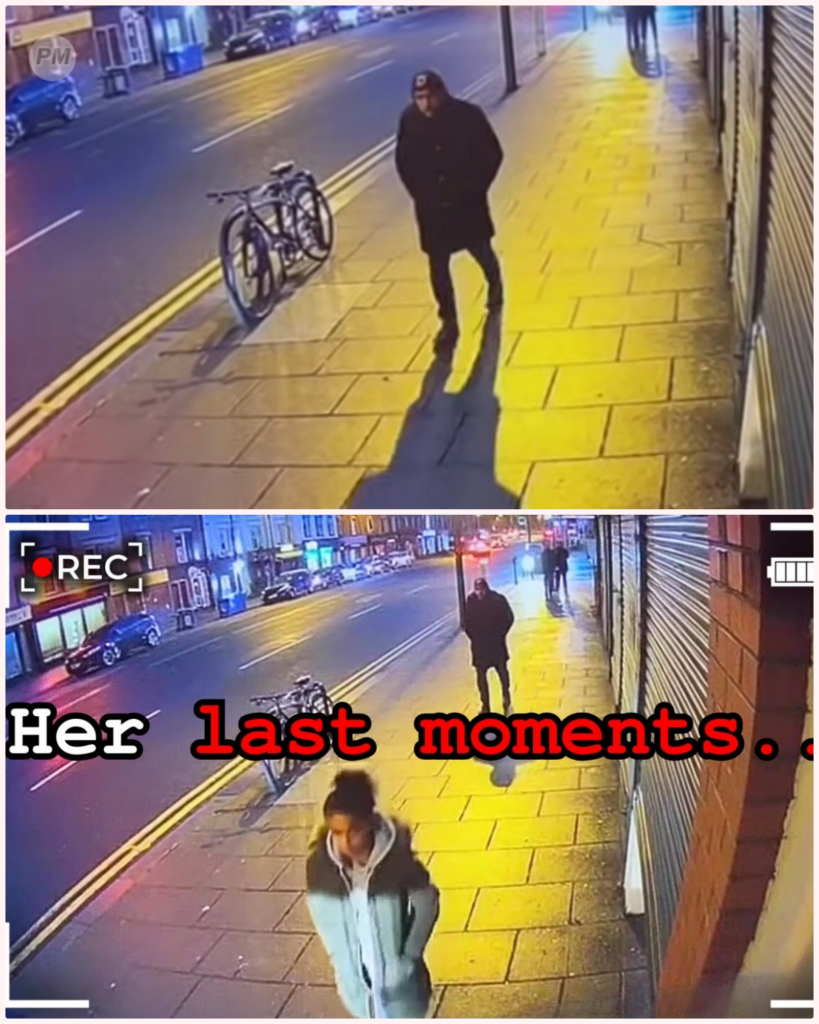
Fast forward to January 15th. Let’s go back to that footage. The only footage CCTV camera mounted on corner of West Grand Boulevard and 14th Street, 0.2 mi from Hope Street Shelter.
Camera is city-owned. Parks and Recreation Department. Installed in 2019 after vandalism complaints. Covers the intersection.
Grainy resolution 15 frames per second. No audio. Time stamp bottom right corner. 94723 p.m.
