PART 1
The Arizona sun scorched her skin, and hooves thundered behind her like death closing in.
A young Apache woman ran barefoot down the old Chiricahua trail, gasping, clutching a hide-wrapped bundle to her chest.
Then she skidded to a stop.
In front of her stood a lone white man beside a broken fence with wire cutters in his hand. His eyes had the empty look of a man whose heart had died a long time ago.
Across the valley, three riders came over the rise, kicking up red dust and closing fast.
Without a word, the man held out his horse’s reins.
His name was Marcus Webb. He was forty-three, lean and weathered, shaped by fifteen years of mending fences alone. He knew every post on his ranch the way some men know their children’s faces, because knowing was safer than feeling.
And Marcus Webb hadn’t felt anything in a very long time.
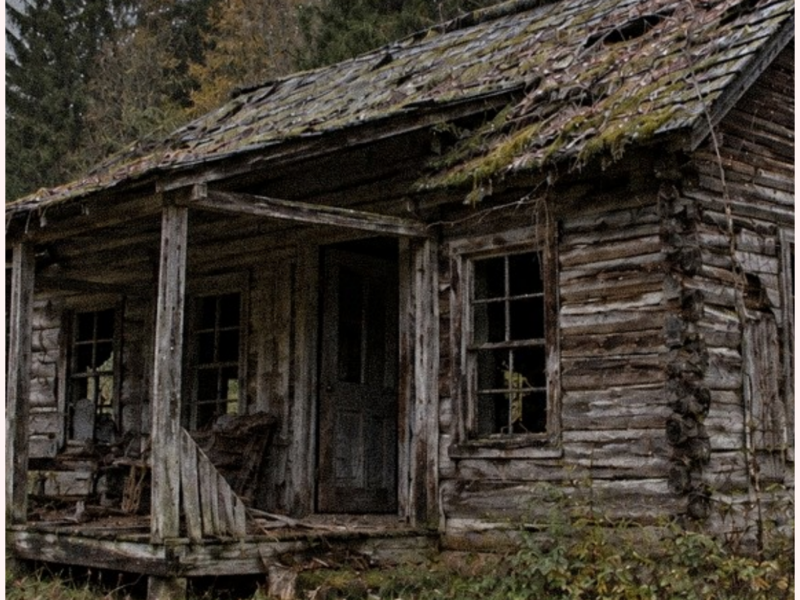
Inside his cabin, a photograph sat on the table by the window. He walked past it every morning without looking straight at it, but he always knew it was there.
It was Sarah, twenty-two years old in the blue dress she’d sewn herself.
Sarah had died on October 17, 1871, and the baby with her, Daniel, named for Marcus’s father. He buried them both on the hill behind the cabin, under the cottonwood, along with the cradle he’d spent two months building.
After that, Marcus stopped talking about the future. He worked, he survived, and he asked nothing more of life than the next day’s chores.
His ranch hand Owen had come six months after the funeral, a drifter good with horses, cattle, and silence. That last part was why Marcus hired him. Owen had been there ever since.
Two seasons ago a younger man named Cole had signed on. He talked more than Owen and smiled more, which made Marcus trust him less. There was something watchful in him, as if he was always measuring and always looking for an angle.
On the morning of August 14, 1887, Marcus saddled Copper, his steady eleven-year-old bay mare. Sarah had named her. He rode east to fix a downed fence along the old Chiricahua trail, the path the Apache had used for generations.
That was when he saw the girl.
She was young, in her twenties perhaps, in a deerskin dress and moccasins, her long black hair tied back. She ran with the spare motion of someone who had been running for hours.
Behind her, maybe a mile back, three horses galloped hard.
Marcus did the arithmetic. They’d catch her in ten minutes, maybe less.
He thought about his ranch, which didn’t need more trouble. He thought about the three riders, who could be anybody.
Then he thought about Sarah, which was the thing he always tried not to do. Sarah would have helped without stopping to calculate.
Marcus had spent sixteen years making sure he was not Sarah, and making sure nothing could ever reach him again.
And then, for the first time in sixteen years, Marcus Webb did something impulsive.
He climbed down from Copper and held out the reins.
The young woman stopped. Her eyes were dark and calm and impossible to read. There was no fear in them, only judgment.
She looked at the reins, then at him, then at the dust cloud behind her.
She took them. Then she ran a hand down Copper’s neck and checked her quickly with practiced fingers. She looked back at Marcus and spoke in careful, precise English.
“The front left shoe is loose.”
Marcus blinked.
Three men were hunting her down, she was running for her life, and she had stopped to tell him his horse needed care.
He didn’t know what to say, so he just nodded.
She swung into the saddle in one fluid motion and looked at him one last time. Something passed between them, a kind of recognition.
Then she turned east into the rocks and cedars and was gone. 🌵
The riders pulled up hard. They were white men, rough-dressed, but their horses were too fine and their saddles too expensive. They were men paid well to do what others wouldn’t.
The leader wore a red bandana. “Seen an Apache girl come through here?”
“Been here about five minutes,” Marcus said. “Haven’t seen much.”
The lie came easily.
The man looked at the fresh tracks heading east, then at Marcus standing alone with no horse.
“Those your tracks?”
“Could be.”
The man’s hand drifted toward his belt. Marcus didn’t move or blink. His hands hung loose at his sides.
Marcus had learned something about men with nothing to lose. They’re dangerous not because they’re reckless, but because they’re free. The rider saw it and did the math.
“Keep moving,” he told the others.
They rode off at a different angle from the girl’s trail.
Marcus walked the four miles home under the August sun with no water. Owen met him at the gate.
“Good Lord, Marcus. Where’s Copper?”
“Lent her out.”
“You did what?“
“Lent her to somebody who needed her more than I did this morning.”
Owen gave him a long look and said nothing.
That night Marcus sat at his table and looked at Sarah’s photograph, really looked at it, for the first time in years.
On the fourth evening, Owen came up from the barn walking faster than usual.
“You’ve got company. On the east ridge.”
Along the ridge sat a line of riders, five, then seven, then more, as still as stone, watching the ranch.
“Apache?” Marcus asked.
“Chiricahua.”
Marcus set down his coffee. He thought about his rifle and decided against it. Reaching for a gun while you’re being watched sends a message.
“We wait,” he said.
They waited while the light went from gold to red to purple to black. When it was full dark, the riders were gone.
At first light, Marcus walked out to feed the horses and stopped at the gate.
Copper was standing there.
She’d been brushed until her coat shone. Her mane was combed out, and her hooves were clean.
All four shoes had been reset by expert hands.
Tied to the saddle horn was a small bundle in tanned hide. With shaking fingers Marcus opened it. Inside were strips of dried venison, a handful of piñon nuts, and a strand of beadwork in blue and white, hundreds of tiny beads, the kind of work that takes days.
He set the beads on the table beside Sarah’s photograph: a blue dress, and blue-and-white beads.
Someone had honored his gift by returning it better than it was given. 💙
Two days later, a lone rider came from the east in broad daylight, a young Apache man on a pinto.
“You are the man from the trail,” he said. “I am Kai. I was sent to speak with you.”
Over coffee, Kai looked Marcus in the eye.
“The woman you helped is named Aya. She is the daughter of our chief.”
Marcus nodded slowly.
“The men who chased her were hired by Silas Crane.” Kai’s voice hardened. “Crane has been taking land in this valley for two years. Henderson sold and fled in the night. Clifton was frightened off. Morrison was found dead in a ‘hunting accident,’ and his widow sold to Crane a week later.”
Then Kai leaned forward.
“And Crane’s men are watching your ranch now. Two nights this week, from the south ridge. They are counting your men, your horses, and your bullets.” He paused. “Our chief believes they will move against you within the week.” 😨
👉 Marcus handed his horse to a stranger, and now the most dangerous man in the valley has him in his sights. Would you stand and fight, or sell and leave? Tell me in the comments! 👇
PART 2
“Why are you telling me this?” Marcus asked.
“Because our chief says a man who gives freely, expecting nothing in return, is a man who deserves to be warned.” Kai paused. “And he offers more than a warning. Crane wants the corridor between your land and our summer grounds. If he takes your ranch, we lose the eastern springs. What threatens you threatens us. We have a common enemy.”
At the door Kai stopped.
“Aya asked me to tell you something. The loose shoe has been fixed. She said you would understand.”
For the first time in years, Marcus Webb wanted more than survival. He wanted to meet her.
At dawn three days later, in the dry creek bed, Marcus met Chief Nantan, a silver-haired man with a lined, strong face. Kai translated.
“He asks whether you understood what giving your horse would cost you.”
“Not fully,” Marcus admitted. “I knew it was a risk. I didn’t know how big.”
“He says a man who does what is right knowing the risk is worth more than one who waits for the risk to disappear. It never does.”
Marcus told the chief the truth. He had two hands, and he wasn’t sure he could trust one of them. He had ammunition for maybe three days and no friends in town.
“Tell him I thought being invisible meant being safe,” Marcus said. “Tell him I was wrong.”
Nantan’s eyes softened. “He says Crane leaves no one alone. Sometimes the only way to protect what is yours is to stand up and be seen.”
The chief held out his hand. Marcus took it. 🤝
The next day four warriors arrived. Tahoma was the best scout. Nitis knew horses better than anyone; he spotted heat in a gelding’s hoof that Marcus had missed. Kuruk was eighteen and working with white men for the first time. They walked the ranch, strengthened fences, and cleared sightlines.
Cole stood off to the side, sweating. “You really trust them?”
“They didn’t have to help,” Marcus said. “But they are.”
Then Aya came.
She wore a fresh deerskin dress with blue-and-white beads, and her black hair was loose.
“You are the man who gave his horse,” she said.
“And you’re the woman who noticed the loose shoe.”
A flicker of amusement crossed her face. “I always notice horses. My grandmother taught me. Your mare trusted you completely, and a horse does not trust a cruel man. So I trusted you.”
They walked the dry creek. She knelt and touched the earth. “There is water here, six feet down. If they poison your well, dig here.” She pointed out plants and animal paths he had never seen in fifteen years.
“My grandmother raised me,” she said. “My mother died giving birth.”
Marcus stopped walking. “My wife too. Sixteen years ago. The baby died with her.”
“I know,” Aya said softly. “My grandmother told me before she died that pain doesn’t leave. It changes shape. You learn to carry it, and to make room for it without letting it take everything.”
Marcus stood very still while the words settled in him. ❤️
A week later, Marcus saw Cole by the fence handing a folded paper to one of Crane’s riders.
When Cole came out of the bunkhouse with his saddlebags already packed, Marcus was waiting.
“You going to stop me?”
“No.”
“Crane pays better. And you’re a fool to fight a war you can’t win. They’ll kill you, Marcus. They know everything now.”
“Maybe,” Marcus said. “But I’ll die standing.”
Cole rode south toward Crane’s camp.
On the third night after Cole left, the desert went quiet in that strange way it does when something big is moving.
“South fence,” Owen whispered. “Eight riders. Maybe more.”
They came slowly, carrying kerosene cans, rope, and unlit torches. They meant to burn him out.
Marcus Webb stepped out of the barn into the open moonlit yard, alone, in full view of eight armed men…
Part 2 ends here. Marcus is standing alone in front of eight men with torches. What do you think he’s about to do? I’m writing the finale now and will post it on the page as soon as possible. 🙏
PART 3
The riders reined in, startled.
“I know who sent you,” Marcus called. His voice carried clear and calm. “Silas Crane. I know what he did to Henderson, Clifton, and Morrison.”
“Then you know how this ends,” one rider said. “Leave tonight or we burn it all.”
“Here’s what you don’t know.” Marcus lifted his eyes toward the ridges. “Right now, on both ridges, people are watching you. They know exactly where each of you sits. They’re waiting for my signal.”
“You’re bluffing.”
Marcus didn’t answer. He only looked up.
On the south ridge, a small fire flared for three seconds and went dark. On the north ridge, the same.
Then from the east came a single long, clear note that rolled across the whole valley.
The horses began to dance and shift, scenting danger. The riders felt it through their saddles. They muttered to each other, then turned, slowly at first and then fast, and vanished south. 🔥
Kai came down from the ridge. “They will come back. Next time they will come to kill.”
“I know,” Marcus said. “That’s why I’m not going to fight him with guns.”
At dawn, Marcus rode to Nantan.
“Crane uses fear, but he hides behind the law: forged deeds, bought officials. If I can prove those deeds are false, I strip away his cover, and he’s just a common criminal.”
Kai translated the chief’s answer. “He says you will need white witnesses. They will not believe the Apache.” He paused. “He says the truth wins battles guns cannot. Fear grows in isolation, and courage grows in community. He will send men to find Henderson and Clifton and tell them they are not alone.”
For three weeks, riders came and went. Henderson was found on a small farm in Colorado, frightened but listening. Marcus hired an independent surveyor from Santa Fe, Thomas Pike, who studied his deed and frowned.
“This boundary doesn’t match the original survey. Someone altered it.”
During those weeks, Aya came four more times.
On the third visit they sat in the shade of a cottonwood by the creek, and she asked about Sarah: how she laughed and what she loved. Marcus found he could answer without the grief choking him.
“She would have liked you,” he said.
“Why?”
“Because you’re like her. Strong. Kind. You notice things.” He looked at her. “You make me want to be better.”
Aya was quiet for a long moment. Then she reached over and took his hand. This time she didn’t let go. 🌳
Then Silas Crane came in person.
He was fifty, finely dressed, and everything about him smelled of money. He held out his hand, and Marcus didn’t take it.
“Triple what this land is worth. In cash.”
“No.”
Crane’s smile went cold. “I lost a son too, Webb. After that, I decided never to be weak again. Money is power. Land is power.” He stepped closer. “I own the sheriff, the judge, and the land office. You are one man alone. I could have you killed tonight, and no one would ask a question.”
“Then do it,” Marcus said quietly. “Because I’m not leaving.”
Crane looked away first.
“You’re a fool, Webb.”
“Maybe. But a fool with honor. That’s more than you’ve got.”
That night, around a fire outside the cabin, Marcus looked at the circle of faces: Owen, Kai, Nantan, the warriors, and Aya.
“Why?” he asked. “Why are you doing this for me?”
Kai translated the chief. “You gave your horse to my daughter without asking a single question. That made you family. And we fight beside you for our children, and for the right to exist without men like Crane taking everything.”
Marcus turned to Aya. “And you?”
She stood, walked around the fire, and sat down right beside him.
“I am here because I chose to be. Because you deserve someone standing beside you.” Her voice softened. “And because when I am with you, I feel truly seen.”
“I see you too,” Marcus whispered.
In front of everyone, she took his hand and kept it. ❤️
Three days later, Territorial Marshal Clayton rode in with a court order. Thomas Pike had convinced the territorial judge in Santa Fe that there was enough evidence of fraud. Both Webb and Crane were ordered to bring their deeds and surveys for official examination.
“It’ll be settled by law,” the marshal said. “One way or the other.”
The Santa Fe courthouse was small and cool inside its adobe walls. Judge Whitfield presided, seventy years old with a white beard and a stern face. Crane sat with two lawyers in expensive suits.
Across the aisle sat Marcus, Thomas Pike, and, to everyone’s surprise, Henderson. After two months in hiding, he had come.
With shaking hands, Henderson told the court about the poisoned well, the threats, and selling his land for a pittance because he feared for his family.
“The Apache saw two of Crane’s men pour something into my well that night,” he said.
Crane’s lawyer jumped up. “Hearsay, Your Honor! Apache testimony is unreliable!”
“I will decide what is reliable,” Judge Whitfield said coldly. “Sit down.”
Then Pike laid out his survey: altered boundaries, impossible dates, mismatched signatures. The judge called in a land office expert. The examination took five days, and the whole trial ran two weeks.
The verdict was forgery. There were multiple documents and three years of systematic fraud.
“Mr. Crane,” the judge said, “you will return all fraudulently acquired land to its rightful owners. You will pay damages and court costs. And you are barred from purchasing land in this territory for twenty years.”
Crane leaped up, red-faced. “This is outrageous!”
“What you have, Mr. Crane, is debts to pay and a ruined name. Marshal Clayton will see that you comply. Court is adjourned.”
Crane stared across the room at Marcus with pure hatred, and he could do nothing about it. ⚖️
Six months later, Marcus stood on his porch with his coffee and watched the sun rise as he had for sixteen years.
Everything was different now. Henderson was back on his land. Clifton had come home from Montana. Owen was in the barn, loyal as ever. Nantan’s people were trusted neighbors now, and the valley was healing.
Light, familiar footsteps came up behind him.
Aya stood beside him, her shoulder against his.
“Beautiful morning,” she said.
“Yes.”
Three months earlier she had asked him what he wanted now that Crane was gone. Marcus had answered honestly: he wanted her. After speaking with her father and listening to her own heart, Aya had said yes. It wasn’t marriage, not yet. It was yes to trying, and to building something new on the ruins of what they’d both lost.
Marcus looked at her in the golden light.
“I love you,” he said simply.
She smiled the smile that changed everything.
“I know.” A pause. “I love you too.”
She leaned up and kissed him, gently and briefly.
“Thank you,” he whispered into her hair.
“For what?”
“For noticing me.”
Aya laughed, a sound like water over stones.
“Always,” she said. “I will always notice you.”
He knew she didn’t only mean horses. She meant him: his wounds, the parts that were healing, the parts that never fully would, and loving him anyway. 💙
Behind them in the cabin, Sarah’s photograph still sat on the table beside a strand of blue-and-white beads. Marcus still remembered and honored that first love, and he always would.
Now he had a second love he had never expected, proof that a broken heart can still make room for more.
He finally understood what Sarah had whispered to him on her last day, words he couldn’t hear through his own grief back then:
Keep living.
After sixteen years, Marcus Webb was finally doing it. 🌅
💬 If this story moved you, share it with someone who’s been carrying grief for too long. What was your favorite moment, the loose shoe, Copper coming home, or the courtroom? Tell me where you’re reading from!
Disclaimer: This story is entirely fictional and created for entertainment purposes only. It does not represent any organization or individual, nor does it encourage inappropriate behavior. The content was generated with AI assistance.