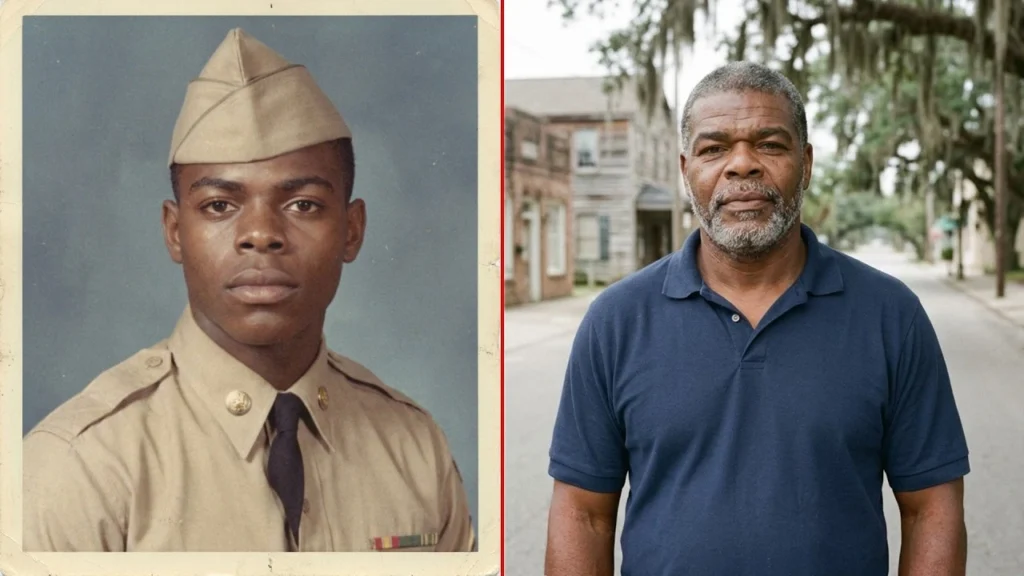
They said they'd found my brother in the jungle
They said they’d found my brother in the jungle.
I said he came home alive in 1988.
Then he said, “Ma’am, your brother has been lying in that jungle since 1967”.
>> That was Audrey Faircloth, a retired school principal in Savannah, Georgia.
In May of 2023, she was 66 years old.
Her only brother had gone missing in Vietnam in the fall of 1967.
21 years later in 1988, he walked up the steps of the family house and came home.
He ran the family business for 31 years.
He married, raised three children, and died in 2019.
Audrey buried him herself beside their parents.
The man in that grave was not her brother.
So, who was he? The answer was waiting in an old army roster, in a photograph taken in a jungle camp in 1967 and in a place nobody had ever thought to look.
In April of 1988, the night he came home, somebody filmed the party on the front porch with a camcorder.
The tape still exists.
I’m home, y’all.
[laughter] 21 years I dreamed about this porch, and I’m finally home.
Mama and daddy didn’t live to see this day, >> but I’m here now and I’m staying.
How did a stranger walk into a family and take over a whole life? Where did he learn its secrets? And what really happened in that jungle in 1967? >> He fooled a whole city for 31 years.
The proof sat in a police file all along.
>> Before we go any further, tell us in the comments where you’re watching from.
We’d love to know.
And don’t forget to hit that subscribe button so you never miss one of our stories.
He knew which pew the family sat in at church.
Third from the front on the left side.
The Mincys had sat there since before Audrey was born.
Her father, Cyrus Mincy, had started a shrimp business in 1951 with one wooden boat, which he named after his wife, Estelle.
By the 1980s, Mincy Seafood had six trwers at a packing house on the river in Thunderbolt, just outside Savannah.
Cyrus was known on every dock along the coast.
He and Estelle had two children, 12 years apart, a son, Leland, born in 1945, and a daughter, Audrey, born in 1957.
Leland was drafted in 1965 and sent to Vietnam the next year with an infantry platoon.
Audrey was nine.
She remembered him mostly as a tall shape in the doorway and a laugh in the kitchen.
Her mother wrote to him every single week on blue air mail paper at the kitchen table.
Leland wrote back whenever he could, short letters in pencil that smelled of rain and smoke by the time they reached Savannah.
He asked about the boats, about the weather on the river, and about his little sister.
In his last letter in August of 1967, he said the rain had not stopped for a week and that he was saving every dollar of his pay to buy a boat of his own when he got home.
In September of 1967, two army officers came to the house.
Leland was missing in action after a firefight in central Vietnam.
His body had not been found.
Estelle Mincy never stopped believing he was alive somewhere.
And for the next 20 years, she kept writing to the army asking for news.
In May of 2023, Audrey’s phone rang.
The caller worked for the Pentagon agency that searches for American servicemen still missing from old wars.
A farmer clearing land in central Vietnam had turned up bones and a dog tag.
In March, a recovery team had excavated the site.
The dog tag read Leland Mincy.
His Army dental records matched the teeth.
After 56 years, the caller said they could finally bring her brother home.
Audrey heard him out without saying a word.
Then she told the man on the phone that there had been a terrible mistake and that he had the wrong family.
Her brother was not lying in any jungle.
Her brother had knocked on the door of their parents’ house in the spring of 1988, and she had been the one who opened it.
He knew what his mother called him when she was angry with him.
Leland Cyrus, both names.
Slowly.
In November of 1987, Cyrus and Estelle Mincy were killed together when a truck crossed the median on the highway to Atlanta.
The Savannah paper ran their obituary on the front page of the local section.
Their will was simple.
Mincy Seafood was to go to their son Leland and if he did not survive them, to their daughter, Audrey.
Leland had never been declared dead.
He was still listed as missing.
So the old family lawyer held the estate and waited to see what would happen.
On a Sunday afternoon in April of 1988, a man climbed onto the porch of the big white house on the east side of Savannah and knocked.
He was about 42 with a round face, heavy brows, and a beard going gray.
He looked at Audrey for a long moment and then he said her name.
He told her he was Leland.
He said he had been captured in 1967, had escaped from a prison camp two years later, and had made his way to Thailand.
For years, he had lived abroad and then in other states on false papers.
He had been ashamed to come home and afraid the army would call him a deserter.
He said he had finally reached the point where he could not live without his family any longer.
Then he asked for his mother and father.
Audrey had to tell him standing on the porch that they had been dead for 5 months.
He sat down on the top step and cried like a child.
Audrey hardly remembered her brother.
So that first week, she tested him.
She asked him about things that only the family could know.
He answered everything, and some of his answers were things she had forgotten herself.
>> He knew the name of Daddy’s first boat.
>> Mhm.
>> He knew the dog we had before I could walk.
He told her their mother hummed the same hymn every time she rolled out biscuits.
He told her their father had promised for 20 years to fix the squeaky porchstep and never did.
He knew the names and nicknames of the old captains on the boats.
When he met them on the dock, he greeted every one of them by name.
He seemed a little different from the few memories she had.
But 21 years in a war change any man.
And if he seemed taller or shorter than she pictured, she put it down to the fact that she had been a child herself.
He even looked like the photographs on the piano.
The same round face, the same build, the same way of standing.
There was a small party on the porch that night.
The family was tiny.
Cyrus and Estelle had both been only children, and the grandparents had died long before.
There was Audrey and her husband, the family lawyer, a few old boat captains, and some neighbors.
One of the neighbors brought a camcorder.
The tape shows paper lanterns strung along the porch rail, a table of fried shrimp and potato salad, and old men in captain’s caps wiping their eyes.
In the middle of it all, a man in a borrowed white shirt stands at the top of the steps with a glass of lemonade in his hand.
He asked everyone to keep his return quiet.
He said he could not face reporters after his years as a prisoner, and that the army knew about him and had settled his case without any fuss.
Nobody doubted him.
Later that night, alone with Audrey on the porch, he told her the truth, or what he said was the truth.
He had never gone back to the army.
He said if the army found out he was alive, they could put him on trial for desertion.
He made her promise that she would never tell them.
Audrey loved him.
She promised, and she kept that promise until the day he died.
In the weeks that followed, he put his life back together on paper.
He wrote to the county for a copy of his birth certificate, which anyone could do in those days with a name, a birth date, and the names of the parents.
With the birth certificate, he got a Georgia driver’s license, and a new social security card.
Nobody ever asked for his fingerprints.
The lawyer turned the company over to him that summer.
He turned out to be a good businessman, careful with money and patient with the crews.
He bought two more boats and opened a seafood market downtown.
And the old captain said he had his father’s eye for weather.
In 1990, he married a woman named Yolanda and they had three children.
He coached little league and served as a deacon at the same church in the same pew, third from the front.
For Audrey, those were the best years of her life.
She had lost her parents and found her brother within six months.
He called her every Sunday night.
He taught her son to steer a trwler through the marsh.
And every Christmas, he gave her a box of pink coconut candy, the kind she had loved as a little girl.
In 1998, he made a television commercial for the company, standing on the dock in front of his trwlers.
>> My daddy started this company with one boat.
I’m proud to carry his name.
>> He died of heart failure in 2019 at what everyone believed was 74.
Audrey sat with him at the hospital at the end and she chose his headstone herself.
It read Leland Mincy 1945 to 2019.
Beloved son, brother, and father.
He knew how his father whistled for the boats coming in.
Two short notes and one long.
Audrey had grown up with that whistle, and in 1988, she had heard it again on the dock from the man she called her brother.
Now, a stranger on the phone was telling her that the man who whistled it had never been Leland at all.
The caller was patient.
The army had no record of any return, he said.
As far as the government knew, Leland Mincy had been missing since September of 1967, and now he had been found.
The dental match was certain.
The teeth in the jungle had the same fillings as the X-rays taken when Leland joined the army.
Audrey hung up and decided to prove the army wrong.
She called her brother’s widow and asked for his hospital papers from 2019.
Yolanda did not understand why, but she found the folder and drove it over that afternoon.
Every American dog tag from that war carried the soldier’s name, his service number, his blood type, and his religion.
The tag found in the jungle said opos.
The hospital papers from 2019 said that the man who had died as Leland Mincy had type B blood.
A man can change his name, his story, and his face.
He cannot change his blood type.
Audrey sat at her kitchen table with the two pieces of paper side by side until the light outside went gray.
Then she stopped arguing with the army.
What she felt was not grief and it was not guilt.
It was anger.
For three decades, she had loved a stranger and she had kept his secret for him.
She called the Pentagon agency back and told the caller everything.
the knock on the door in 1988, the stories, the promise on the porch.
There was a long silence on the line.
Then he asked her the question she had been asking herself all afternoon.
If the man she had buried was not Leland Mincy, then who was he? The army had no answer.
Neither did the police because no crime anyone could prosecute had taken place.
The man was dead and the company had passed to his widow and children.
If Audrey wanted the truth, she would have to go and find it herself.
He knew the nickname the doc cruise had given his father, Captain Sunday, because Cyrus never sent a boat out on the Lord’s day.
Audrey wanted to know who had been using that knowledge, and she did not trust anyone else to find out.
In June of 2023, she hired a private investigator.
Desiree Brisco was 58.
She had spent 25 years investigating fraud for a large insurance company before she went into business for herself.
She liked to say that her specialty was people who borrowed other people’s lives.
She had seen men fake their own deaths, but she had never seen a stranger step into a dead man’s life and stay there for three decades.
Her first question was simple.
Who could have known so much about the Mincy family? The man had known the pew, the hymn, the porchstep, and the captain’s nicknames.
Somebody had told him all of it, and he had learned it well.
She started with the people who had been there in 1988.
Most of them were dead.
Of the ones still alive, two names stood out.
The woman who had shared his bed for almost 30 years, and the old lawyer who had handed him the company.
He knew where his father hid the spare key to the boatshed, under the third flower pot by the door.
Yolanda Mincy was 63.
She had met him in 1989 when she was 29 and keeping the books at a marina and they had married the next year.
When Brisco told her what the army had found, she did not say anything for a full minute.
>> I slept next to that man for almost 30 years and I never once heard his real name.
>> Spent two afternoons with her.
Yolanda had never known the Mincy family before she met him.
She had never met anyone who served with him.
He did not talk about the war, and she had learned early not to ask.
She knew only what he had told everyone.
The prison camp, the escape, the shame.
He had been a good husband, she said, quiet and steady, a man who worked six days a week and never raised his voice.
He had nightmares some nights, and she had always thought they came from the prison camp.
Looking back, a few things made sense to her now.
He would not apply for veterans benefits or go to a veterans hospital even when his heart began to fail.
He never went to reunions.
He would not let the children put a service flag in the window on Memorial Day.
She had always thought it was pride.
There was one more thing.
After he died, she found a newspaper clipping folded in his old wallet, soft as cloth from being carried so long.
It was the 1987 obituary of Cyrus and Estelle Mincy.
She had thought it was the most loving thing she had ever seen, a son carrying his parents with him everywhere.
Brisco believed her.