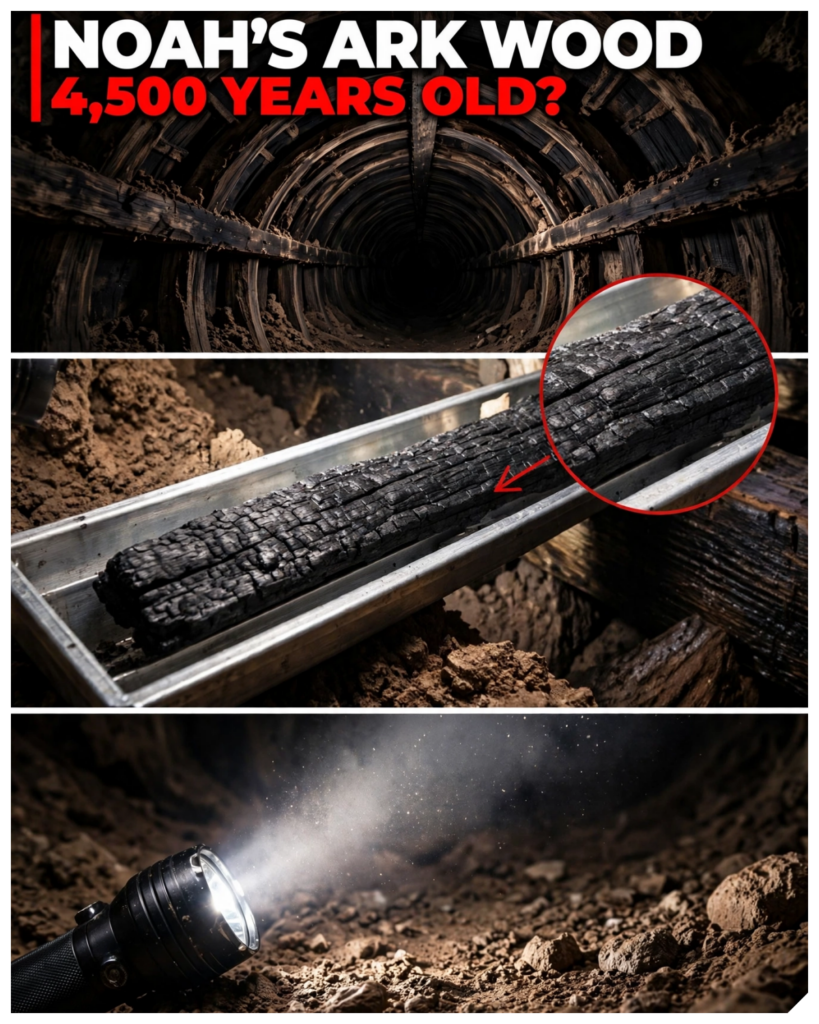
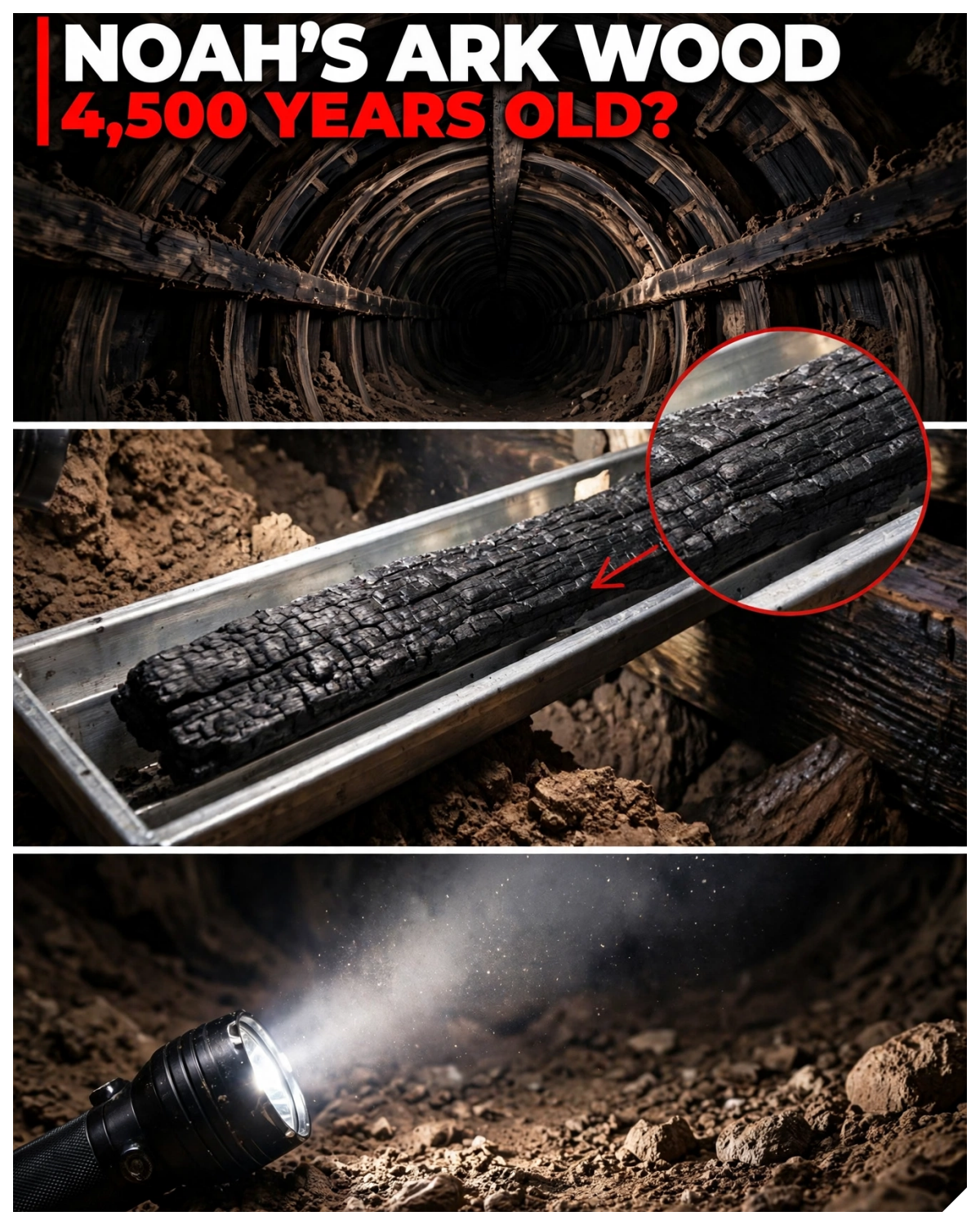
Somewhere in France [music] right now, a few small pieces of blackened wood are sitting in a laboratory.
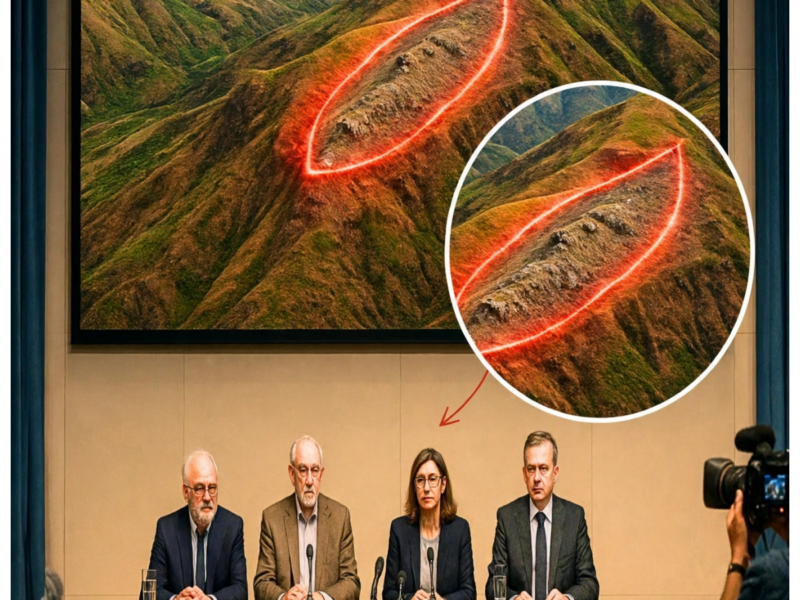
They came out of a drill hole about 30 ft deep inside a 500 ft boatshaped hill in eastern Turkey.
The hill people call Noah’s Ark.
In the middle of October, the archaeologist who leads the dig said he expected the French result [music] in about 15 days.
Those 15 days have come and gone.
And as we make this video, no number has been published.
When it comes, it’s going to be one number, [music] an age.
And that number can only land in a few places.
One of them means a shepherd lit a fire.
One of them means the hill is just geology.
And one of them would put a burned piece of wood deep inside [music] that shape in the time of the flood.
But here’s what almost nobody is telling you.
This is not the first time someone has sent Noah’s [music] Ark wood to a lab.
It isn’t even the first time it went through France.
It has happened again and again for 70 years.
And every single [music] time the lab said something nobody expected.
So we opened a ledger.
Five times Noah’s arc went to the lab and what came back and at the end exactly how to read the sixth result when [music] it lands.
First, what is actually in that lab?
This year, a team working with Noah’s [music] Arc Scans and Civas Kumhurat University drilled into the Durupanar formation about 18 mi south of Mount Ararat.
[music] According to the team, they drilled 12 holes inside the boat shape and four outside it.
For comparison, some going down around 20 m.
And the project’s founder, Andrew Jones, says none of them hit bedrock.
From one of [music] those holes from roughly 9 m down about 30 ft.
They say they brought up pieces [music] of wood damaged and charred as if they had been burned.
Professor Sanker Atila who directs the archaeology said the samples [music] went to laboratories in Turkey and in France to find out two things.
How old the wood is and what kind [music] of tree it came from.
He gave the timing too.
The French result in about 15 days.
The Turkish carbon [music] tests in about 3 months.
Now, the honest part because it matters.
Photographs of the wood haven’t been released.
The exact hole it came from hasn’t been published.
One report calls it charred.
Another says it might be petrified.
Atala himself told the Jerusalem Post, “I don’t want to say absolutely.”
And Andrew Jones has said openly that the burned pieces could be from the ark or from a shepherd’s campfire centuries ago.
So, no one, not the team and not us, knows what that wood is yet.
That’s exactly why the lab matters.
There’s one detail about that lab that nobody mentions.
Radiocarbon dating isn’t free.
At a commercial lab, a single sample can cost several hundred, and a dig like this sends off hundreds of samples of soil and core.
There’s no government paying for this one.
When this team needed money for drilling, it asked ordinary people to chip in.
The wood in France is in that lab in part because strangers wanted to know the answer.
This channel runs on the same thing.
[music] No sponsor.
A video like this is days of reading old lab reports, fact checks, and papers from the 1970s, so you can see the whole history in one place, not just the headline.
[music] If that’s been worth something to you, there’s a buy me a coffee link in the description.
One coffee [music] genuinely pays for a night of digging through a 70-year-old radiocarbon report.
And if it’s not for you, that’s completely fine.
Stay [music] with us because the first entry in the ledger starts with a Frenchman on a glacia with an axe.
Entry 1, 1955, the wood in the ice.
Fernand Navara was a French industrialist from Bordeaux and he was obsessed with Noah’s ark.
Not at Durupinar higher on Mount Ararat itself.
After two failed expeditions, he climbed to around 13,750 ft.
And there, in a creasse, locked in a wall of ice, he says he found a hand cut wooden beam, black, [music] heavy, almost like stone.
He cut off a piece and carried it down the mountain.
Then he did what everyone does.
He took it to the experts.
A report from Bordeaux described the wood as coming from an epoch of great antiquity.
An analysis in Madrid estimated it at about 5,000 years old, 5,000 years, [music] right where the flood would be.
For a while, it looked like the case was closed.
But those first tests didn’t measure carbon 14.
They looked at things like the wood’s color, its density, [music] and how much it had turned into something like ligignite.
Clues that are real, but slow and subjective.
Wood can darken in a century and the density estimate depends on knowing exactly what species of tree you started with.
When the same kind of wood finally went to radiocarbon labs, [music] the answer changed completely.
According to later summaries, three labs dated Navara’s 1955 sample to around 720 to 790 AD.
One lab working with a sample that was too small got about 260 AD.
Navara went back in 1969 and brought out more wood, two more labs, 650 AD and 630, [music] not 5,000 years, closer to 1300.
So, what was a hand cut beam doing in the ice of Ararat from the early Middle Ages?
[music] One idea that’s been raised is that Christians in that era who believed the ark rested on the mountain built something up there themselves.
A shrine, a structure, a marker.
Nobody has proven that either.
[music] So, write down lesson one.
The method decides the answer.
The same piece of wood was 5,000 years old by one method and 1300 by another.
[music] Entry two, 1979.
The soil, not the wood.
Ron [music] Wyatt, an American nurse anesthetist who became the loudest champion of Durupinar, took two soil samples, [music] one from inside the boat shape and one from outside.
He sent them to Galbrath Laboratories in Knoxville, Tennessee.
[music] The report came back with 1.88% carbon outside and 4.95% inside, more than 2 1/2 times as much.
For decades, that was quoted as proof that a huge amount of wood had rotted inside the hill.
But notice what the lab actually measured.
Percent carbon, not organic carbon, and not an age.
Carbon also lives in minerals like limestone.
A number that sounded like wood was really a number about dirt.
And that same question never went away.
In 2024, a soil scientist working with the current team took dozens of samples inside and outside the shape.
And this year, Professor Atala said the carbon coming from inside the formation is 40% higher than outside.
Interesting.
But it’s still carbon in soil, not an age, and not a piece of a ship.
Lesson two.
Before you get excited about a result, ask what the lab actually measured.
Before we get to entry three, the one that went around the world in a single day, here’s what happens next on this channel.
When the French number comes out and later the Turkish one, there will be a 100 videos within an hour with the word confirmed in the title.
We’re not going to do that.
We’re going to wait for the actual report, the lab code, the raw age, and the calibrated range and go through it line by line the same way we just did with 70 years of these tests.
Even if the answer is that kind of video takes time and nobody pays us to make it.
If you want it to exist, the buy me a coffee link is in the description.
People backing the work is literally how that wood got into a lab in France.
It’s also how we get to stay on this story with you until it’s settled.
Entry three.
2010.
The wooden rooms.
In April [music] of 2010, a group called Noah’s Ark Ministries International announced that it had found the ark not at Durupinar, but high on Mount Ararat.
They showed footage of men climbing through wooden chambers with straw and old beams.
And they said carbon dating put the wood at about 4,800 years old.
That story went around the world in a single day.
But then the details came out.
According to a report by geologist Andrew Snelling of Answers in Genesis, who saw the results before the announcement, there were four wood samples.
Three of them A, B, and C, came back less than 700 years old.
Only one sample D gave an ancient age.
It was tested at a single lab, a different one from the others, which wasn’t named, and its date range ran from almost 10,000 BC to about 300 BC, a window almost 10,000 years wide.
Snelling, a creationist who believes in a global flood, concluded the results did not support the claim.
Accusations that the site had been staged [music] followed, and the group rejected them.
To this day, the full data has never been opened up for other scientists to check.
Lesson three.
One sample from one unnamed lab with the other results left out of the headline is not a result.
Entry 4.
2023.
The dates from inside Durupanar.
A few years ago, Turkish researchers including Professor Atala took nearly 30 rock and soil samples from the Durupanar formation and had them analyzed at Istanbul Technical University.
The result that reached the news was that the material was between about 3,500 and 5,000 years old.
Read that again.
3 1/2 to 5,000 years.
That overlaps the time many people place Noah’s flood.
So why didn’t that end the debate?
Because of a sentence most headlines left out.
Another member of the research team, Farukqa, said with the dating, it is not possible to say that the ship is here.
He was right to be careful.
The reports didn’t say which method was used [music] or exactly what material was dated.
And soil isn’t one thing with one age.
It’s a mix of old carbon and new carbon, of roots, of things that washed in from somewhere else.
A soil date tells you something about the soil.
It doesn’t tell you there’s a boat.
Lesson four.
A date from the dirt around something isn’t a date of the thing.
Entry five.
September 2026.
The drill that broke.
This one happened only weeks ago inside the same hill.
While the team was drilling, the drill hit something hard enough to break the bit.
Andrew Jones told Newsweek [music] it could be petrified or heavily mineralized wood or it could be a block of rock.
And this entry matters for the French lab more than any other.
Because there’s a trap hidden inside the [music] word petrified.
When wood truly petrifies, the wood itself is gone.
Over a very long time, water carries minerals into the cells [music] and replaces the original material until what you’re holding is stone in the shape of wood.
And radiocarbon dating needs the original carbon.
If the carbon has been replaced, [music] there’s nothing old left to count.
Charred wood is very different.
Burning turns the outside into [music] charcoal, and charcoal is one of the best things in the world to radioarbon date.
It barely rots.
[music] It holds on to its carbon.
That’s why the argument over whether this wood is charred or petrified isn’t a small detail.
[music] It decides whether the French lab can give a clean answer at all.
Lesson five.
Before you ask how old it is, ask whether it can be dated.
So, here’s what is probably [music] happening to that wood right now in that French lab.
First, someone looks at it under a microscope.
Wood has a fingerprint.
The pattern of its cells, its [music] rings, and its paws can tell an expert, often down to the type of tree, whether it’s oak or pine, popppler or cedar.
That’s the species identification Atala [music] asked for.
Then for the age, a tiny piece is cleaned in a series of acid and alkaline baths to strip off any younger carbon that soaked in from the soil.
Then it’s burned, turned into a gas, and squeezed into a speck of graphite smaller than a grain of rice.
And that spec goes into a machine called an accelerator mass spectrometer [music] which counts carbon 14 atoms almost one at a time.
Here’s why that works.
Every living tree takes in carbon 14 from the air.
The moment it dies, it stops and the carbon 14 starts to disappear at a steady rate.
Half of it is gone after about 5,730 years.
Wood from about 4,400 years ago still has close to 60% of its original carbon 14.
[music] Wood from 50,000 years ago has almost none left to count.
The machine gives a raw age and then that raw age is corrected against a curve built from tree rings and other records to turn it into real calendar years.
And there’s one more trap to keep in mind.
A radiocarbon date tells you when the tree died, not when someone burned it.
[music] If you burn a beam cut from the old heart of a huge tree, the charcoal can come out older than the fire itself.
Scientists [music] call it the old wood problem.
So, how do you read the result?
There are really four ways this can go.
Answer one, a few hundred years or a couple of thousand.
That’s the most common result in the entire ledger.
[music] It would mean the wood came from people who lived on that plane in recorded history.
A shepherd’s fire, a village, a road.
Andrew Jones has said this himself.
And if that’s the answer, the radar picture of three levels becomes a lot harder to defend.
Answer two.
Tens of thousands of years or too old to measure.
That would point to nature.
The area around Durupanar is volcanic country [music] and would buried and burned by ancient eruptions or landslides would fit the scientists who’ve always said this hill is natural.
Answer three.
No date at all.
The lab says the material is mineralized with no original carbon left, petrified.
That wouldn’t prove anything either way, and it would leave the whole debate exactly where it is now.
And answer four, the one in the title, somewhere around 4,000 to 5,000 years.
That’s the range where different readings of the Bible from the Hebrew text to the Greek translation place Noah’s flood.
[music] If that comes back from charcoal from 30 ft inside the formation from a tree that doesn’t belong on that bare high plane and if a second lab in Turkey comes back with the same age then for the first time in 70 years the ledger would hold a result that isn’t from a tiny sample [music] isn’t from soil isn’t from one unnamed lab and isn’t from a method that measures color.
That is why people say it could shake the world.
But even then, be careful about what it would mean.
Andrew Jones has said it himself.
Identifying ancient wood would not by [music] itself prove human construction.
A date tells you when a tree died, [music] not who cut it, not who shaped it, and not whether it was ever part of a ship.
It would turn a hill into a real scientific question.
It would not be the end of the argument.
So, let’s close the ledger.
1955 5,000 years by color and density 1300 by radioarbon the method decides the answer 1979% carbon in the soil ask what was measured 2010 three samples young one ancient from one unnamed lab a single result is not a result 2023 3 and 12 [music] to 5,000 years from soil the dirt is not the object and 2026 Six.
A drill bit breaks on something hard.
Ask if it can be dated at all.
[music] Every single time someone has sent Noah’s arc to a lab, the result was weaker than the headline.
Every time.
This time there’s something different.
Two countries, two labs, charred wood [music] from deep inside the shape.
And a team that has said in public, it might just be a shepherd’s fire.
If they publish the full report, the lab [music] names, the sample numbers, and the raw ages, then whatever it says, the ledger finally gets an entry nobody can argue with.
Right now, that answer is sitting in a lab in France, and it already knows how old it