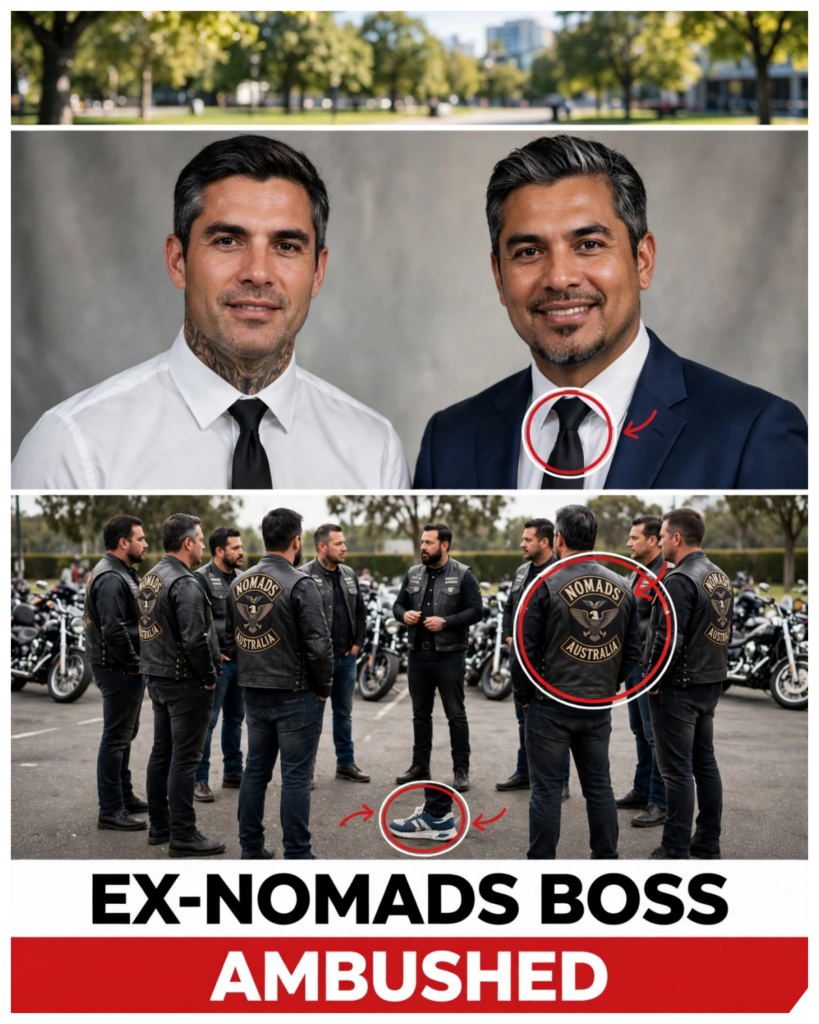
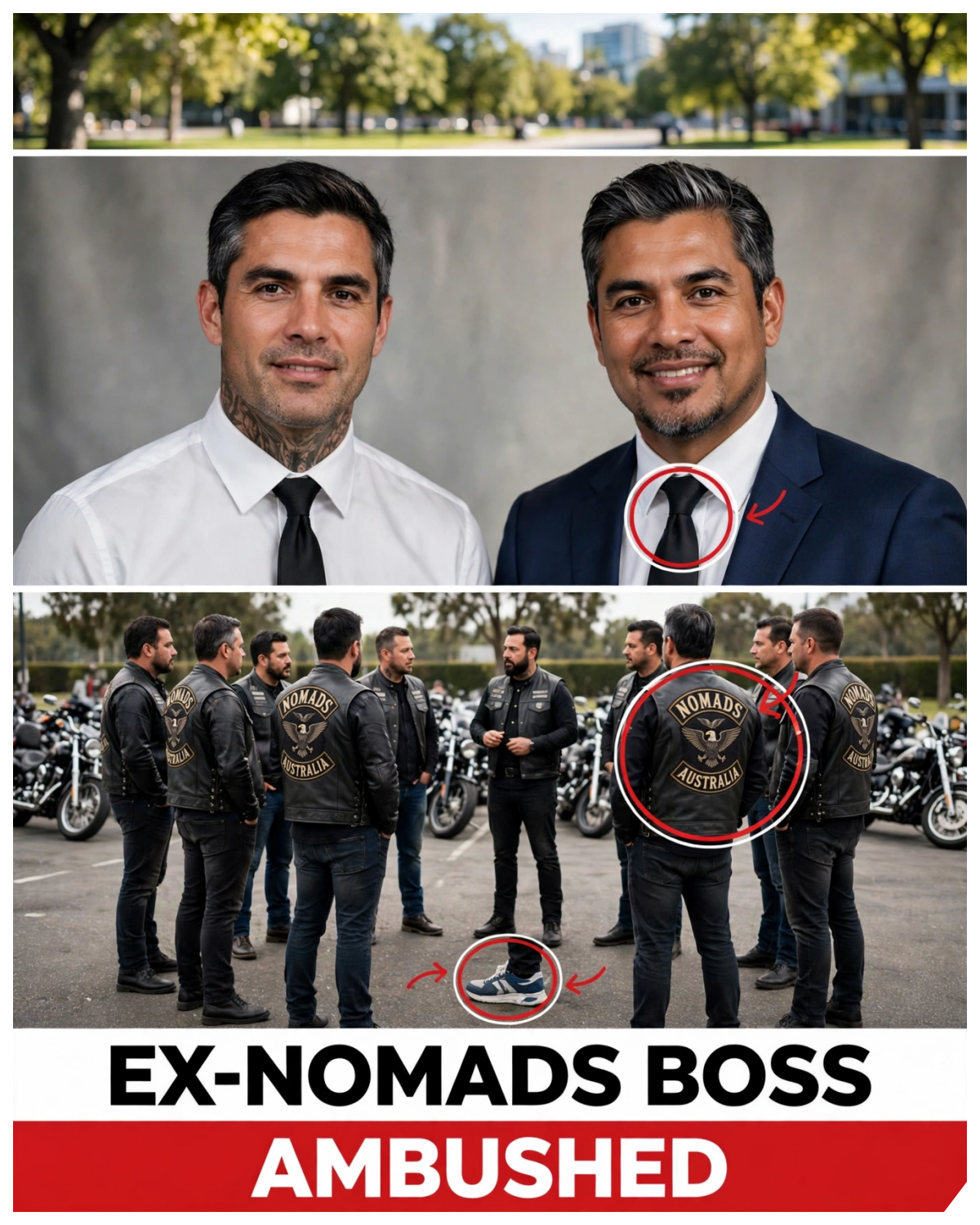
Four men surrounded him in a hardware store car park on the Gold Coast in broad daylight on what had started as an ordinary Saturday morning ride.
They stripped him.
They stomped on him while he was down.
And as they did it, one of them leaned in and asked him a question that wasn’t really a question at all.
Where’s your podcast now?
The man on the ground was Moody Tajure, a former national president of the Nomad’s Motorcycle Club.
And by December 2022, when this happened, someone who’d spent close to 3 years rebuilding himself into exactly what his attackers were mocking, a social media personality, talking openly about the life he claimed to have left behind.
Before we go further, a note on how this video is put together.
This account draws on court reporting, independent news coverage, and Tajjo’s own public interviews and statements cross-cheed against each other wherever possible.
Where we’re relying on his own account of events, including his belief that the Bunnings attack was a deliberate setup connected to a rival club, we’ll say so directly because it’s a claim this channel hasn’t been able to independently verify beyond what Underworld sources told journalists at the time.
To understand why four men would go to that much trouble and why the taunt about his podcast landed the way it clearly did, you have to go back considerably further than 2022.
Tajour was the youngest recruit the Nomad’s Sydney chapter had ever taken on, joining in the late 1990s.
By 2006 at 24, he was involved in a car park ambush in Chisik that left a man named Robin Nassau dead.
A case that also drew in his own brother and the brother of one of Sydney’s most recognizable nightclub figures.
He served more than four years for manslaughter.
He went back to the nomads afterward, rose all the way to national president by 2018, and then within a matter of months walked away from the position entirely, burning his colors with his own brother’s blessing.
What happened in that Bunnings car park four years later suggests that walking away isn’t always as final as it looks from the outside.
That a past like Tojour doesn’t necessarily let go just because someone else has decided to leave it behind.
In this video, we’ll go through Mood Tajur’s story in order.
How a teenager became the youngest nomad in the club’s history.
The killing that put him in prison, his rise to the top of the organization, and his dramatic exit from it, and what actually happened in that car park, and why it might not have been as random as it looked.
If you’re new here, this channel covers organized crime and gang history across Australia and New Zealand using court records and verified public reporting.
No dramatizing, no glorifying.
Subscribe and turn on the bell if you want to see where this one goes.
We’ll start with a 15-year-old who wanted in badly enough that the nomads made an exception for him.
According to Moody Tour’s own retelling of his early life, he was handling pistols before he was old enough for high school.
A child growing up in a Western Sydney housing commission estate in an environment where that kind of exposure wasn’t treated as unusual.
By 14 in 1999, he’d walked into his first formal nomads meeting.
Brought into the club’s orbit through family connections to the Ibrahim family, whose various brothers, including John, the King’s Cross nightclub figure, this account has already referenced, and his siblings carried genuine standing within Sydney’s underworld across this same period.
Family connection alone didn’t fasttrack to Jour’s path into the club.
The Nomads, according to his own account of the process, operated under a strict formal progression, three months as a hangaround before moving to nominee status, then earning the two patches worn on a prospective member’s vest, and finally after a full year, the center patch that marked genuine full membership.
Tajour’s own path through that process took considerably longer than the standard timeline by his own account, 18 months rather than the usual year.
A delay he’s attributed directly to his own conduct during the nomination period, describing himself as repeatedly getting kicked out for fighting with and attacking existing members.
He since described it without evident regret as the longest nomination process in the club’s history.
It’s worth treating this specific origin story with the appropriate caution this channel applies to any figure’s own account of their early life, particularly one delivered years later after Tajjour had already built a public career partly around retelling exactly this kind of formative history.
The broad outline, extremely young entry into one of Australia’s most established outlaw motorcycle clubs, family connections easing that entry, and a genuinely difficult extended nomination period is corroborated across multiple independent accounts of his background.
The more specific, colorful details, including the exact circumstances of his childhood exposure to firearms, rest more heavily onto Jur’s own retelling than on independently verified reporting from the period itself, given how little documentation typically exists for anyone’s life before they first draw formal police or media attention as an adult.
What is independently more solidly documented is the trajectory that followed to Jour became by most accounts the youngest member the Nomad’s Sydney chapter had ever formally recruited.
A distinction that combined with his family’s existing standing within the broader Ibrahim network positioned him for a genuinely rapid rise through the club’s internal hierarchy over the following years.
By his early 20s, he held a position significant enough that his later arrest alongside senior figures, including his own brother and the member of the Ibrahim family, would draw serious sustained police and media attention.
Treatment reserved for people already understood to hold genuine standing within the organization rather than peripheral low-level associates.
It’s worth pausing on the specific family structure surrounding Tajar’s rise because it recurs throughout this entire account in ways that shape almost everything that follows.
His older brother, Sleman, was rising through the same organization alongside him, eventually becoming the nomad’s current national president in his own right.
Meaning this account is tracing not simply one man’s individual path through outlaw motorcycle club culture, but a genuine family enterprise spanning at least two brothers holding senior positions within the same club across overlapping periods connected further to the broader Ibrahim family’s own separate extensive standing within Sydney’s underworld.
By 2006, Tajour was 24 years old, several years into his membership, embedded within exactly this network of family and club relationships.
What happened that year?
A car park ambush that would end another man’s life, draw in his own brother as a co-acused, and eventually cost Tajjour more than four years of his own freedom is where this account turns next.
Because it represents the first moment his name moved from internal club standing into the kind of formal documented criminal record this channel is able to trace with genuine confidence.
The events that led to Robin Nasser’s death began, according to the account later accepted by the New South Wales Supreme Court, as a planned assault rather than a planned killing.
A distinction that would prove central to how the case was ultimately resolved and one worth understanding in detail before covering what actually happened.
In 2006, a group of men connected to Moody Tajour arranged to confront brothers George and Robin Nassour in the car park of an apartment building in Chisik on Sydney’s harbor.
George Nasour was at the time known publicly as an actor connected to the Fat Pizza television series, a detail that would draw additional media attention to the case once it reached court.
Given the contrast between his public profile and the underworld violence his family became caught up in, the specific underlying dispute that led to the confrontation isn’t detailed in the court reporting this account has been able to access.
Though contemporaneous commentary on the case noted with some skepticism that the matter appeared unconnected to drugs, an observation worth including because it suggests the dispute, whatever its actual cause, arose from something closer to a personal grievance than the more familiar territorial or trafficking related motives this channel has documented in the majority of other cases it’s covered.
When George Nassau arrived at the car park and recognized the men waiting for him, he immediately understood what was happening.
According to court evidence, he shouted a warning to his brother that this was a setup moments before he was stabbed.
Despite the wound, George managed to escape the immediate scene.
The group then turned their attention to Robin, surrounding him and beginning a sustained assault involving kicking and punching.
The same man who’ stabbed George then stabbed Robin twice with one of those wounds severing an artery in his leg.
Robin Nassau did not survive.
The legal proceedings that followed centered on a specific carefully drawn distinction between the man who’ actually wielded the knife and the other participants in the assault, including Tajour, his brother Slayman, and Michael Ibrahim.
Presiding over the matter, Supreme Court Justice Derek Price made a finding that shaped the entire outcome of the case.
While the group had planned to assault Robin Nasur and cause him physical harm, the evidence didn’t establish that Tajour, his brother or Ibrahim, had known in advance that the fourth man intended to bring a knife to the confrontation at all.
It was only once that man used the knife against George, the first unplanned stabbing, that the other participants became aware a weapon was actually involved.
This is where the court’s reasoning becomes genuinely significant for understanding the specific charge each man ultimately faced.
Justice Price found that once the group had witnessed the knife being used against George and had directly observed its capacity to cause serious harm, their decision to continue the assault against Robin, knowing that same weapon might be used again, was what made them criminally liable for his death.
Even though none of them had personally wielded the blade, and even though the original plan before the confrontation actually began appears to have involved only a physical assault rather than a knife attack, this distinction is precisely what allowed the men to plead guilty to manslaughter rather than murder.
A legally meaningful difference reflecting the court’s assessment that continuing a dangerous assault with awareness of an escalated risk rather than any direct individual act of lethal violence was what connected each of them to Robin Nasser’s death.
It’s worth being precise about what this legal outcome does and doesn’t establish in keeping with the standard this channel applies consistently.
A guilty plea to manslaughter accepted on this specific factual basis means to juror and his co-acused were found criminally responsible for Robin Nasser’s death.
This isn’t a case this account can describe in softer terms than that.
At the same time, the court’s own findings are worth taking seriously as an accurate reflection of what was actually established.
Not a group that set out with the specific intention to kill, but one that planned a violent assault was confronted mid- attack with a weapon it hadn’t anticipated and chose to continue regardless with consequences that proved fatal.
The man who actually wielded the knife, the person whose specific action caused the fatal injury, isn’t named in the reporting this account has been able to access.
Beyond the detail that he has since died, separate from these proceedings and apparently unconnected to any further legal consequence this channel has been able to trace.
It’s worth noting this gap.
Honestly, the specific individual most directly physically responsible for Robin Nasur’s death appears to have escaped formal accountability for it, at least through the criminal justice system before his own death closed off any further possibility of prosecution.
Robin Nasso’s mother, Amelia, attended the sentencing hearing and was reported to have been visibly and audibly distressed throughout the proceedings.
Speaking afterward, she offered a measured, if clearly painful, assessment of the outcome that the sentence handed down was fair and that justice had, in her view, been done.
It’s worth including her specific response here because it represents one of the few moments in this entire account where the direct human cost of the events being traced is voiced by someone outside the criminal justice system or the men directly involved.
A mother grieving her son finding some measure of resolution in a legal process that by its own explicit findings hadn’t established that any of the men in the dock had actually intended to kill him.
Tajour along with his brother and Michael Ibrahim was sentenced separately from the immediate proceedings covered here with reporting indicating the brother’s specific sentencing was scheduled for a later date following the initial court findings.
Tajur ultimately served more than four years in custody in connection with the case.
A period that would prove formative for the rest of his life, both in terms of his continued standing within the nomads once released and considerably later in terms of how he’d eventually come to talk about the experience publicly once he’d built a media career partly around retelling exactly this chapter of his own history.
What happened once Tjour was released?
A return to the same organization that had already cost him years of his freedom, followed by a rise all the way to its most senior formal position is where this account turns next.
Mudi Tajour’s release from custody didn’t mark an ending point in his relationship with the nomads.
It marked, based on everything this account has been able to trace, roughly the midpoint of a career within the club that would eventually stretch across two full decades, taking him from a difficult extended nomination period as a teenager through to the single most senior position the organization offered.
The years between his release and 2018 aren’t extensively documented in the reporting this account has been able to access.
A gap worth noting, honestly, consistent with this channel’s approach across other cases where an individual’s most dramatic headline generating moments are well covered.
While the intervening periods of ordinary sustained club activity simply don’t generate the same volume of contemporaneous reporting, what is clear is that Tajour continued rising within the organization during this period, eventually reaching the position of vice president, a role reporting from the time places him in specifically alongside photographs showing him in that capacity during his ongoing tenure with the club.
By 2018, at 34 years old, Tajor had positioned himself to make a direct claim on the nomad’s most senior role, national president.
That claim didn’t arrive through a clean, uncontested transition.
It came through what’s been described as an internal power struggle against the club’s existing national leader, Michael Clark.
According to reporting from the period, the dispute divided the organization’s chapter structure in a genuinely consequential way.
Every nomad’s chapter except the Canbor branch ultimately recognized to Jour as the legitimate national president while Canberra’s membership remained loyal to Clark, creating a formal split in the club’s leadership.
Recognition that persisted at least for a period rather than resolving cleanly in either direction.
Tajor’s own public statement issued through his lawyer once his position as national president had been established offers a useful window into how he understood or at least chose to present his own rise to the role.
He confirmed directly that he’d made the decision to take over the national presidency and stated his intention to relocate the club’s center of gravity back towards Sydney.
A detail worth noting because it suggests Clark’s own leadership based in Canberra had shifted the organization’s practical center of operations away from what Tajjour and his supporters apparently considered its natural home base.
He described the situation candidly as involving genuine internal division while expressing confidence in the level of support he’d secured across the Sydney and Melbourne chapters specifically along with what he referred to as the club’s international membership.
It’s worth pausing on that final detail, international membership, because it reflects something about the scale of the organization Tajure had actually risen to lead.
This wasn’t simply a dispute over control of a single city’s chapter.
It was a contest for leadership of an organization with a genuine international footprint.
Meaning the internal politics this account has traced extended well beyond Australia’s own borders into whatever formal or informal structure connected international nomads chapters back to the organization’s Australian leadership.
Tajur’s tenure as national president once secured proved remarkably brief.
Reporting on his subsequent career describes him rising to prominence in this role in 2018 before in the same general period dramatically quitting the position entirely.
This account hasn’t been able to establish the specific immediate trigger for that resignation through independently verified reporting.
Whether it connected to ongoing tension with Clark’s remaining supporters in CRA to increasing police pressure of the kind this channel has documented affecting senior outlaw motorcycle club figures across virtually every organization it’s covered or to something more personal and specific to Tajour’s own circumstances at the time.
What is documented and what adds a genuinely distinctive element to this specific leadership transition compared to others this channel has traced across its broader coverage is who succeeded him.
Tjur’s own brother Sleman his co-acused in the 2006 manslaughter case and by this point a senior figure within the organization in his own right went on to become the Nomad’s national president himself.
A position reporting from as recently as 2024 indicates he continues to hold.
It’s worth sitting with what this specific family succession represents because it’s genuinely unusual even by the standards of the family dynasties this channel has documented across other organizations including the Nahu brothers leadership of the commoner in New Zealand.
Two brothers, both convicted, as co-acused in the same fatal assault, both rising through the same organization over the following decade, with leadership passing directly from one to the other rather than through any external contest.
A level of concentrated family control over a major national outlaw motorcycle club that this account hasn’t documented in quite this specific form anywhere else in its broader coverage.
There’s a further detail worth including about how Tajur’s own departure from the presidency was symbolically marked because it connects directly to how he’d go on to publicly frame the entire chapter of his life in later years.
According to his own later account, he burned his nomad’s colors upon leaving a genuinely significant, symbolically loaded act within outlaw motorcycle club culture, representing a formal, deliberate severing of the visible marker of his membership rather than simply an informal fading away from active involvement.
He’s described receiving his brother’s explicit blessing for this decision, framing the moment as one he considers unforgettable and one that marked the genuine beginning of an entirely different chapter of his life.
It’s worth reflecting on what this specific combination, resigning the most senior position available within a major outlaw motorcycle club, then formally symbolically burning the colors that represented two decades of membership.
All while his own brother simultaneously rose to take over that same position actually represents set against everything this account has already traced about the organization’s broader internal politics.
This wasn’t a man forced out through arrest, exile, or violence.
The three mechanisms this channel has most commonly documented ending senior leadership tenures across its coverage of other Australian and New Zealand organized crime figures.
It was, based on the available account, a genuinely voluntary departure, timed relatively soon after he’d actually secured a position he’d apparently fought an internal contest to win, and one that unlike most of the leadership transitions this account has documented elsewhere, didn’t destabilize the broader organization at all, given his own brother, was positioned to step directly into the vacancy.
What Tour did with his life immediately after this departure and how directly connected his subsequent public reinvention actually was to the specific mechanisms police consorting laws.
A formal break from his old associates that he’s since credited with making that reinvention possible is where this account turns next.
By 2020, speaking from Sydney during the city’s first extended CO 19 lockdown, Moody Tour offered the fullest public account he’d given up to that point of what had actually driven his departure from the nomads and what his life had become in the years since.
The specific mechanism he credited with forcing the change wasn’t, by his own account, primarily his own willpower or a sudden personal epiphany.
It was New South Wales Police’s consorting laws, the same broad category of anti-association legislation this channel has documented being deployed against senior outlaw motorcycle club figures across its coverage of the rebels, the Comancheros, and other organizations, typically criticized by the figures targeted by it as an overreach of state power against people who haven’t necessarily been convicted of any specific new offense.
Tajour’s own framing of the same legal tool applied directly to his own circumstances was strikingly different from the resentment this channel has documented from most other figures subjected to similar orders.
He’s described the restriction preventing him from associating with his former bikey associates as something that in his own words saved him from that life, giving him, as he’s put it, a legitimate excuse to walk away that he might not have found the strength to create for himself.
It’s worth taking this specific framing seriously because it inverts something this channel has documented consistently across its broader coverage of anti-consorting and serious crimerevention order legislation.
Most of the figures this account has traced being targeted by these tools.
Damian Vela, Alan Mian, and others have publicly characterized them as unjust, disproportionate state intrusion, forcing relocation, restricting ordinary movement, and treating them as presumptively dangerous without a matching new conviction.
Tajur’s own account suggests these same broad legal powers can function at least for some individuals in some specific circumstances as something closer to external cover for a genuine personally desired exit from a world an individual might otherwise struggle to formally leave.
Removing the immediate social pressure of appearing to abandon long-standing loyalties by making that separation in effect legally mandatory rather than personally chosen.
Tajour has described the immediate period following this enforced separation as genuinely difficult using language describing it as a dark and lonely period in his life.
A detail worth including because it complicates any simple uncomplicated narrative of relief or straightforward liberation.
Losing sustained decadesl long social connections, even ones connected to a genuinely dangerous and criminal world, isn’t something this account should assume happens without real ongoing personal cost, regardless of how beneficial the underlying separation may have ultimately proven.
What emerged from that difficult period, by his own account, was a genuinely reconstructed daily life.
He’s described starting medications specifically to help manage his own anger alongside what he’s characterized as a renewed engagement with his religious faith.
He became engaged during this same period to a partner considerably younger than himself and has spoken about wanting to focus on living in the present moment rather than continuing to define himself by his own past.
Professionally, he transitioned into ownership of several cafes across Sydney’s western suburbs before later moving into the trucking industry, a detail he shared directly on social media, marking what he described as his latest career step.
It’s worth pausing on the specific health detail he’s mentioned alongside this broader transformation because it adds a further layer to the picture.
He’s described ongoing lung problems.
Serious enough that he said he exercises particular caution about leaving his home unless it’s specifically for work rellated purposes.
This account can’t independently verify the specific nature or cause of this health issue and it’s included here simply because it’s part of the broader personal narrative Tour has chosen to share publicly alongside the more dramatic elements of his gang history and eventual departure from it.
What makes Tajour’s specific version of this post gang reinvention distinctive compared to the other cases this channel has documented across its broader coverage?
Vince Focarelli’s podcast appearances, Toby Mitchell’s social media fitness brand, Les Grantham’s own account of surviving an assassination attempt is the specific direction his public platform eventually took.
Rather than positioning himself primarily as a cautionary figure warning young people away from the life he’d left or building a brand centered on physical fitness and personal survival, Tajour became what’s been described in reporting on his more recent activities as a cult figure on social media, engaging directly and publicly in verbal disputes with both genuine and self-styled criminal figures.
He’s built a podcast, made appearances on other creators shows discussing his own history and current perspective, and maintains an active Tik Tok presence built substantially around his own personal narrative and ongoing public commentary.
It’s worth reflecting on what this specific choice of public persona actually represents because it sits in genuine tension with the saved by police now a changed man framing he’s offered elsewhere.
Building a media career that involves ongoing public verbal confrontation with other figures connected to organized crime and gang culture, even where that confrontation takes place entirely online through legal, non-violent means, represents a considerably more active ongoing engagement with exactly the world he’s described leaving behind than a straightforward retirement into private life would.
This channel has documented similar tensions in other cases.
A genuine, apparently sincere personal transformation, coexisting with a public career that continues drawing its primary value and audience interest from the same underworld connections and reputation the individual claims to have moved past.
Tajjo’s own case may represent one of the more pronounced examples of this specific tension this channel has yet documented.
A man whose entire subsequent media career depends substantially on his audience’s continued interest in exactly the criminal history and gang world he’s simultaneously positioned himself as having escaped.
That tension would be tested directly and violently in December 2022, proving that whatever genuine distance Tjour had built between himself and his old world, it wasn’t necessarily distance that people connected to that world were prepared to respect indefinitely.
At approximately quarter to 1 in the afternoon on a Saturday in December 2022, Moody Tajjour was at a Bunnings hardware store car park in Nang on Queensland’s Gold Coast.
Having joined what he understood to be a peaceful social motorcycle ride.
By the time it ended, he’d been stripped, stomped on, and beaten by a group of four men.
An attack captured, at least in part, on footage that would later circulate publicly.
According to Tajur’s own account of the incident given shortly afterward, the attack followed an earlier comparatively minor confrontation that same morning involving a motorcyclist he understood to be connected to the Mongols, a rival outlaw motorcycle club.
This channel has documented extensively elsewhere in its coverage, including through its account of Toby Mitchell’s own presidency of the club’s Melbourne chapter.
Rather than escalating immediately, that earlier confrontation appeared, by Tajur’s own description, to have resolved itself, or at least paused well enough that he agreed to continue participating in the planned group ride.
It was only later in the Bunnings car park, that the situation turned violent with the four attackers surrounding him and carrying out a sustained physical assault.
The specific detail of what his attackers said to him during the beating is worth including directly because it captures something this account has already flagged as a genuine tension into Jur’s public reinvention.
As he lay on the ground being assaulted, one of the men taunted him directly about his media career, asking in effect where his podcast was, now a question clearly intended to mock the specific public persona Tajure had built in the years since leaving the Nomads, treating his social media fame not as evidence of genuine distance from gang culture, but as exactly the kind of exposed, mockable vulnerability his attackers apparently ly believed it represented.
According to an Underworld source who spoke to journalists covering the incident, the attack wasn’t a random opportunistic assault, but a deliberate setup connected directly to the earlier confrontation with the Mongols linked motorcyclist.
This account can’t independently verify that specific characterization beyond what was reported through that single source at the time.
A genuine limitation worth stating plainly consistent with the standard this channel applies whenever a case rests substantially on unnamed underworld sourcing rather than court testimony or on thereord police statements.
What can be confirmed is the practical outcome.
A 31-year-old man from Park Ridge, Queensland was arrested the following Monday in connection with the assault.
Tajour’s own public response to the attack delivered afterward offers a useful final window into how he’d come to present himself by this stage of his post nomad’s life.
He described the physical sequence of the assault directly and without evident self-pity being surrounded, receiving what he characterized in blunt terms as a serious blow before the rest of the group joined in.
He specifically declined to share a photograph of his resulting black eye, framing that decision as a refusal to give his attackers the satisfaction of a visible trophy from the encounter.
It’s worth reflecting on what this specific incident adds to the broader picture this account has traced across Tajur’s entire public life because it complicates any simple onedirectional narrative of either genuine redemption or performed reinvention.
A man who has spent years building a public identity around having left gang violence behind was in December 2022 subjected to exactly that kind of violence.
In a way apparently connected directly to his continued if now purely social and mediabased presence within the broader outlaw motorcycle club world.
Whatever genuine personal transformation Tour has undergone since burning his nomad’s colors, this incident demonstrates that the world he claims to have left doesn’t necessarily consider the departure final, or the resulting public figure entirely off limits from the kind of violence that world has always used to settle its disputes, even when the specific target has spent years insisting publicly and repeatedly that he no longer belongs to it.
There’s a specific question worth asking directly.
Having now traced Moody Tajour’s full public life in detail, what does it actually mean for someone to leave organized crime behind?
And how would an outside observer working only from publicly available reporting ever be genuinely confident that departure was real rather than simply a change in the specific form someone’s connection to that world takes over?
This channel has now documented several figures across his broader coverage, attempting some version of exactly this transition.
Vince Foarelli building a podcast career centered on warning young people away from exactly the life he once led.
Toby Mitchell transitioning from Mongol’s president to social media fitness personality while maintaining documented social connections to former club associates.
Les Granthm publicly framing his own survival of a targeted attack as the beginning of a path toward redemption.
Tajjo’s own case shares elements with each of these while also differing in ways worth drawing out directly because those differences matter for how confidently the Sakan can assess where he actually stands.
Unlike Fukarelli’s case, where this channel documented genuine serious ambiguity about his own historical standing within the organization he claimed to have led, Tajur’s rise to the nomad’s national presidency is independently solidly documented, confirmed through his own lawyer’s formal public statement at the time and through contemporaneous reporting on the specific internal contest against Michael Clark that produced it.
There’s no comparable dispute in Tajou’s case about whether he genuinely held the senior position his public narrative depends on.
Unlike Mitchell’s case where this channel documented a series of ongoing assault charges suggesting continued personal volatility well after his own departure from formal club leadership to Jour’s post-departure record based on available reporting doesn’t show a comparable pattern of him personally initiating violence the Bunnings incident whatever its underlying cause positioned him clearly as the victim of an attack rather than its instigator.
What Tojour’s case does share with each of these other figures and what this account has now identified as a genuinely recurring pattern across virtually every documented instance of this kind of gang world departure.
It’s covered is the specific tension between claimed personal transformation and a public career that continues depending substantially on the very history that transformation is meant to represent moving past.
Tajour doesn’t run a business entirely disconnected from his gang history the way a fuller cleaner break might suggest.
His trucking work and cafe ownership exist alongside not instead of a media career built directly on retelling his nomad’s history in granular ongoing detail.
Engaging publicly with other current and former gang figures and maintaining exactly the kind of visible underworld adjacent profile that made him a recognizable enough target for the Bunnings attack in the first.
It’s worth being fair to the genuine difficulty this specific tension actually represents rather than treating it as straightforward evidence of insincerity.
A man who spent from age 14 through his mid30s inside one of Australia’s most significant outlaw motorcycle clubs, eventually rising to lead it nationally, has built an entire adult identity and social network around that world.
Expecting a complete clean severing of every connection to it, professional, social, and financial, may represent an unrealistic standard that few people into Jaw’s specific position could actually meet, regardless of how genuine their underlying desire for change actually is.
Building a media career around exactly the history and connections he actually has rather than attempting some entirely disconnected reinvention may reflect pragmatic realism about what was actually available to him rather than evidence that the underlying transformation itself is somehow false or purely performed.
At the same time, this account has to be honest about what that specific choice actually costs in terms of the safety and finality any genuine departure from organized crime presumably ought to provide.
The Bunnings attack demonstrates directly that Tajjour’s continued public visibility built on his gang history kept him within reach of exactly the kind of violence that world produces, regardless of how many years had passed since he’d formally burned his colors.
And regardless of how sincere his own stated desire to leave that world behind actually was, a quieter, more complete withdrawal from public life might have provided genuine physical safety.
This account has no way of knowing whether his current, more public path actually affords him.
There’s a final observation worth offering connecting Tajour’s specific story to the broader pattern this channel has now traced across dozens of cases spanning its full coverage of Australian and New Zealand organized crime.
Formal departure from a criminal organization resigning a title.
Burning colors receiving a symbolic blessing from a family member who remains within the organization doesn’t necessarily sever every practical, social, or financial connection to that world.
Even where the underlying personal transformation is genuine, Tajjour’s own brother remains the nomad’s current national president.
His own media career depends substantially on an audience whose interest traces directly back to his gang history and his own physical safety.
Based on the single most significant incident this account has documented since his formal departure, remained genuinely contested in a car park on the Gold Coast four years after he’d apparently left that world behind for good.
Mudajour’s story traced across everything this account has covered resists the kind of clean resolution that either a straightforward redemption narrative or a straightforward cautionary tale would provide.
He isn’t simply a former gang leader who successfully rebuilt his life.
And he isn’t simply a cautionary example of someone unable to genuinely leave organized crime behind.
He’s something considerably more difficult to categorize cleanly.
A man whose documented, verifiable history includes genuine serious violence, a manslaughter conviction connected to a car park ambush that took another man’s life, arising from a plan that by the court’s own findings escalated beyond what its participants had originally intended.
Sitting alongside an equally documented, equally genuine attempt to build something different in the years since.
An attempt tested directly and violently by people apparently unwilling to accept that departure as final.
It’s worth returning one final time to the specific irony sitting at the center of the incident that opened this account.
Four men beat Tajur in a Bunnings car park, marking him specifically for the media career he’d built around leaving gang violence behind and in doing so delivered exactly the kind of gang-connected violence that career was ostensibly built around having escaped.
Whatever this incident actually proves about the underlying sincerity of Tajura’s own transformation, it demonstrates something this channel has now documented across virtually every similar case it’s covered.
The specific ongoing difficulty of building a genuinely safe, genuinely separate life while remaining publicly visibly connected to the history and relationships that made someone dangerous or at least notable in the first place.
There’s a broader reflection worth offering connecting this account to the wider body of work this channel has built across its coverage of Australian and New Zealand organized crime.
Specifically, this channel has now traced multiple figures attempting some version of exactly the path Tojour has walked.
Genuine departure from formal gang leadership followed by a public reinvention that continues drawing its value and its audience from the very history the individual claims to have moved past.
None of these cases, including to Jur’s own, resolve into a clean, confident answer about whether that specific combination, public reinvention built on gang history rather than complete, quiet withdrawal from public life, actually represents genuine, sustainable change, or simply a different, more commercially viable form of continued engagement with the same underlying world.
What this account can say with confidence is the shape of what’s actually documented.
A 14-year-old joined one of Australia’s most significant outlaw motorcycle clubs and during the longest nomination period in its history by his own account.
At 24, he was part of a group whose planned assault escalated into a killing neither the court nor by its own findings the men involved had originally intended.
He served more than four years for it, returned to the same organization, and eventually rose to lead it nationally before resigning within months with his own brother’s blessing and his own brother’s simultaneous rise to take his place.
He built a genuinely public ongoing media career around retelling exactly this history, framing New South Wales police’s own anti-consorting powers as the specific mechanism that gave him permission to walk away.
And four years after making that departure in a hardware store car park on the Gold Coast, he was reminded directly and violently that not everyone connected to his old world was prepared to treat that departure as settled.
Whatever comes next for Moody Tajjour, continued reinvention, further violence connected to his past, or some combination.
This account has no way of predicting his story.
As it currently stands, offers something this channel has found genuinely valuable across its broader coverage.
Not a clean lesson about redemption or its limits, but an honest, welldocumented account of how genuinely difficult and genuinely unresolved that specific question remains for someone who spent two decades of his life from adolescence through his mid30s inside one of the organizations.
This channel has spent its own existence documenting.
This channel covers organized crime and gang history across Australia and New Zealand using court records and verified public reporting rather than speculation.
If you’re new here, that’s the standard we hold to on every case, including, as this account has tried to demonstrate throughout, cases where the person at the center of the story is still right now actively writing the next chapter of it himself.
Subscribe and turn on the bell if you want to see where this one goes.


