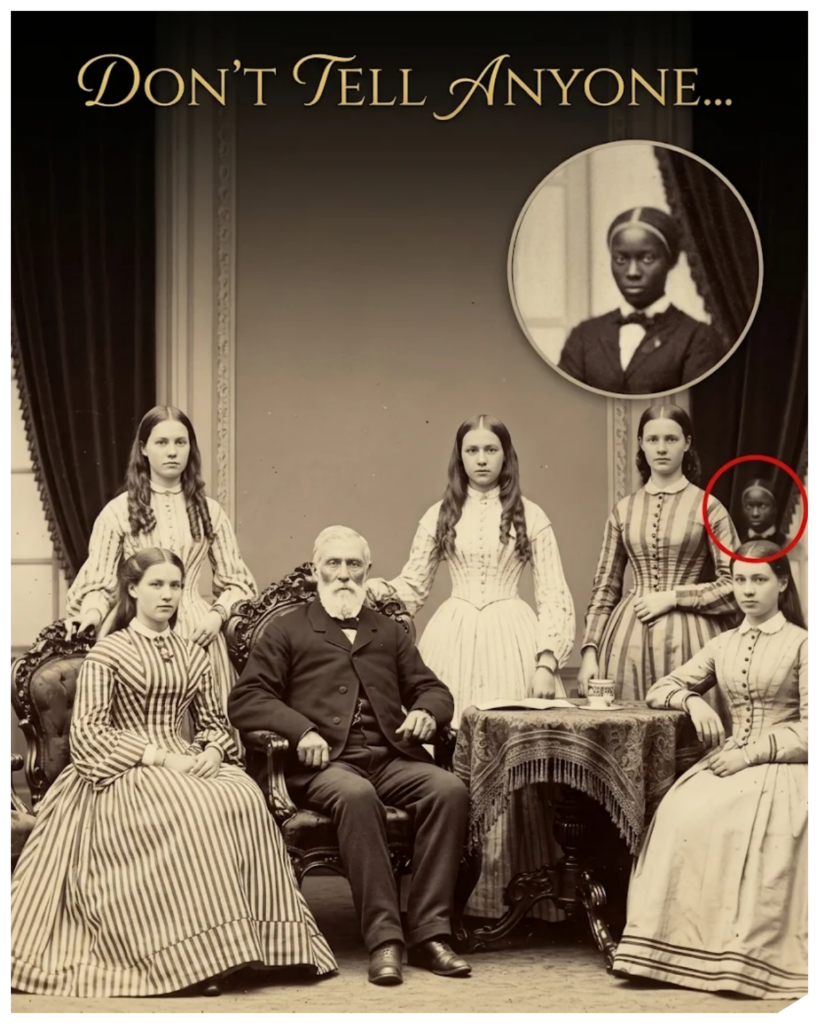
THE FOUR DAUGHTERS, THE HIDDEN INHERITANCE, AND THE BARON'S FINAL PUNISHMENT
The chapel doors remained open.
The cold night air entered the room, moving the candles and making their flames tremble.
Helena de Alencar stood beneath the entrance arch.
She looked older than the woman in the photographs.
Her cheeks were thinner.
Her hands trembled slightly.
But her eyes were exactly the same.
Beatriz stared at her mother.
For several seconds, she could not move.
Then she whispered:
“Mother?”
Helena looked at her.
“My darling.”
Isabel began crying.
Clara ran forward.
“Mother!”
Helena opened her arms.
The youngest daughter threw herself against her.
The two embraced.
Beatriz and Isabel followed.
For seventeen years, they had believed their mother was dead.
For seventeen years, they had wondered why their father refused to speak about her.
For seventeen years, they had imagined that perhaps they had done something wrong.
Now the woman they had missed stood before them.
Alive.
But the reunion was interrupted by the baron.
Henrique stepped backward.
His face was pale.
“This is impossible.”
Helena slowly released her daughters.
“No, Henrique. It is simply the truth.”
He looked toward the magistrate.
“What is the meaning of this?”
The magistrate opened his official papers.
“Baron Henrique de Alencar, you are required to answer questions concerning fraudulent property transfers, unlawful confinement, falsification of family records, and the disappearance of documents belonging to the Monteiro estate.”
The baron laughed nervously.
“On whose authority?”
“On the authority of the court.”
“Those are absurd accusations.”
Helena looked at him.
“You have said that for seventeen years.”
Henrique turned toward Dr. Álvaro.
“Tell them this is a misunderstanding.”
The secretary lowered his eyes.
“I cannot.”
The baron stared at him.
“You work for me.”
“I did.”
“Then do as I say!”
Dr. Álvaro stepped away.
“No more.”
The baron suddenly understood that his control was disappearing.
The servants who had obeyed him for years were no longer afraid.
The daughters he had confined were standing beside their mother.
And the woman he had declared dead had returned with witnesses.
But he still believed he had one final advantage.
The documents.
“Those papers are forged,” he declared.
Helena shook her head.
“Then perhaps you should explain the original records.”
She turned toward the magistrate.
“Bring them.”
A clerk entered carrying a large leather case.
Inside were official birth registers, property deeds, correspondence, and a collection of letters written by Henrique himself.
The magistrate opened the case.
“These documents were recovered from the archives of the parish church and verified by the authorities.”
Henrique stared.
“No.”
“Your signature appears on several of the transfers.”
“Impossible.”
“And your correspondence confirms that you knowingly concealed the identity of a legal heir.”
The baron looked toward Ana.
“She stole those documents.”
Ana raised her head.
“No, senhor. I found what you tried to destroy.”
THE TRUTH ABOUT THE FOUR DAUGHTERS
Helena approached the altar.
She looked at Beatriz, Isabel, Clara, and Ana.
Then she took a deep breath.
“There is something I must explain.”
The four young women gathered around her.
Henrique tried to interrupt.
“Do not listen to her.”
Helena ignored him.
“For seventeen years, you have been told that your family was built upon a simple story. A baron, his wife, and three daughters.”
She looked at Ana.
“But the truth is more complicated.”
She began with Beatriz.
“Beatriz is my biological daughter. She was born in this mansion in 1863. She was the first child I had with Henrique.”
Beatriz nodded through her tears.
“That is what I always believed.”
Helena gently touched her face.
“Your father loved you when you were very young. But as he became more obsessed with wealth, he began seeing his children as pieces in a financial arrangement.”
She turned toward Isabel.
“Isabel was also my biological daughter. She was born two years later.”
Isabel began crying.
“Then why did he always treat us as though we were possessions?”
Helena looked at her husband.
“Because he believed he owned everything around him.”
She continued.
“Clara is different. She is the daughter of my beloved sister, Mariana Monteiro.”
Clara looked at her.
“I knew.”
Helena smiled sadly.
“Mariana died shortly after your birth. Her husband had died earlier, and she had no one she trusted to protect you.”
She held Clara’s hands.
“Before she died, she asked me to raise you as my own.”
Clara began sobbing.
“Did you ever regret it?”
“Never.”
Helena kissed her forehead.
“You were my daughter from the first moment I held you.”
Clara embraced her.
Then Helena turned toward Ana.
“And you…”
Ana could barely breathe.
Helena looked at Rosa.
The older woman stepped forward.
“Tell her,” Rosa whispered.
Helena nodded.
“Ana is the daughter of Rosa de Souza and the niece of Mariana Monteiro.”
Ana looked at her mother.
“But I grew up believing…”
“I know,” Rosa said.
“Why didn’t you tell me?”
Rosa’s eyes filled with tears.
“Because I was afraid.”
Helena continued.
“Your mother and I were close friends. She had worked with my family for many years. When Henrique began threatening Mariana, Rosa helped us protect the children.”
Ana looked confused.
“Which children?”
Helena took a document from the case.
“Before Mariana died, she discovered that her family owned more property than anyone realized. The estate included land, houses, and financial assets that had been hidden by fraudulent records.”
She pointed toward Clara.
“Clara inherited a portion of that estate.”
Then she pointed toward Ana.
“And you inherited another portion through your mother’s family.”
Ana stared at the document.
“But why did the baron want to keep me in this mansion?”
“Because Henrique discovered that the two inheritances were connected.”
Helena looked toward the magistrate.
“He believed that by controlling Clara and Ana, he could eventually claim both estates.”
The magistrate nodded.
“The documents confirm this.”
Henrique shook his head.
“That is nonsense.”
Helena continued.
“Your father also created false records suggesting that Clara had been born to him. He believed that if she appeared to be his legitimate daughter, he could control her inheritance.”
Clara looked at Henrique.
“Did you ever care about me?”
The baron said nothing.
“Did you ever care about any of us?”
He turned away.
Helena answered for him.
“He cared about what he could gain through you.”
The words hurt more than any accusation.
For years, the daughters had searched for explanations.
They had blamed themselves.
They had believed that their father’s anger came from disappointment, worry, or an unusual form of protection.
Now they understood.
His rules had never been designed to keep them safe.
They had been designed to keep them under his control.
THE REASON HELENA DISAPPEARED
Beatriz approached her mother.
“Why did you let us believe you were dead?”
Helena looked down.
“I never wanted to.”
“Then why?”
“Because your father had threatened to separate you.”
Isabel wiped her eyes.
“How?”
Helena sat on a nearby bench.
“When I discovered the fraudulent documents, I confronted Henrique. I told him I would take the evidence to the authorities.”
She paused.
“He laughed.”
Henrique looked away.
“He told me that nobody would believe a woman against a powerful baron. He said that if I spoke, he would have me declared unstable. He would send the girls to separate households, and I would never see them again.”
Beatriz shook her head.
“He couldn’t have done that.”
“He had already arranged it.”
Helena continued.
“Dr. Álvaro prepared false medical records. Henrique arranged for a coffin to be buried without my body. He announced my death to the community and used the story to explain why the daughters were never permitted to leave the mansion.”
Ana looked toward the secretary.
“You helped him?”
Dr. Álvaro lowered his head.
“Yes.”
Helena looked at him.
“Tell them what happened.”
The secretary stepped forward.
“After Helena discovered the documents, the baron arranged for her to be confined in the east wing. I was instructed to prepare records claiming she had died from an illness.”
Isabel covered her mouth.
“All these years…”
Dr. Álvaro nodded.
“I knew it was wrong. But I was afraid of losing my position and my family’s security.”
Helena continued.
“Rosa helped me survive. She brought food and messages. She kept the girls informed whenever she could.”
Rosa began crying.
“I could not do more.”
Helena took her hand.
“You did more than you know.”
Then Helena revealed something that surprised even Ana.
“Your father did not keep me imprisoned continuously for seventeen years.”
Everyone looked at her.
“What do you mean?” Beatriz asked.
“There were periods when I was moved between properties. Sometimes I was allowed to remain in the east wing. Other times, I was taken to an isolated farmhouse.”
Helena looked toward Henrique.
“He wanted to know whether I had hidden copies of the documents.”
The baron clenched his jaw.
“Where are they?” he demanded.
Helena smiled sadly.
“You still think about the documents.”
Henrique stepped forward.
“Where are they?”
“Some are here. Others have already been delivered to the authorities.”
The magistrate closed the leather case.
“That is correct.”
For the first time, Henrique appeared defeated.
THE SECRET LETTER
But Helena had one more revelation.
She turned toward Ana.
“There is something else you must know.”
Ana approached.
“What is it?”
“Your mother is not the only person who protected you.”
Helena reached into her dress and removed a small envelope.
It had been sealed with red wax.
On the front was Ana’s name.
Ana opened it.
Inside was a letter written by Mariana Monteiro.
The letter was dated shortly before her death.
“To my beloved sister Rosa,
If anything happens to me, please protect my daughter and tell her the truth when she is old enough.
My child must never grow up believing that her family abandoned her.
The Monteiro estate belongs to her and to the child I have entrusted to Helena.
I know Henrique will try to control everything. He has already begun asking questions about our property.
If he discovers the truth, he will attempt to use the girls against one another.
Please make sure they understand that they are not enemies.
They are family.
And family should never be used as a weapon.
With love,
Mariana.”
Ana lowered the letter.
She looked at Clara.
Then at Beatriz and Isabel.
Suddenly, she understood why Helena had called her one of her daughters.
Not because she was biologically related to all of them.
But because their lives had been connected long before they understood it.
Ana took Clara’s hand.
“I thought I was alone.”
Clara smiled through her tears.
“So did I.”
Beatriz approached.
“Not anymore.”
Isabel embraced them both.
For the first time, the four young women stood together without fear of being separated.
And Henrique watched them from the other side of the chapel.
He had spent seventeen years trying to control their lives.
Now he was witnessing something he could never buy.
Their loyalty to one another.
THE BARON’S FINAL ATTEMPT
The magistrate ordered Henrique to surrender the remaining keys and documents.
The baron refused.
“You cannot arrest me.”
The magistrate remained calm.
“You are being formally investigated. You will accompany us.”
“I am Baron Henrique de Alencar!”
“Your title does not place you above the law.”
Henrique turned toward the servants.
“Joaquim!”
The old caretaker, who had been standing near the door, did not move.
“Bring my carriage!”
Joaquim lowered his head.
“No, senhor.”
The baron stared.
“Have you forgotten who pays you?”
Joaquim looked directly at him.
“I remember very well.”
“Then obey me!”
“For seventeen years, I obeyed you because I was afraid. I will not spend the rest of my life regretting that I remained silent.”
Henrique turned toward Rosa.
“Rosa!”
She stood beside Ana.
“Your daughter is nothing without this family.”
Rosa lifted her chin.
“My daughter has always been something without you.”
The baron looked at the magistrate.
“You cannot believe these people over me.”
The magistrate opened another document.
“This is a sworn statement from three former employees, two officials, and the priest who maintained the original birth register.”
Henrique’s face changed.
“Who signed it?”
“People who are no longer afraid of you.”
The baron tried to walk toward the chapel exit.
Two officials stepped forward.
“Baron, please come with us.”
He stopped.
For a moment, everyone expected him to fight.
Instead, he looked toward his daughters.
“Beatriz.”
She did not respond.
“Isabel.”
She turned away.
“Clara.”
The youngest looked at him.
“Father.”
Henrique’s eyes filled with tears.
“Please.”
Clara remained silent.
Then she said:
“I spent seventeen years waiting for you to tell me the truth.”
He lowered his head.
“I was trying to protect you.”
“No. You were trying to protect yourself.”
The officials escorted him out.
His footsteps echoed through the chapel.
The great baron, who had once commanded an entire region, left the mansion without his keys, his authority, or the obedience he had taken for granted.
THE TRIAL
The legal proceedings began several months later.
The case attracted enormous attention throughout Pernambuco.
Newspapers published accounts of the mysterious confinement, the false death records, and the fraudulent inheritance arrangements.
Many people had difficulty believing that a wealthy baron could have maintained such a secret for seventeen years.
But the evidence was overwhelming.
The authorities examined the east-wing room.
They recovered letters written by Helena.
They found the original property records.
They compared the altered birth certificates with the parish registers.
And they interviewed servants who had witnessed Henrique’s actions.
Dr. Álvaro testified.
He admitted that he had helped prepare false records.
He explained how Henrique had used the names of his daughters to conceal ownership arrangements.
He also confirmed that Helena had never died.
Rosa testified about the messages she had carried between the imprisoned mother and her daughters.
Joaquim described the nights when he had heard the baron entering the east wing.
Ana provided the documents she had discovered in the chapel.
And Helena spoke about the threats.
The courtroom remained silent as she described the night she had been taken away from her daughters.
“I did not fear losing the mansion,” she said.
“I did not fear losing my position in society. I feared losing my children.”
The judge asked whether she had ever considered escaping.
“Many times.”
“Why did you not?”
“Because every time I tried, Henrique threatened to separate the girls and destroy the evidence. I believed that if I escaped alone, he would punish them.”
The judge nodded.
“Do you regret remaining silent?”
Helena considered the question.
“I regret that I was forced into silence. But I do not regret protecting my daughters.”
The court eventually ruled against Henrique.
He lost control of the disputed properties.
The false documents were declared invalid.
The Monteiro inheritance was restored according to the verified records.
The baron was held responsible for his role in the fraudulent transfers and unlawful confinement.
His title and social influence could no longer shield him from the consequences.
For the first time, the people who had been silenced by his wealth were heard.
THE FOUR WOMEN CHOOSE THEIR FUTURE
After the trial, Helena and her daughters returned to the mansion.
But the building no longer felt like the same place.
The heavy curtains were removed.
The east-wing door was opened permanently.
The old study was emptied.
And the locked room where Helena had spent so much of her life was transformed into a small library.
Beatriz decided to dedicate herself to managing the restored family properties.
She wanted to ensure that the land was never again transferred through deception.
Isabel began teaching music to children from nearby villages.
The piano that had once stood in the private music room was moved into a large classroom.
Clara wanted to travel.
She had spent seventeen years looking through windows.
Now she wanted to see the world.
Helena encouraged her.
“Go wherever your heart takes you.”
Clara smiled.
“And you?”
“I will be here when you return.”
Ana made a different choice.
She refused to become a wealthy landowner simply because the documents gave her a claim to property.
Instead, she used part of her inheritance to establish a small school and a place where women working in local households could learn to read, write, and understand their legal rights.
Rosa helped organize it.
For the first time in her life, she no longer worked in someone else’s kitchen.
She became the person responsible for welcoming visitors and helping families.
One evening, the four young women gathered beneath the mango tree.
The same tree where Clara had once asked Ana whether a person could be imprisoned without chains.
Clara looked at her.
“Do you remember what I asked you?”
Ana smiled.
“Of course.”
“Do you still believe the answer is yes?”
Ana looked toward the mansion.
“Yes. But I also believe that people can find their freedom.”
Beatriz joined them.
“Even after years of fear?”
“Especially then.”
Isabel placed a small flower in Ana’s hair.
“Then we should make sure nobody in this house ever feels trapped again.”
They embraced.
For the first time, the mansion was filled with laughter that did not disappear when the baron entered a room.
THE BARON’S LAST LETTER
Three years later, a letter arrived from the place where Henrique was living under legal restrictions.
It was addressed to Helena.
She opened it alone.
The handwriting was uneven.
“Helena,
I have spent many nights thinking about what happened.
At first, I blamed everyone else. I blamed the servants. I blamed the officials. I blamed the girls for refusing to understand my intentions.
But I can no longer convince myself that I was innocent.
I wanted control.
I wanted wealth.
I wanted every person around me to obey.
I told myself that I was protecting the family, but I was destroying it.
I do not expect forgiveness.
I only wish I had understood what I was losing before it was too late.
Henrique.”
Helena read the letter twice.
Then she folded it.
Beatriz entered.
“Was it from him?”
Helena nodded.
“What did he say?”
“That he regrets what happened.”
“Do you believe him?”
Helena looked toward the garden.
“I believe he regrets the consequences.”
She paused.
“Whether he understands the pain he caused is something only he can answer.”
Beatriz sat beside her.
“Will you reply?”
Helena shook her head.
“No.”
“Why?”
“Because I have spent too many years answering his demands.”
She placed the letter inside a drawer.
“Now I want to answer the people who love me.”
THE FINAL BANQUET
In October 1890, the family organized a large celebration at the mansion.
It marked the anniversary of the day Helena had returned.
People from surrounding villages attended.
There were musicians, food, dancing, and decorations throughout the garden.
Children played beneath the trees.
The servants who had once worked in fear now attended as honored guests.
Ana stood near the entrance, greeting visitors.
Rosa sat beside Helena.
Beatriz spoke with local farmers about the restored properties.
Isabel played the piano.
And Clara, who had traveled through several cities, had returned home for the occasion.
As the sun began to set, Helena called everyone into the dining room.
A large table had been prepared.
At its center stood four silver candles.
One for each daughter.
Helena raised her glass.
“I want to thank everyone who helped us recover something that should never have been taken from us.”
She looked toward Rosa.
“To the woman who protected a child when the world offered her no protection.”
Rosa began crying.
Helena continued.
“To the people who refused to forget the truth.”
She looked at Joaquim’s empty chair, which had been placed near the window in his memory.
“And to those who were brave enough to speak when silence was safer.”
Then she turned toward her daughters.
“To Beatriz, Isabel, Clara, and Ana.”
The four women stood.
Helena smiled.
“People once told me that a family is defined by blood, property, and names.”
She paused.
“I have learned that a family is defined by love, loyalty, and the courage to protect one another.”
Everyone raised their glasses.
“To family!”
The room filled with applause.
Ana looked around.
She remembered arriving at the mansion three months earlier.
She remembered the locked door.
The whispered voice.
The photograph.
The hidden chapel.
And the moment she had discovered that her own life was connected to the mystery.
She had entered the mansion as a mucama.
She had believed that her only responsibility was to clean the rooms and serve the household.
But she had become the person who opened the door to the truth.
And in doing so, she had helped four women reclaim their lives.
EPILOGUE — THE DOOR THAT REMAINED OPEN
Many years later, the mansion became known throughout the region for a very different reason.
It was no longer remembered as the home of Baron Henrique de Alencar.
People called it the House of Four Daughters.
The old east wing became a school.
The chapel became a place where families could consult historical records and receive assistance with property disputes.
The gardens were opened to the public.
And the large dining room was used for community celebrations.
One afternoon, a little girl visiting the school approached Ana.
“Madam, is it true that a terrible secret was once hidden here?”
Ana smiled.
“Yes.”
“Was it about a monster?”
Ana looked toward the old east-wing corridor.
“No. It was about a man who believed that having power meant he could control other people’s lives.”
The girl thought for a moment.
“And did someone defeat him?”
Ana knelt.
“Yes.”
“Who?”
Ana looked toward Helena, who was sitting beneath the mango tree with her daughters.
“A woman who refused to let the truth die. Three daughters who refused to abandon one another. A mother who protected a child. And a maid who was brave enough to open a door.”
The little girl smiled.
“Was the maid a princess?”
Ana laughed softly.
“No, sweetheart.”
She touched the girl’s shoulder.
“She was something much more important. She was a person who understood that doing the right thing matters, even when nobody is watching.”
The girl ran back toward her friends.
Ana remained beneath the tree.
The evening breeze moved through the leaves.
From inside the mansion came the sound of Isabel playing the piano.
Helena was laughing.
Clara was telling a story about her travels.
Beatriz was discussing plans for the school.
And Rosa was preparing tea.
The old mansion, once filled with locked doors and frightened whispers, had finally become a place where nobody needed to hide.
Ana looked toward the east wing.
The door remained open.
It would never be locked again.
And that was the greatest victory of all.
Because the darkest secret of Baron Henrique was not simply that he had imprisoned his wife or falsified his daughters’ identities.
It was that he had believed love could be replaced by possession.
He had believed that fear could create loyalty.
He had believed that wealth could silence every voice.
But he had forgotten one thing.
A family cannot be built by controlling the people inside it. It can only be built by giving them the freedom to stay.
And sometimes, the person who changes the destiny of an entire family is not the richest person in the mansion.
Sometimes, it is the woman who quietly cleans its rooms, listens to its secrets, and finally finds the courage to open the one door everyone else is afraid to touch.
The baron had three daughters—or so the world believed.
But it took one mucama to reveal the four women whose lives were connected by a secret he could never bury.
And from that day forward, the mansion belonged not to the baron, but to the truth.
Disclaimer: This story is entirely fictional and was created for entertainment purposes only. It does not represent any real organization or individual, nor does it encourage inappropriate behavior. The content was generated with AI assistance.