Get so cool.
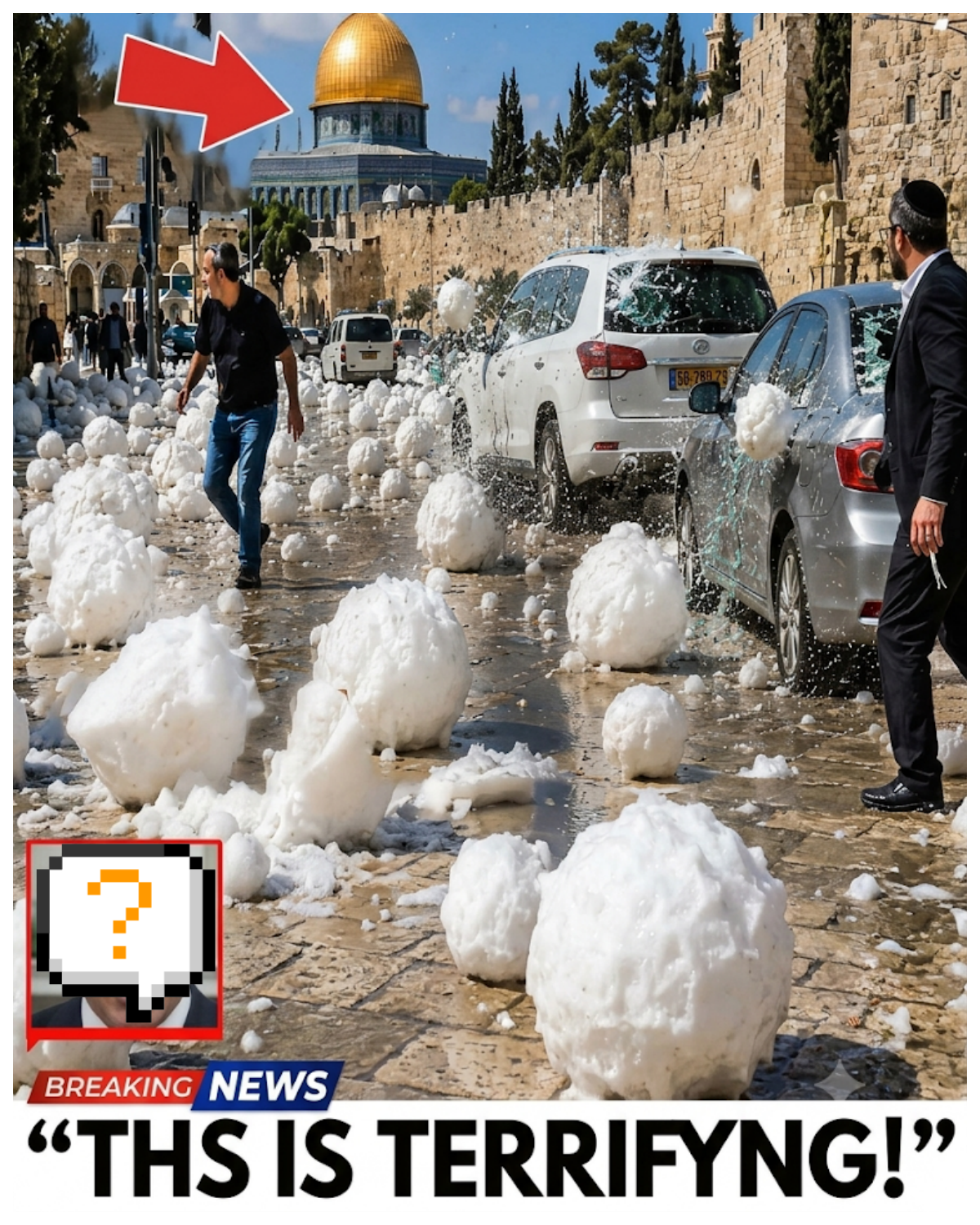
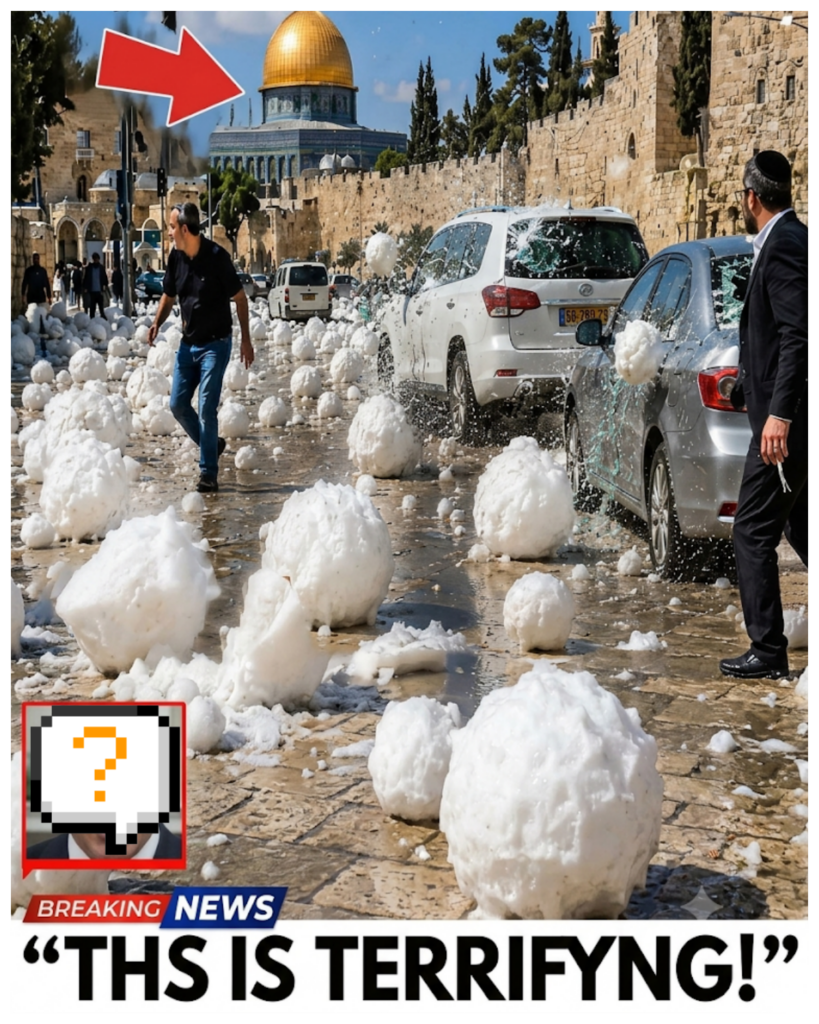
Something is happening around Jerusalem that should make us pause.
A city already surrounded by centuries of conflict, religion, archaeology, and prophecy is once again appearing at the center of events that are drawing the attention of the entire world.
Fire has appeared in and around the region.
[music] Israel and Iran have been locked in a dangerous confrontation while Jerusalem continues to experience intense heat and extraordinary tension.
Across the Middle East, events are unfolding with a speed that can leave even careful observers wondering what comes [music] next.
But there is something even deeper about Jerusalem.
Why does this city appear so prominently throughout scripture?
Why did the biblical prophets speak about Jerusalem not merely as a place of the past, but as a city connected to God’s purposes for the future?
And why does the story of Jerusalem ultimately lead beyond destruction, conflict, and human kingdoms toward a promise of restoration?
Perhaps the most fascinating part is that the Bible does not ask us to understand Jerusalem through fear or speculation.
Instead, [music] scripture invites us to look carefully, remember God’s promises, and recognize the larger story unfolding through history.
Before we continue, make sure you subscribe to our channel and turn on notifications so you don’t miss more videos exploring biblical history, archaeology, scripture, [music] and the fascinating world behind the Bible.
Jerusalem is not simply another ancient city.
For thousands of years, it has stood at the intersection of faith, empire, conflict, worship, and [music] prophecy.
For Christians, its significance is inseparable from the life, death, and resurrection of Jesus.
Jesus entered Jerusalem knowing that his journey would lead to the cross.
He taught in the temple courts.
He wept over the city.
He was crucified outside its walls.
And according to the New Testament, he rose again and later promised his disciples that he would return.
This history alone explains why Jerusalem occupies such a powerful place in Christian thought.
But the Bible’s prophetic picture of Jerusalem extends far beyond the first century.
The prophet Zechariah described a future in which Jerusalem would become a point of immense international tension.
I will make Jerusalem an immovable rock for all the nations.
Zechariah 12:3.
That is a remarkable statement.
The prophet was not writing about modern geopolitics, satellite television, international diplomacy, or modern warfare.
Yet, Jerusalem was portrayed as a city around which nations would gather [music] and struggle.
That does not mean every modern conflict is automatically the fulfillment of Zechariah’s prophecy.
But it does explain why believers pay such close attention whenever Jerusalem becomes the center of global attention.
The recent confrontation involving Israel and Iran has brought the region into another period of extraordinary instability.
In 2026, direct hostilities between Israel and Iran escalated dramatically before a pause in strikes was announced in June.
While tensions have continued to affect the wider region, images of destruction, [music] emergency responses, flames, smoke, and people seeking shelter can be deeply unsettling.
[music] And when such images appear alongside Jerusalem, it is understandable that people begin opening their Bibles and asking questions.
Could this be what the prophets saw?
Could these conflicts be connected to biblical end times [music] passages?
The honest answer is that we should be careful.
Scripture gives us prophetic descriptions, but it does not give us permission to attach a specific modern event to a prophecy simply because the imagery appears similar.
Jesus himself warned his followers against rushing to conclusions.
You will hear of wars and rumors of wars, but see to it that you are not alarmed.
Matthew 24:6.
Notice those words.
Do not be alarmed.
Jesus acknowledged that wars would occur, but he did not tell his followers to treat every war as proof that the final moment had arrived.
Instead, he called them to remain watchful.
That distinction is extremely important.
There is, however, something fascinating about the biblical emphasis on Jerusalem.
The prophets repeatedly place the city within God’s larger story.
Isaiah spoke of Jerusalem as a place associated with God’s purposes [music] for the nations.
Zechariah described a future conflict surrounding Jerusalem.
Jesus spoke about Jerusalem in the context of his return.
And Revelation [music] ends the biblical story not with Jerusalem disappearing into history, but with the appearance of something even greater, the new Jerusalem.
I saw the holy city, the new Jerusalem, coming down out of heaven from God.
Revelation 21:2.
This changes the way we should think about biblical prophecy.
The ultimate message is not simply destruction.
It is restoration.
The Bible begins with humanity separated from God’s presence and ends with God’s presence dwelling with humanity.
God’s dwelling place is now among the people.
Revelation 21:3.
And then comes one of the most beautiful promises in scripture.
He will wipe every tear from their eyes.
[music] There will be no more death or mourning or crying or pain.
That is where the biblical story ultimately leads.
So what should we make of the strange events surrounding Jerusalem?
We should watch.
We should study.
We should remain spiritually awake.
But we should also resist the temptation to declare certainty where scripture does not give certainty.
A fire is a fire.
A military confrontation is a military confrontation.
Extreme heat is extreme heat.
But when these things happen around a city that has been central to biblical prophecy for thousands of years, they naturally remind believers of the scriptures that speak about Jerusalem’s future.
That is the responsible way to approach prophecy, not by forcing today’s headlines into ancient passages, but by allowing scripture to shape how we understand today’s world.
Interestingly, Zechariah’s prophecy [music] portrays Jerusalem as a city that will remain extraordinarily significant among the nations.
Whether every present event represents a prophetic fulfillment is a question that cannot honestly be settled simply by watching the news.
But one thing is undeniable.
Jerusalem continues to matter politically, historically, archaeologically, and [music] spiritually.
Perhaps the most important question is not can we prove that this event is the final sign.
Perhaps the better question is, [music] if Christ returned today, would we be ready?
The Bible repeatedly moves our attention away from speculation and toward faithfulness.
Jesus did not tell his disciples to calculate every headline.
He told them to watch.
He told them to remain faithful.
He told them to be ready.
And that message remains relevant regardless of what happens tomorrow in Jerusalem, Tehran, Washington, or anywhere else.
Because biblical prophecy is ultimately not designed merely to satisfy our curiosity about the future.
It is designed to remind us that history has a destination.
There may be more conflict.
[music] There may be more uncertainty.
There may be more fires, more political confrontations, and more moments when the world looks toward Jerusalem and asks, “What happens next?”
But Christians are not called to live in panic.
They are called to live in hope.
Jerusalem’s story is still unfolding, but scripture tells us that the final destination is not endless war.
[music] It is the restoration of God’s creation.
It is the new Jerusalem.
It is the presence of God with his people.
And it is the fulfillment of the promise of [music] Christ.
So as you watch the events unfolding across the Middle East, remember this.
Do not let the headlines make you afraid.
Let them make you look deeper.
Study scripture.
Test claims carefully.
Remain watchful.
And most importantly, keep your hope in Christ.
Because whether these events represent the immediate fulfillment of specific end times prophecies or simply another turbulent chapter in human history, the central promise of scripture remains unchanged.
God is still sovereign.
Christ will return and the story of redemption will ultimately end [music] in the presence of God.
And perhaps that is the [music] most extraordinary thing about Jerusalem of all.
Its greatest story may not be behind it.
It may still be ahead.
Thank you so much for watching and God bless.