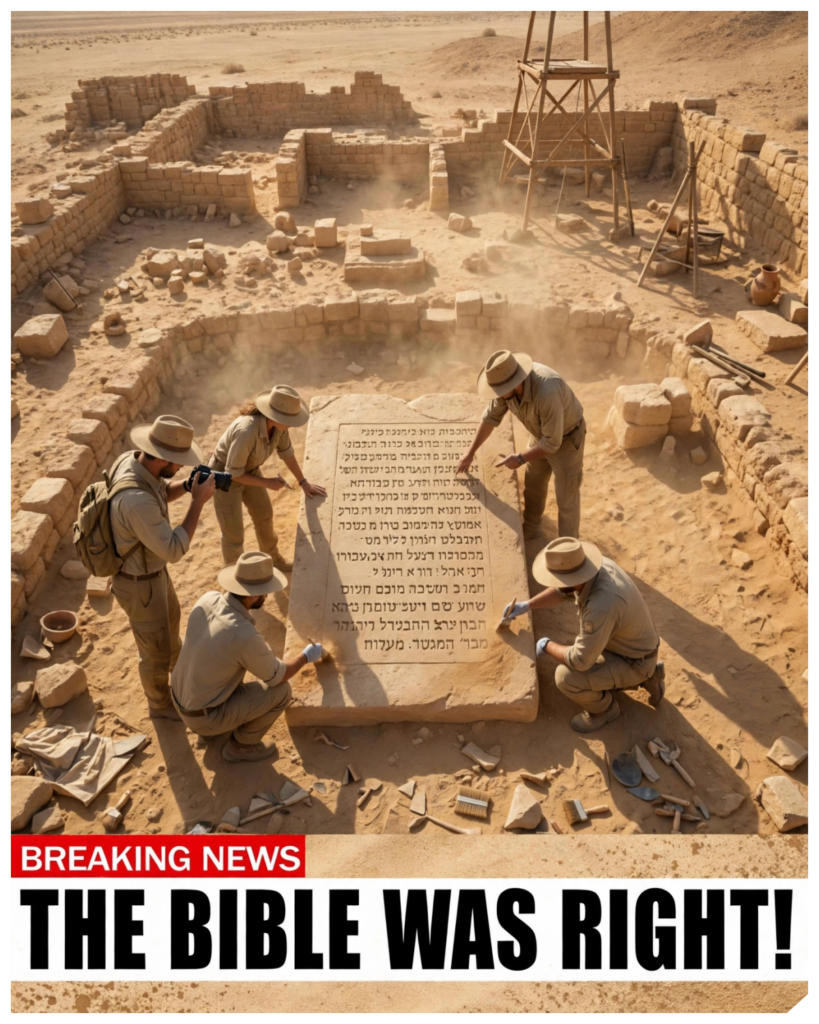
Archaeologists on the northern shore of the Sea of Galilee have been pulling a Byzantine church complex out of waterlogged mud.
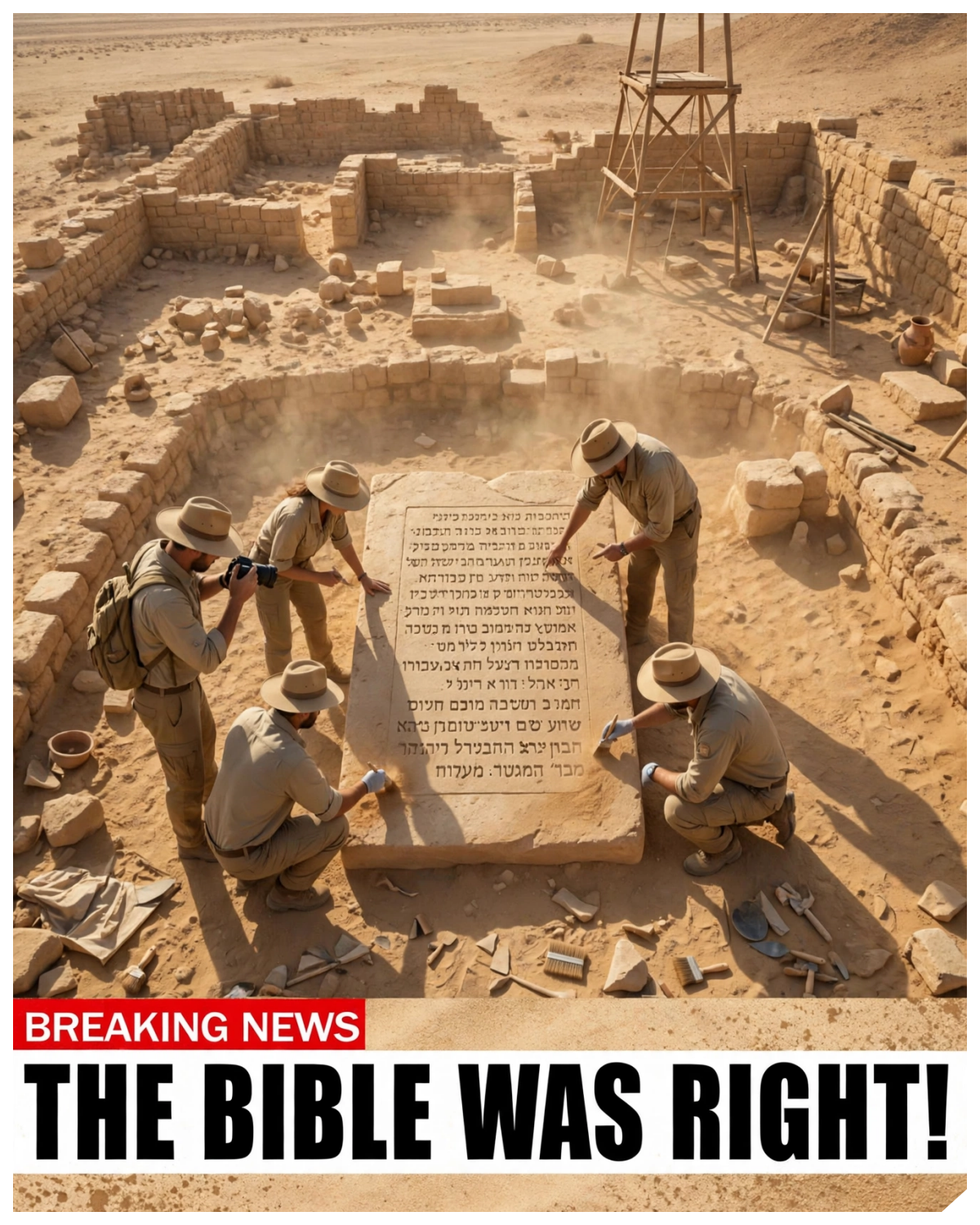
What if I told you that inside it a few lines of ancient Greek repeat a promise Jesus made to Peter and could reopen an argument that has divided Christians for nearly 1,000 years?
And this wasn’t found in Rome where you’d expect it.
It was found in Galilee by the lake where Jesus called Peter away from his nets.
The Museum of the Bible calls it the oldest archaeological evidence that Christians saw Peter as the chief of the apostles.
The church is about 1,500 years old, and the team believes it stands over Bethida, the hometown of Peter, Andrew, and Philip.
Its mosaic floor is still intact, and it calls Peter the holder of the keys of heaven.
In Matthew 16, Jesus tells Peter, “I will give you the keys of the kingdom of heaven.”
Here are Christians from 15 centuries ago attaching that promise to Peter’s name.
So, what does that mean for the fight over Peter’s authority?
And why haven’t you heard about it?
Stick with me because by the end, you’ll know what this floor shows and what it doesn’t.
And today, we’re going to read this floor line by line, the way the people who paid for it wanted it read.
Part one.
11 lines in a side room.
In the summer of 2022, the team scraped the last of the mud off a round medallion in the floor of a small room on the north side of the church.
The room was the Diaonacon, the side chamber where clergy kept the vessels and vestments they needed for the service.
The inscription even uses that word, so the floor names the room it sits in.
Framed by floral patterns, 11 lines of Greek ran across the medallion in letters close to 4 in tall.
You didn’t need good eyes to read this one.
It opens the way most donor floors from this period open with the man who paid for it.
The whole work of laying this mosaic, it says, was done through the zeal of Constantine, a servant of Christ.
He’s a local donor and has nothing to do with the emperor.
Then the inscription turns and speaks straight to Peter, chief of the apostles, holder of the keys of heaven, intercede for him and for his children, George and Theopano.
So at its heart, this is a father’s prayer.
A man in Galilee paid for a floor and asked Peter to look after his kids.
And the titles he chose for Peter tell you exactly how that congregation thought about him.
Anyone standing in that church who knew their gospels would hear Matthew 16 in the word keys.
That’s why the people running the dig got so excited.
Steven not the academic director of the excavation had spent close to 20 years on the question of where Bethida stood.
He called this inscription their strongest indicator that Peter had a special association with the basilica.
His fellow director, Morai Avam of Kineret College, had led the digging on this muddy stretch of shoreline since 2016.
Now, the floor itself seemed to be pointing at Peter.
But the strangest part of this story is how close the most important words on that floor came to slipping past almost everyone.
We’ll get to that in a few minutes.
First, you need to know how a town with a name this famous managed to disappear in the first place.
Part two, the town that slipped off the map.
Bethsida shows up in the gospel seven times.
The name means something like house of the hunt or house of fishing which fits a village of working fishermen.
The gospel of John says plainly that Philip came from Bethada, the town of Andrew and Peter.
And notice two of those names.
Andrew and Philip are both Greek names.
Later in John, a group of Greeks who want to meet Jesus go straight to Philip of Bethada to ask for an introduction.
And Philip brings in Andrew.
That small scene hints at a lakeside town where Greek wasn’t a foreign language, which matters once you see who ran it.
Jesus spent real time there.
In Mark 8, people bring him a blind man at Bethesda.
He leads the man out of the village by the hand and heals him in two stages, and halfway through, the man says he sees people, but they look like trees walking around.
Luke places the feeding of the 5000 in a remote spot near Betha.
And in Mark 6, right before Jesus walks on the water, he sends the disciples ahead by boat toward the town.
But Bethesda also earned one of the harshest lines Jesus ever spoke about a place.
In Matthew 11, he pronounces woe on Corazine and Betha, saying that if the miracles done there had been done in Ty and Siden, those pagan cities would have repented long ago.
The town story gets more complicated after that.
The Jewish historian Josephus tells us that Herod’s son Philip who ruled this region and who isn’t the apostle raised the fishing village to the status of a city.
Philip renamed it Julius after Libya the wife of the emperor Augustus who was also known as Julia Augusta.
Philip died around the year 34 and was buried there.
Josephus also describes a skirmish near Julius during the war against Rome with troops coming in by boat and his own horse going down in the marshy ground.
Over the centuries that followed, the exact spot was lost.
So historians had two names, a shoreline and a marsh to work with.
Therefore, the hunt for Bethsida turned into a fight between two sites.
In 1838, the American explorer Edward Robinson pointed to a large mound called Etel, which rises about 45 meters above the plane and sits roughly 2 km from today’s shore.
Since 1987, the Israeli archaeologist Rammy Arav has excavated it with a consortium led by the University of Nebraska at Omaha.
His team has found an impressive Iron Age city in fishing gear, and they argue that earthquakes along the rift valley pushed the land up and left the shoreline farther away.
Critics answer that more than 20 years of digging, there still haven’t shown a convincing first century city.
The other candidate was El Arj, right at the water’s edge, where the Jordan River flows into the lake.
For a long time, experts assumed the lake stood about 686 feet below sea level in Roman times, which would have put El Arj underwater until the Byzantine period.
Then Avium and Notley started digging right there at the shoreline.
In 2017, they hit a Roman layer about 2 m below the Byzantine one.
It held a bath house with a mosaic floor, roof tiles, and heating vents, plus a silver coin of Nero struck in the year 65 or ‘ 66.
Roman style baths were rare in country villages.
So the team read it as a sign of a real city, the kind Josephus says Philip built.
And the mud that had covered it all came from sediment washed down by the Jordan River and the nearby Meushim stream.
Later seasons turned up fishing weights and oil lamps that the team believes residents brought home from trips to Jerusalem.
Ordinary life right where the Gospels put Peter’s family.
There was one more clue and it came from an 8th century traveler.
Willibalald, an Englishman who later became bishop of Iikstat in Germany, is the first Englishman we know of to visit the Holy Land.
Traveling from Capernaum toward Kersy on the Eastern Shore, he spent a night at a place he was told was Bethsida, the home of Peter and Andrew.
His account says a church now stood where their house had been.
So the team had a target.
If Willal was right, a church should be sitting somewhere under the mud at Elarrage, built over a house from Peter’s time.
And in 2019, they found it.
Part three, the church under the mud.
The first walls came out of the ground, dating to around the fifth century.
Then came the details that told the team this was no ordinary chapel.
They found small cubes of glass covered in gold leaf, the kind used in shimmering wall mosaics, along with a piece of a marble chancel screen carved with a wreath.
Notly pointed out that gilded glass like this turns up in ornate important churches.
Somebody had clearly spent serious money here.
Around the church, the team traced the rooms of a monastery, and the floors held more than one Greek inscription.
The one in the side room was the showpiece, and the work isn’t finished.
The team’s plans include tracing the monastery’s own bath house and chasing down more of that Roman bath house from 2017.
The Arav team still hasn’t conceded, though.
Arav has suggested that whatever stood at El Arj could have been a later settlement that simply borrowed the old name.
Keep that objection in mind because it comes back.
Now remember that medallion in the side room.
When the find went public in August 2022, the translation that went out to the press read Peter’s title as chief and commander of the heavenly apostles, but it’s a different title from the one I read you earlier.
The full scholarly edition came out the next year prepared by Leah Dedney of the Hebrew University together with the excavators.
In their reading, the final line uses the Greek word clidos.
It literally means the one who holds the keys.
The same floor read more carefully, said holder of the keys of heaven.
So the keys were there all along.
They sat under the mud for centuries, and when the inscription finally came up, the first headlines missed them.
The fuller reading landed in an academic journal that most people never open.
That’s a big part of why you probably haven’t heard this version of the story.
The other title matters too.
The word for chief is cor which means the head or the very top of something.
Byzantine Christians used words from that family for Peter all the time which matters later on.
The letter shapes point to the second half of the 500s, possibly later.
That puts this prayer roughly 500 years after Peter’s lifetime and about 500 years before the great split between the Eastern and Western churches in 1054.
A keyholder title on the floor of a church at Peter’s supposed hometown is remarkable on its own.
But why Christians built a rich church on this exact spot opens up something bigger.
Part four.
Why build here?
Early Christians tended to build on top of places they remembered.
In the 300s, a great basilica rose in Rome over the spot Christians honored as Peter’s grave.
The Elaraj team argues that his home got the same treatment in Galilee.
And here’s where it gets tricky, because there’s already a famous house of Peter.
If you visit Capernium today, a few miles west along the shore, you’ll see a modern church hovering over the ruins of an octagonal Byzantine church.
In 1968, archaeologists found a Roman era house beneath it that had become a place of worship by the end of the first century.
Mark’s Gospel also mentions the house of Simon and Andrew in Kapa where Jesus healed Peter’s mother-in-law.
So which one is Peter’s house?
Not’s answer is that Byzantine Christian tradition routinely placed Peter’s home in Bethada even though most pilgrims today head to Capernaum.
One possibility fits both texts.
Peter grew up in Bethesda, married and was living near his wife’s family in Capernium by the time Jesus came around.
Bethsida would be his hometown and Capernium his household.
That’s a reasonable guess, though no ancient text spells it out.
There’s another connection most people miss.
The same Philip who turned Bethesda into Julius also rebuilt a city about 25 mi to the north at the foot of Mount Herman and named it Cesaria Philippi.
It sat around 1,150 ft above sea level beside a cave shrine to the Greek god Pan.
Matthew says the conversation about the keys happened in the district of Cesaria Philippi.
So Jesus made that promise in Philip’s territory to a fisherman from Philip’s city.
Many tour guides will tell you Jesus pointed at Pan’s cave when he talked about the gates of Hades.
That’s an old tradition though Matthew’s text itself never says so.
Then there’s the language.
This prayer is in Greek in a Galilean church in the Eastern Roman world centuries before Rome and Constantinople broke communion.
The Museum of the Bible put it carefully.
The idea of Peter’s primacy already shows up in literary and lurggical writings.
What’s new is finding it laid into a floor, and no older archaeological example of it is known.
So, does this settle the oldest argument about Peter?
That depends on which word in his title you lean on.
Part five, the keys in the argument.
Start with the scene itself.
Jesus asks his disciples who people say he is and then who they say he is.
Peter answers first.
You are the Messiah, the son of the living God.
Jesus calls him blessed Simon son of Jonah and says this wasn’t revealed to him by flesh and blood.
Then comes the promise of the keys followed by these words.
Whatever Peter binds on earth will be bound in heaven and whatever he looses on earth will be loosed in heaven.
Jewish teachers used binding and loosing for declaring what was forbidden and what was permitted.
And Jesus says whatever rather than whoever, which is why many scholars think it’s about making rulings for the community.
Two chapters later in Matthew 18, Jesus gives that same binding and loosing to the disciples as a group.
Critics of the Catholic reading lean hard on that verse.
But the keys only show up once and they go to Peter alone.
To hear what keys meant to a Jewish audience, go back to Isaiah 22.
God removes a palace official named Shbna and hands his office to Eliakim, the steward over the royal household.
He puts the key of the house of David on Eliakim’s shoulder so that what he opens no one can shut and what he shuts no one can open.
A keyholder ran the king’s household in the king’s name.
Revelation picks up the same picture and has Jesus holding the key of David himself.
And this argument is far older than the Reformation.
Around the early 200s, the North African writer Tertulan attacked a bishop who claimed the power of binding and loosing had passed to every church connected to Peter.
Tertulan insisted Jesus gave it to Peter personally.
Scholars still debate which bishop he meant.
Two centuries later, Augustine read it another way with Peter holding the keys on behalf of the whole church.
There’s also the word play in Matthew 16 itself.
Peter’s Greek name is Petro and Jesus says, “On this Petra, this rock, I will build my church.”
In Aramaic, the language Jesus most likely spoke.
Peter’s nickname was Cphus, which also means rock.
Here’s how the three big traditions read all that and how each one sees this floor.
Catholics read Peter as the steward.
Jesus appointed and they believe the office continues through the bishops of Rome.
They also point to John 21 where the risen Jesus tells Peter three times to feed his sheep.
For them, a 6th century Greek prayer calling Peter the keyholder shows that his unique role was honored in the east as well as the west long before the split.
The Orthodox call Peter chief, too.
Their hymns for the June 29 feast named Peter and Paul together as the Corey Fio, a word from the same family as the one on this floor.
In ancient Greek theater, the Corifios led the chorus and set the singing and the movements for everyone else.
The Orthodox honor Peter as first among the apostles, but they don’t believe that rank passed to the bishop of Rome alone.
A Greek speaking church in Galilee sits comfortably inside their tradition.
Many Protestants read the rock in Matthew 16 as Peter’s confession that Jesus is the Messiah, and some read it as Christ himself.
They see the keys working through the preaching of the gospel.
Peter’s role was real and historic and in their reading it stayed with Peter himself.
For them, this floor tells you what 6th century Christians believed, which is a different question from what Jesus meant in the first century.
So, here’s what the floor shows.
By the later 500s, Christians on this shore gave Peter both of those titles inside a lavish church they believed stood on his family home.
A Galilean father trusted that title enough to put his children’s names under it.
And here’s what it doesn’t show.
It never mentions Rome.
A pope or anyone who would take Peter’s place.
It doesn’t prove this was Peter’s actual house and it hasn’t ended the Bethsida debate as the ETel team will gladly tell you.
There’s one more detail from that room I keep coming back to.
Constantine paid for that floor so a congregation would remember Peter and so Peter would remember his family.
Then the mud from the Jordan buried it for centuries.
When it finally came back up, the first translation went out without the keys.
They were in the floor the whole time, a few inches from the names George and Theopano.
If you want more videos where we pull a find out of the ground and read it next to the Bible, subscribe because there are plenty more of these stories


