It was selected in advance to fall just beyond the…
It was selected in advance to fall just beyond the advertised 70-minute tour. The brothers had also prepared a mechanical explanation for the parked car.
A printed warning under the windshield wiper claims overnight parking is permitted for guests using a shuttle.
No shuttle operates on Saturdays. Orin planned to tell families the women left with other visitors while their vehicle remained legally behind.
Searchers initially see that notice and delay towing the car for evidence. Its paper carries Cal’s fingerprint and was printed from the office at 4:38.
Corrine presents the artifacts in the order they were prepared. Departure log, parking notice, cloned tag, sedated water, and open service lane.
The murder happens later, but the system for making guests disappear from official records exists before they arrive.
This is why the brothers claim of sudden panic fails even where Lacy’s fatal confrontation was not specifically planned.
They had prepared confinement, false movement, and an explanation for absence. When Lacy resisted, those preparations gave them time and privacy to kill her.
Becca describes hearing Orin above the trapdoor making normal closing announcements over an outdoor speaker.
He thanked non-existent visitors and warned that the parking gate would close. The recording was part of a timer, yet he spoke live between segments to make the empty ground sound occupied.
June hears Cal drag metal panels across the tunnel and ask whether the scanner shows them outside.
Their statements come from separate rooms and were given before either knew the other survived.
The phrase about the scanner matches a deleted voice memo on Oren’s phone. He records ticket counts while practicing the clone tag and says, “Outside on paper, below in fact.”
That sentence becomes the prosecution’s simplest description of the crime. Engineers later test the emergency phone Lacy used.
Its cable had been cut partially, so calls would drop after several seconds. The brothers expected visitors to use it only during supervised tours, where a failed connection could be blamed on the quarry walls.
Lacy’s 6 seconds escape because one copper strand remained intact. The call captures Cal’s voice and the scanner chirp before the strand breaks.
At the earlier scene, Alyssa’s damaged camera contains a memory card the first investigation could not read.
New recovery methods extract one thumbnail showing the underground great. The image was captured 40 minutes before the staged bridge fall.
Oren had claimed Alyssa never entered that section. Her thumbnail and Lacy’s uploaded photograph show the same numbered clamp from opposite sides of the hatch.
Two images taken 2 years apart preserve an object the brothers repeatedly claimed had been discarded.
The attraction marketed itself as a place where guests solved staged mysteries through hidden passages and false clues.
That branding becomes painful after the truth emerges. Families ask officials to remove promotional signs calling the underground route an unsolved escape.
Investigators catalog the props carefully because real restraints and blood had been dismissed as theatrical objects.
The boundary between attraction and evidence was another form of cover. Visitors were trained to interpret locked doors, screams, and abandoned belongings as part of a game.
Becca saw the backpack and cable because she worked in emergency care and recognized that the stains were old, rather than decorative paint.
Lacy acted when Orrin refused to open the hatch. Their attention did not create the danger.
It exposed what the brothers had hidden among props. At sentencing, Alyssa’s mother and Lacy’s fiance do not combine their statements.
One describes two years spent arguing that a bridge report was false. The other describes receiving reassuring messages written after Lacy was dead.
The shared scanner method joins the prosecutions, but each family keeps its own chronology. Becca and June speak together only once.
They read the three entry names from the reservation and then the line Orrin wrote before they arrived.
Final guests departed. They ask the court to recognize how the log erased them while two were still locked underground.
Black Fern never reopens. Inspectors dismantle the rope structures and seal the limestone works. The entrance gate remains for months because ownership is disputed.
It’s faded arch standing over a path closed by police fencing. Lacy’s fiance asks that the false messages not be included in memorial displays.
He keeps her earlier voice notes instead, including one recorded on the drive to Oak Glass when all three women argued about who would be most afraid of the underground tour.
Becca and June refuse requests to recreate the route for television. They provide investigators with written maps separately, and the differences are preserved rather than edited into one clean memory.
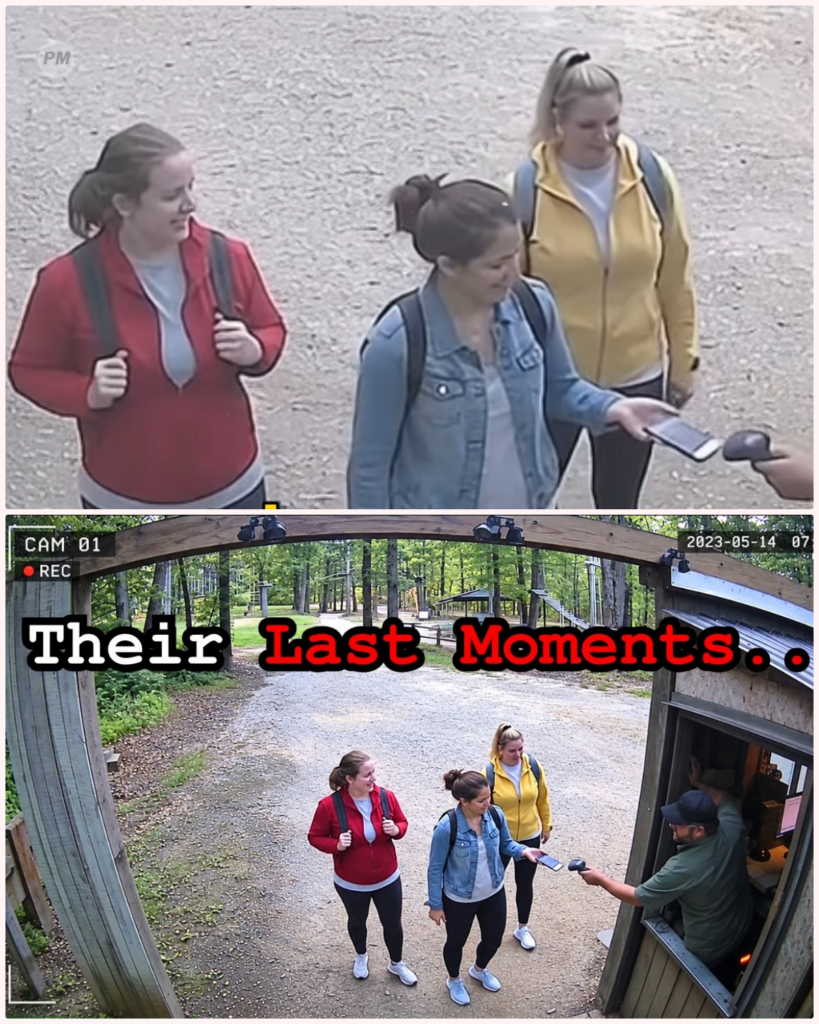
The final footage comes from the entrance at 4:52. Becca in red, June in denim, Lacy in yellow.
Three women walk beneath the gate together. Orrin scans June’s phone and the device chirps twice.
The first sound admits the group. The second copies their identities into a tag already carrying the code of a dead visitor.
Hours later, the log will show three departures. The camera records none.


